
News
SL can be declared mine-free by 2027 – Japanese official

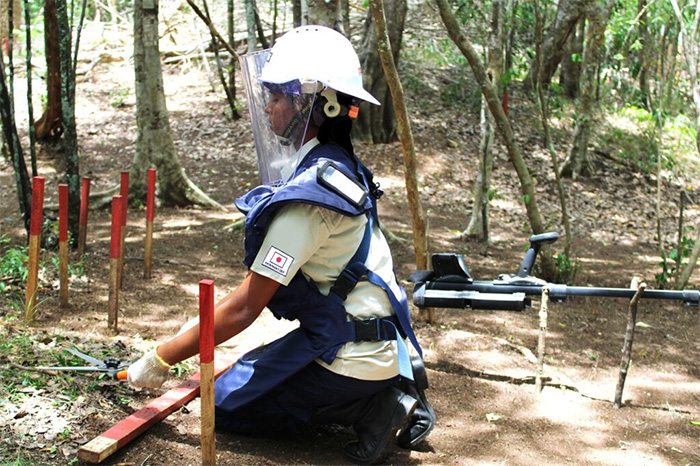
Kamoshida Naoaki, Chargé d’ Affaires ad interim of Japan to Sri Lanka, has said that Sri Lanka could be declared a mine-free country by 2027. The Japanese official said so after signing grant contracts for two demining projects with the Mines Advisory Group (MAG) and the HALO Trust (HALO) under the scheme of “Grant Assistance for Grassroots Human Security Projects (GGP).”
Sri Lanka brought the war to a successful conclusion in May 2009.
The Japanese Embassy press release: “The Government of Japan has provided approx. USD 900,000 (approx. Rs. 270 million) for these two projects with MAG and HALO to support humanitarian demining activities in the Northern and Eastern provinces of Sri Lanka. Japan has been a major donor in demining activities in Sri Lanka since 2002, and the total amount of assistance exceeds USD 47 million.
It is expected that the two newly-funded projects by MAG and HALO will together contribute to resettlement and improved livelihood for around 13,000 beneficiaries in the Northern and Eastern provinces.
The development of the conflict-affected areas is one of the priorities in Japan’s official development assistance for Sri Lanka.
Kamoshida emphasised that Japan considers landmine clearance as a fundamental step toward peacebuilding, resettlement, and sustainable development in Sri Lanka. He reaffirmed Japan’s strong commitment to continuing its support, and expressed his hope that Sri Lanka will become a mine-impact-free country by 2027, paving a way for lasting peace and reconciliation.”
Commenting on the provision of this grant, Ms. Zeenat Garewal, Country Director, MAG, stated: “Mine clearance and land release have direct impacts on the lives of civilians living in the Northern and Eastern provinces of Sri Lanka. Clearing contaminated land aids agricultural and infrastructure development in rural villages and ensures the safety of civilians from the threat of landmines and unexploded ordnance. These efforts strengthen the economy of Sri Lanka, paving the path towards prosperity and a safer nation.
As of January 2025, MAG has released a total of 100,930,005
㎡ of land and has removed more than 103,467 explosive remnants of war since 2002. MAG extends its deepest gratitude for the ongoing support that the Embassy and people of Japan have provided to clear anti-personnel landmines and other dangerous contamination in areas most affected by decades of armed conflict.
In order to successfully complete our mission to “Save Lives, Build Futures”, MAG is grateful to the Embassy and the Government of Japan and looks forward to their continued support and assistance to achieve our goal of realising a landmine free Sri Lanka.”
Ms. Hannah Elizabeth Picton, Deputy Programme Manager, HALO, stated;
“Over the past 22 years, Japan has been HALO’s most consistent supporter. During this time, HALO has found and destroyed nearly 300,000 anti-personnel landmines and released 120
㎢ of previously contaminated land. This has contributed to the resettlement of 150,300 individuals in Kilinochchi District alone, restoring sustainable livelihoods and enabling community rebuilding and stabilisation. It has also enabled local men and women to partake in a highly respected vocation, providing a stable income to their families.
With the support from Japan, HALO is working towards identifying and clearing the remaining contamination, while supporting the National Mine Action Centre (NMAC) in implementing the National Completion Process. This assistance to demining operators is critical to help bring the Government of Sri Lanka closer to meeting its Anti-Personnel Mine Ban Treaty obligation of clearing the country of all known mine and other explosive contamination.”

Latest News
Heat Index at Caution Level in the Western, Sabaragamuwa, Southern, Eastern, North-western, Northern and North-central provinces and in Monaragala district


Warm Weather Advisory
Issued by the Natural Hazards Early Warning Centre
Issued at 3.30 p.m. on 31 March 2026, valid for 01 April 2026.
The Heat index, the temperature felt on human body is likely to increase up to ‘Caution level’ at some places in the Western, Sabaragamuwa, Southern, Eastern, North-western, Northern and North-central provinces and in Monaragala district.
The Heat Index Forecast is calculated by using relative humidity and maximum temperature and this is the condition that is felt on your body. This is not the forecast of maximum temperature. It is generated by the Department of Meteorology for the next day period and prepared by using global numerical weather prediction model data.

Effect of the heat index on human body is mentioned in the above table and it is prepared on the advice of the Ministry of Health and Indigenous Medical Services.
ACTION REQUIRED
Job sites: Stay hydrated and takes breaks in the shade as often as possible.
Indoors: Check up on the elderly and the sick.
Vehicles: Never leave children unattended.
Outdoors: Limit strenuous outdoor activities, find shade and stay hydrated.
Dress: Wear lightweight and white or light-colored clothing.
Note:
In addition, please refer to advisories issued by the Disaster Preparedness & Response Division, Ministry of Health in this regard as well. For further clarifications please contact 011-7446491.

Govt. rations stocks as imports falter
By Ifham Nizam
The government faces a looming fertiliser crisis ahead of the 2026 Yala season, with a sharp shortfall in urea threatening paddy yields and food security.
Experts have warned that the fertiliser shortage will take its toll on the yala harvest.
With just over 100,000 tonnes of fertiliser in stock by early March—barely enough for paddy cultivation alone—and more than half of expected imports either cancelled or delayed, the government has moved to ration supplies through Agrarian Service Centres, based on last year’s consumption.
Leading crop scientist Professor Buddhi Marambe has warned that while rationing is unavoidable, it will reduce productivity. “Even last season we applied below recommended levels. This year, the gap will be worse,” he said.
Authorities are prioritising paddy, followed by maize and tea, as limited stocks are stretched across crops.
However, experts estimate yields could fall by 15–20% if nutrient shortages persist—raising the risk of higher food prices in the months ahead.
The crisis has been worsened by global disruptions, including Gulf conflict affecting fertiliser shipments and precautionary export restrictions by key suppliers, such as China.
Although the Government is pursuing deals with countries like Russia, supplies remain uncertain.
With global urea prices surging and production costs rising, smallholder farmers are expected to be the hardest hit.
“This is a wake-up call,” Prof. Marambe said, urging urgent steps to build buffer stocks and strengthen Sri Lanka’s long-term food security strategy.
By Shamindra Ferdinando
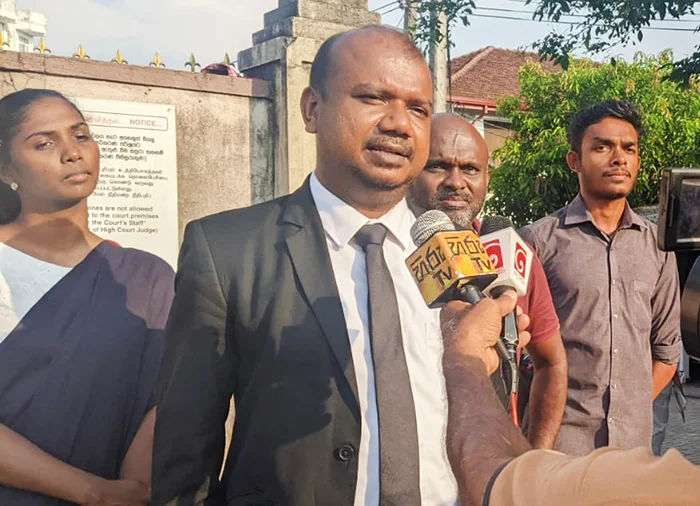
Frontline Socialist Party (FSP) spokesman Pubudu Jayagoda says the Gampaha Magistrate’s Court order that the ruling JVP hand back the FSP’s Kirindiwela office, grabbed by a group of JVP politicians on 02 September, 2025, has shown that the government cannot undermine the law.
Jayagoda said that the FSP had been compelled to move the court against the JVP as the Gampaha police refused to intervene due to political pressure. “They probably thought we were going to give up that office. Perhaps, the ruling party felt they could forcibly occupy other FSP offices,” Jayagoda said.
FSP’s Administrative Secretary Chamira Koswatta and trade unions, which operated from the Salmal Garden office, sought the court intervention to confirm the ownership of that building in the FSP. The court initially transferred the building to the police and issued a directive to law enforcement authorities to remove the JVP/NPP from that building.
Among the 20 respondents was Tilvin Silva, General Secretary of the JVP. Those now identified themselves as FSP quit the JVP in 2011 and later formed their own party.
Gampaha Additional Magistrate Shilani Perera on Monday ruled that the legitimate owner was the FSP. The Magistrate ruled that the FSPers had been forced out of that office, illegally.
Jayagoda said that the FSP considered the court ruling a victory for democracy and a devastating blow to the increasingly authoritarian JVP/NPP rule.

Showers expected in the Western, Sabaragamuwa and Southern provinces in the evening or night

Heat Index at Caution Level in the Western, Sabaragamuwa, Southern, Eastern, North-western, Northern and North-central provinces and in Monaragala district

Urea shortage threatens Yala harvest: Experts

2025 property grab: Court orders JVP to hand back Yakkala office to FSP

Jaffna commander stresses need for strong military presence in Kilinochchi

UK’s all party parliamentary group on Sri Lanka focuses on economy

‘Dates have the highest sugar content to fight Coronavirus’

Sunday Island 27 December – Headlines

#SundayIsland 17th December – Headlines

Sunday Island – 28th March

Sunday Island Headlines – 21 March

Sunday Island – 21st February – Headlines
-

 Features4 days ago
A World Order in Crisis: War, Power, and Resistance
-

 News5 days ago
Energy Minister indicted on corruption charges ahead of no-faith motion against him
-

 News6 days ago
US dodges question on AKD’s claim SL denied permission for military aircraft to land
-

 Business6 days ago
Dialog Unveils Dialog Play Mini with Netflix and Apple TV
-

 Sports5 days ago
SLC to hold EGM in April
-
 Latest News6 days ago
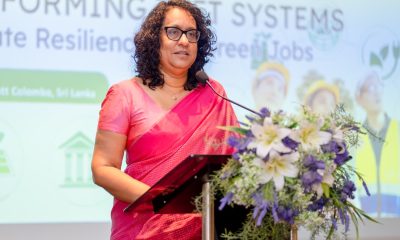
A strong Technical and Vocational Education and Training (TVET) system equips individuals with practical, relevant, and future-oriented skills helping to innovate responsibly towards a greener and sustainable future – PM
-

 Opinion5 days ago
When elephants fight, it is the grass that suffers
-

 Features5 days ago
Lest we forget