
News
Lanka reaffirms commitment to UN Peacekeeping at Berlin Summit


Sri Lanka has reaffirmed its commitment to advancing global peace and security through principled and accountable engagement.
At the 2025 UN Peacekeeping Ministerial in Berlin, Deputy Minister of Foreign Affairs Arun Hemachandra praised the United Nations for its steadfast efforts to maintain global peace and security amid rising asymmetric threats and an increasingly complex operational landscape.
Speaking on behalf of the new government, Hemachandra emphasized Sri Lanka’s unwavering dedication to global peace, supported by a renewed national vision and comprehensive reforms aimed at enhancing professionalism and accountability across all sectors of governance, including defense.
He stressed the importance of civilian protection within UN peacekeeping operations, advocating for more robust and responsive strategies to address the growing challenges on the ground. Hemachandra noted that rapid technological advancements have introduced sophisticated threats, requiring adaptive and resilient peacekeeping approaches to ensure civilian safety.
Sri Lanka is actively pursuing new partnerships and opportunities for collaboration with the United Nations, member states, and regional organizations to strengthen collective capabilities and contribute meaningfully to peacekeeping efforts.
The Deputy Minister also underscored the government’s commitment to empowering women in peacekeeping, in line with national policies to extend military retirement age and promote women in leadership roles.
Reaffirming Sri Lanka’s pledge to uphold the highest standards of conduct and discipline in peacekeeping, Hemachandra stated that Sri Lankan peacekeepers serve under the UN flag with professionalism, integrity, and respect.
He concluded by expressing the new government’s dedication to playing a greater role in global peace and security, urging the United Nations to consider Sri Lanka a trusted and capable partner in advancing the shared goal of effective, responsive, and resilient peacekeeping.


The Sri Lanka Press Institute (SLPI) and several leading media organisations have expressed strong opposition to the proposed Chartered Institute of Media Professionals of Sri Lanka (CIMP) Bill, urging the Government to withdraw the legislation and engage in consultations with stakeholders.
In a joint statement, the SLPI, together with its constituent organisations—the Newspaper Society of Sri Lanka (NSSL), the Editors’ Guild of Sri Lanka (TEGOSL), the Free Media Movement (FMM) and the Sri Lanka Working Journalists Association (SLWJA)—as well as affiliated bodies including the Muslim Media Forum (MMF), the Tamil Media Alliance (TMA), the Federation of Media Employees Trade Union (FMETU) and the South Asia Free Media Association (SAFMA) – Sri Lanka Chapter, said their primary objection was the government-led nature of the proposed institute.
Full text of the statement: The Sri Lanka Press Institute (SLPI), and its constituent partners, the Newspaper Society of Sri Lanka (NSSL), The Editors’ Guild of Sri Lanka (TEGOSL), the Free Media Movement (FMM), the Sri Lanka Working Journalists Association (SLWJA) together with its affiliated organizations, the Muslim Media Forum (MMF), the Tamil Media Alliance (TMA), The Federation of Media Employees Trade Union (FMETU), the South Asia Free Media Association’s SL Chapter (SAFMA) object the proposed Chartered Institute of Media Professionals of Sri Lanka (CIMP) Bill.
Our primary objection stems from the government-led nature of this initiative. History shows that robust professional bodies, such as the Institute of Engineers and the Sri Lanka Institute of Architects, were founded and drafted by the professionals themselves before being incorporated by Parliament. In contrast, the CIMP is a state-driven project ordered to be published by the Minister of Health and Mass Media despite objections raised by media’s professional bodies. We view this as an attempt to impose a state-managed regulatory framework upon a profession that must remain independent of government interference to function effectively.
The SLPI, its constituents and affiliated organizations maintain that professional media standards must be self-regulated in principle and led by the media community, not mandated by law under ministerial oversight. The SLPI has presented an alternative mechanism, viz., the Sri Lanka Media Commission (SLMC), based on co-regulatory and self-regulatory principles, which improves professionalism. In addition, the Sri Lanka College of Journalism, which is recognised by the media industry for training journalists for more than two decades, could also be an alternative way of building relevant journalism standards with government financial support if it intends to genuinely promote media professionalism. We call upon the government to withdraw this Bill and engage in a genuine dialogue with stakeholders that respects the autonomy and freedom of the media in a democracy.

The Fort Magistrate’s Court yesterday issued a warrant for the arrest of Jaffna District MP Ramanathan Archchuna after he failed to appear before court in connection with a pending case.
Court officials said the MP and his bail sureties were absent when the matter was taken up, prompting the Magistrate to issue the warrant.
The case relates to an alleged incident in which Archchuna is accused of obstructing the duties of Fort Police officers while they were performing their duties.
The matter was listed before the Colombo Magistrate’s Court yesterday as well, when the MP failed to appear before court and his bail guarantor was also absent. Following this, the Magistrate ordered that a warrant be issued against him.
The case is to proceed with further legal action against the MP.

Sri Lanka’s dengue outbreak has continued to worsen, with the number of infections reported this year surpassing 80,000, according to official surveillance data.
The country recorded 80,114 dengue cases as of midnight on July 23, while health authorities reported 59 dengue-related deaths, resulting in a case fatality rate of 0.07%.
The National Dengue Control Unit said that by Week 29, a total of 175 Medical Officer of Health (MOH) areas had been identified as high-risk zones, with an average of 2,391 new cases being reported daily.
July has emerged as the worst month of the year so far, with 24,739 cases recorded, while June also saw a significant surge with 21,534 infections.
The Western Province continues to account for more than half of the country’s dengue burden, with Gampaha recording 16,950 cases and Colombo 16,091 cases. Together, the two districts account for more than 40% of total infections reported nationwide.
Other districts recording high numbers include Matara with 5,534 cases, Kandy with 4,827, Kalutara with 4,545, and Ratnapura with 4,428 cases. The Colombo Municipal Council area alone has reported over 3,200 dengue infections.
At provincial level, the Southern Province has recorded 12,143 cases, followed by the Central Province with 6,686 and Sabaragamuwa with 6,607. Meanwhile, the North Western, Eastern, Uva, North Central and Northern provinces have reported 3,844, 3,148, 2,154, 1,264 and 1,173 cases respectively.
Health authorities have urged residents, particularly those living in high-risk areas, to intensify mosquito-control measures and seek immediate medical attention when dengue symptoms appear, warning that the situation could deteriorate further without sustained preventive action.

India’s education minister resigns after weeks of ‘Cockroach’ protests

ICC prosecutor Karim Khan removed over ‘political’ sex abuse claims

A few showers will occur in the Western, Sabaragamuwa and North-western provinces and in Galle and Matara districts

Govt. urged to withdraw Media Professionals Bill

Fort Magistrate orders arrest of MP Archchuna

Dengue rages with average of 2,391 new cases detected daily

‘Dates have the highest sugar content to fight Coronavirus’

Sunday Island 27 December – Headlines

#SundayIsland 17th December – Headlines

Sunday Island – 28th March

Sunday Island Headlines – 21 March

Sunday Island – 21st February – Headlines
-

 Features6 days ago
Two memorable excerpts from a former SLAF commander’s memoir
-
 Business6 days ago
‘Giving up was never an option’: The fisherman who fought back after losing millions in SL
-

 Life style6 days ago
Taste of the Swiss Alps comes to Colombo
-

 Features6 days ago
Erdoğan’s New Republic
-
 Midweek Review3 days ago
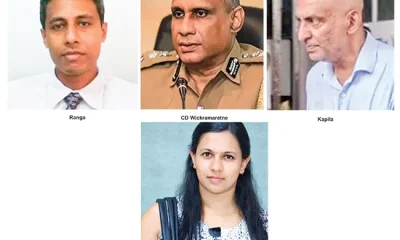
Three high-profile alleged suicides shaping key investigations
-

 News3 days ago
Customs asked to resume probe or face legal action
-
 Editorial4 days ago
Welcome bid to tackle rolling death traps
-
 Foreign News7 days ago
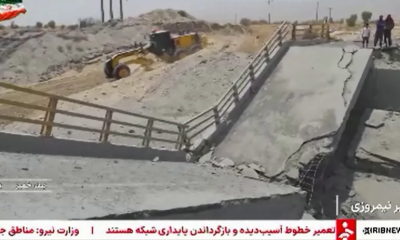
Iran accuses US of striking critical infrastructure as war intensifies