
News
Govt. should obtain support of SL’s natural allies in NAM and Global South who form a majority in UNHRC


While taking action to negate and disprove the charges
The United Nations Human Rights Council (UNHRC) has scheduled, at its February/March 2021 Sessions, to take up for discussion the report on Sri Lanka prepared by the High Commissioner, Mrs. Bachelet on human rights.
This is to discuss the implementation of Resolution 30/1 adopted in 2015, and the subsequent resolutions co-sponsored by the previous government on alleged past violations of human rights in Sri Lanka.
The arguments advanced by the High Commissioner are what she uses to justify the imposition of sanctions against Sri Lanka and to take it before the ICC, the International Criminal Court of Justice. There is also provision for legal action to be taken in the courts of any foreign country against individual citizens of Sri Lanka alleged to have committed crimes against humanity, (which are genocide, ethnic cleansing and war crimes).
If we are to counter these sinister moves against Sri Lanka and its citizens, then action must be taken within Sri Lanka to deprive the High Commissioner and the Western Group led by the UK (in the absence of the USA, which has left the UNHRC) of the arguments levelled by the High Commissioner to the extent that they interfere with Sri Lanka’s responsibility under the UN Charter and international human rights conventions.
Action must also be taken by the government to expose the manner in which the Report and its recommendations, should they be endorsed by the Council, will seriously undermine the Charter-based multilateral system, which is the guarantor of state sovereignty and independence established under the multilateral system based on the UN Charter.
Such action will also help to draw in its natural allies in the Global South to extend their own support to Sri Lanka within the UNHRC, and help defeat the sinister moves.
The High Commissioner’s arguments are based on the following six broad areas of concern:
* Militarization of civilian government functions.
* Reversal of Constitutional safeguards, including the passage of the 20th Amendment.
* Political obstruction of accountability for crimes and human rights violations such as the presidential commission of ‘political victimization’, which has intervened on behalf of a number of military officers implicated in gross human rights violations, including the killing of Lasantha Wickrematunga abduction of Prageeth Ekneligoda, and the naval officers implicated in ransom induced abductions and murder of Tamil youth in Trincomalee.
* Majoritarian and exclusionary rhetoric.
* Surveillance and obstruction of civil society and shrinking democratic space.
* New and exacerbated human rights concerns.
These concerns are already being addressed domestically by the people of Sri Lanka themselves, both in the past (LLRC Report) and the present. The UK-led forces backing the UNHRC resolution are well aware of this. It is important that the government should also further intensify its efforts in this direction.
In doing so, the government should fully appreciate the real motivations for these concerns by the High Commissioner. They are to advance the global agenda of the United States to maintain its hegemony and consolidate the unilateral global order that it desires.
Therefore, while taking action to negate and disprove these charges, the government should obtain the support of our natural allies in the Non-aligned Movement and the Global South, like Russia, who form a majority in the UNHRC, so as to counter what is a common threat.
Some sections of the government, including the Secretary to the Ministry of Foreign Affairs, are seeking to reach a consensus with the UK-led Western bloc. The danger of trying to reach a consensus with the US and its Western allies is that the negotiations will necessarily be between unequal partners, as a result of our high economic dependence on the very same powerful Western countries that are leading the resolution against us.
Moreover, if there are direct bilateral negotiations, then Sri Lanka’s natural allies in the Global South, which are the majority in the United Nations, will not want to get involved by supporting Sri Lanka, as shown by our own past experience.
A consensus between such unequal partners can only, therefore, result in Sri Lanka having to make compromises and also accommodate America’s global agenda, undermining Sri Lanka’s sovereignty, independence, and territorial integrity. We may be even compelled to accept the MCC, SOFA and ACSA agreements that were rejected earlier.
Under these circumstances, the option is to call for a vote in the Council through a friendly nation, such as Cuba, and to work towards obtaining the support of the Council’s majority, who are members of the Non Aligned Movement, and the Global South, including Russia. This option has already proven to be successful in numerous cases where draft resolutions against individual countries by the Western Group have been defeated.
For example, in the specific case of Sri Lanka, in September 2011, we even succeeded, with the support of the Non Aligned Movement and Russia to force the US and Canada to withdraw a draft resolution against Sri Lanka, even before it was tabled.
The support of most, if not all, Non-aligned countries and others like Russia is a certainty provided they are all made aware of the hidden agenda motivating the USA/UK led Western action against Sri Lanka, as well as the precedent that such a resolution would create in the future for the Global South as a whole.
Even if the matter is brought before the Security Council, which alone can take punitive action against a member state, and even then only when there is a threat to international peace and security or a war of aggression, both Russia and China can, and I am sure will, be able to use their veto in our defense.
In the circumstances, Sri Lanka must under no circumstances try to reach a consensus that will necessarily require compromising the multilateral principles of the UN system. If it acts on its own, it will get the necessary support of the Non-aligned countries and the Global South as it is acting on a matter of common concern for a vast majority of the countries. We must follow the successful example of Cuba, which regularly gets the support of all countries, except the USA, and Israel on its General Assembly Resolution condemning the illegal US blockade against Cuba.
Prof. Tissa Vitarana


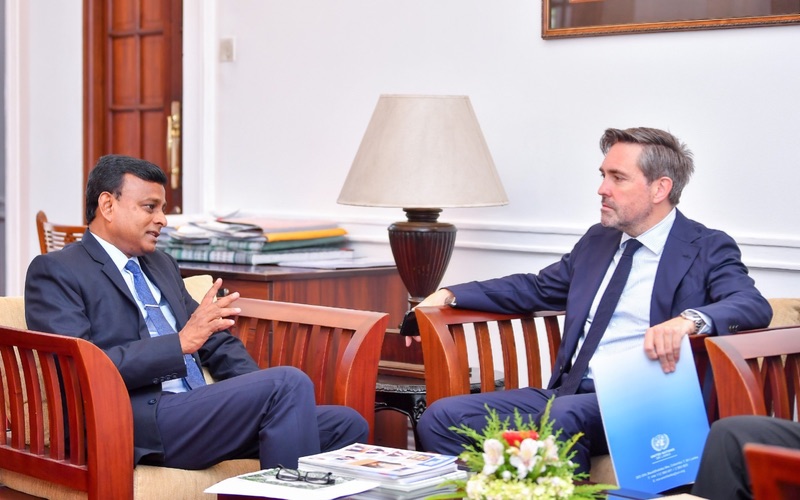
A meeting between UN Resident Coordinator Marc-André Franche and Chief of Staff to the President Prabath Chandrakeerthi was held on Monday (07) morning at the Presidential Secretariat.
Particular attention was given to the Government’s programme to resettle people who lost their homes due to Cyclone Ditwah.
The Government’s programme to address potential disasters that may arise in the future amid El Nino conditions was also discussed. The Chief of Staff to the President briefed the UN Resident Coordinator on the Government’s preparedness and plans to address such challenges.
Mr Franche stated that the United Nations was prepared to provide the necessary assistance to the Government to support the successful implementation of these programmes.
Partnerships and Development Finance Specialist at the United Nations Azam Bakeer Markar and UN Sri Lanka Humanitarian and Resilience Officer Wagisha Perera also participated in the discussion.
[President’s Media Division]
[ Cricbuzz]
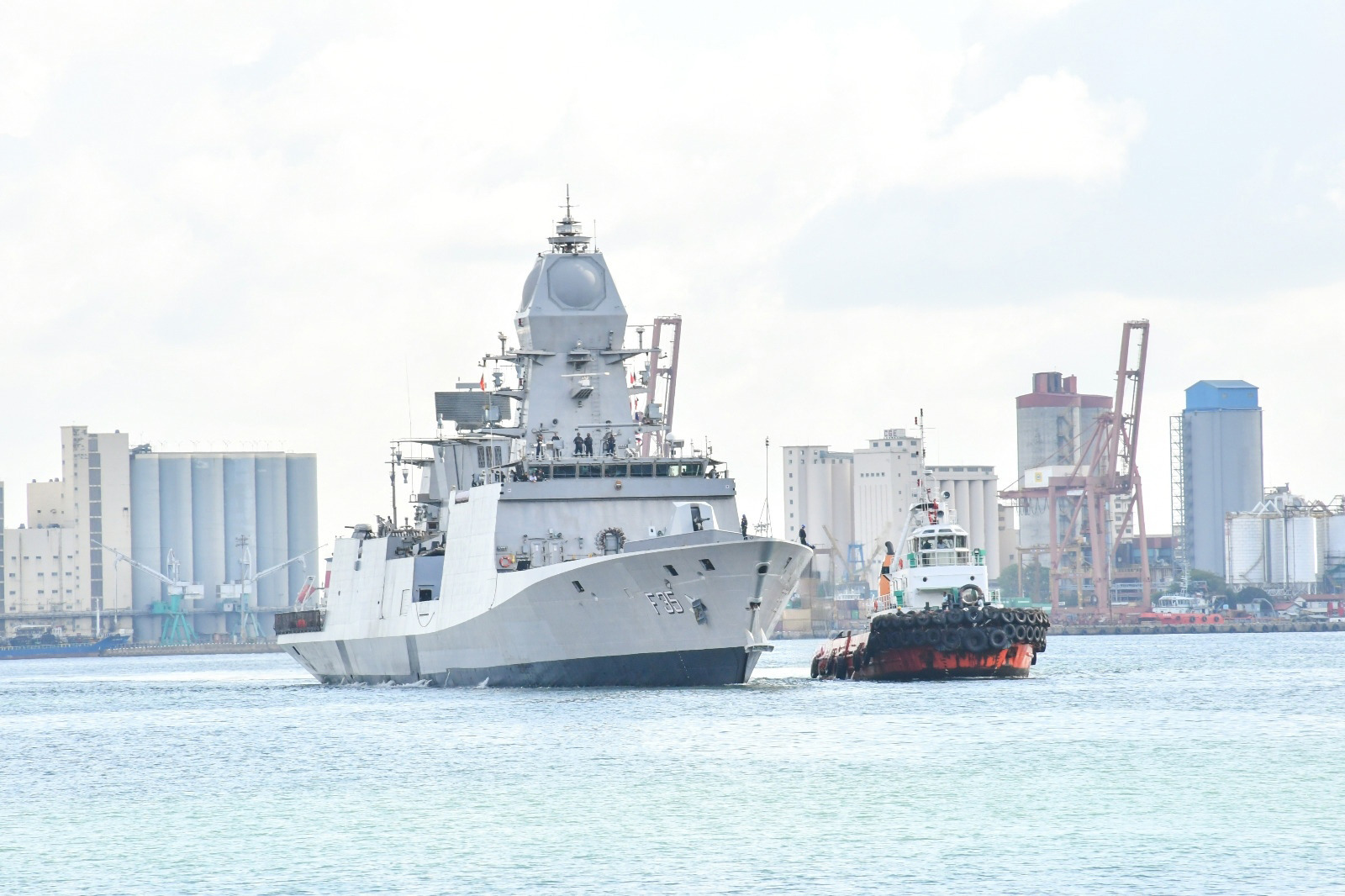
The Indian Naval Ship (INS) Udaygiri arrived at the Port of Colombo on an official visit today, 8 September 2026, where it was received by the Sri Lanka Navy in accordance with time-
honoured naval traditions.
INS Udaygiri is a 149.02m long Frigate, Commanded by Captain Vikas Sood. Meanwhile, the Commanding Officer of the visiting ship is scheduled to call on Commander Western Naval
Area, Rear Admiral Harsha De Silva at the Western Naval Command Headquarters.
Captain Sood served as the Defence Adviser at the Indian High Commission in Sri Lanka from July 2020 to October 2023.
During their stay in the island, the crew of INS Udaygiri will participate in several goodwill events organized by the Sri Lanka Navy to enhance camaraderie between the two forces.
The visiting personnel are also scheduled to visit prominent tourist and cultural locations across the island.
Additionally, Sri Lanka Navy personnel are expected to visit the ship for capability observation and knowledge sharing, and will conduct onboard training during its stay.

UN Delegation Meets Chief of Staff to the President

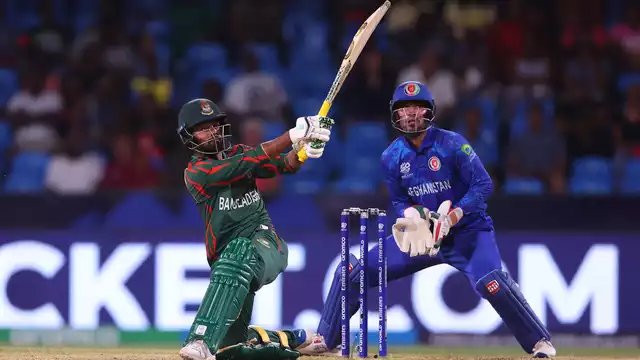
Afghanistan to host Zimbabwe, Bangladesh in ODI tri-series

Sandhu’s 6 for 7 seals Pakistan’s semi-final spot

INS Udaygiri makes port call in Colombo

Showers in the Uva, Central and Eastern provinces and in Polonnaruwa district

22A: Exclusion of 8 petitions questioned, action filed against SC Registrar, others

‘Dates have the highest sugar content to fight Coronavirus’

Sunday Island 27 December – Headlines

#SundayIsland 17th December – Headlines

Sunday Island – 28th March

Sunday Island Headlines – 21 March

Sunday Island – 21st February – Headlines
-

 News6 days ago
Denied of promotion to SC despite vacancies, justice Gurusinghe retires
-

 Latest News6 days ago
Grade 5 scholarship exam results released
-

 News6 days ago
22A: SC urged to suspend hearing, appoint full bench
-

 Midweek Review7 days ago
The local and global dynamics of Sri Lanka’s 22nd Amendment
-
 News4 days ago
Namal remanded until Sept. 18 over Airbus deal investigation
-

 Latest News3 days ago
Tharanga creates history with Diamond League crown in Brussels
-
 News6 days ago
Govt. seeks NATO assistance
-

 News7 days ago
40 professional organisations and TU oppose proposed 22A