
Features
The Premadasa years:how a new leader mobilized the energies of a nation

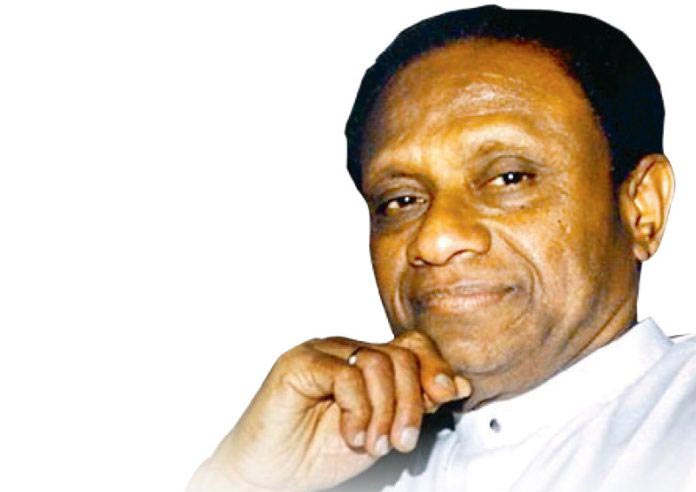
Premadasa’s love of the arts drew him to resuscitate the old cultural theatre of Sri Lanka. The centre was the Tower Hall at Maradana. He rescued, too, the old and now feeble artistes, who had sung and danced their way into the hearts of the people since the 1920s. He gave many of them, like Lakshmi Bhai, Romulus Master and Mohideen Baig, a new lease of life. He brought them back on to center stage and into the limelight, after many years spent in the shadows. He enabled the ‘stars’ to come out again after many years, stiff but erect, to centre stage where they belted out their patriotic songs. Several of them still sang full of verve and true to tone and melody.
Premadasa clearly understood that music and dance appealed to people. He gave the Tower Hall ‘stars’ an important place in the Gam Udawa ceremonies.
Premadasa played a leading role in the 1977 election which J R Jayewardene won with a record five-sixth majority. He canvassed throughout the country, spending many days and night on the campaign trail. His deadly invective against the misdeeds of the United Front (Sirimavo’s Administration) drew vast crowds. Seven years in the opposition had been an exacting crucible. He had always been deeply aware of the inner dynamics of mass audiences. With his earthly anecdotes and devastating wit, he derided his opponents and rallied enthusiastic crowds around the UNP.
J R Jayewardene chose Premadasa for the post of prime minister. The choice provided J R with the ‘balance’ which the UNP needed to change the conventional view of the party as one representing the elites, the mercantile interests and the Western-educated. With his popular acceptance as a ‘man of the masses’ with his national dress and his simple lifestyle, his totally indigenous background, and his rapport with the Sangha, the Sinhala literati and the man in the street, Premadasa was the perfect counterpoise to J R.
Although now the post of prime minister had become only nominal and constitutionally powerless, this did not deter Premadasa from assuming all of the roles and status that the post had earlier possessed. A lesser man would have been inhibited with a post shorn of the customary powers. But to Premadasa, it was a further challenge to be addressed. He followed a simple strategy. It was to utilize all the space he perceived he had, until he touched the boundaries of someone else’s territory. It was a bold and imaginative approach to carving out a role and function for a new position. After all, there were no accepted norms for what a prime minister did in an executive presidential set-up.
There were two important factors that helped him in establishing his new role. The first was clearly the implicit trust that J R Jayewardene had in him. J R provided him with a great deal of flexibility of movement. This faith and trust was fully reciprocated by Premadasa. He was the perfect second-in-command; the deputy who would take infinite pains to give the head of state all the respect and regard that that position deserved. He was exemplary in doing this freely and enthusiastically.
J R fully appreciated this, and the bond between the two men was always close. Only towards the end of J R’s term as president, after the signing of the Indo-Sri Lanka Accord, while Premadasa was out of the country, did the relationship show signs of strain.
The second factor that assisted Premadasa to expand his role of prime minister was that the position of prime minister still had attached to it many of the perquisites of office of the former holder. This included the prime minister’s official residence, the graceful Temple Trees in Kollupitiya, which the family now moved into, and the ‘The Lodge’ in Nuwara Eliya. Premadasa also established an imposing new prime ministerial office at ‘Sirimathipaya’, No 58 on Sir Ernest de Silva Mawatha (Road), one of the stately homes of Colombo 7, which had been acquired by the previous government under the Ceiling on Houses Law and given to the department of education. With Eardley Goonewardene, his then secretary, Premadasa spent much time and effort in transforming this building into an impressive and efficient secretariat. He had always believed that the work environment must be conducive for successful results.
For Premadasa, cost was not to be a constraint in this area. His offices were not only to be functionally efficient. He had a keen eye for harmony and balance. And over time, these offices like the presidential secretariat today, acquired a special grace and lustre. If at all he could be faulted in this area it was for over elaboration and a ceaseless drive for further ‘improvement’ which sometimes resulted in grotesque decoration, as in his Flower Road office.
He would often act quite contrarily to the views of the new breed of architects he consulted, who, influenced by their mentor Geoffrey Bawa, would stress authenticity and simplicity. For Temple Trees and for Sirimathipaya, Premadasa personally chose the furniture, so that it blended with the character of the buildings. He looked for an indigenous, and if possible, antique style. He took great pains to recover from the ‘estate’ bungalows in the up-country several beautiful pieces in ebony and tamarind, which had once graced the drawing rooms of the white ‘periya dorais’. (big bosses)
This furniture had moved over time to the backs of the estate bungalows. Premadasa had these often broken pieces reconditioned, and placed in the official residences. Unfortunately many of these pieces went missing with the movement of the original occupant and appeared to be replaced by less expensive ‘fake antiques’ as in the present state Guest House Visumpaya, the former ‘Acland House’ of the Colombo Commercial Company.
Premadasa was attracted by the people’s need for housing. He had experienced at close hand the squalor of the urban slums. But the situation in the village was no different and a far cry from the conventional picture of the idyllic village in the mind of the urban rich. The need was acute. Literally, millions of people were living in sub-standard housing.
Premadasa began by building a powerful organization for conceptualizing, articulating and implementing a massive house-building program. Initially, it was fully supported by the state but with lessons learnt along the way, he introduced several innovations which brought in greater people’s participation, some private sector involvement and less state expenditure.
He realized that to capture the nation’s imagination, he had to dramatize what was hitherto a mundane and peripheral subject. He had to transform the job of constructing houses of brick and stone, into something primary and compelling. So Premadasa adopted the word ‘shelter’ and invested it with an almost spiritual quality. The home, the family, the awakened village (Gam Udawa), were all to be integral parts of the new, better-housed society he saw being created.
He got together a team of first-class planners and administrators – Dustan Jayawardena, R Paskaralingam, Susil Sirivardana, and W D Ailapperuma – and motivated the team to deliver the goods. His targets were always high, almost unachievable to begin with – 100,000 houses in the first five years, and a million houses in the second five-year term. He broke it down into so much per year and so many per electorate and set about it with a vengeance involving the local politicians in a socially productive adventure.
Premadasa never took ‘no’ for an answer. His personal involvement in the effort was immense. He looked at every aspect of the process. From articulating his vision, to research in low-cost techniques, supplies management – he created the Building Materials Corporation and brought in private sector dynamism by recruiting Ajantha Wijesena – to fund-raising for the Sevana (Shelter) Fund, and to monitoring very regularly progress on the ambitious targets he set, at the operations room in the department of housing.
He travelled incessantly by car across the length and breadth of the country. Hundreds of Udagam (reawakened villages) were born with lyrical new names. Arunodagama (the first light of dawn); Yovungama (village for youth); Ekamuthugama (village of unity) and so on. He brought the entire population of the area together for the formal opening ceremony and the personal, very often, handing-over of houses and keys. His Gam Udawa ‘openings’ became regular, monthly affair. The ceremonies were elaborate. The members of parliament of the district, the Sangha in large numbers, and the Tower Hall artistes from Colombo, all joined in the celebrations.
Premadasa knew that ceremonies were an important aspect of village life. The Gam Udawa function provided entertainment and spice in the normally uneventful village scene. It also provided a splendid opportunity of communicating government policies and plans to the people. He made use of these functions for reflecting on a wide variety of national issues. As prime minister, and later, as president, he made use of these many opportunities of public speaking to make important policy announcements.
The most dramatic of these was perhaps his call to the former and late prime minister of India, Rajiv Gandhi, to recall the IPKF (Indian Peace Keeping Force) from Sri Lanka, made at a temple ceremony in Battaramulla, outside Colombo, in June 1989.
The Udagama (Reawakened Village) was a fully functional, integrated community, complete with houses, a school, pipe-borne water, home gardens, a post office, health facilities, and a temple, kovil or church.
Each year in June, for one week beginning with his birthday which fell on the 24th Premadasa organized a national Gam Udawa, which brought in literally a million people for a celebration staged in some distant part of the country. It had the effect of bringing the world to the doorstep of the village, and the rural people responded by coming in large numbers. Premadasa gave these annual Gam Udawa’s an attention which was extraordinary.
Planning for the next year would start 12 months ahead. Many ministries and departments would be co-opted mostly by more than gentle persuasion. I was Chairman and CEO of Air Lanka Ltd after I came back from London in 1989, and he was then the president of Sri Lanka but his interest in the Gam Udawa that year was so great that he wanted me to do an Air Lanka stall in Mahiyangana where the Gam Udawa was being held.
It meant a lot of work. Building a model of a life-size Lockheed Tristar aircraft and cutting it in half so that passengers could mount the stairway and be strapped to their seats by a pretty Air Lanka stewardess. It was all make believe but Premadasa surmised that it would give the villager an idea of what it was like once you were up in the air. Up to then all that they had seen was a speck in the sky moving at great speed towards the east in the morning and back in the evening.
All government agencies with work to do performed at peak efficiency during the period. So, roads would be repaired, bridges and culverts strengthened, government buildings painted, and everything for miles around, spruced up. It was as if the beam of a searchlight had been focused for a while on some dark corner. The private sector would also be brought in and persuaded to open up new industrial units like the garment factories in the hinterland.
By 1988, since Premadasa continued as prime minister after the Referendum of 1982 which substituted for the general elections, he had conducted 10 such great national Gam Udawas. The national show was inaugurated by the president and different ministerial colleagues were chief guests on other days. The opening ceremony itself was akin to a religious experience with a collective recital of the Gam Udawa oath. Premadasa himself usually spent the entire week in the village. His purpose in holding this annual festival, was as he put it, to empower the poor and the weak.
He was undeterred by the criticisms of those who said that the expenditure was wasteful. In his view the work that was done, repairing roads, bridges, and so on, was anyway the duty of departments and ministries. Moreover, what was built for the Gam Udawa remained as permanent assets to be used by the local community. Overall, it was an occasion for national togetherness, where the great rubbed shoulders with the masses which generated an esprit de corps between different arms of the government
In 1980, with the housing program in full steam and with his concept of shelter fully fleshed out, Premadasa took his idea of ‘Homes for the Homeless of the World’ to the international stage.
It was a propitious beginning for an idea that became a world issue with the acceptance by the United Nations of an International Year of Shelter (IYS) in 1987. It began with Premadasa’s address that year to the 35th session of the General Assembly of the United Nations. It was his first appearance on the foremost international stage, and he wanted it to be something which would remembered and leave a lasting mark.
As usual, his preparation for the task was thorough and exacting. There was the content of the address to being with. It had to deal with both global and national issues; it had to reflect his own special concerns — the gap between the rich and the poor, globally and nationally — his holistic view of development (not only material goods, but more values as well), and his particular experience in housing. There should be also something distinctly Eastern and Sri Lankan — a Pali stanza, a blessing to the entire world.
I began work on the speech at least three months before the scheduled date. I opened a special file which I named `Anatomy of a Speech’ to record the tremendous amount of work which went into the 20-minutes event in New York late in September that year. There was also the question of the timing of the speaking slot. To be most effective and to achieve maximum coverage, it had to be delivered at mid-rooming. Not too early, after 10 am when the General Assembly began and the chamber was still filling up. Not too close to the lunch break, when members were moving out to the lounges, Ben Fonseka, who was our permanent representative at the time, managed to secure the best slot.
The speech was to be on Monday morning. We arrived in New York on Saturday and on the day before the speech, Premadasa went down to look over the arrangements in the Chamber. He even tested the rostrum for height. It was not quite right and a little too high for the short man he was. He thought about a little fabricated stool which would give him the required height but where in this first city of the world would you find a carpenter who would work on a Sunday.
The speech itself was a great success, strongly delivered, full of resonance and rich in substance. It ended as he had wished with a powerful and moving Pali benediction so familiar to Sri Lankans and Buddhists the world over.
Devo vassatu Kalena
Sasse sampatthhi he to cha
Pito bhavatu lo ko cha
Raja bhavatu Dhammiko
(May the rains fall in due season; may the good earth be bounteous; may all being in this world be blessed; and may the rulers be just.)
The distinguished Shirley Amerasinghe, veteran of many, usually boring General Assembly interventions, and at the time chairing the Law of the Sea Conference, came up to Premadasa in the Delegates Lounge where we gathered later and complimented him on the speech in his home-spun Sinhala, “Bohoma shoke kattawak ,Sir (A very fine speech, Sir).”
(Excerpted from Rendering Unto Caesar, by Bradman Weerakoon)


Further to my earlier letter titled, “Psychology of Greed and Philosophy for a New World Order” (The Island 26.11.2025) it may not be far-fetched to say that the cause of the devastating cyclones that hit Sri Lanka and Indonesia last week could be traced back to human greed. Cyclones of this magnitude are said to be unusual in the equatorial region but, according to experts, the raised sea surface temperatures created the conditions for their occurrence. This is directly due to global warming which is caused by excessive emission of Greenhouse gases due to burning of fossil fuels and other activities. These activities cannot be brought under control as the rich, greedy Western powers do not want to abide by the terms and conditions agreed upon at the Paris Agreement of 2015, as was seen at the COP30 meeting in Brazil recently. Is there hope for third world countries? This is why the Global South must develop a New World Order. For this purpose, the proposed contentment/sufficiency philosophy based on morals like dhana, seela, bhavana, may provide the necessary foundation.
Further, such a philosophy need not be parochial and isolationist. It may not be necessary to adopt systems that existed in the past that suited the times but develop a system that would be practical and also pragmatic in the context of the modern world.
It must be reiterated that without controlling the force of collective greed the present destructive socioeconomic system cannot be changed. Hence the need for a philosophy that incorporates the means of controlling greed. Dhana, seela, bhavana may suit Sri Lanka and most of the East which, as mentioned in my earlier letter, share a similar philosophical heritage. The rest of the world also may have to adopt a contentment / sufficiency philosophy with strong and effective tenets that suit their culture, to bring under control the evil of greed. If not, there is no hope for the existence of the world. Global warming will destroy it with cyclones, forest fires, droughts, floods, crop failure and famine.
Leading economists had commented on the damaging effect of greed on the economy while philosophers, ancient as well as modern, had spoken about its degenerating influence on the inborn human morals. Ancient philosophers like Plato, Aristotle, and Epicurus all spoke about greed, viewing it as a destructive force that hindered a good life. They believed greed was rooted in personal immorality and prevented individuals from achieving true happiness by focusing on endless material accumulation rather than the limited wealth needed for natural needs.
Jeffry Sachs argues that greed is a destructive force that undermines social and environmental well-being, citing it as a major driver of climate change and economic inequality, referencing the ideas of Adam Smith, John Maynard Keynes, etc. Joseph Stiglitz, a Nobel Laureate economist, has criticised neoliberal ideology in similar terms.
In my earlier letter, I have discussed how contentment / sufficiency philosophy could effectively transform the socioeconomic system to one that prioritises collective well-being and sufficiency over rampant consumerism and greed, potentially leading to more sustainable economic models.
Obviously, these changes cannot be brought about without a change of attitude, morals and commitment of the rulers and the government. This cannot be achieved without a mass movement; people must realise the need for change. Such a movement would need leadership. In this regard a critical responsibility lies with the educated middle class. It is they who must give leadership to the movement that would have the goal of getting rid of the evil of excessive greed. It is they who must educate the entire nation about the need for these changes.
The middle class would be the vanguard of change. It is the middle class that has the capacity to bring about change. It is the middle class that perform as a vibrant component of the society for political stability. It is the group which supplies political philosophy, ideology, movements, guidance and leaders for the rest of the society. The poor, who are the majority, need the political wisdom and leadership of the middle class.
Further, the middle class is the font of culture, creativity, literature, art and music. Thinkers, writers, artistes, musicians are fostered by the middle class. Cultural activity of the middle class could pervade down to the poor groups and have an effect on their cultural development as well. Similarly, education of a country depends on how educated the middle class is. It is the responsibility of the middle class to provide education to the poor people.
Most importantly, the morals of a society are imbued in the middle class and it is they who foster them. As morals are crucial in the battle against greed, the middle class assume greater credentials to spearhead the movement against greed and bring in sustainable development and growth. Contentment sufficiency philosophy, based on morals, would form the strong foundation necessary for achieving the goal of a new world order. Thus, it is seen that the middle class is eminently suitable to be the vehicle that could adopt and disseminate a contentment/ sufficiency philosophy and lead the movement against the evil neo-liberal system that is destroying the world.
The Global South, which comprises the majority of the world’s poor, may have to realise, before it is too late, that it is they who are the most vulnerable to climate change though they may not be the greatest offenders who cause it. Yet, if they are to survive, they must get together and help each other to achieve self-sufficiency in the essential needs, like food, energy and medicine. Trade must not be via exploitative and weaponised currency but by means of a barter system, based on purchase power parity (PPP). The union of these countries could be an expansion of organisations,like BRICS, ASEAN, SCO, AU, etc., which already have the trade and financial arrangements though in a rudimentary state but with great potential, if only they could sort out their bilateral issues and work towards a Global South which is neither rich nor poor but sufficient, contented and safe, a lesson to the Global North. China, India and South Africa must play the lead role in this venture. They would need the support of a strong philosophy that has the capacity to fight the evil of greed, for they cannot achieve these goals if fettered by greed. The proposed contentment / sufficient philosophy would form a strong philosophical foundation for the Global South, to unite, fight greed and develop a new world order which, above all, will make it safe for life.
by Prof. N. A. de S. Amaratunga
PHD, DSc, DLITT

When Senior biodiversity scientist Vimukthi Weeratunga speaks of Sinharaja, his voice carries the weight of four decades spent beneath its dripping emerald canopy. To him, Sri Lanka’s last great rainforest is not merely a protected area—it is “a cathedral of life,” a sanctuary where evolution whispers through every leaf, stream and shadow.
“Sinharaja is the largest and most precious tropical rainforest we have,” Weeratunga said.
“Sixty to seventy percent of the plants and animals found here exist nowhere else on Earth. This forest is the heart of endemic biodiversity in Sri Lanka.”
A Magnet for the World’s Naturalists
Sinharaja’s allure lies not in charismatic megafauna but in the world of the small and extraordinary—tiny, jewel-toned frogs; iridescent butterflies; shy serpents; and canopy birds whose songs drift like threads of silver through the mist.
“You must walk slowly in Sinharaja,” Weeratunga smiled.
“Its beauty reveals itself only to those who are patient and observant.”
For global travellers fascinated by natural history, Sinharaja remains a top draw. Nearly 90% of nature-focused visitors to Sri Lanka place Sinharaja at the top of their itinerary, generating a deep economic pulse for surrounding communities.
A Forest Etched in History
Centuries before conservationists championed its cause, Sinharaja captured the imagination of explorers and scholars. British and Dutch botanists, venturing into the island’s interior from the 17th century onward, mapped streams, documented rare orchids, and penned some of the earliest scientific records of Sri Lanka’s natural heritage.

Smallest cat
These chronicles now form the backbone of our understanding of the island’s unique ecology.
The Great Forest War: Saving Sinharaja
But Sinharaja nearly vanished.
In the 1970s, the government—guided by a timber-driven development mindset—greenlit a Canadian-assisted logging project. Forests around Sinharaja fell first; then, the chainsaws approached the ancient core.
“There was very little scientific data to counter the felling,” Weeratunga recalled.
-
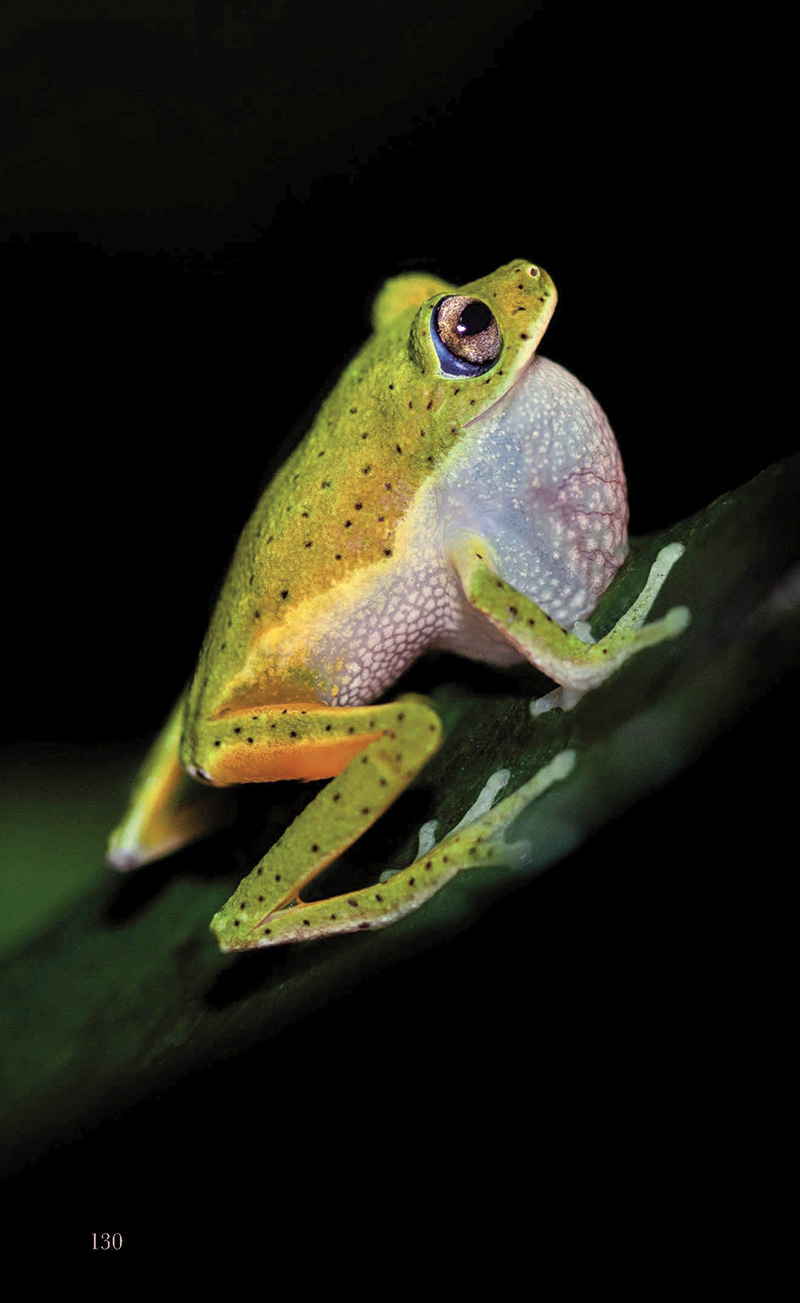
- Poppie’s shrub frog
-

- Endemic Scimitar babblers
-

- Blue Magpie
“But people knew instinctively this was a national treasure.”
The public responded with one of the greatest environmental uprisings in Sri Lankan history. Conservation icons Thilo Hoffmann and Neluwe Gunananda Thera led a national movement. After seven tense years, the new government of 1977 halted the project.
What followed was a scientific renaissance. Leading researchers—including Prof. Savithri Gunathilake and Prof. Nimal Gunathilaka, Prof. Sarath Kottagama, and others—descended into the depths of Sinharaja, documenting every possible facet of its biodiversity.

Thilak
“Those studies paved the way for Sinharaja to become Sri Lanka’s very first natural World Heritage Site,” Weeratunga noted proudly.
-

- Vimukthi
-

- Nadika
-

- Janaka
A Book Woven From 30 Years of Field Wisdom
For Weeratunga, Sinharaja is more than academic terrain—it is home. Since joining the Forest Department in 1985 as a young researcher, he has trekked, photographed, documented and celebrated its secrets.
Now, decades later, he joins Dr. Thilak Jayaratne, the late Dr. Janaka Gallangoda, and Nadika Hapuarachchi in producing, what he calls, the most comprehensive book ever written on Sinharaja.
“This will be the first major publication on Sinharaja since the early 1980s,” he said.
“It covers ecology, history, flora, fauna—and includes rare photographs taken over nearly 30 years.”
Some images were captured after weeks of waiting. Others after years—like the mysterious mass-flowering episodes where clusters of forest giants bloom in synchrony, or the delicate jewels of the understory: tiny jumping spiders, elusive amphibians, and canopy dwellers glimpsed only once in a lifetime.
The book even includes underwater photography from Sinharaja’s crystal-clear streams—worlds unseen by most visitors.
A Tribute to a Departed Friend
Halfway through the project, tragedy struck: co-author Dr. Janaka Gallangoda passed away.
“We stopped the project for a while,” Weeratunga said quietly.
“But Dr. Thilak Jayaratne reminded us that Janaka lived for this forest. So we completed the book in his memory. One of our authors now watches over Sinharaja from above.”

Jumping spide
An Invitation to the Public
A special exhibition, showcasing highlights from the book, will be held on 13–14 December, 2025, in Colombo.
“We cannot show Sinharaja in one gallery,” he laughed.
“But we can show a single drop of its beauty—enough to spark curiosity.”
A Forest That Must Endure
What makes the book special, he emphasises, is its accessibility.
“We wrote it in simple, clear language—no heavy jargon—so that everyone can understand why Sinharaja is irreplaceable,” Weeratunga said.
“If people know its value, they will protect it.”
To him, Sinharaja is more than a rainforest.
It is Sri Lanka’s living heritage.
A sanctuary of evolution.
A sacred, breathing cathedral that must endure for generations to come.
By Ifham Nizam

Leaked RTI Files Reveal Conflicting Approvals, Missing Assessments, and Silent Officials
“This Was Not Mismanagement — It Was a Structured Failure”— CEJ’s Dilena Pathragoda
An investigation, backed by newly released Right to Information (RTI) files, exposes a troubling sequence of events in which multiple state agencies appear to have enabled — or quietly tolerated — unauthorised road construction inside the Knuckles Conservation Forest, a UNESCO World Heritage site.
At the centre of the unfolding scandal is a trail of contradictory letters, unexplained delays, unsigned inspection reports, and sudden reversals by key government offices.
“What these documents show is not confusion or oversight. It is a structured failure,” said Dilena Pathragoda, Executive Director of the Centre for Environmental Justice (CEJ), who has been analysing the leaked records.
“Officials knew the legal requirements. They ignored them. They knew the ecological risks. They dismissed them. The evidence points to a deliberate weakening of safeguards meant to protect one of Sri Lanka’s most fragile ecosystems.”
A Paper Trail of Contradictions
RTI disclosures obtained by activists reveal:
Approvals issued before mandatory field inspections were carried out
Three departments claiming they “did not authorise” the same section of the road
A suspiciously backdated letter clearing a segment already under construction
Internal memos flagging “missing evaluation data” that were never addressed
“No-objection” notes do not hold any legal weight for work inside protected areas, experts say.
One senior officer’s signature appears on two letters with opposing conclusions, sent just three weeks apart — a discrepancy that has raised serious questions within the conservation community.
“This is the kind of documentation that usually surfaces only after damage is done,” Pathragoda said. “It shows a chain of administrative behaviour designed to delay scrutiny until the bulldozers moved in.”
The Silence of the Agencies
Perhaps, more alarming is the behaviour of the regulatory bodies.
Multiple departments — including those legally mandated to halt unauthorised work — acknowledged concerns in internal exchanges but issued no public warnings, took no enforcement action, and allowed machinery to continue operating.
“That silence is the real red flag,” Pathragoda noted.
“Silence is rarely accidental in cases like this. Silence protects someone.”
On the Ground: Damage Already Visible
Independent field teams report:
Fresh erosion scars on steep slopes
Sediment-laden water in downstream streams
Disturbed buffer zones
Workers claiming that they were instructed to “complete the section quickly”
Satellite images from the past two months show accelerated clearing around the contested route.
Environmental experts warn that once the hydrology of the Knuckles slopes is altered, the consequences could be irreversible.
CEJ: “Name Every Official Involved”
CEJ is preparing a formal complaint demanding a multi-agency investigation.
Pathragoda insists that responsibility must be traced along the entire chain — from field officers to approving authorities.
“Every signature, every omission, every backdated approval must be examined,” she said.
“If laws were violated, then prosecutions must follow. Not warnings. Not transfers. Prosecutions.”
A Scandal Still Unfolding
More RTI documents are expected to come out next week, including internal audits and communication logs that could deepen the crisis for several agencies.
As the paper trail widens, one thing is increasingly clear: what happened in Knuckles is not an isolated act — it is an institutional failure, executed quietly, and revealed only because citizens insisted on answers.
by Ifham Nizam

Government assures University community of support to rebuild Peradeniya stronger and safer

Thousands flee Thai-Cambodia border after deadly clashes

Henry, Santner, Nathan Smith ruled out of rest of West Indies Test series

Level III landslide early warnings issued to the Districts of Kandy, Kegalle, Kurunegala and Matale extended till 1600 hrs on Tuesday [09]

President chairs Nuwara Eliya District Special Coordinating Committee Meeting

Jetstar to launch Australia’s only low-cost direct flights to Sri Lanka, with fares from just $315^

‘Dates have the highest sugar content to fight Coronavirus’

Sunday Island 27 December – Headlines

#SundayIsland 17th December – Headlines

Sunday Island – 28th March

Sunday Island Headlines – 21 March

Sunday Island – 21st February – Headlines
-
News6 days ago
Lunuwila tragedy not caused by those videoing Bell 212: SLAF
-

 News15 hours ago
Over 35,000 drug offenders nabbed in 36 days
-
 News5 days ago
Level III landslide early warning continue to be in force in the districts of Kandy, Kegalle, Kurunegala and Matale
-
 Latest News7 days ago
Level III landslide early warnings issued to the districts of Badulla, Kandy, Kegalle, Kurunegala, Matale and Nuwara-Eliya
-
 Features7 days ago
Ditwah: An unusual cyclone
-
 Business3 days ago
LOLC Finance Factoring powers business growth
-

 News3 days ago
CPC delegation meets JVP for talks on disaster response
-
 News3 days ago
A 6th Year Accolade: The Eternal Opulence of My Fair Lady