
News
Saudi Ambassador urges graduates not to think graduation as the end of academic chapter, but beginning of lifelong journey of growth and innovation


Saudi Arabian Ambassador Khalid bin Hamoud Al Kahtani said that graduation is not just the conclusion of academic chapter but the beginning of great responsibility and a new sense of hope and a life long journey of growth and innovation.
Delivering convocation address at South Eastern University recently, he said:Today is a special day in our life when we come together to celebrate years of hard work, dedication and learning as well as to acknowledge and appreciate the successful students and wish them a future filled with success and joy. Graduation is not just conclusion of our academic chapter but the beginning of great responsibility and a new sense of hope and a life long journey of growth and innovation.
This shining moment is the resolve to feel the hard work, the support of family and the commitment of lecturers. Saudi Arabia’s national road map for future place a strong emphasis on education and development of human capital. We strongly believe that most valuable investment is in minds and human capitalism for the foundation of a new successful, sustainable future. Today you are honoured with the crown of knowledge, so rise to meet the responsibility it preaches, uphold the value of integrity, loyalty and responsibility. You are an ambassador of knowledge – great in your field, and a source of pride to your family and community. The road is on your way of innovation and your country looks forward to your contribution.
I would like to take this opportunity to extend my heartfelt thanks and appreciation to the administration of South Eastern University, its team and lecturers for their academic guidance and moral support to their students as well as for their outstanding role in advancing education. I would also like to express my heartfelt congratulations to the parents here to have supported their children towards this remarkable achievement. They are true parents! We look forward to greater educational cooperation between Saudi Arabia and Sri Lanka in the future.”
dereliction of duty on the part of the relevant institution, and these authorities must be held accountable for the same.
The BASL is deeply concerned on the inadequate implementation of the provisions of the `Prohibition of Ragging and Other Forms of Violence in Educational Institutions Act No. 20 of 1998’, by Law Enforcement Authorities, against perpetrators of ragging and violence in these Institutions. The BASL is also mindful of the applicability of the provisions of the ‘Convention against Torture and Other Cruel, Inhuman or Degrading Treatment or Punishment Act No. 22 of 1994’ and the relevant provisions of the Penal Code.
The BASL urges all responsible authorities in Universities and other High Educational Institutions to take necessary preemptive action and incorporate a zero-tolerance policy on unlawful ragging.
The BASL will closely monitor the case filed by the Samanalawewa Police in the Magistrate’s Court of Balangoda and urges the authorities to take all necessary legal measures to ensure the rule of law and the due enforcement of the law. The BASL is also considering seeking intervention of the Courts of Law to ensure better implementation and enforcement of the applicable Law.”
Meanwhile Sabaragamuwa VC M. Sunil Shantha has appointed a committee consisting of Senior Prof. A.A.Y. Amarasinghe (Chairman) Prof. Kapila Rathnayaka and Attorney-at-Law Y.S. Chandrasekara to investigate the incident.
From M.A. Kaleel, Kalmunai Corr.



Latest News
Payment of Compensation to the people who have lost their cultivable lands in implementing the Uma Oya Multipurpose Development Project

Approval has been granted at the Cabinet meeting held on 27-06-2012 to provide cultivable agricultural lands from the lower Uma Oya valley to 276 farming families in Hali-Ela, Walimada, and Uva Paranagama Divisional Secretariat Divisions who have lost their cultivable lands due to the acquisition of lands for the
Uma Oya Multipurpose Development Project.
However, the aforementioned proposal could not be implemented due to the encroachment of a large portion of the identified lands by unauthorized persons, heavy forest cover, the threats posed by wild elephants, remoteness from their original settlements, and difficulties in adapting to other environmental conditions and social anomalies.
Accordingly, the Cabinet of Ministers has approved the resolution furnished by the Minister of Agriculture, Livestock, Land, and Irrigation to pay an estimated compensation of Rs. 12 lakhs for each of these 276 farming families, based on the
recommendations submitted by the Cabinet Sub-Committee appointed to provide solutions for the issues arising in the implementation of the Uma Oya Multipurpose Development Project.
Policy approval was granted at the Cabinet meeting held on 07.04.2025 to prepare a draft bill to establish the Chartered Institute of Media Professionals of Sri Lanka in order to accomplish the requirement of a training institution to carry out studies in order to create chartered media professionals and mould intelligent media personalities with skills in order to enhance the quality and standard of the media society.
Clearance of the Attorney General has been received for the final draft prepared by the Legal Draftsman for the purpose.
Accordingly, the Cabinet of Ministers granted approval to the resolution furnished by the Minister of Health and Mass Media to publish the draft bill of Chartered Institute of Media Professionals of Sri Lanka in the Government Gazette Notification and thereafter submit the same for the concurrence of the House.
The Telecommunication Levy Act No. 21 of 2011 has enabled provisions to impose telecommunication levy. The budget 2026 has proposed to introduce amendments for the act including changes imposed from time to time regarding the telecommunication levy.
Accordingly, the Legal Draftsman has formulated a draft bill for
amending the Telecommunication Levy Act No. 21 of 2011 including provisions to extend applicable to envisage all the tax amounts applicable from the year 2015 along with the telecommunication levy existing at present, applicable of taxes on unrecovered revenue (bad debts) and to extend the provisions of that act to cater the telecommunication suppliers.
The Cabinet of Ministers approved the resolution furnished by the President in his capacity as the Minister of Finance, Planning and Economic Development to publish the said draft bill in the Government Gazette Notification and subsequently to submit the same for the concurrence of the House.

Down-and-up tendency continues to stifle share market

More than 1,000 BAIC X55 SUVs hit Sri Lankan roads

Payment of Compensation to the people who have lost their cultivable lands in implementing the Uma Oya Multipurpose Development Project
Draft Bill of the Chartered Institute of Media Professionals of Sri Lanka to be Gazzated
Telecommunication Levy Act No. 21 of 2011 to be amended
Management of State Expenditure during the Energy Crisis

‘Dates have the highest sugar content to fight Coronavirus’

Sunday Island 27 December – Headlines

#SundayIsland 17th December – Headlines

Sunday Island – 28th March

Sunday Island Headlines – 21 March

Sunday Island – 21st February – Headlines
-

 News7 days ago
Senior citizens above 70 years to receive March allowances on Thursday (26)
-

 Features4 days ago
A World Order in Crisis: War, Power, and Resistance
-

 News5 days ago
Energy Minister indicted on corruption charges ahead of no-faith motion against him
-

 News6 days ago
US dodges question on AKD’s claim SL denied permission for military aircraft to land
-

 Business6 days ago
Dialog Unveils Dialog Play Mini with Netflix and Apple TV
-

 News7 days ago
CEB Engineers warn public to be prepared for power cuts after New Year
-

 Sports5 days ago
SLC to hold EGM in April
-
 Latest News6 days ago
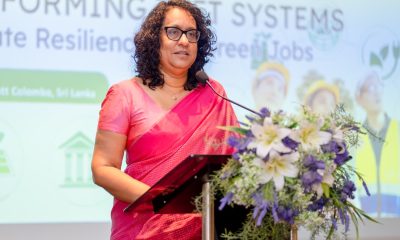
A strong Technical and Vocational Education and Training (TVET) system equips individuals with practical, relevant, and future-oriented skills helping to innovate responsibly towards a greener and sustainable future – PM