
News
Celebrating ‘Our Children’ on Intl Day to End Corporal Punishment

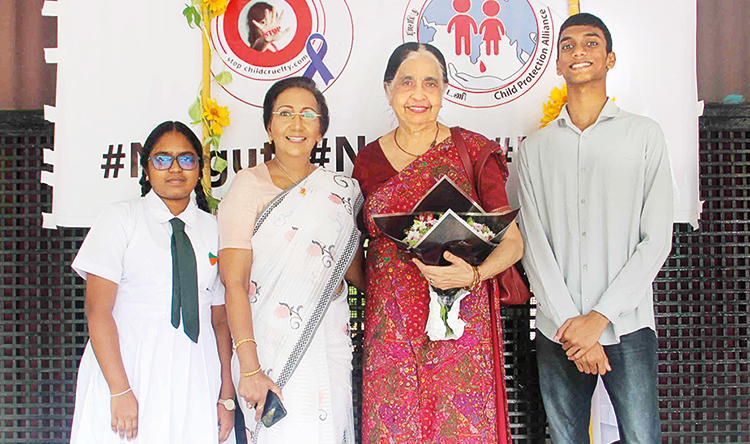
Marking the International Day to End Corporal Punishment, the Stop Child Cruelty Trust (SCC) and the Child Protection Alliance (CPA) organised ‘Our Children’, a compelling advocacy initiative to combat violence against children in Sri Lanka. The event featured an expert forum on child protection strategies and celebrated the winners of the ‘Me Unhurt – Stop Child Abuse’ art competition, amplifying youth voices in the fight for their rights.
In February 2025, the World Health Organisation (WHO) declared that ending corporal punishment was a public health priority. Each year, 1.8 million children worldwide are subjected to corporal punishment. In some countries, violence against children costs up to six times what is invested in health. Countries that have enacted comprehensive prohibitions against corporal punishment are granting children the same protective legal framework against assault as adults.
In March 2025, forty countries made the first-ever joint statement on corporal punishment to the Human Rights Council, declaring that ending corporal punishment is a human rights priority for children. Children have the fundamental right to protection from all forms of violence. This right is essential for their well-being, safety, survival and development. It recognises the severe and lasting consequences of violence against children, not just for the individual child but for society as a whole.
Despite being recognised in 2017 as the sole Pathfinding country in South Asia committed to Sustainable Development Goal (SDG) 16.2 (ending violence against children), Sri Lanka’s efforts have faltered. The National Partnership to End Violence Against Children (NPEVAC), established to drive this agenda, dissolved in 2018. At the 2024 Bogotá Ministerial Conference, the government pledged to enact the Penal Code Reforms Bill to Abolish Corporal Punishment, a long-overdue measure and to implement teacher training programmes by mid-2025. However, legislative delays and inadequate enforcement undermine these commitments.
Speaking at the event, Dr Tush Wickramanayaka, Founder Chairperson of SCC and Co-convener of CPA, shared her disappointment that GOSL was delaying the submission of the Bill in parliament, which was already passed in Cabinet by the previous government on 13/09/2024. “Physical abuse of children is a preventable crime that has been normalised in society. Each day, there are horrendous incidents reported in the media. GOSL has a national and international obligation to fulfil its promises to eradicate this menace towards the dawn of a happier and safer future for the true beneficiaries of the future, our children”, said Dr Wickramanayaka.
Om Prakash Sen Thakuri, Executive Director, Legal Literacy, Nepal, Saranga Disasekara, Actor and Brand Ambassador of #Noguti, Dr Gehan Gunathilake, Commissioner of the Human Rights Commission of Sri Lanka (HRCSL), Rtd DIG Priyantha Jayakody, Prof Sarath Wijesuriya, renowned author and social activist addressed the event.

Latest News
No-confidence motion against Justice Minister should be supported by facts as members’ noise does not establish facts – PM

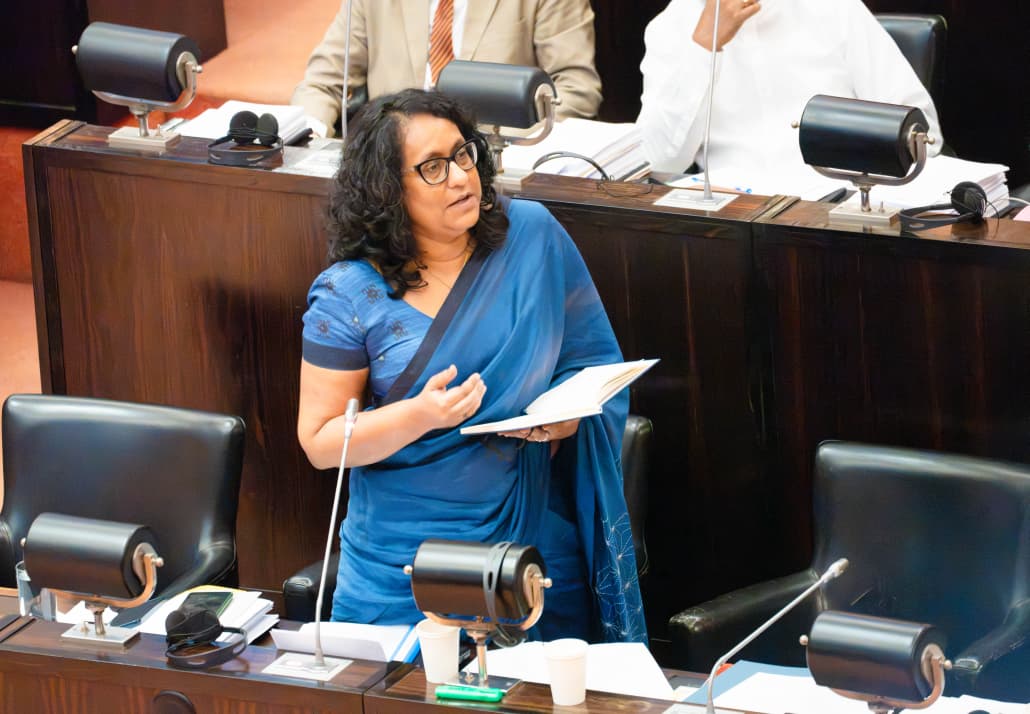
“Our mandate is to establish the rule of law and restore respect and confidence in Sri Lanka’s justice system”
Prime Minister Dr. Harini Amarasuriya made these remarks in Parliament on Friday [July 24] while pparticipating in the parliamentary debate on the no-confidence motion against the Minister of Justice and National Integration, the Prime Minister emphasized that the Opposition had failed to substantiate its allegations with facts and had instead relied on rhetoric and personal attacks.
The Prime Minister further stated,
“There is no doubt that the incident that occurred on 5 and 6 July was tragic, and the loss of life is unacceptable. It is not something that can be accepted or condoned in any way.
Members of the Opposition must establish, through evidence and facts, how exactly the Minister of Justice and National Integration is solely responsible for what happened, and how his conduct before, during and after the incident amounted to a breach of trust. Noise, personal attacks, venom and rhetoric do not establish facts.
What we are hearing today is a distortion of the truth, misrepresentation of facts, half-truths at best, and a deliberate effort to viciously attack a member of the Cabinet. That does not establish the intent of this no-confidence motion.
The Prime Minister further noted that many of the structural deficiencies within the prison system predated the current administration and had remained unresolved for years.
She noted that longstanding vacancies in the prison service had persisted since 2022 but that the present Government had taken steps to address them.
“During the past year, 695 prison guards have been recruited, a further 190 recruitments are underway, and 18 Assistant Superintendents have been appointed. This is the first time since 2022 that these vacancies have begun to be filled.”
The Prime Minister further emphasized that the reforms undertaken to strengthen the Government Analyst’s Department, including filling vacancies, allocating funds for essential equipment, initiating procurement processes, and reviewing procedures to improve efficiency.
Addressing the need to ensure that the numbers of people in the remand are reduced , the Prime Minister stated legal reforms were already in progress, including amendments to the Poisons and Dangerous Drugs Act, which will soon be presented to Parliament. The Prime Minister stated that, “It is not that the Minister has failed to address these issues. Law reform does not happen overnight. It requires due process, and those processes are well underway.”
The Prime Minister also outlined measures taken by the present Minister of justice and national integration to improve prison conditions, including expanding healthcare services for prisoners and prison staff in collaboration with the Ministry of Health, introducing inpatient and specialized medical services, appointing new healthcare personnel, and improving access to treatment.
In addition, she highlighted rehabilitation initiatives aimed at reducing reoffending, including community rehabilitation programmes and vocational training to equip prisoners with employable skills upon release.
Reaffirming the Government’s commitment to comprehensive justice sector reforms, the Prime Minister further stated,
“Our mandate was to establish the rule of law and restore respect and confidence in Sri Lanka’s justice system.”
Prime Minister Dr. Harini Amarasuriya emphasized that the Government inherited a justice system that had been weakened by years of systemic corruption, institutional inefficiencies, and longstanding structural shortcomings. The Prime Minister further stated,
The task of cleaning up such a corrupted system is not easy. This incident is also needed to understand in that particular context of how the prison system was operated in the past It is this corrupted system that the Minister has been entrusted with the responsibility of cleaning up. This involves investigation within the Institution itself. It is not a easy task. This government has undertaken this difficult challenge.
It is very clear that this opposition so far will not be able to establish any facts that support the motion that they have brought forward. This is rhetorical exercises. This is not about justice system. This is another cheap effort by the opposition to get attention and part of a push back against the very reforms the government and the ministry has been undertaken”.
[Prime Minister’s Media Division]
Latest News
Develop a programme to allocate underutilised state land for investment by returning migrant workers – President
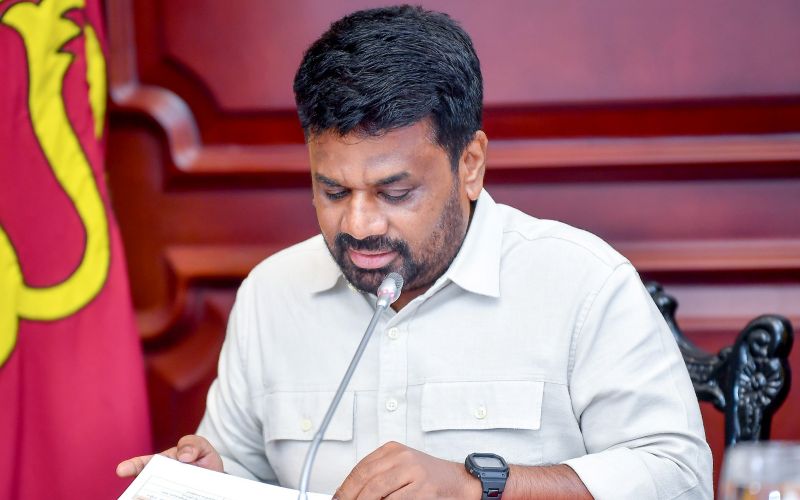
President Anura Kumara Dissanayake has instructed the relevant authorities to formulate a programme to allocate underutilized land, together with the necessary project support services, to Sri Lankan migrant workers returning home upon the completion of their overseas employment.
The President issued these instructions during a discussion held on Friday (24) afternoon at the Presidential Secretariat to review the progress of projects implemented under the 2026 budget allocations for the Ministry of Plantation and Community Infrastructure and to consider the Ministry’s proposals for the 2027 Budget.
The meeting included a comprehensive review of the progress of development projects being implemented by the Plantation Sector, the Community Infrastructure Sector and institutions under the State Plantation Companies operating within the Ministry. Discussions also focused on priorities, funding requirements and planned initiatives for 2027.
The meeting also reviewed key plantation sector initiatives being implemented under capital allocations of Rs. 1,081 million, including the estate land surveying programme, the disease management of coconut, the Kapruka Fund, initiatives to increase coconut production and the Northern Coconut Triangle Programme.
President Dissanayake also assessed the progress of ongoing infrastructure development programmes in the plantation sector. The President emphasised the importance of completing the project to construct 10,000 houses for the Malayagam community within the stipulated time-frame and handing them over to the beneficiaries without delay.
The President further noted that weaknesses in the implementation mechanisms for projects financed through foreign grants and loan assistance had resulted in certain allocated funds remaining underutilised or being returned.
President Dissanayake also reviewed the progress of the relief programme implemented to support the replanting of plantation crops, including tea, coconut and rubber that were damaged by the Ditwah disaster situation.
It was revealed during the discussion that the tea, coconut, rubber, cashew and palmyrah sectors, along with plantation infrastructure development activities, have recorded growth and improved profitability this year compared to the previous year. In particular, six state plantation companies, including Elkaduwa Plantations Limited, Kurunegala Plantations Limited, Chilaw Plantations Limited, Sri Lanka State Plantation Corporation, Janatha Estates Development Board and Kalubowitiyana Tea Factory Limited, are making significant progress in increasing their profitability.
Special attention was also given to crop production and related crop improvement programmes implemented by the Tea Research Institute, research and development activities and initiatives launched to support the replanting of smallholder tea plantations.
It was revealed during the discussion that approximately 60,000 hectares of Sri Lanka’s tea cultivation consists of smallholder tea plantations. Of the Rs. 450.06 million allocated in the 2026 Budget for the replanting of smallholder tea plantations, Rs. 155.07 million has already been utilised.
President Dissanayake also reviewed the progress of the 500 Tea Villages Programme implemented under the Tea Small Holdings Development Authority and instructed officials to expedite its completion by integrating the initiative with other rural development programmes, such as “Prajashakthi”, being implemented at the grassroots level.
The meeting also discussed the programme to revitalise rubber cultivation, including the allocation of Rs. 137 million in the 2026 Budget for the Rubber Research Institute, as well as the progress of rubber replanting initiatives and the challenges encountered during implementation.
In addition, discussions focused on the progress of programmes and research activities aimed at developing the coconut industry, enhancing productivity in coconut plantations, promoting new product development, increasing value addition and improving product quality.
The progress of programmes implemented under the Palmyrah Development Board and the Kithul Development Board to strengthen the palmyrah and kithul industries was also reviewed during the discussion.
It was revealed that Sri Lanka is expected to meet 18,000 metric tonnes of its annual cashew requirement of 25,000 metric tonnes this year, marking a significant increase compared to the previous year. The meeting also discussed the potential to expand cashew cultivation across approximately 15,000 hectares in the Northern and Eastern Provinces.
The progress of ongoing efforts to consolidate institutions within the plantation sector and the implementation of Cabinet decisions relating to non-commercial government-owned institutions were also reviewed. The meeting further discussed the need to update agreements entered into by previous governments when allocating lands to companies. Emphasising the importance of establishing stronger agreements regarding State-owned land allocations, President Dissanayake instructed that a committee be appointed through the Ministry of Finance to examine and address these matters.
The President also instructed officials to explore the possibility of offering courses conducted by the National Institute of Plantation Management through universities, in consultation with relevant higher education institutions.
Among those present were Minister of Plantation and Community Infrastructure Samantha Vidyarathna, Minister of Labour and Deputy Minister of Finance and Planning Anil Jayantha Fernando, Deputy Minister of Plantation and Community Infrastructure Sundaralingam Pradeep, Secretary to the President Dr. Nandika Sanath Kumanayake, Chief of Presidential Staff Prabath Chandrakeerthi, Senior Additional Secretaries to the President Russell Aponso and Kapila Janaka Bandara, Secretary to the Ministry of Finance, Planning and Economic Development Dr .Harshana Suriyapperuma and Secretary to the Ministry of Plantation and Community Infrastructure Gunadasa Samarasinghe. Chairpersons, Director Generals and senior officials of institutions under the Ministry of Plantation and Community Infrastructure also participated in the discussion.
[PMD]
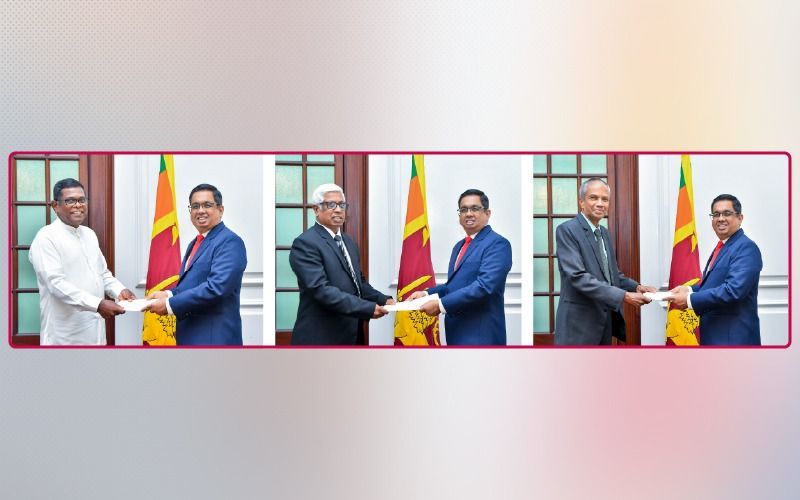
President Anura Kumara Dissanayake has appointed M. K. Saman Sri Ratnayake as the new Chairman and a member of the Delimitation Commission.
M. B. Rohana Pushpakumara and K. Thavalingam have been appointed as the other members of the Commission.
The relevant letters of appointment were presented to them by Secretary to the President Dr Nandika Sanath Kumanayake at the Presidential Secretariat on Friday (24) afternoon .
The appointments have been made to fill the vacancies that arose following the expiry of the terms of office of the members of the Delimitation Commission.
[PMD]

No-confidence motion against Justice Minister should be supported by facts as members’ noise does not establish facts – PM

Develop a programme to allocate underutilised state land for investment by returning migrant workers – President

New Chairman and Members appointed to Delimitation Commission

Kishan, Tilak knocks help India seal the series

Gunaratne 123, Samarawickrama 100* ace 274 chase for 1-1

Savindu, Akeel and Romesh star in Abans Groups’ 8 wicket win

‘Dates have the highest sugar content to fight Coronavirus’

Sunday Island 27 December – Headlines

#SundayIsland 17th December – Headlines

Sunday Island – 28th March

Sunday Island Headlines – 21 March

Sunday Island – 21st February – Headlines
-
 Features7 days ago
Two memorable excerpts from a former SLAF commander’s memoir
-

 Business7 days ago
‘Giving up was never an option’: The fisherman who fought back after losing millions in SL
-

 Life style7 days ago
Taste of the Swiss Alps comes to Colombo
-
 Features7 days ago
Erdoğan’s New Republic
-
 Midweek Review4 days ago
Three high-profile alleged suicides shaping key investigations
-

 News16 hours ago
Fort Magistrate orders arrest of MP Archchuna
-

 News4 days ago
Customs asked to resume probe or face legal action
-

 Editorial16 hours ago
An indictment of all parties