
Foreign News
Child damages €50m Rothko painting in Dutch museum


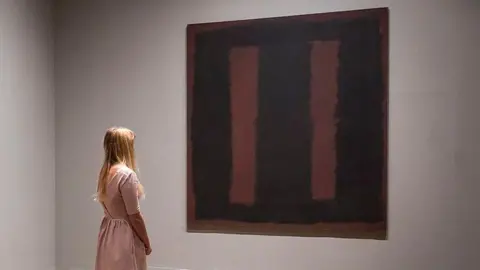
A child has damaged a painting worth millions of pounds by the American artist Mark Rothko at a museum in Rotterdam.
A spokesperson for the Museum Boijmans Van Beuningen said it was considering the “next steps” for the treatment of Rothko’s Grey, Orange on Maroon, No. 8.
The damage occurred during an “unguarded moment”, a museum spokesperson told the Dutch media outlet Algemeen Dagblad (AD) last week.
A spokesperson for the museum told the BBC the damage was “superficial”, adding: “Small scratches are visible in the unvarnished paint layer in the lower part of the painting”.
The abstract painting is estimated to be worth up to €50m (£42.5m), according to newspaper AD.
“Conservation expertise has been sought in the Netherlands and abroad. We are currently researching the next steps for the treatment of the painting”, the museum spokesperson told the BBC.
“We expect that the work will be able to be shown again in the future,” they added.
Sophie McAloone, the conservation manager at the Fine Art Restoration Company, said that “modern unvarnished” paintings like Rothko’s Grey, Orange on Maroon, No. 8 are “particularly susceptible to damage”.
This is “owing to a combination of their complex modern materials, lack of a traditional coating layer, and intensity of flat colour fields, which make even the smallest areas of damage instantly perceptible,” she said.
“In this case, scratching of the upper paint layers can have a significant impact on the viewing experience of the piece,” Ms McAloone said.
The Rothko painting was hanging in the museum’s Depot – a publicly accessible storage facility beside the main museum – as part of an exhibition displaying a selection of “public favourites” from the gallery’s collection.
Jonny Helm, a marketing manager at the art restoration service Plowden & Smith, said the incident had implications for UK institutions such as V&A East and the British Museum, which are considering “opening up the display of things that would otherwise be obscured in archives.”
“How will this event affect other UK institutions who are opening up their archives in the same way?” Mr Helm said.
Restoring a Rothko painting is a difficult task because “Rothko’s mixture of pigments and resins and glues were quite complex”, Mr Helm said.
He said the fact the painting is unvarnished – meaning it is “open to the environment” – will pose an additional challenge to conservators.
Conservators working to restore the painting will now likely be in the process of documenting the extent of the damage and researching “historic successful treatments” of Rothko paintings.
“Rothko works seem to have terrible luck – this isn’t the first damaged Rothko we’ve heard about,” Mr Helm said.
Rothko’s 1958 work, Black on Maroon, was deliberately vandalised by Wlodzimier Umanjec at London’s Tate Modern gallery in October 2012. Umaniec was sent to prison for two years and subsequently apologised for his actions.
During his trial, prosecuting barrister Gregor McKinley said the cost of repairing the work would be about £200,000. It took conservators 18 months to repair the painting.
Rachel Myrtle, Head of Specie and Fine Arts at Aon, a company that offers insurance broking to its clients, said fine art insurance policies typically cover “all risks associated with physical loss and damage to artwork”.
This includes “accidental damage caused by children or visitors, albeit with certain exclusions”, she said.
She said that when an artwork is damaged, a gallery’s insurer will appoint a specialist fine art loss adjuster to visit the museum.
The loss adjustor typically “reviews the damage to the artwork, examines any CCTV footage to determine the exact cause of the loss, and assesses conservation options”, Ms Myrtle said.
The museum did not comment on who will be held liable for the damage to the 1960 painting, which the gallery reportedly bought in the 1970s.
The Museum Boijmans Van Beuningen has previously billed visitors who have caused damage to artworks on display.
In 2011, the museum asked an unsuspecting tourist who stepped on Wim T. Schippers’ peanut butter floor artwork, called Pindakaasvloer, to pay for repairs to the work. Sharon Cohen, a spokesperson for the museum at the time, wax quoted by AD as saying “It is normal procedure for people to pay if they damage art.”
The Rothko painting is described by the museum as an example of colour field painting, a term used to describe art characterised by large blocks of flat, solid colour spread across a canvas.
Rothko’s Grey, Orange on Maroon, No. 8 painting is one of several works of modern art that have been damaged in the Netherlands in recent years.
In November 2024, multiple screen prints by the US pop artist Andy Warhol were damaged by thieves during an attempted robbery of the MPV art gallery in the town of Oisterwijk.
In another incident, a Dutch town hall admitted it most likely disposed of 46 artworks by accident – including an Andy Warhol print of the former Dutch queen – during renovation works last year.
Museums have different policies when responding to damage caused by children.
In August last year, a four year old boy accidentally smashed a 3,500 year old jar into pieces at the Hecht Museum in Israel. At the time, Hecht Museum worker Lihi Laszlo told the BBC the museum would not treat the incident “with severity” because “the jar was accidentally damaged by a young child”.
The family were invited back to the exhibition for an organised tour shortly after the incident occurred.
[BBC]

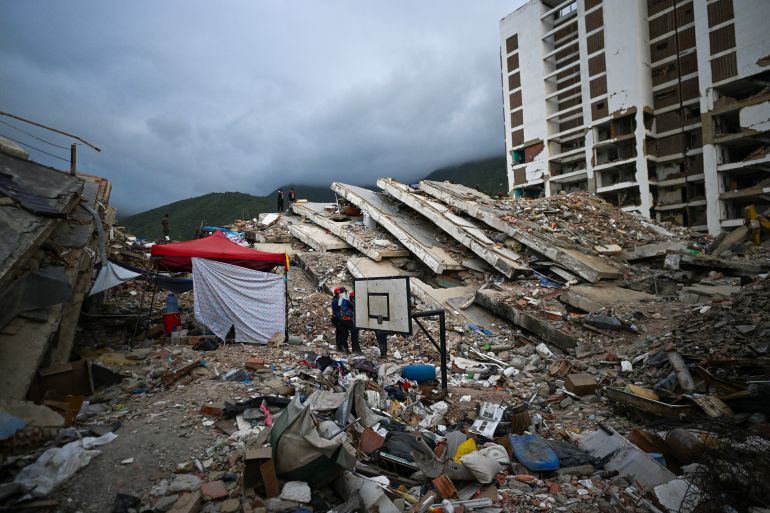
The World Bank has said that the powerful earthquakes that struck Venezuela in late June caused an estimated $19.6bn in physical damage, underscoring the country’s challenging path to recovery.
In a statement on Thursday, the World Bank said 47 percent of the damage occurred to residential buildings, while 27 percent occurred to infrastructure and 26 percent to non-residential buildings.
“The earthquakes have disrupted lives, damaged critical infrastructure, and created new challenges for Venezuela’s recovery,” Susana Cordeiro Guerra, the World Bank vice president for Latin America and the Caribbean, said in a statement. “Recovering effectively begins with reliable evidence.”
Government authorities have estimated that the magnitude 7.2 and 7.5 earthquakes that struck Venezuela on June 24 killed at least 5,000 people and injured nearly 17,000. An additional 18,000 remain homeless, as the country struggles to recover from the destruction amid persistent economic hardship.
Even before the disaster, the World Bank estimated that 76 percent of people in Venezuela, suffering from years of economic mismanagement and crushing US sanctions, were living in poverty.
“Without timely additional investment, the negative impact on productive capacity and living standards will slow the path to recovery,” said Cordeiro Guerra.
The World Bank says its estimate is meant to provide the Venezuelan government and those hoping to assist with recovery efforts with data on the scale of the challenges ahead.
The report, conducted using Global Rapid Damage Estimation (GRADE), says the areas of La Guaira state and Distrito Capital were most severely impacted. The estimate relies on local seismic data, remote-based earthquake modelling, satellite imagery, and damage reports from government and humanitarian groups.
While countries around the world have pledged support for Venezuela, it remains unclear where the funds for recovery might come from.
(Aljazeera)
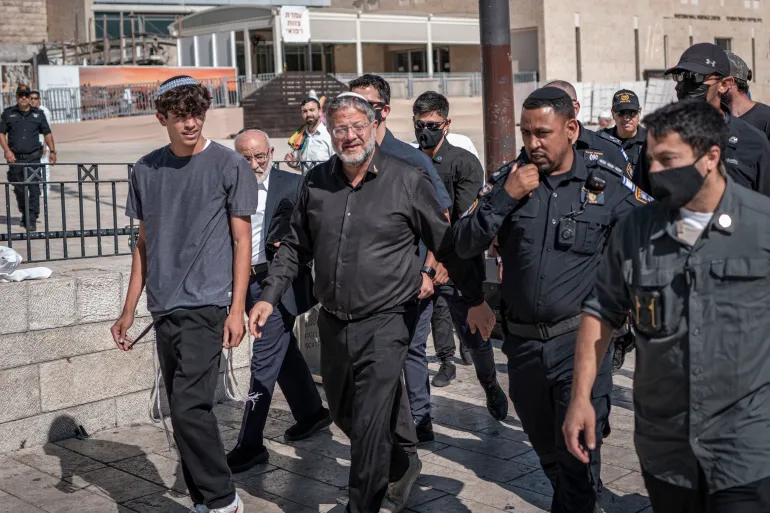
More than 4,200 Israeli settlers and members of far-right groups have stormed the Al-Aqsa Mosque compond in occupied East Jerusalem in one of the largest incursions this year as they mark a Jewish holiday, Palestinian officials say.
Far-right Israeli National Security Minister Itamar Ben-Gvir also entered the site under heavy police protection on Thursday for Tisha B’Av, a Jewish day of mourning that marks the destruction twice of an ancient Jewish temple believed to have stood at the site known to Muslims as Al-Aqsa and to Jews as the Temple Mount.
The Palestinian administration of the Jerusalem governorate said 4,288 Israelis had so far entered the compound.
This number was expected to keep rising until sundown, perhaps reaching 5,000, the governorate said, which would exceed the numbers recorded in previous years during the same Jewish holiday.
Palestinian officials said Israeli forces imposed tight restrictions at the mosque’s gates, barred large numbers of Palestinian worshippers and students from entering, and assaulted several worshippers.
Nour Odeh, Al Jazeera’s correspondent in Ramallah in the occupied West Bank, said Israeli authorities had “taken extreme measures in the Old City” of Jerusalem, including barring entry to the Al-Aqsa compound for all but the elderly and tightening checkpoints such as those at Qalandiya and around East Jerusalem.
Israeli settlers performed Talmudic rituals inside the compound, including prostrating themselves, singing and praying, the Jerusalem governorate said.
Israeli media reported that police allowed more than 1,000 Israelis to pray at the site on Thursday. While non-Muslims are allowed to visit Islam’s third holiest site, they are forbidden from praying there as part of a 1967 agreement.
Ben-Gvir said Jews visiting the site on Tisha B’Av “feel like the owners”, praising what he called “tremendous progress” there, the Haaretz newspaper reported.
[Aljazeera]
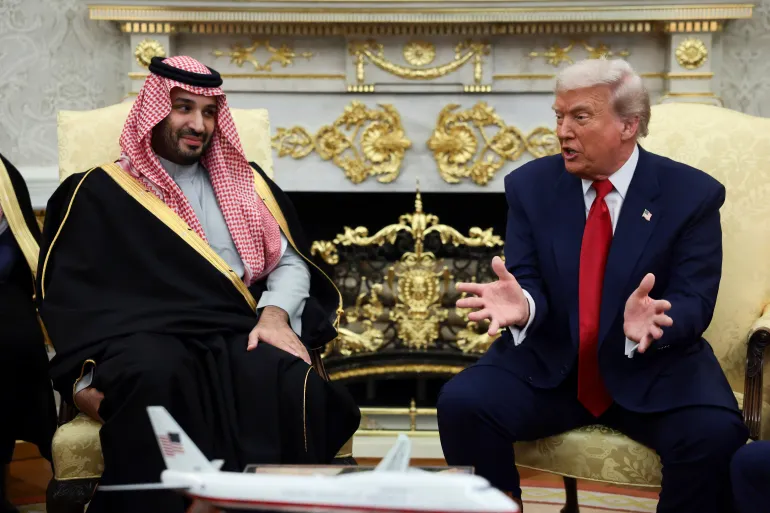
The United States and Saudi Arabia have reached a civilian nuclear cooperation deal, the administration of US President Donald Trump announced, as Washington and Riyadh push to deepen ties.
The US Department of Energy hailed the agreement as “historic” on Wednesday, saying that US companies will provide nuclear technology to the kingdom.
The deal consists of an accord under Section 123 of the Atomic Energy Act of 1954, known as a 123 agreement, “alongside an accompanying bilateral safeguards agreement”, the department said.
“These agreements reflect our two nations’ shared commitment to strengthening US-Saudi commercial relations, delivering prosperity at home and security to our allies abroad,” Energy Secretary Chris Wright said in a statement.
“Rest assured, these agreements uphold the highest standards of nuclear safety and nonproliferation, while relying on the world’s best nuclear technology and scientists, designed right here in the United States.”
Some US media reports have suggested that the deal will allow Saudi Arabia to enrich uranium domestically rather than import nuclear fuel from the US.
The Energy Department’s statement did not provide details on enrichment. If the reports are confirmed, the deal is likely to face opposition in Washington.
The statement called the agreement a “decades-long, multi-billion-dollar partnership” and said it will now be submitted to Congress for review.
Trump, together with Israel, launched a war on Iran in February to prevent the country from enriching uranium and acquiring a nuclear weapon, which Tehran denies seeking.
[Aljazeera]

Sooryavanshi the star as India complete 3-0 sweep

US and Iran hit pause on strikes for second day

Showers will occur in the Western, Sabaragamuwa and North-western provinces and in Galle, Matara, Kandy and Nuwara-Eliya districts

Chamika, Colambage help Galle Gallants consolidate top spot

BASL challenges NPP MP to repeat false claims outside Parliament

Judges’ retirement age row: Govt.-BASL powwow on the cards

‘Dates have the highest sugar content to fight Coronavirus’

Sunday Island 27 December – Headlines

#SundayIsland 17th December – Headlines

Sunday Island – 28th March

Sunday Island Headlines – 21 March

Sunday Island – 21st February – Headlines
-
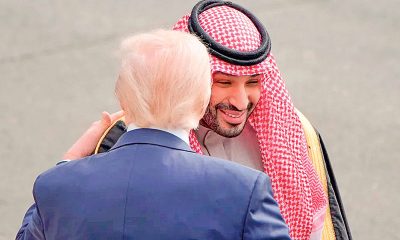
 Features1 day ago
MBS: The Man of the Last Laugh
-
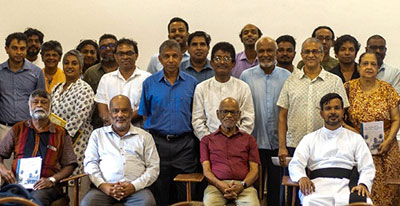
 Features1 day ago
A Landmark Gathering of Minds: The Ceylon Journal Roundtable Revives the Spirit of Intellectual Dialogue
-
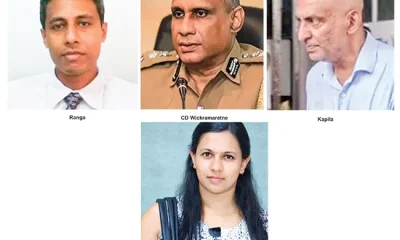
 Midweek Review5 days ago
Three high-profile alleged suicides shaping key investigations
-
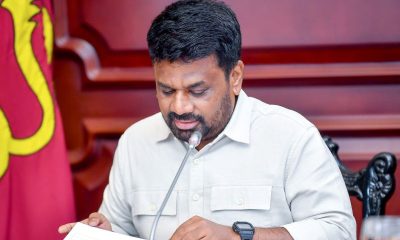
 Latest News2 days ago
Develop a programme to allocate underutilised state land for investment by returning migrant workers – President
-

 Life style1 day ago
A proud Sri Lankan voice in Australian Parliament
-

 News2 days ago
Fort Magistrate orders arrest of MP Archchuna
-

 Editorial1 day ago
‘Cockroaches’ tame a mighty regime
-
 Editorial2 days ago
An indictment of all parties