
News
TISL welcomes passage of Proceeds of Crime Act

The Proceeds of Crime Act’s introduction of non-conviction based asset forfeiture would strengthen Lanka’s legal tools for recovering illicit assets, including those held abroad, Transparency International Sri Lanka (TISL) said in a statement.
It welcomed the passage of the Proceeds of Crime Act, which was approved by Parliament on 08 April 2025. This is a landmark development in Sri Lanka’s anti-corruption and asset recovery framework, filling a long-standing legal gap and introducing powerful tools to combat illicit enrichment and the flow of black money.
TISL commends the work of the drafting committee for navigating the complexity of this legislation, which is designed to ensure that stolen assets are recovered and redirected for public benefit.
The new law introduces mechanisms for identifying, freezing, seizing, and confiscating the proceeds of crime, including in cases where a criminal conviction may not be possible. Notably, it provides for non-conviction-based forfeiture, a shift in the burden of proof in specific proceedings, and robust channels for international cooperation in tracing assets hidden across borders.
These legal tools are crucial in addressing grand corruption, where assets are often laundered through sophisticated local and global networks. Without such mechanisms, Sri Lanka has historically struggled to recover stolen public funds.
Importantly, the law focuses on the recovery of illicit assets rather than the prosecution of offenders. This is a critical strategy to disrupt the financial rewards of corruption and weaken the foundations of kleptocracy.
TISL also draws attention to several concerns that must be addressed to ensure the Act’s successful implementation. Stronger safeguards and judicial oversight are necessary within investigation processes to prevent the misuse of powers and uphold due process. The Proceeds of Crime Management Authority (PCMA) must function with the highest standards of transparency, and board members should be adequately and fairly compensated to attract qualified professionals and reduce corruption risks. Likewise, the Victims of Crime Reparations Trust Fund must be governed with clear selection criteria, term limits, disqualification processes, and strong conflict-of-interest safeguards to maintain public trust.
In addition to implementation issues, TISL remains concerned about broader challenges in Sri Lanka’s legislative process. The development of this law highlighted continued translation errors from English to Sinhala, which risk undermining its intent and application—particularly since the Sinhala version has legal precedence. These issues reinforce the need for institutionalised mechanisms for public and expert participation from the earliest stages of lawmaking, to ensure clarity, coherence, and alignment with the public interest and international standards.
Looking ahead, TISL urges the government and implementing institutions to ensure that the Proceeds of Crime Act is applied with integrity, fairness, and transparency. This includes the responsible and open management of recovered assets, robust public oversight, and ensuring that these powerful tools are used proportionately and in line with the law’s intended focus on grand corruption and serious crime. The ultimate goal must remain clear: to ensure that corruption and crime do not pay—and that stolen wealth is returned to its rightful owners, whether individuals or the public at large.
TISL remains committed to supporting the effective implementation of this law, for which it has long advocated, and will continue to push for transparency, accountability, and public participation across every stage of Sri Lanka’s reform journey, it said.

MONETABRIEF –Sri Lanka plans to hire 121,000 state workers to fill identified vacancies over the next year as part of plans to return tax money to the economy President Anura Kumara Dissanayake has said.
For many years employment was restricted to the state service.
“We will not hire in a ad hoc manner (hithoo hithoo vidiyater),” President Dissanayake told a public rally in Akuressa.
“A committee under the Prime Minister and asked each agency what the vacancies were. Was it essential? Will these people stay with no work? We will hire 121,000 to the state service in that manner. This year. We have not hired all.”
“10,000 for the Police. 23,000 teachers. Then a young person in the village will get a job. A teacher will be there. They will get an economic strength. They will join the police.
“Next year we will give a special allowance to police in the budget. They work 18 hours. They will get a uniform with a batton and kid. When the jobs are created, economic opportunities will be created.
“Then the benefits that the economy got will to the people.”
When Sri Lanka defaulted around 80 percent of the tax revenues went to pay state worker salaries and pensions after rising to 50 percent when the stimulus for economic growth (potential output targeting) initially started.
With more money in the Treasury capital expenditure will also be increased to 2,000 billion rupees in the 2027 budget.
Sri Lanka is planning to build some expressways with domestic financing which may trigger more imports and require higher interest rates to maintain external stability.
Opposition leader Sajith Premadasa also pushed to hire more unemployment graduate in parliament transferring more taxes collected from the people to able bodied population.
Analysts had warned that ‘revenue based fiscal consolidation’ was a spurious doctrine as spending will catch up to match revenue.
Generally called Parkinson’s Second Law, the phenomenon was articulated by Nortcote C Parkinson in an article in the Economist magazine in 1955 when he was working at the Raffles University campus in Singapore (now NUS).
Sri Lanka went on a revenue based fiscal consolidation drive from 2015 and eventually defaulted as ‘policy support’ intensified with aggressive central bank activism under a 5 percent inflation target after the agency was taught by the IMF to calculate potential output targeting.
In Sri Lanka politicians are against printing money but macro-economists support high inflation and monetary depreciation. When people are impoverished by depreciation and the high inflation target of the central bank, Aswesuma (income support) benefits are increased.
In 2026 the rupee collapsed to 330 to the US dollar from 300 a year earlier as the government ran a budget surplus.
Macro-economists who cut rates had blamed budget deficits for external trouble since money printing to suppress interest rates started in 1952. What is now called ‘rate cuts’ were not invented at the time.
Meanwhile another method of spending money in the Treasury was to give subsidies, President Dissanayake said. The subsidies will however be targeted to the deserving.
These included persons affected by kidney disease, orphans in care who will get 5,000 rupee a month deposited into their accounts and 2 million rupee when they leave the home to build a house.
The time in the care home had been extended from 18 to 21 years, he said.
It was not a good idea to give subsidies to all, President Disssanayake said.
However, even in rich countries there were a section of the population that had to be supported and others who faced sudden crises in their lives.
Politicians in Sri Lanka are against money printing and pushing up the cost of living, but are unable to do anything as the central bank is independent and has a 5-7 percent.
The International Monetary Fund has supported Sri Lanka’s controversial 5-7 inflation target which was to have been revised in October, delivering a blow to advocates who want monetary stability, free trade and democratic rule for the country.
The central bank exceeded its target and pushed up inflation to 8 percent in 2026.
Though opposed inflation and being prepared to raised taxes, politicians in a democratic set up dominated by are they are under pressure to spend, whenever tax revenues increase.
Macro-economists also push politicians to engage in capital spending not for benefits that come after a project is completed, as in the classical period, but for the instant gratification of the ‘multiplier effect’ of Keynesian stimulus or what is called ‘policy support’ by the IMF.
The thinking of macro-economists well-articulated in ‘revenue based fiscal consolidation’ which was rejects the classical ‘spending based consolidation’ match political needs.
Many western nations including the US, which has been in the grip of stimulus advocates over over 20 years are now drifting towards debt crises with uncontrollable inflation under so-called ample reserve regimes operated by central banks.
Sri Lanka first started to go to the IMF in the 1960s as US macro-economists in particular started to push ‘full employment’ policies leading to the collapse of the Bretton Woods a few year later.
“Past experience in Ceylon, which is in line with experience in virtually all parts of the world, is that in a democratic set up political and other pressures are heavily on the side of more and more spending by the government,” B R Shenoy, a classical economist told the then Ceylon government in a policy document in 1966.
“When Revenues increase, under the weight of these pressures, expenditures too increase to meet, or even exceed, Revenue collections. In Ceylon during the past seven years Revenues rose by 45 per cent and Expenditures charged to Revenues by 48 per cent.
“There is a real danger that any programme for increased Revenue collections may be attended by a corresponding increase in the consumption expenditures of the government, and little may be left of the additional Revenues to cover Budget deficits.”
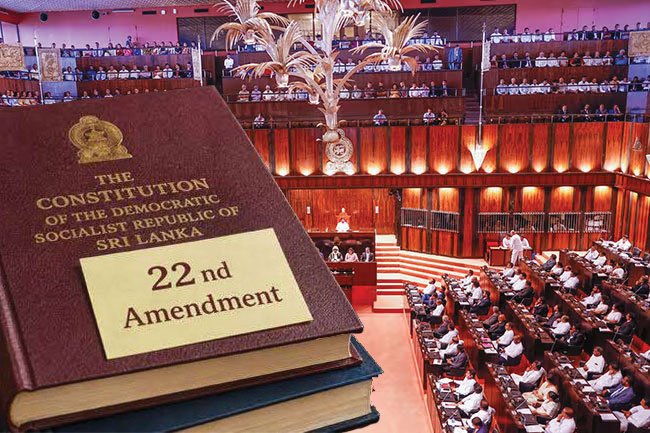
The government secured the required two-thirds majority in Parliament on Friday to pass the Twenty-Second Amendment to the Constitution Bill, despite opposition from the SJB, the ITAK, the SLPP, the SLMC, and other opposition parties.
The Bill received 158 votes in favour and 63 against. The Judicature (Amendment) Bill was also passed by the same margin.
The two Bills were passed following a two-day parliamentary debate and several hours of voting, with Opposition MPs calling for separate divisions on clauses of the Judicature (Amendment) Bill during the Committee Stage. The final vote on that Bill was announced around 8.08 p.m.
The 22nd Amendment provides for increasing the retirement age of Supreme Court judges from 65 to 67 and that of Court of Appeal judges from 63 to 65. The Chief Justice would retire at 67 or after six years in office, whichever comes first.
The Supreme Court determined that the constitutional amendment did not require a referendum and could be passed with a special two-thirds majority. It also determined that the Judicature (Amendment) Bill could be passed by a simple majority.
The Bills were presented for their Second Reading on Thursday by Justice and National Integration Minister Harshana Nanayakkara.
The SJB mounted a strong protest against the legislation, with its MPs wearing black in Parliament yesterday and party members staging a demonstration at Polduwa Junction, Battaramulla.
Opposition Leader Sajith Premadasa and several SJB politicians participated in the protest held under the theme “No to 22, which destroys democracy”.
ITAK and SLMC MPs voted against the Bills alongside the SJB.NDF MPs Ravi Karunanayake and Faizer Musthapha and SJB Badulla District MP Nayana Wasalathilaka were absent during the voting.
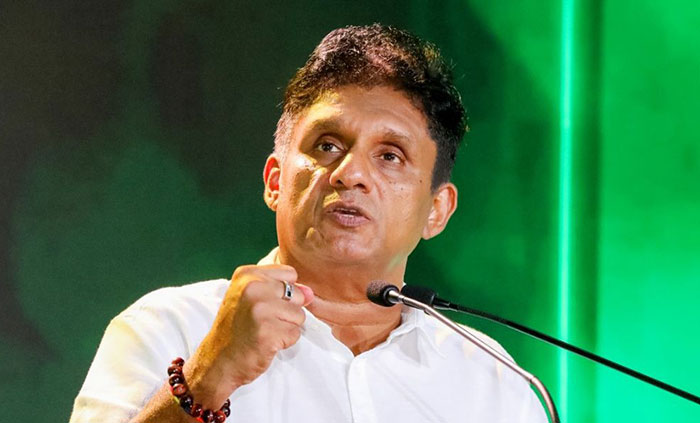
Opposition Leader Sajith Premadasa yesterday likened the Government’s justification of the proposed 22nd Amendment to Hans Christian Andersen’s “The Emperor’s New Clothes”, claiming that the amendment would undermine judicial independence, democracy and the separation of powers.
Speaking in Parliament during the debate on the 22nd Amendment, Premadasa said the Government portrayed the constitutional amendment as a measure aimed at protecting democracy, but alleged that its actual effect would be to strengthen executive influence over the Judiciary.
He said the amendment would erode public confidence in judges and turn the Judiciary into a “tool and puppet” of the Executive.
Premadasa recalled the constitutional changes introduced through the 17th, 18th, 19th, 20th and 21st Amendments, arguing that executive powers had been repeatedly reduced and restored under successive governments.
He also criticised politicians who had supported several of those amendments while continuing to receive public support at elections.
The Opposition Leader referred to the impeachment of former Chief Justice Shirani Bandaranayake and accused those who had supported her removal of later taking positions in favour of judicial independence.
He also referred to a court order concerning the holding of local government elections, saying some politicians who had previously defended judicial independence had subsequently called for judges who issued the order to be summoned before a Parliamentary Select Committee.
Premadasa said the Samagi Jana Balawegaya had consistently defended judicial independence in both instances.
He also questioned the Government’s proposal to extend the retirement age of senior judges, saying no proper study had been conducted to justify the measure. He referred to a 2023 Asian Development Bank study, claiming that extending judges’ retirement age had not been identified as a solution to problems facing the Judiciary.
The Opposition Leader further questioned the Government’s position that a referendum was unnecessary for the 22nd Amendment, recalling arguments made by President Anura Kumara Dissanayake in support of a referendum during the 20th Amendment process.
The Supreme Court has determined that the 22nd Amendment Bill does not require approval at a referendum under Article 83 of the Constitution, while requiring certain textual changes to the Bill.
Premadasa also accused the Government of departing from its manifesto pledge to abolish the executive presidency and alleged that it was instead seeking to increase executive influence over state institutions.
He urged the Government to withdraw the Bill, alleging that it would weaken checks and balances and move the country towards one-party rule.

Buttler out of Oval decider as Lawrence earns ODI call-up

Showers will occur in the Western, Eastern, Uva and Sabaragamuwa provinces and in Galle, Matara, Kandy and Nuwara-Eliya districts.

Nor’easter brings flooding as New York and New Jersey declare emergency 2 hours ago

Trump rejects Iran deal to reopen Strait of Hormuz in seven days

Govt plans to hire 121,000 state workers, redistribute tax revenue

Parliament clears 22A amid protests

‘Dates have the highest sugar content to fight Coronavirus’

Sunday Island 27 December – Headlines

#SundayIsland 17th December – Headlines

Sunday Island – 28th March

Sunday Island Headlines – 21 March

Sunday Island – 21st February – Headlines
-
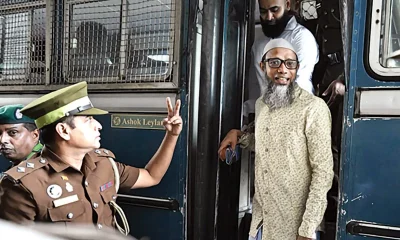
 News5 days ago
Mastermind Naufer Moulavi among 15 found guilty
-
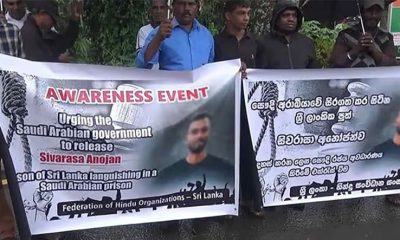
 News7 days ago
Hatton youth protest against reported death sentence for Lankan in Saudi Arabia
-
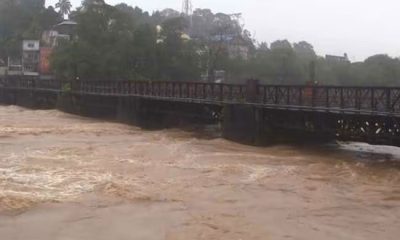
 News7 days ago
Mahaweli rises as heavy rain triggers flood, landslide fears
-
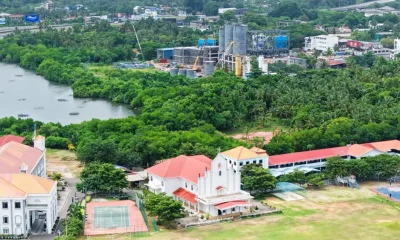
 News6 days ago
Protest against setting up of cement factory in highly populated area near BIA
-
 Midweek Review5 days ago
Thileepan’s fast unto death: An authentic narrative that many missed
-
 Latest News4 days ago
Showers above 100 mm are likely at some places in the Western, Sabaragamuwa, Central and North-western provinces and in Galle and Matara Districts
-

 Editorial6 days ago
Trouble beginning in earnest
-
Editorial5 days ago
Big Bad Bills