
Latest News
Putin agrees in Trump call to pause Ukraine energy attacks but no full ceasefire


President Vladimir Putin has rejected an immediate and full ceasefire in Ukraine, agreeing only to halt attacks on energy infrastructure, following a call with US President Donald Trump.
The Russian leader declined to sign up to the comprehensive month-long ceasefire that Trump’s team recently worked out with Ukrainians in Saudi Arabia.
He said a comprehensive truce could only work if foreign military aid and intelligence sharing with Ukraine came to an end. Ukraine’s European allies have previously rejected such conditions.
US talks on Ukraine are due to continue on Sunday in Jeddah, Saudi Arabia, the US envoy to the Middle East, Steve Witkoff, said.
In the grinding three-year war, Russia has recently been taking back territory in its Kursk region that was occupied by a Ukrainian incursion six months ago.
The results of Tuesday’s Trump-Putin call amount to a retreat in the US position from where it stood a week ago, although the two leaders did agree that further peace talks would take place immediately in the Middle East.
When a US delegation met Ukrainian counterparts in Jeddah last Tuesday, they convinced Kyiv to agree to their proposal for an “immediate” 30-day ceasefire, across land, air and sea.
President Volodymyr Zelensky, who arrived in Helsinki, Finland, for an official visit on Tuesday shortly after Trump and Putin’s call ended, said Ukraine was open to the idea of a truce covering energy infrastructure, but wanted more details first.
He later accused Putin of rejecting a ceasefire following a barrage of Russian drone attacks.
Among the places targeted was a hospital in Sumy, and power supplies in Slovyansk, said Ukraine’s leader. “Unfortunately, there have been hits, specifically on civilian infrastructure,” Zelensky said on X. “Today, Putin effectively rejected the proposal for a full ceasefire.”
Trump posted earlier on social media that his call with the Russian leader was “very good and productive” and that “many elements of a Contract for Peace were discussed”.
“We agreed to an immediate Ceasefire on all Energy and Infrastructure, with an understanding that we will be working quickly to have a Complete Ceasefire and, ultimately, an END to this very horrible War between Russia and Ukraine,” the US president said on Truth Social.
About 80% of Ukraine’s energy infrastructure has been destroyed by Russian bombs, Zelensky said last September.
Kyiv has in turn conducted drone and missile strikes deep into Russian territory, on oil and gas facilities.
Just hours after Putin agreed to stop attacking energy infrastructure, Russia and Ukraine accused each other of launching air attacks.
Zelensky said that Russia launched more than 40 drones against Ukraine in the hours following the call between Trump and Putin.
Meanwhile, officials in the southern Russian region of Krasnodar said that a Ukrainian drone attack sparked a small fire at an oil depot.
In Belgorod, a Russian region on the border with Ukraine, the governor said the situation “remains difficult”. Moscow said on Tuesday that Ukrainian forces attempted a ground assault on Belgorod but were pushed back.
Following last week’s talks in Jeddah, Secretary of State Marco Rubio had said “the ball” was in Russia’s court, after the Ukrainians accepted Washington’s proposal for a full ceasefire.
But the White House’s statement following the Trump-Putin call on Tuesday made no reference to that agreement with Kyiv.
It instead said the two leaders agreed that “the movement to peace will begin with an energy and infrastructure ceasefire”, followed by negotiations over a “maritime ceasefire in the Black Sea, full ceasefire and permanent peace”.
But the Kremlin’s own statement on the call noted what it said were a “series of significant issues” around enforcing any agreement with Kyiv. And it said the end of foreign support and intelligence for Ukraine was a “key condition” for Russia.
Trump and Putin agreed to immediate technical-level talks towards a longer-term settlement, which the Kremlin said must be “complex, stable and long-term in nature”.
But it’s unclear if this means further negotiations between the US and Russia, or bilateral talks between Russia and Ukraine.
The Kremlin also said Trump supported Putin’s idea of holding ice hockey matches between professional US and Russian players.
Russia was frozen out of ice hockey events overseas after the country invaded Ukraine in 2022.
Kyiv will probably see the outcome of Tuesday’s much-anticipated phone call as Putin playing for time, while he adds crippling conditions on any settlement.
Putin has previously insisted Russia should keep control of Ukrainian territory it has seized and has called for Western sanctions to be eased as part of any eventual peace settlement.
The Russian leader has already tasted Trump’s readiness to cut off US support to Ukraine, and is trying to get him to repeat it – while tossing the ball back to Kyiv.
Earlier this month the US temporarily suspended military and intelligence aid to Ukraine after Trump and Zelensky had an altercation in the Oval Office.
Trump and his Vice-President JD Vance dressed down Zelensky in front of the world’s media, accusing him of being ungrateful for American support.
Speaking at a news conference on Tuesday in Berlin with French President Emmanuel Macron, German Chancellor Olaf Scholz said the limited ceasefire plan was an important first step, but he again called for a complete ceasefire.
Meanwhile, British Prime Minister Sir Keir Starmer spoke to Zelensky after the Trump-Putin call and “reiterated [the] UK’s unwavering support”, a Downing Street spokeswoman said.
[BBC]

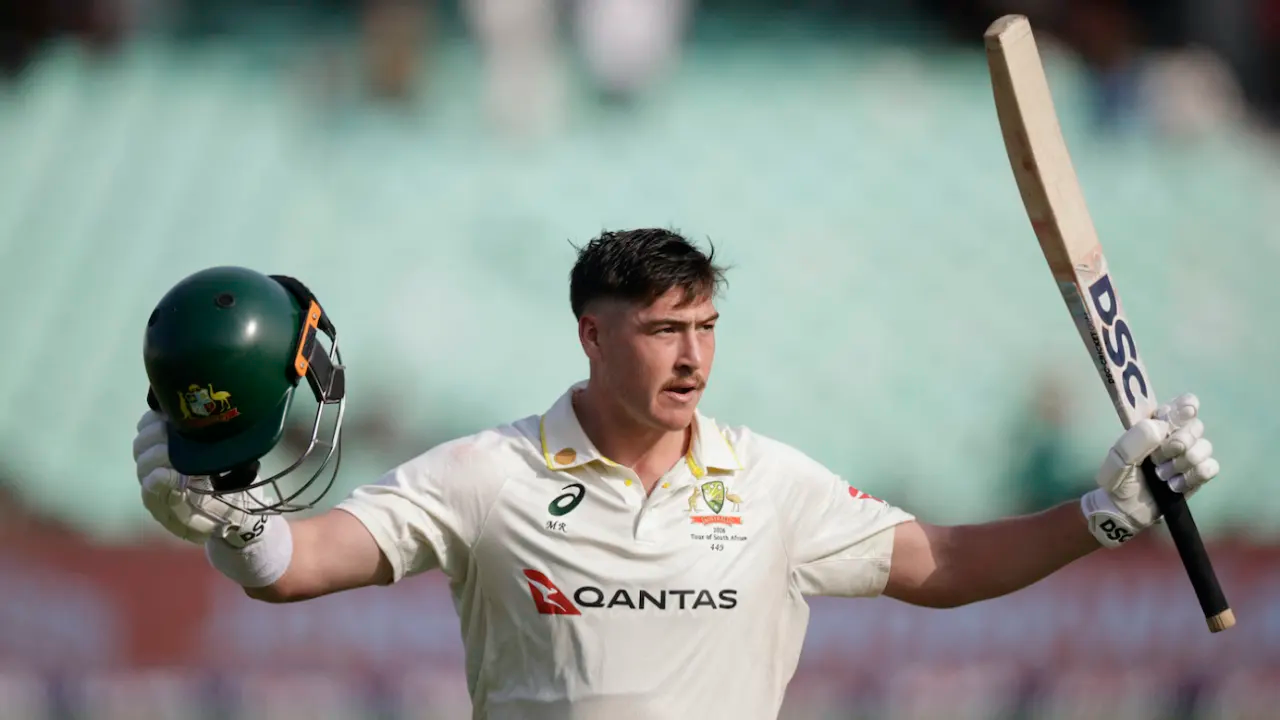
Matt Renshaw produced a herculean 190 and powered Australia to an unlikely first-innings total before Josh Hazelwood dismissed South Africa opener Ryan Rickelton for a duck late on day two of the first Test in Durban. Australia had their backs to the wall at 124 for 6 in familiar batting woes but Renshaw rescued the innings with his 397-ball marathon effort.
Renshaw fell short of what would have been a maiden double ton after being dismissed two balls into the final session, caught at slip off the bowling of offspinner Simon Harmer. His only other Test century was against Pakistan at the SCG in January 2017, when he made 184.
After 137.2 overs in the field, South Africa openers Rickelton and Aiden Markram faced a tough challenge under increasingly gloomy skies. A weary Rickelton did not fare well after edging Hazlewood to third slip in the second over, having attempted a lavish drive to a full delivery.
But Markram and new No. 3 David Bedingham were unruffled, and hit several attractive boundaries before bad light ended the day’s play just 8.4 overs into South Africa’s innings.
Having been on the back foot for much of the opening day, Australia were on top after day two as Renshaw produced the fourth highest score by an Australian in South Africa. Remarkably, he scored 174 of his runs with the last four batters, the most anyone has scored in a Test innings while batting with the tail since 2002.
Renshaw received strong support from the lower order, marked by an 86-run seventh-wicket partnership with Pat Cummins and a 134-run stand with Nathan Lyon, the second-most for the ninth wicket for Australia in their Test history.
Cummins and Lyon faced a combined 190 deliveries – that was 27 more than Australia’s top four batters – although batting became easier on a surface that on day one produced steep bounce and seam movement.
It has been a tough journey for Renshaw, who might have resurrected his Test career after providing a major tonic for Australia’s reshuffled batting order. He reached his century just before the lunch break with a boundary through the leg side, and raised his arms in delight and took off his helmet, showing off a beaming smile.
Highly disciplined but also showing a knack of going through the gears, Renshaw became the first Australia batter to face 300 balls in a Test innings since Usman Khawaja scored 232 against Sri Lanka in Galle in early 2025.
Renshaw has relished moving down to No. 5 after Nic Maddinson’s surprise selection as an opener, along with Cameron Green missing the match through injury. He had only filled the position four times previously – thrice during the 2023 tour of India, and once on the 2017 tour – with modest results, although has enjoyed success with Queensland there.
Renshaw had returned to Test cricket after three-and-a-half years as an opener against Bangladesh in August. While Maddinson’s selection has initially backfired, Renshaw looked at ease in the middle order, and equally untroubled against the seamers and spinners.
Having dominated much of the shortened first day, South Africa were left frustrated with their attack blunted by Renshaw. Seamers Wiaan Mulder, Marco Jansen and Anrich Nortje took nine wickets between them but struggled to consistently threaten on day two.
Spin duo Harmer and Keshav Maharaj claimed just one wicket from 48.2 overs, with Renshaw negating their influence, although the surface is expected to spin significantly later in the match. It was a disappointment for the sparse crowd in Durban, with the atmosphere rather subdued for Australia’s first Test series in South Africa since the 2018 sandpaper scandal.
Earlier on day two, Australia resumed their first innings on 187 for 6 after just 65.2 overs were bowled on a truncated opening day due to bad light. Renshaw and Cummins aimed to build on their unbeaten 63-run partnership from overnight. It did not take Renshaw long to reach his fourth Test half-century after edging Nortje through third slip and gully as he celebrated the milestone for the first time since March 2017.
Nortje, who played a starring role on day one after a three-and-a-half year exile from Test cricket, once again unfurled vicious short deliveries but occasionally tried to outfox Cummins by pitching up. A focused Cummins was unfazed, and pounced on a rare overpitched delivery with a beautiful square drive to the boundary. He had a fourth Test half-century in his sights – and the first since January 2024 – until, on 43, he edged a good-length delivery from Mulder to second slip.
Renshaw, meanwhile, showcased his much improved play against spin, reverse sweeping Maharaj with good effect to keep the scoreboard ticking over.
Much like Cummins, Mitchell Starc was intent on solid defence, and had a slice of luck when he edged Harmer through the hands of Markram at first slip as the ball flew to the boundary. South Africa had no hesitation in taking the second new ball, and Mulder capitalised when he clean bowled Starc with a cracker of a delivery that pitched on middle before crashing into the off stump.
But Renshaw kept South Africa at bay, and put the foot down in the back end of the elongated session. He hogged the strike after lunch as South Africa skipper Temba Bavuma deployed Maharaj and Harmer in tandem. The game went through a lull until the reintroduction of Nortje, who delivered a 143kph thunderbolt that whacked Renshaw on the grill of the helmet.
But Renshaw gave an immediate thumbs up and continued with his indefatigable effort after receiving medical attention. He reached 150 with a reverse sweep off Maharaj – and quite fittingly so, given his mastery of the stroke through the innings.
Lyon appeared set to bat through the entire second session before being trapped plumb lbw by a full delivery from Jansen, who was rewarded for a hostile spell before tea. The session was extended, but Hazlewood held firm with the bat before making an impact with the ball before stumps.
Scores:
South Africa 27 for 1 in 8.4 overs (Aiden Markram 15*, David Bedingham 12*; Josh Hazlewood 1-9) trail Australia 390 in 137.2 overs (Matt Renshaw 190, Pat Cummins 43; Marco Jansen 3-68, Wiaan Mulder 4-68, Anrich Nortje 2-88 ) by 363 runs
[Cricinfo]
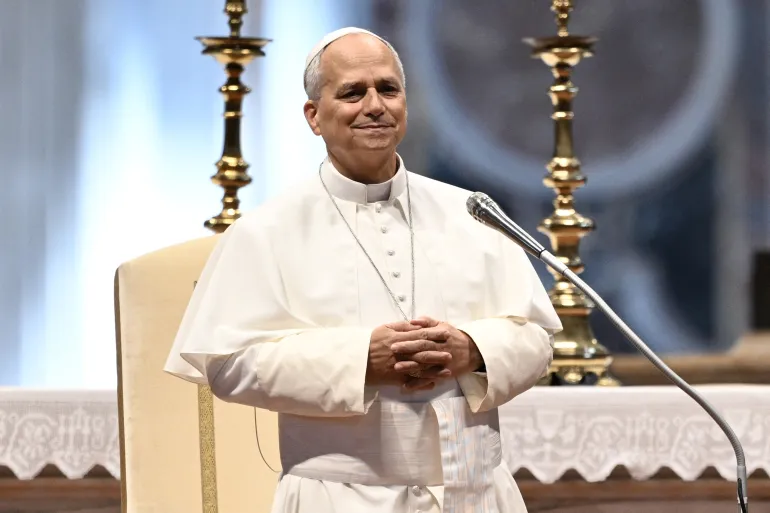
Pope Leo XIV has declared that the death penalty is “inadmissible” while his home country, the United States, announces plans to livestream an execution by firing squad.
Marking World Day Against the Death Penalty on Saturday, the pope reiterated the Catholic Church’s teaching on capital punishment, writing on X that it was “inadmissible because it is an attack on the inviolability and dignity of the person”.
“The common good can be safeguarded and the requirements of justice can be met without recourse to capital punishment,” his post said.
“Effective systems of detention have been developed that protect citizens while at the same time do not completely deprive those who are guilty of the possibility of redemption,” added the leader of the Catholic Church.
The American Pope’s comments come days after US Secretary of Defense Pete Hegseth said on Thursday that the firing squad execution of Nidal Malik Hasan on December 3 will be livestreamed.
Hasan was convicted of killing 13 people and wounding 32 others in a shooting at the Fort Hood military base in 2009.
Pope Leo did not specifically refer to the planned execution, or last month’s botched execution attempt on Christa Pike, who survived two doses of the lethal injection in Tennessee.
But his post came hours after his top deputy, Cardinal Pietro Parolin, the Vatican secretary of state, told Vatican News that the plan to livestream Hasan’s execution was “unacceptable”.
It was Leo’s predecessor, Pope Francis, in 2018 who first amended official Catholic teaching to declare capital punishment “inadmissible” in all circumstances.
[Aljazeera]
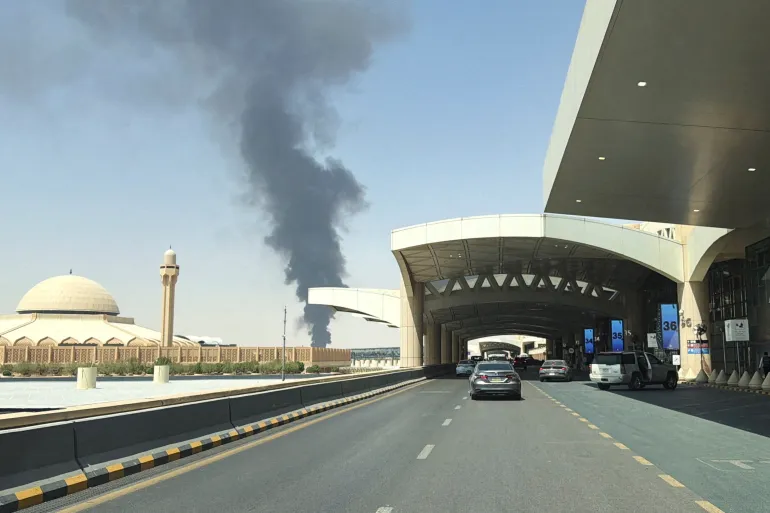
The latest attack on King Khalid International Airport in Saudi Arabia’s capital has injured several people, according to the country’s Civil Aviation Authority.
Operations at the airport in Riyadh were temporarily suspended after the attack on Saturday afternoon, said the General Authority of Civil Aviation (GACA). Its statement added that officials were assessing the damage and determining the exact number of injuries.
On Thursday, at least three Saudi citizens, including a pilot, were killed in Houthi attacks at the airport, according to GACA.
Those attacks were launched by Yemen’s Houthi group, which is at war with Riyadh and the Saudi-backed Yemeni government in Aden.
Al Jazeera’s Yousef Mawry, reporting from Yemen on Saturday, said the Houthis have yet to claim responsibility for the latest attack.
But the Iran-backed group has warned aviation companies to avoid using Saudi airspace, saying any aircraft operating there – except over the holy cities of Mecca and Medina – is a target.
Earlier on Saturday, King Khalid airport urged passengers to contact their airlines directly and check their flight status before heading to the airport amid reports of disruptions to air traffic. The airport did not specify the cause of the disruptions in its initial advisory.
Saudi Arabia’s Ministry of Foreign Affairs also instructed Saudi citizens travelling to the kingdom to contact local embassies if their travel itineraries have been disrupted following the attack.
Following reports of the latest attack, President Donald Trump was asked by reporters outside the White House whether the United States planned to join Saudi strikes on the Houthis.
[Aljazeera]

Cabinet approval has been granted to several proposals and policies related to the new Education Reforms – Prime Minister

The Anti-Corruption Act is being amended to strengthen It, not to weaken it – PM

Renshaw 190 lifts Australia to 390 before Hazlewood strikes

Pope says death penalty ‘inadmissible’ as US plans to livestream execution

Attack on airport in Saudi capital, Riyadh, leaves several injured

Hurricane Isaias downgraded after making landfall in Florida

‘Dates have the highest sugar content to fight Coronavirus’

Sunday Island 27 December – Headlines

#SundayIsland 17th December – Headlines

Sunday Island – 28th March

Sunday Island Headlines – 21 March

Sunday Island – 21st February – Headlines
-

 News6 days ago
Geneva takes up Sallay’s case and govt. ignores opportunity to answer accusations
-

 Features7 days ago
The first woman in the foreign service or Ceylon Overseas Service it was then called
-

 News7 days ago
Nearly 20 Iranian tankers stranded off Lanka amid US sanctions
-

 Features5 days ago
Preventing grievances from becoming communal
-

 Sports3 days ago
Nissanka absence opens door for Sri Lanka’s young guns
-

 News4 days ago
Gnansara Thera to be assigned to prison printing section: Officials
-

 Features6 days ago
Sri Lanka Cricket Bill: Governance reform is not yet a cricket strategy
-

 Features3 days ago
The Sri Lankan who made Scottish history