
Sports
Chandraguptha in the running for a Test spot


by Rex Clementine
We have just witnessed a fiercely contested First-Class season culminate in Bloomfield being crowned champions – a long-awaited triumph after 15 years in the wilderness. The tournament had all the hallmarks of a riveting contest, but as the dust settles, a significant shake-up has taken center stage.
In a bold yet ruthless move, Sri Lanka Cricket (SLC) wielded the axe to trim down the number of First-Class teams, aiming to restore quality over quantity. The biggest casualty? The country’s premier cricket club, SSC, found itself unceremoniously relegated, a decision that sent shockwaves through the cricketing fraternity. Joining them in the drop zone were Ragama CC, Negombo CC, and Kandy Customs. With two more teams set to face the chop next season, the club circuit will be streamlined to just 12 teams, a significant reduction from the previous 26-team structure.
Kudos to SLC for finally making the tough call. Over the years, the First-Class tournament had been diluted beyond recognition, with too many teams and not enough competitive edge. Now, with a leaner and meaner structure, the domestic circuit is expected to regain its sharpness. The top performers from the club season will graduate to the NSL, Sri Lanka’s highly competitive provincial tournament, which carries First-Class status. Selection for the Test team will now be heavily influenced by performances in this high-intensity arena.
With Sri Lanka enduring a rough patch in Test cricket – losing four consecutive matches (two against South Africa and two against Australia) – some inevitable changes are on the horizon. The biggest talking point? The vacant opener’s slot, left behind by the departure of Dimuth Karunaratne.
The race to fill that void is heating up, and two prolific openers have thrown their hats into the ring with impressive returns in the club season. NCC’s Lahiru Udara finished as the leading run-getter, amassing 787 runs at 56, while Bloomfield’s Ron Chandraguptha wasn’t far behind with 729 runs at 48.
Until the First-Class final, Udara seemed to be the front-runner. The 31-year-old has been a consistent performer and has already been around the national squad as a backup opener. But in cricket, big games often redefine narratives, and Chandraguptha seized his moment with a performance that turned the final on its head.
Heading into the summit clash, NCC were overwhelming favourites. With half a dozen Sri Lanka internationals in their ranks, they had the firepower to dictate terms. But one man – Ron Kashyapa Chandraguptha – rewrote the script.
Batting against the odds, he produced a monumental innings, a knock for the ages that swung the pendulum Bloomfield’s way. In scorching Colombo heat, he displayed unwavering concentration, unbreakable patience, and sheer resilience, grinding it out for two full days at the crease. His maiden double century not only batted NCC out of the contest but also catapulted his name into the national selection debate.
What was once a one-horse race for the Test opener’s slot is now a two-way contest. Udara had the early momentum, but Chandraguptha has forced selectors into a rethink. With the NSL tournament in progress, whoever performs better in the next few weeks will likely get the selector’s nod.
While the opener’s position is in focus, another name is knocking on the door for a middle-order berth – Pasindu Sooriyabandara. The 25-year-old Royalist has built an impressive First-Class record, averaging 56 after 50 games. This season, he was instrumental in Moors SC’s campaign, racking up 620 runs at a staggering average of 88.
A player with sound temperament and a wide range of strokes, Sooriyabandara appears ready for the next step. With Sri Lanka struggling for consistency in Test cricket, his introduction into the national setup seems more a matter of when rather than if.
With Sri Lanka’s Test team in transition, the NSL will be a defining tournament. Players like Udara, Chandraguptha, and Sooriyabandara have put themselves in contention, but the final decision rests in how they handle the next big challenge.
One thing is certain—domestic cricket has regained its competitive edge. With fewer teams, higher stakes, and players stepping up on the big occasions, Sri Lanka’s red-ball future may just be heading in the right direction.


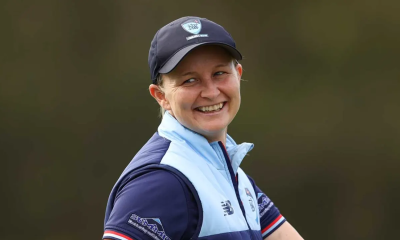



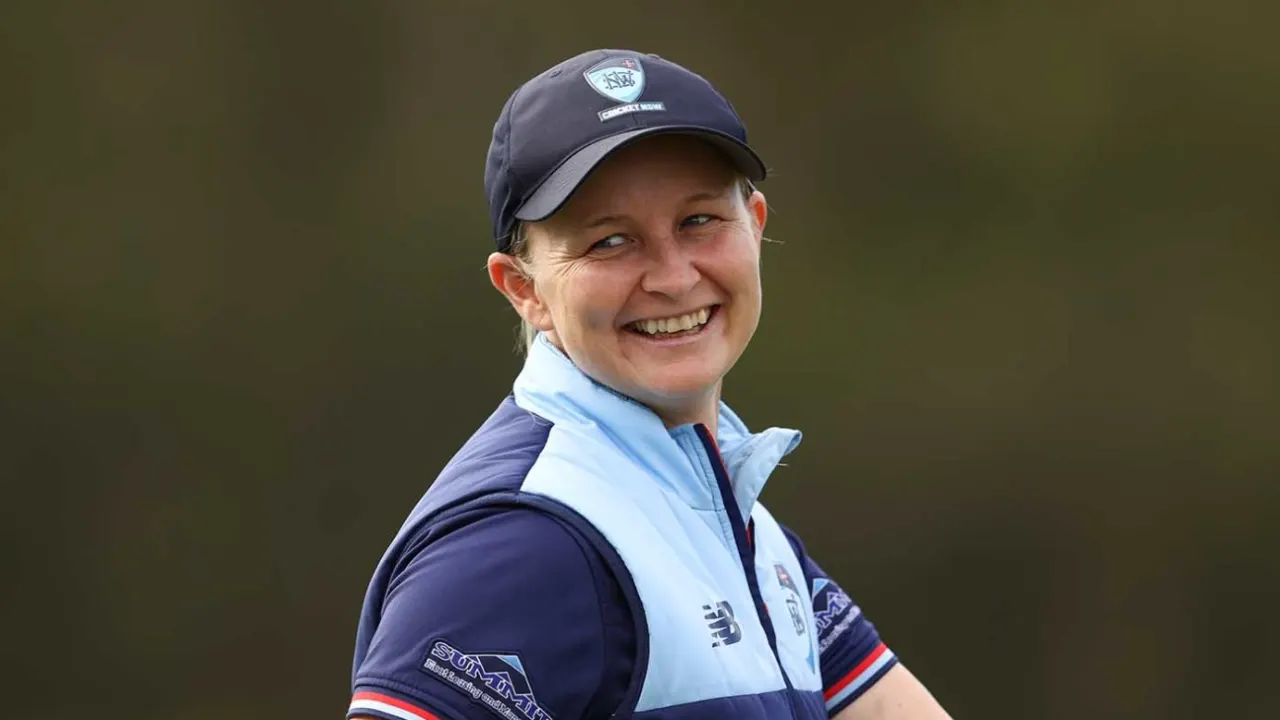
Leah Poulton the former Australia batter turned coach and administrator, will join England Women as managing director, succeeding Clare Connor.
Poulton will be charged with overseeing the success of the international team and pathways after the ECB cited her “impressive track record driving women’s cricket forward in Australia”.
Poulton earned 90 caps for Australia before retiring in 2015 and has spent the past six years as head of elite female cricket at Cricket New South Wales. There, she oversees cricket performance operations across two WBBL franchises, women’s state cricket and one of the world’s largest women’s cricket talent pathways.
Before that, she spent three years at Cricket Australia as a High Performance Coach, where she was instrumental in setting up Australia’s enviable women’s high-performance pathway, which included developing the Australia A and Under-19s women’s teams.
In her new role, she will be accountable for the performances of England Women, England Women A, England Women Under-19s and the overall women’s high-performance system.
Poulton will start in her new role in November with England set to host the Women’s Ashes next summer. She fills the role vacated by Connor, who announced earlier this year that she would be leaving the ECB after a career spanning 18 years, and will work closely with England Women’s head coach Charlotte Edwards and captain Nat Sciver-Brunt.
“I’m incredibly excited and honoured to be joining England, and to have the opportunity to help shape our programmes and, most importantly, invest in our people,” Poulton said. “I’m looking forward to working with Charlotte, Nat and the wider team, building on the strong foundations already in place and taking the programme forward.
“I know how vital strong pathways and a healthy domestic game are to sustained success, so I’m looking forward to connecting with people across the game and helping give the next generation of English players every opportunity to thrive. It’s a huge privilege to be part of England Women, and I can’t wait to get started.”
Richard Gould, the ECB’s CEO, said that with the senior women’s team had made under Edwards, appointed last year, and having reached the final of their recent home T20 World Cup, England Women were well placed for a successful era.
“I’m delighted to welcome Leah on board to help us build on this and take us to the next level,” Gould said. “She has a deep understanding of international cricket from her playing career and has built an impressive reputation in her time in administration.
“I believe she and Lottie will be a formidable combination, and will continue the team’s progress and development as we compete for the ICC Women’s Champions Trophy and Women’s Ashes in 2027.”
[Cricinfo]
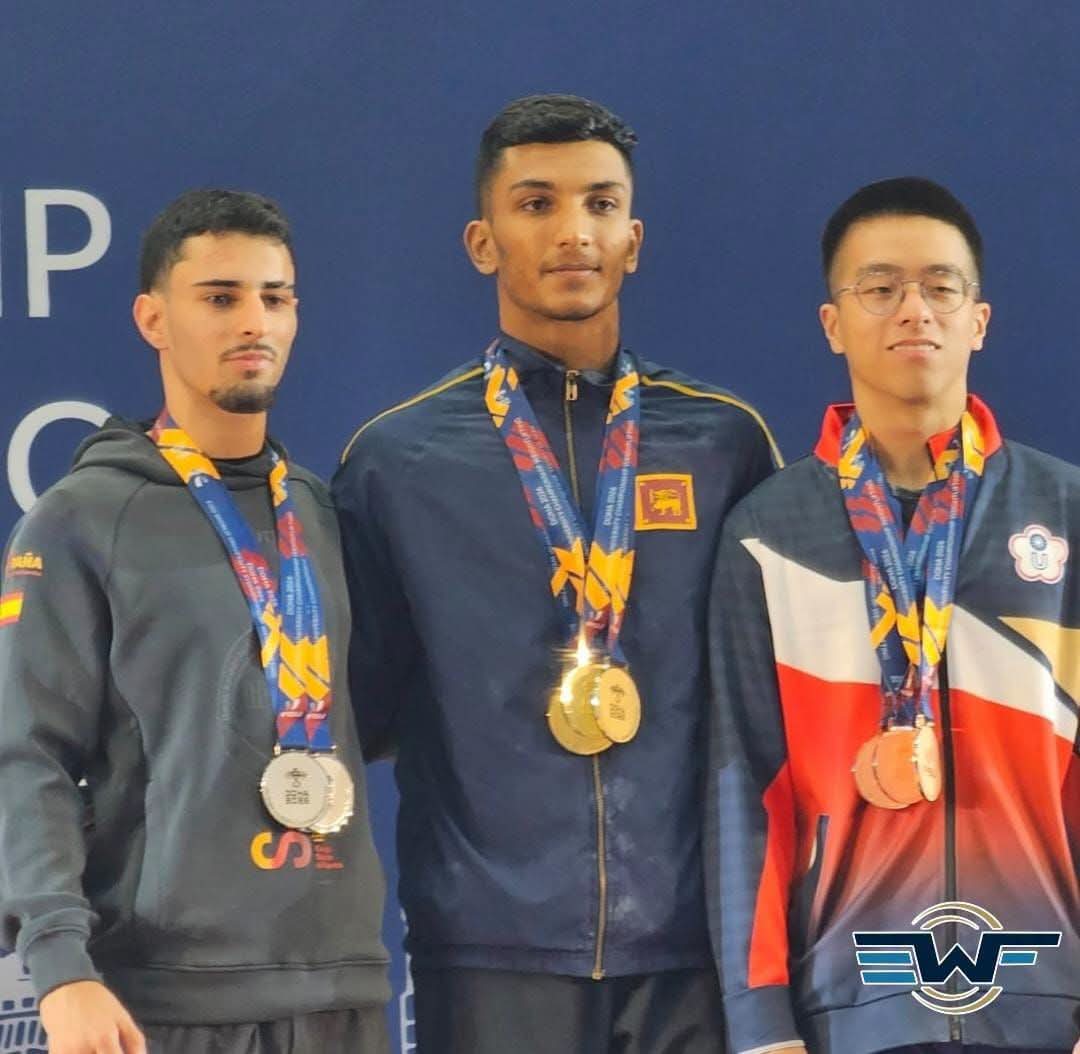
University of Sri Jayewardenepura weightlifter Avindu Liyanagedara made history yesterday by becoming the first Sri Lankan university student to win a gold medal at a World University sports event, as Sri Lanka made a spectacular start to the 2026 World University Weightlifting Championship in Doha, Qatar.
Liyanagedara won the men’s 60kg title, while Sabaragamuwa University’s Nipun Dissanayake added a bronze medal in the 65kg category on the opening day of the championship.
Liyanagedara lifted 105kg in the snatch and 132kg in the clean and jerk for an impressive combined total of 237kg.
Spain’s Gomez Martinez took the silver with 228kg, while Chun-Yen Tang of Chinese Taipei won bronze with 227kg.
Dissanayake also secured a podium finish in the 65kg class with a total of 220kg, comprising a 100kg snatch and a 120kg clean and jerk.
Iran’s Mohhadov Tehran won the gold with 289kg, with Moldova’s Ion Badanev taking silver with 288kg.
Liyanagedara’s achievement represents a landmark breakthrough for Sri Lankan university sport. His gold is the first gold medal won by a Sri Lankan university student at a World University sports event, while Dissanayake’s bronze further strengthened the country’s historic opening-day showing.
The Sri Lanka University Sports Association has entered five male and two female athletes for the championship, with University of Colombo’s Sujan Walgampaya serving as team manager and coach.
The championship continues in Doha until September 12, with Sri Lanka already assured of a memorable place in the history of World University sport through Liyanagedara’s historic gold medal.

by Rex Clementine
Despite the disappointment over how Sri Lanka’s cricket teams have fared in recent years, there is one format in which they have managed to hold their heads high, ODI cricket. There are a couple of notable feathers in their cap too, having beaten Australia and India, the world’s two top ranked teams and finalists at the last World Cup.
Those impressive performances against the heavyweights have ensured that Sri Lanka are out of the woods this time around. Unlike ahead of the 2023 World Cup, they will not have to endure the indignity of a qualifying tournament to book their ticket to South Africa in 2027.
How they fare once they get there, of course, is another question altogether.
Sri Lanka failed to progress beyond the first round in both 2019 and 2023, a sharp contrast to their impressive run from 2003 to 2015. Across those four World Cups, they twice finished runners-up, reached a semi-final on another occasion and made the quarter-finals in the other.
If Sri Lanka are to make an impact in South Africa, one thing they must do is wrap their fast bowlers in cotton wool. Fast bowling has been one of the brighter areas of Sri Lankan cricket in recent years and there can hardly be a better place to cash in than South Africa, where hard, bouncy surfaces tend to put a spring in the step of any quick worth his salt.
The key man, obviously, is Dushmantha Chameera. The quickest bowler in the country, Chameera is now being used only in white ball cricket and that should make workload management considerably easier. Sri Lanka would be wise to count how many limited overs games they have between now and the World Cup rather than wheel him out for every bilateral contest.
Keep him for the important assignments, such as the Asia Cup. Then there is the IPL, where he will understandably want to ply his trade. Manage him sensibly and by the time the World Cup comes around this time next year, Sri Lanka could have a fresh and firing Chameera rather than one held together by strapping and hope.
Then there is Asitha Fernando, whose progress over the last five years has been remarkable. Currently ranked just outside the top ten among Test bowlers, he has earned admiration for his ability to make things happen, particularly with the older ball. He keeps asking questions even when conditions are against him.
A stint with Glamorgan last year appears to have added a few more tricks to his armoury as well. Asitha is no longer simply a wholehearted fast bowler. He is developing into a clever one.
Lahiru Kumara is another serious weapon. The second quickest bowler in the country behind Chameera, he can be devastating when fully fit. His career should probably have produced far more by now, but, like Chameera, injuries have repeatedly applied the handbrake.
Eshan Malinga, meanwhile, has arguably been the most improved fast bowler in the country over the last 12 months. He has pace, guile and every time you watch him, there seems to be another little trick added to his repertoire. The upcoming series against England should tell us plenty about how far he has come.
Eshan has already become a regular fixture for his IPL franchise. It should only be a matter of time before he establishes himself in similar fashion for Sri Lanka.
Then there is Dilshan Madushanka to provide the left-arm variety. When in full flow, he is a treat to watch. His ability to strike with the new ball makes him particularly valuable and when batters attempt to force the pace against him, he can be deadly. Used aggressively during the Power Play, he should provide plenty of early breakthroughs.
That makes Sri Lanka’s use of their quicks during the upcoming tour of England, particularly in the ODIs, worth watching closely. With the World Cup in mind, there is little sense in flogging the same men game after game. Rotate them, manage them and make sure the main weapons are still firing when the bigger battles arrive.
There are also Matheesha Pathirana and Nuwan Thushara, the two slingers, although that style of bowling increasingly looks as though it is losing some of its novelty as batters become accustomed to it.
One man Sri Lanka should certainly not overlook is Milan Rathnayake. He bowls at a decent pace, bats beautifully and is probably the best fielder among the fast bowlers. That package could prove invaluable in South African conditions.
Sri Lanka have spent years searching for a pace attack with depth. They finally appear to have one. The challenge now is to preserve them. South Africa will reward pace. Sri Lanka’s job over the next year is to make sure their quicks land in Johannesburg fit.

Italian Naval Vessel ‘ITS Giuseppe Garibaldi’ arrives in Colombo

England Women appoint Leah Poulton as managing director

Bangladesh bank on bowlers in bid to bring India down

Avindu makes history with first World University gold for Sri Lanka

Establishment of National Trade Negotiation Committee (NTFC) and Trade Policy Consultation Committee.

Showers will occur in the Western and Sabaragamuwa provinces and in Galle and Matara districts

‘Dates have the highest sugar content to fight Coronavirus’

Sunday Island 27 December – Headlines

#SundayIsland 17th December – Headlines

Sunday Island – 28th March

Sunday Island Headlines – 21 March

Sunday Island – 21st February – Headlines
-

 News7 days ago
Denied of promotion to SC despite vacancies, justice Gurusinghe retires
-

 News7 days ago
22A: SC urged to suspend hearing, appoint full bench
-

 News5 days ago
Namal remanded until Sept. 18 over Airbus deal investigation
-

 Latest News4 days ago
Tharanga creates history with Diamond League crown in Brussels
-
 News7 days ago
Govt. seeks NATO assistance
-

 News4 days ago
Dispute which triggered listed company director being detained at BIA resolved
-

 Editorial7 days ago
Strange arithmetic goes unchallenged
-

 Features3 days ago
After the parade: What a traffic OIC’s walk-out tells us