
Foreign News
Scores of whales to be euthanised after mass stranding in Australia

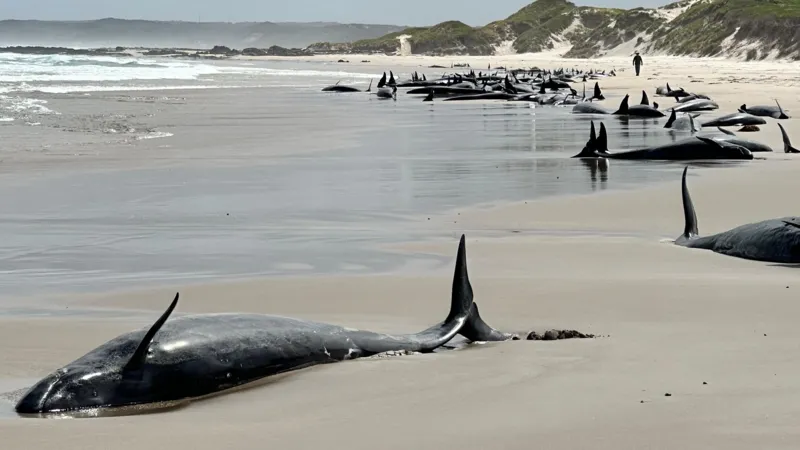
Australian authorities are euthanising about 90 false killer whales which survived a mass stranding on a remote beach in Tasmania.
A team of experts at the site said complex conditions have made it impossible to save them.
They are part of a pod of 157 whales that had beached near Arthur River, in the island’s north west. The rest had died shortly after the stranding.
Tasmania has seen a series of mass whale strandings in recent years – including the country’s worst-ever in 2020 – but false killer whales haven’t mass stranded there in over 50 years.
False killer whales are technically one of world’s largest dolphin species, like their orca namesakes. They can grow up to 6m (19ft) and weigh 1.5 tonnes.
Authorities on Wednesday said the pod had been stranded at the site for 24 to 48 hours, and the surviving animals were already under extreme stress.
Local resident Jocelyn Flint told the Australian Broadcasting Corporation she had travelled to the site on Wednesday morning after her son noticed the pod while out shark fishing overnight.
“There are babies… There’s just families of them. Their eyes are open, they’re looking at me, like ‘help’.”
“It’s just absolutely horrific.”
The site – about 300km (186 miles) from the city of Launceston – is extremely difficult to access and transport any rescue equipment to, marine biologist Kris Carlyon told media.
“This is possibly the trickiest location I’ve seen in 16 years of doing this role in Tasmania,” he said.
“We’re talking a very rough, steep, single lane road into the site. We can get four-wheel drives in there, but not a lot else.”
Rough conditions meant returning the animals to the sea at the location they stranded was impossible, so an expert team tried to relocate two and refloat them, but were unsuccessful.
“The animals just can’t get past the break to get out. They just keep turning around and coming back towards the beach,” said Shelley Graham, from Tasmania’s Parks and Wildlife Service.
With conditions for the next two days forecast to be similar, expert wildlife veterinarians made the “tough” and “confronting” decision to euthanise the remaining whales.
“The longer these animals are out stranded, the longer they are suffering. All alternative options have been unsuccessful, euthanasia is always a last resort,” Dr Carlyon said.
That grim task – which involves shooting the animals – is expected to begin on Wednesday but continue on Thursday.
Authorities are still working out how to dispose of the carcasses. The site has important cultural heritage for Aboriginal people so a department spokesperson earlier suggested “it may be a case of… letting nature run its course”.
Authorities have asked members of the public to avoid the site, with bushfires burning nearby and limited road access.
More than 80% of Australian whale strandings take place in Tasmania – often on its west coast.
Around 40 pilot whales were stranded further south at Macquarie Harbour in 2020 and about 350 of them died despite rescue efforts. Another 200 became standed in the same harbour in 2022.
Whales are highly social mammals and are well known for stranding in groups because they travel in large, close-knit communities which rely on constant communication.
There are a range of theories for why beachings occur. Some experts say the animals can become disoriented after following fish they hunt to the shore.
Others believe that one individual can mistakenly lead whole groups to shore.
[BBC]

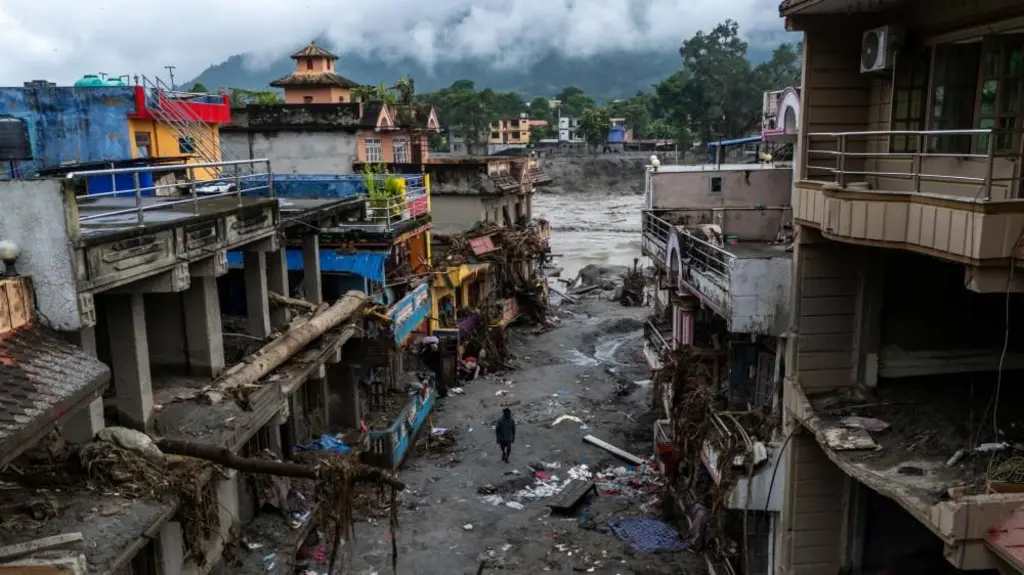
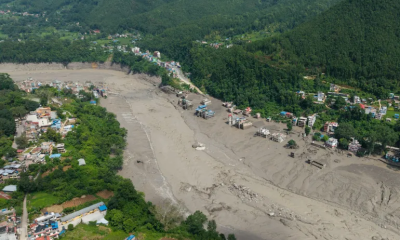
A head teacher’s quick decision to evacuate his school saved 900 pupils from deadly flash floods along the Nepal-Tibet border
Rajendra Dawadi tells the BBC he was tipped off about incoming flood waters and moved students to higher ground with just minutes to spare. One pupil says she and her friends survived by just 10 seconds and watched as a nearby bazaar was swept away
Wednesday’s disaster has killed at least 794 people and more than 2,500 people are missing in Nepal, local officials say
In Tibet, the official death toll is 16, with 546 reported to be missing, according to Chinese state media –
[BBC]

A ferry carrying around 260 people has capsized off the coast of northern Cyprus with a search underway for survivors, according to local media.
The catamaran-style boat was travelling from the port of Kyrenia, also known as Girne, and started sinking a few kilometres off the coast of the island state on Sunday.
There were no immediate reports of casualties.
[Aljazeera]
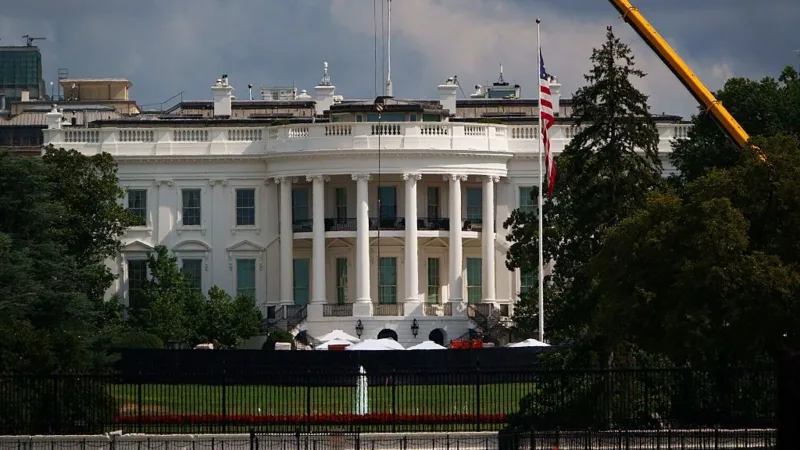
A former White House teleprompter operator has been ordered to pay more than $172,000 (£127,000) for using inside information to bet on US President Donald Trump’s speeches.
Gabriel Perez was found to have made trades on what the president would say during addresses between December 2025 and February 2026 on Kalshi – a prediction markets platform where users can bet on real-world events.
Its regulator, the Commodity Futures Trading Commission (CFTC), said Perez would have to surrender profits of $107,539.02 (£79,452) and pay a civil penalty of $65,000 (£48,000).
The White House has not yet commented. In July then press secretary Karoline Leavitt said Perez was on unpaid leave and would not return to his post.
Announcing the settlement on Friday, the CFTC said Perez had “misappropriated” his prior knowledge of Trump’s speeches to place bets “in breach of his duty of trust and confidence”.
It said his civil penalty had been reduced due to his “exemplary co-operation” with the investigation.
Perez has also been banned from trading for three years.
Writing on X, Kalshi’s lead lawyer Bobby DeNault welcomed the decision: “It doesn’t matter who you are: violate our rules or federal law and you will face the consequences.”
(BBC)

Showers will occur in the Western, Sabaragamuwa, Southern and Uva provinces and in Kandy and Nuwara-Eliya districts

Sun directly overhead Kalpitiya, Talawa, Sinharagama, Galkadawala, Nachchaduwa, Padikaramaduwa, Gomarankalla and Verugal about 12.10 noon today (01)

SJB asks what Speaker intended to do about allegations against CJ

Navy Chief attends strategic-level discussions in Delhi

ICRS: Sustained and collective efforts critical to address issue of missing persons

US, SL military exercise underway here

‘Dates have the highest sugar content to fight Coronavirus’

Sunday Island 27 December – Headlines

#SundayIsland 17th December – Headlines

Sunday Island – 28th March

Sunday Island Headlines – 21 March

Sunday Island – 21st February – Headlines
-

 News4 days ago
Eight politicians in drug kingpin probe
-

 Features2 days ago
“Wrap Me Up in My Blazer”— A Gentlemanly Bradby Reminiscence
-

 Business4 days ago
Sri Lanka opens up: A new season of direct connectivity
-

 Features4 days ago
Redefining ageing in Sri Lanka
-
 Features6 days ago
Insights from Chieftains of Uva: Genealogy of two Kandyan Families – Part II
-
 Latest News5 days ago
Nepal-Tibet floods: What happened, what caused them and who is missing?
-

 Editorial6 days ago
Warning of power cuts: El Niño and corruption
-

 Features6 days ago
Export diversification: Missing the wood for the trees – Part I