
News
Group led by Karu seeks to resurrect Yahapalana constitutional proposals

By Shamindra Ferdinando
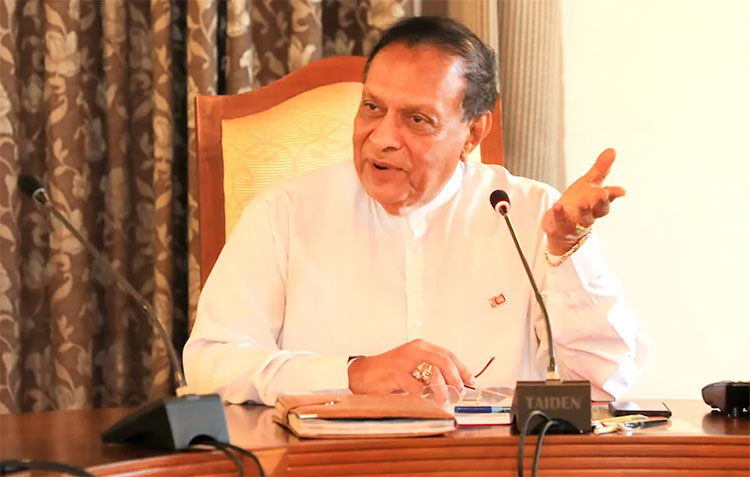
Chairman of the Public Representations Committee on Constitutional Reforms (PRCCR) Lal Wijenayake yesterday (12) said that former Speaker Karu Jayasuriya, in his current capacity as the Chairman of the National Movement for Social Justice (NMSJ), intended to initiate a dialogue with the National People’s Power (NPP) government to explore the possibility of advancing the constitutional proposals unveiled during the Yahapalana administration.
The Cabinet, headed by President Maithripala Sirisena, appointed the PRCCR on 22 Dec., 2015.
Attorney-at-law Wijenayake said that they recently discussed the constitutional proposals that were available for the NPP government’s consideration. “Having met at Jayasuriya’s residence, we reached consensus that the former Speaker should write to President Anura Kumara Dissanayake in this regard,” Wijenayake told The Island.
Noting that President Dissanayake serves as the leader of both the Janatha Vimukthi Peremuna (JVP) and the NPP, Wijenayake emphasized that Premier Dr. Harini Amarasuriya had been a member of the PRCCR. Therefore, the NPP government could comfortably handle the constitutional proposals prepared following a countrywide public consultations at the onset of Yahapalana administration (2015-2019), the civil society activist said.
Wijenayake explained the current status of their efforts in response to The Island queries. According to him, the NMSJ Chief has called another meeting later this month to pursue the matter. Pointing out that some felt that the government should entirely focus on post-Aragalaya economic recovery process, the new administration couldn’t afford to keep the constitutional solution on the backburner, Wijenayake said.
The Public Representations Committee consisted of S. Winston Pathiraja (Secretary), Faisz Musthapha, Prof. A. M. Navaratna Bandara, Prof. M. L. A. Cader, N. Selvakkumaran, S. Thavarajah, Kushan D’Alwis, Dr. Harini Amarasuriya, Dr. Kumudu Kusum Kumara, Sunil Jayaratne, Dr. Upul Abeyratne, Themiya L. B. Hurulle, S. Vijesandiran, M.Y.M. Faiz, Mrs. M. K. Nadeeka Damayanthi, Ms. Kanthie Ranasinghe, S. C. C. Elankovan, and Sirimasiri Hapuarachchi.
The Wijenayake-led PRC handed over a report that contained the entire set of proposals to Yahapalana Premier Ranil Wickremesinghe on 31 May, 2016.
Karu Jayasuriya served as the Speaker of the Yahapalana government and was a key supporter of that constitutional process that received the backing of the Geneva-based United Nations Human Rights Council.
Wijenayake said that in the wake of the November 2019 presidential election, President Gotabaya Rajapaksa appointed a nine-member committee, headed by Romesh de Silva, PC, to formulate a new draft Constitution. That effort was discarded after Aragalaya forced Gotabaya Rajapaksa out of office, Wijenayake said, urging all political parties represented in Parliament to examine their proposals with an open mind. “Let us stop playing politics with the constitution making process. We should be genuinely interested in formulating a Constitution that would meet the aspirations of all communities,” Wijenayake said.
Wijenayake, who is a member of the NPP’s Executive Committee, said that during the presidential and parliamentary election campaigns references were made to the PRCCR’s proposals.
Responding to another query, Wijenayake emphasized that in spite of the successful conclusion of the conflict the country couldn’t achieve true national reconciliation for want of a new Constitution that was acceptable to the people.
Former SLPP National List MP Gevindu Cumaratunga accused Jayasuriya of promoting Yahapalana constitutional proposals that had been roundly rejected by the people at the presidential and parliamentary polls in 2019 and 2020, respectively. Cumaratunga emphasized that the proposed new Constitution should reflect the actual situation on the ground or post-2009 position. Asked to explain, the former parliamentarian said that the government shouldn’t, under any circumstances, promote a federal agenda in the guise of enacting a new Constitution.
Wijenayake noted that at the time the PRCCR formulated those constitutional proposals those who now represented the main Opposition SJB were members of the UNP. In the Yahapalana Parliament the JVP had only six MPs though the Marxist party-led NPP consisted of 159 MPs in the current Parliament.



Sri Lanka commemorates Children’s Day on 1st October every year with the objective of further strengthening social attention towards protecting the rights of children, education, health, and well-being.
It has been observed that the challenges encountered by present-day children, such as risk, psychological and social stress, negligence, and various social and economic vulnerability conditions related to the internet and digital technology, have broadened rather than traditional child protection issues.
Furthermore, it has been recognized that there is a need to develop awareness regarding the rights of children and the
protection of not only children but also all parties involved, including parents, teachers, public officials, service providers, and the general public who are consistently associated with children.
Consequently, it has been proposed to establish “A National Children’s Week” in line with the national commemoration
of Children’s Day with the objective of raising public awareness of the rights of children, fostering social sensitivity towards children, and encouraging community involvement in the protection of children.
Accordingly, the Cabinet of Ministers has approved the resolution furnished by the Minister of Women and Children Affairs to implement special programs declaring “A National Children’s Week – 2026” from 25-09-2026 to 01-10-2026.
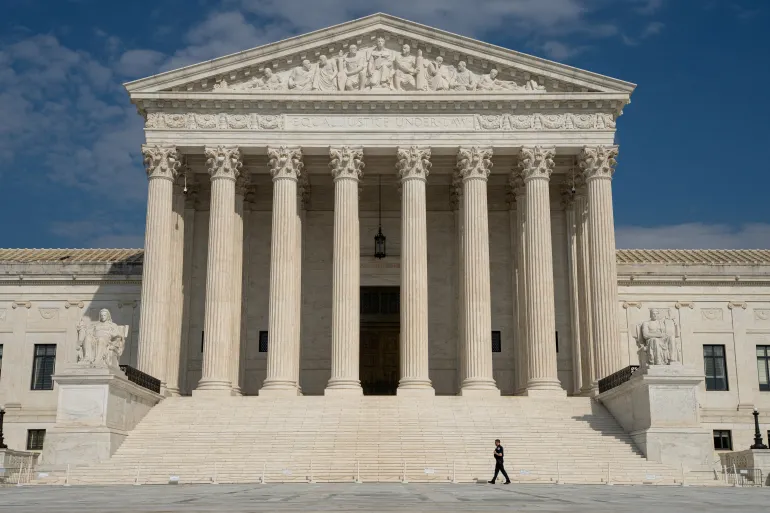
The US Supreme Court has rejected President Donald Trump’s bid to allow the US Postal Service to enforce a rule targeting mail-in ballots.
On Monday, the conservative-majority court refused to lift an order by US District Judge Indira Talwani that blocked the measure, dealing a blow to Trump’s efforts to restrict voting by mail before the November midterm elections.
The postal agency adopted the rule after Trump signed an executive order in March seeking to tighten rules around mail-in voting. Under this measure, states were required to send the Postal Service a list of recipients and use ballot mail envelopes previously approved by the agency.
The Postal Service was allowed to deny ballots if they failed to comply with the new standards or were not associated with registered voters on the lists.
Talwani imposed an injunction blocking the rule, saying that it likely violated the US Constitution and would be impossible to apply given the nearing midterms.
Shortly after, the Trump administration issued an emergency request to the Supreme Court urging it to allow an “important federal policy to protect the mails from being used to commit voter fraud”.
In late August, the Supreme Court had temporarily allowed Trump to move ahead with his executive order on procedural grounds, but did not rule on the legality of the plan.
In the latest decision, the court said in an unsigned order that the administration was “unlikely to succeed on the merits” of its challenge. Justice Samuel Alito and Justice Clarence Thomas dissented, with Alito writing that some plaintiffs lacked standing while the rest were pursuing a claim the court had recently called a “Hail Mary pass”.
[Aljaeera]
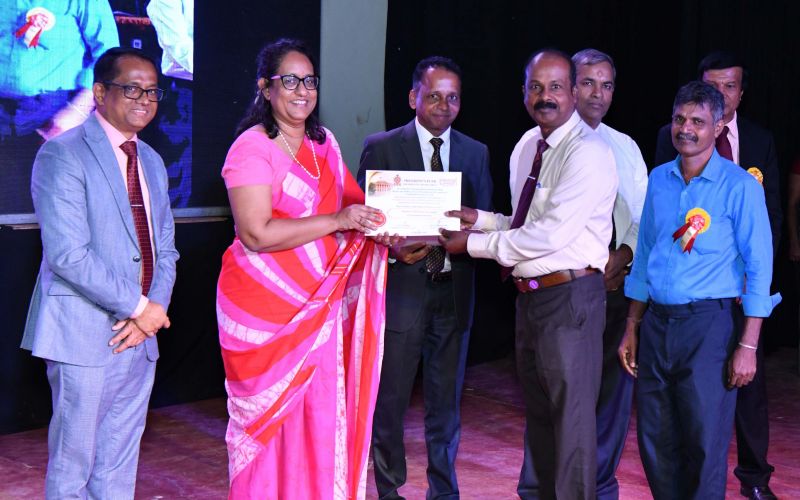
The “Mehewara Pasasum” programme to recognise Divisional Secretariats in the Eastern Province that demonstrated the highest level of performance in 2025 was held recently at the Swami Vipulananda Institute of Aesthetic Studies of the Eastern University, under the patronage of Prime Minister Dr Harini Amarasuriya. The programme was held as part of the initiative to decentralise President’s Fund services to the Divisional Secretariat level, with the aim of providing the public with a more efficient and prompt service.
Of the Divisional Secretariats in the three districts of Ampara, Batticaloa and Trincomalee, nine Divisional Secretariats, three from each district, were selected for recognition based on their efficiency in receiving President’s Fund applications and responding to them promptly.
Accordingly, the Sammanthurai Divisional Secretariat secured first place in the Ampara District, while the Addalachchenai Divisional Secretariat secured second place and the Kalmunai Divisional Secretariat third place.
In the Batticaloa District, first place was secured by the Kattankudy Divisional Secretariat, second place by the Manmunai North Divisional Secretariat and third place by the Koralaipattu Central Divisional Secretariat.
In the Trincomalee District, first place was secured by the Trincomalee Town and Gravets Divisional Secretariat, second place by the Kinniya Divisional Secretariat and third place by the Muttur Divisional Secretariat.
The first “Mehewara Pasasum” programme was held in Colombo, the second in Batticaloa, and this was the third programme.
Speaker Dr Jagath Wickramaratne, Minister of Industry and Entrepreneurship Development Sunil Handunnetti, Senior Additional Secretary to the President and Secretary to the President’s Fund Roshan Gamage, and a number of government officials and others were present at the occasion.
(PMD)

National Children’s Week from 25th September to 01st October

Nairobi and Munich to host 2029 and 2031 World Athletics Championships

Pakistan fined, docked 11 points in Edgbaston Test for slow over rate

England look to continue domineering T20 form

US Supreme Court rejects Trump mail ballot restrictions ahead of midterms

Eastern Province Divisional Secretariats recognized for outstanding performance

‘Dates have the highest sugar content to fight Coronavirus’

Sunday Island 27 December – Headlines

#SundayIsland 17th December – Headlines

Sunday Island – 28th March

Sunday Island Headlines – 21 March

Sunday Island – 21st February – Headlines
-

 Sports5 days ago
DDS set to lose Test captaincy
-

 News5 days ago
Sri Lanka faces new grid challenge as rooftop solar surges: former CEB GM
-

 Latest News5 days ago
Shafali, Deepti power India into sixth T20 Asia Cup final
-

 Opinion7 days ago
Navigating Sri Lanka’s Israeli Dilemma
-

 Latest News4 days ago
Sri Lanka thwart Fatima Sana challenge to secure Asia Cup final spot
-
 Features6 days ago
Lost for 90 years: Rare Goby resurfaces in Jaffna
-

 News3 days ago
Gnanasara Thero absconding after SC ruling
-

 News4 days ago
Ammunition cache found in old Kandy bungalow