
Business
Construction related counters active for second consecutive day


By Hiran H.Senewiratne
Construction related counters were notably active for the second consecutive day yesterday after President Anura Kumara Dissanayake’s assurance that a considerable amount of funds will be allocated in the forthcoming budget to the sector. This gave some impetus to the sector despite witnessing profit- takings at month end, stock market analysts said.
Amid those developments both indices moved upwards slightly. The All Share Price Index went up by 7.5 points while S and P SL20 rose by 1.59 points. Turnover stood at Rs 5.1 billion with 12 crossings.
Those crossings were reported in HNB, which crossed 400,000 shares to the tune of Rs 140 million and its shares traded at Rs 350, Hemas Holdings one million shares crossed to the tune of Rs 114 million and its shares sold at Rs 114, Commercial Bank 700,000 shares crossed for Rs 103 million; its shares sold at Rs 148, Dialog six million shares crossed to the tune of Rs 68.4 million; its shares traded at Rs 22.8, Central Finance 200,000 shares crossed for Rs 44 million; its shares traded at Rs 220, Ambeon Holdings 850,000 shares crossed to the tune of Rs 28.4 million; its shares traded at Rs 33.50.
Hayleys Fabrics 500,000 shares crossed to the tune of Rs 26.75 million; its shares sold at Rs 53.50, Sampath Bank 200,000 shares crossed for Rs 24.1 million; its shares traded at Rs 120.50, Hayleys 3.5 million shares crossed for Rs 21.3 million; its shares traded at Rs 6.10, Access Engineering 516,000 shares crossed for Rs 20.6 million and its shares fetched Rs 40 and Alumax 1.2 million shares crossed to the tune of Rs 20.1 million; its shares traded at Rs 16.80.
In the retail market, companies that mainly contributed to the turnover were; Access Engineering Rs 999 million (26.3 million shares traded), Hayleys Fabrics Rs 197 million (3.6 million shares traded), Browns Investments Rs 166 million (18.4 million shares traded), Commercial Bank Rs 122 million (825,000 shares traded), Softlogic Rs 114 million (18.2 million shares traded) and JKH Rs 111 million (4.9 million shares traded).During the day 197 million share volumes changed hands in 31000 transactions.
It is said that banking, manufacturing and construction sector counters were active. Access Engineering was one of the highest contributors to the market. JKH was also active as manufacturing sector counters were also active during the day.
Union Assurance and Sampath Bank have entered into a bancassurance partnership for Life Insurance products, the company said.
“Union Assurance PLC entered into a long-term referral bancassurance partnership for Life Insurance products with Sampath Bank PLC (“Bank”), on 30 January 2025, consequent to Board approval,” the insurance provider said, according to CSE sources.
Yesterday, the rupee was quoted at Rs 297.30/40 to the US dollar in the spot market, stronger from Rs 297.70/85 to the US dollar the previous day, dealers said, while bond yields were broadly flat.
Stocks were up 0.29 percent. A bond maturing on 15.12.2026 was quoted at 9.00/10 percent, up from 8.95/9.10 percent. A bond maturing on 01.05.2027 was quoted at 9.50/55 percent. A bond maturing on 15.03.2028 was quoted at 10.09/12 percent. A bond maturing on 01.05.2028 was quoted at 10.15/20 percent. A bond maturing on 15.10.2028 was quoted flat at 10.25/35 percent. A bond maturing on 15.09.2029 was quoted at 10.71/76 percent, up from 10.68/75 percent. A bond maturing on 15.10.2030 was quoted at 11.20/25 percent, up from 11.20/24 percent.

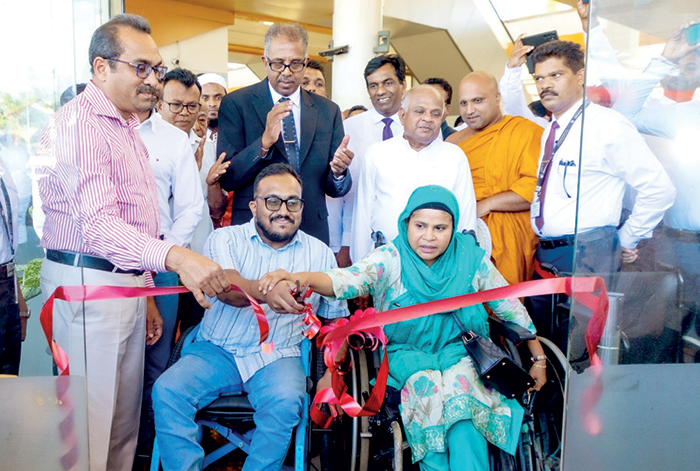
A new low-floor bus service that gives priority to persons with disabilities and special needs was launched last Tuesday (21) from the Makumbura Multimodal Center (MMC).
The service was inaugurated under the patronage of Minister of Transport, Highways and Urban Development, Bimal Rathnayake.
Accordingly, ten specially designed low-floor buses have been introduced into the transport service today. These buses are specially designed so that wheelchair users, visually impaired passengers and also expectant women can board the bus with ease, the Transport Ministry said.
Each bus has 30 passenger seats and separate seating areas have been allocated for passengers using wheelchairs.
The pilot project operates on routes from Makumbura to Colombo Fort and from Makumbura to Kadawatha. These routes also cover major hospitals including the Colombo National Hospital and the Maharagama Apeksha Hospital.
Speaking at the event, Subject Minister Bimal Rathnayake stated that while these buses prioritize the differently-abled community, they will also provide a comfortable and reliable transport service for all passengers.
He also noted that 122 low-floor buses are planned to be introduced into service before the end of this year, and that in the future the service will be expanded to areas such as Kandy, Batticaloa, Matara and Jaffna.
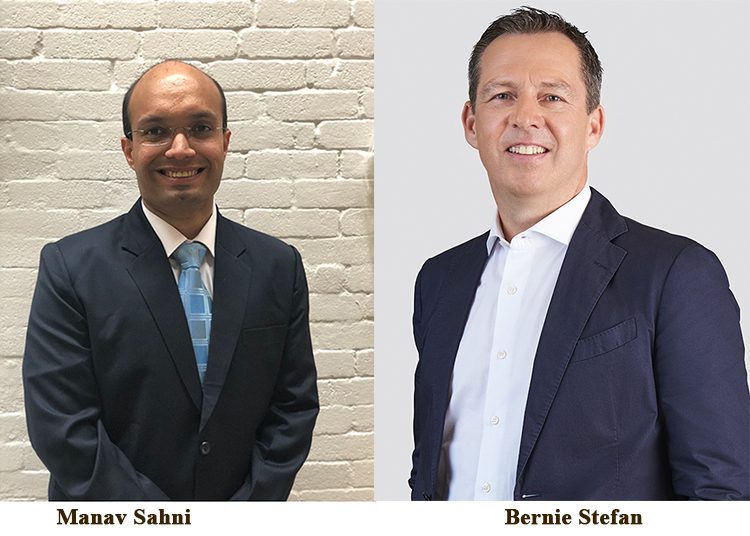
Nestlé Lanka Limited has announced the appointment of Manav Sahni as its Chairman and Managing Director effective 01 May 2026. He will be succeeding Bernie Stefan, who will be transitioning to a new global role within the Nestlé Group. Bernie Stefan led Nestlé’s Sri Lankan operations through a particularly challenging time since 2023 – and has successfully guided the company through a strategic turnaround, positioning it on a axis for sustainable growth.
Speaking on his tenure at Nestlé Lanka, Bernie commented “Leading Nestlé Lanka has been a deeply meaningful chapter in my Nestlé journey. I am grateful to have worked alongside an amazing and resilient team that continues to make a difference for Sri Lankans across the country. On a personal note, it was an amazing opportunity to live on this beautiful island and experience firsthand the openness, warmth and kindness of its people, which has been the highlight of my Nestlé career to date. As Nestlé Lanka marks 120 years of enriching Sri Lankan lives, it is especially humbling to reflect on the role we have played in building on this legacy – positively touching individuals and families, strengthening community partnerships, and advancing our sustainability commitments. I am thankful to my colleagues, partners and stakeholders for their collaboration and trust, and to the wider business community, including through my role as a Board Member of the Ceylon Chamber of Commerce, for the opportunity to reinforce Nestlé’s commitment to responsible corporate citizenship. I leave very confident in the strength of the team and the journey that lies ahead.”
Manav Sahni brings with him over 18 years of experience in the FMCG & Telecom sector. Prior to taking on the role as Chairman and Managing Director of Nestlé Lanka Limited, he has been heading Nestlé’s Dairy business for the South Asia Region, where he expertly managed a highly diverse portfolio, driving sustainable business transformation.
“I am thrilled to take on the role of Chairman and Managing Director of Nestlé Lanka at such a pivotal moment in its journey. Nestlé has been part of Sri Lankan households for generations, and I am excited to work with the team to continue delighting consumers with tasty and nutritious products, while strengthening the positive impact we create through our brands and initiatives.”
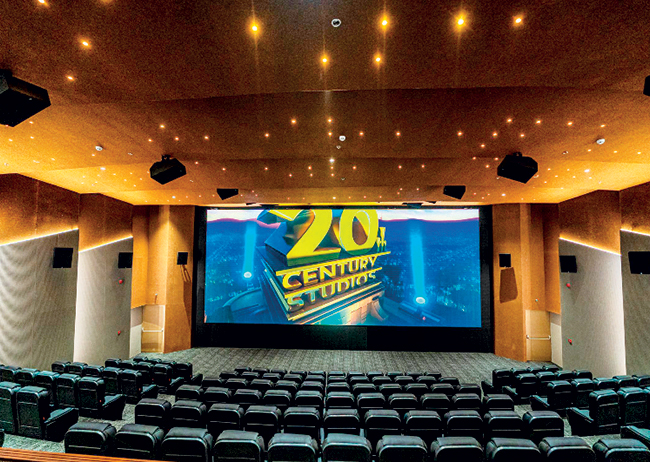
Ceylon Theatres will unveil the newly revamped Majestic Cineplex on the 29th of April 2026, beginning a new chapter for one of Sri Lanka’s best known cinema destinations. Located at Majestic City Colombo, Majestic Cineplex returns with major technology upgrades, enhanced comfort, and a range of premium viewing options, reinforcing Ceylon Theatres’ long standing reputation for raising the bar in cinema entertainment experiences in Sri Lanka. Accordingly, the upgraded Cineplex will be completely open to the public from 29th April 2026 onwards.
For generations of moviegoers, Majestic Cineplex has been a landmark venue in Colombo, and its latest transformation brings together the nostalgia of a familiar name with the excitement of a modern cinema experience. Leading the new screen line up is Majestic Platinum, which introduces Sri Lanka’s first and only digital LED cinema screen. Designed to deliver sharper visuals, deeper contrast, richer colour, and outstanding clarity, the auditorium features a 3D 4K Tricorne LED Cinema Screen together with Dolby Atmos surround sound. Majestic Platinum offers 226 seats, including 18 VIP recliner seats for those chasing a premium cinema experience.
The cineplex also features three additional theatres, each designed to offer a high quality movie experience. Majestic Superior includes Barco 2K projection, 3D capability, and 7.1 surround sound, with seating for 150 patrons. Majestic Ultra features the same advanced projection and audio systems with 149 seats. Majestic Gold offers a more private luxury setting with Barco 2K projection, 3D capability, DTSX surround sound, and 30 leather recliner seats, ideal for those looking for the most premium and exclusive experience.
Patrons can also enjoy an upgraded café experience with freshly prepared and ready to eat food available for purchase at the counter, along with convenience of being served to your seat. The new café experience, together with the upgraded theatres make for a more relaxed, enjoyable, and fulfilling experience for everyone.
Discussing the relaunch, Ganga Rathuvithana, General Manager Operations at Ceylon Theatres said, “Majestic Cineplex has always been a special part of Colombo’s cinema culture, and we are proud to welcome audiences back with an experience that reflects the future of movie entertainment. We have always believed in investing in the best available technology, from introducing Sri Lanka’s first 3D cinema to now launching the country’s first digital LED cinema screen. Our revamped Majestic Cineplex is designed to give movie lovers something truly special.”

Russian circumnavigation team arrive in Sri Lanka

Trump unhurt after shots fired at White House correspondents’ dinner

Sooryavanshi ton in vain as Sunrisers Hyderabad raze a 229 chase

Prabhsimran, Shreyas upstage Rahul’s 152* to mow down record T20 chase

Showers expected in the Western, Sabaragamuwa and North-western provinces and in Galle, Matara, Kandy and Nuwara-Eliya districts after 2.00 pm.

Heat Index at Caution Level in the Northern, North-central, North-western, Western, Sabaragamuwa, Southern, and Eastern provinces and in Monaragala district during the day time

‘Dates have the highest sugar content to fight Coronavirus’

Sunday Island 27 December – Headlines

#SundayIsland 17th December – Headlines

Sunday Island – 28th March

Sunday Island Headlines – 21 March

Sunday Island – 21st February – Headlines
-
 News6 days ago
Rs 13 bn NDB fraud: Int’l forensic audit ordered
-

 News4 days ago
Lanka faces crisis of conscience over fate of animals: Call for compassion, law reform, and ethical responsibility
-

 Opinion7 days ago
Shutting roof top solar panels – a crime
-
 News3 days ago
Whistleblowers ask Treasury Chief to resign over theft of USD 2.5 mn
-

 News3 days ago
No cyber hack: Fintech expert exposes shocking legacy flaws that led to $2.5 million theft
-

 News7 days ago
Church calls for Deputy Defence Minister’s removal, establishment of Independent Prosecutor’s Office
-
 News4 days ago
USD 2 mn bribe: CID ordered to arrest Shasheendra R, warrant issued against ex-SriLankan CEO’s wife
-

 Features7 days ago
The Digital Pulse: How AI is redefining health care in Sri Lanka?