
News
EC: HC judgment won’t bar Premalal from contesting

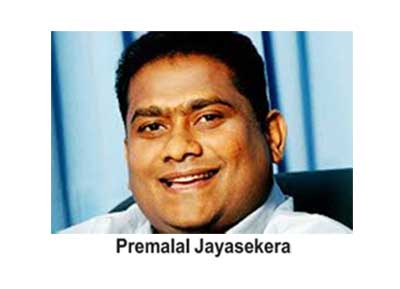
… former, present polls monitors differ
By Shamindra Ferdinando
Election Commission (EC) Chairman Mahinda Deshapriya yesterday (3) said that the recent Ratnapura High Court ruling, in respect of the 2015 January Kahawatte killing, wouldn’t bar SLPP candidate Premalal Jayasekera from contesting the parliamentary polls on August 5.
Deshapriya said so when The Island asked for comment on the Ratnapura, High Court sentencing the SLPP candidate, along with two others, to death, over the killing of a person backing the then common candidate Maithripala Sirisena.
At the time of the incident, Jayasekera held the post of Deputy Minister in the SLFP-led UPFA government.
Deshapriya said that there had never been a similar case before though there had been cases of elected lawmakers being unseated after being found guilty by courts.
“We’ll discuss the issue at hand after the election and decide what to do,” Deshapriya said, adding that there was no change in the status quo as a result of the Ratnapura HC ruling.
The EC consists of Mahinda Deshapriya, Prof. Ratnajeevan Hoole and Nalin Abeysekera, PC.
CMEV (Center for Monitoring Election Violence) spokesman Manjula Gajanayake told The Island that the top SLPP leadership should have considered all aspects before accommodating the former lawmaker on the Ratnapura nomination list. The SLPP could have easily avoided what Gajanayake called unnecessary complication by fielding another in place of Jayasekera, Gajanayake said. The polls monitor pointed out that the SLPP was aware that the Kahawatte case had been heard and the ruling was pending.
Responding to another query, Gajanayake said that the EC as well as political parties, especially those represented in parliament would have to address the issue.
Ratnapura District SLPP list comprises Vasudeva Nanayakkara (leader), Pavitradevi Wanniarachchi, Janaka Wakkumbura, John Seneviratne, Premalal Jayasekera, Dunesh Gankanda, Akila Ellawala, Sanee Rohana Kodituwakku, Ranjith Bandara, Gamini Waleboda, Muditha Prishanthi, Hettiarachchige Lakshman Premaratne, Athula Kumara Rahubadda and Miyuru Bhashitha Liyanage. SLPP’s 14 candidates, include six former lawmakers. Of them, Dunesh Gankanda was elected from the Ratnapura district on the UNP ticket at the last parliamentary polls in August 2015.
The SLPP should blame itself for the crisis, Gajanayake said.
On Feb 26, 2019 four suspects who had been charged with killing of an individual in Kahawatta during the 2015 presidential polls campaign were acquitted and released by the High Court of Ratnapura. However, Jayasekera and two others remained as accused.
Executive Director of PAFFREL (People’s Action for Free and Fair Election) Rohana Hettiarachchi told The Island that at the time Jayasekera received nomination he hadn’t been found guilty by High Court of Ratnapura. Therefore, there couldn’t be an issue in voters exercising their franchise for Jayasekera tomorrow, Hettiarachchi said. However, the EC would have to seek legal advice before Jayasekera received oaths as a member of parliament.
The police arrested Jayasekera in the Beruwela police area while he was hiding after the high profile Kahawatte killing.
CaFFE (Campaign for Free and Fair Elections) head Ahamed Manas Makeen told The Island that the electorate should exercise their franchise for those who had clean records. Those who abused women and children or encouraged such practices, bribery and corruption and engaged or promoted violence or extremism shouldn’t be encouraged. Makeen said that the CaFFE stand was relevant to all districts not only Ratnapura where a candidate was sentenced to death.
However Makeen’s predecessor, Rajith Keerthi Tennakoon, in a letter dated Aug 2 addressed to the EC, on behalf of the Samagi Jana Balavegaya (SJB) said that in terms of the Article 89 of the Constitution a convicted murderer is automatically deprived of the right to exercise his franchise. Therefore, Jayasekera couldn’t vote at tomorrow’s general election, Tennakoon said, pointing out that in terms of Article 91 of the Constitution, a person disqualified to vote at the general election couldn’t contest. Tennakoon urged the EC to advice the Returning Officer of Ratnapura accordingly without delay.
Keerthi functions as the SJB representative at the EC.
SLPP Chairman Prof. G.L. Peiris said that they were watching the situation.



LAWASIA, the Law Association for Asia and the Pacific, has stated that in court proceedings of exceptional constitutional significance, the basis upon which a Bench is constituted should be transparent and discernible and capable of maintaining public confidence in the institutional impartiality of the Court.
The following is the text of the statement issued by LAWASIA regarding the proceedings on the proposed 22nd Amendment to the Constitution: “LAWASIA, the Law Association for Asia and the Pacific, reiterates its longstanding commitment to the rule of law, judicial independence and the proper administration of justice.
LAWASIA refers to its Statement Regarding the Extension of the Retirement Age of Judges in Sri Lanka dated 30th June 2026, in which it expressed concern regarding the proposal to amend the Constitution of Sri Lanka to extend the retirement ages of Judges of the Supreme Court and the Court of Appeal. LAWASIA emphasised, in particular, the implications of such ad hoc reform for judicial independence and the need for transparency, consultation and stakeholder engagement.
The proposal has since proceeded as the Twenty-Second Amendment to the Constitution Bill, and its constitutionality has been challenged before the Supreme Court of Sri Lanka. Concerns regarding the proposed amendment and judicial independence have also been expressed by the Commonwealth Lawyers Association, the International Association of Judges and the United Nations Special Rapporteur on the Independence of Judges and Lawyers.
LAWASIA has taken note of the Report of the Commonwealth Lawyers Association dated 7 September 2026, following the visit of its President to Sri Lanka to observe the proceedings before the Supreme Court.
LAWASIA emphasises that the concerns expressed in this Statement relate to the procedure followed in those proceedings. LAWASIA does not express any view on the merits of the constitutional challenges or the substantive arguments advanced by the parties.
LAWASIA notes with serious concern that applications for the recusal of the Chief Justice and for the petitions to be heard by a Full Court comprising all sitting Judges of the Supreme Court were declined.
The CLA report records that no reasons were given for the dismissal of those applications other than that the Court had jurisdiction to hear the matter. The recusal application had been made in circumstances where the Petitioners contended that the Chief Justice would be the first Supreme Court Judge who could benefit from the proposed amendment.
LAWASIA also notes the concerns raised regarding the composition of the five-member Bench.
With the exception of the Chief Justice, the four Judges immediately senior to Justice Achala Wengappuli; Justice Yasantha Kodagoda, Justice A. H. M.D. Nawaz, Justice Shiran Gooneratne and Justice Janak de Silva were not included in the Bench.
LAWASIA recognises that seniority is not, of itself, determinative of the constitution of a Bench and does not question the competence of the Judges who heard the petitions. Nevertheless, in proceedings of such exceptional constitutional significance, the basis upon which a Bench is constituted should be transparent and discernible and capable of maintaining public confidence in the institutional impartiality of the Court.
LAWASIA expresses further serious concern that, following the oral submissions of the Interveners and the State, the Petitioners were not afforded an opportunity to make oral submissions in reply, although they were permitted to tender written replies by 3.00 p.m. the following day. The opportunity to respond meaningfully to material submissions made against a party’s case is an important aspect of procedural fairness.
LAWASIA emphasises that judicial independence is not confined to the substantive outcome of judicial proceedings; it extends to the integrity of the process by which judicial decisions are reached. This is especially important where proceedings concern a constitutional amendment directly affecting the tenure of serving Judges.
Scrutiny of judicial procedure should not be regarded as an attack upon judicial independence. On the contrary, judicial independence must be safeguarded both in fact and in public perception, and procedural fairness, impartiality and transparency are essential to maintaining public confidence in the Judiciary.
LAWASIA therefore reiterates its Statement of 30th June 2026 and calls upon all institutions concerned to uphold the highest standards of judicial independence, natural justice, procedural fairness and transparency.
The rule of law requires not only an independent judiciary, but a judicial process which commands public confidence as fair, impartial and transparent.”
Easter Sunday probe:
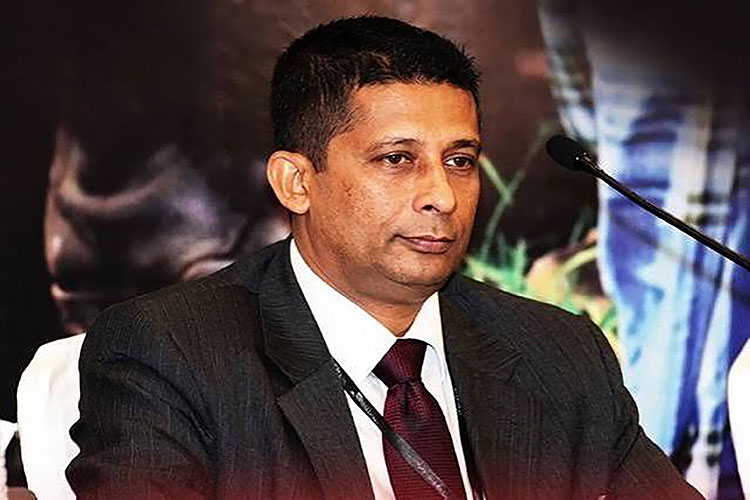
Ranjan Senaratne Bandara, Officer-in-Charge of the ‘Q’ Division of the State Intelligence Service (SIS), has been arrested in connection with the ongoing investigations into the 2019 Easter Sunday attacks.
Additional Solicitor General Dileepa Peiris, on Tuesday (15), sought a travel ban from the Fort Magistrate Court on the officer who had been responsible for handling the extremist desk.
When the matter was taken up, the prosecution was represented by ASG Peiris and DIG Shani Abeysekera The Defence team was led by President’s Counsel Shavindra Fernando.
The prosecution’s submissions centred principally on two matters, specifically hospitalisation of Major General Suresh Sallay and allegations regarding the Easter Sunday attacks.
The ASG criticised the Director of the National Hospital of Sri Lanka (NHSL) for failing to submit within the stipulated time the medical report ordered by court. He requested that the Director be directed to appear before Court on the next date, together with the relevant medical report.
The ASG further alleged that certain doctors, including the Director of the NHSL, were conspiring to facilitate the continued hospitalisation of the suspect. He submitted that Major General Sallay was receiving food from home, having daily visits from family members and weekly visits from his lawyers, and effectively enjoying a “vacation” while in hospital. It was further argued that his continued hospitalisation was hampering the ongoing investigations.
The ASG also submitted that the hospitalisation had resulted from the suspect’s decision to fast, and that his subsequent cardiac condition had arisen as a consequence of that fasting. This assertion is factually incorrect, as the implantation of the ICD was entirely unrelated to his fasting and was necessitated by his underlying cardiac condition.
The Defence strongly objected to the suggestion that the Defence team had conspired with the Director and medical personnel to facilitate the suspect’s continued stay in hospital. The Defence also made it clear that it had no objection, whatsoever, to the medical report being submitted to Court in a timely manner.
Regarding the allegations concerning the Easter Sunday attacks, the ASG, thereafter, made a number of allegations concerning members of the Army, the Military Directorate, the Commanding Officer of 1 MIC, in Vavuniya, and personnel attached to the State Intelligence Service (SIS), alleging that they were connected to the conspiracy surrounding the Easter Sunday bombings. The ASG alleged that a section with the Military Intelligence had protected Zahran Hashim, who led the Easter Sunday suicide attacks.
The ASG also sought a court order imposing a travel ban on an SIS officer who had been responsible for handling the extremist desk. He further characterised these individuals as “henchmen” of Major General Suresh Sallay and sought to establish a connection between them and retired Maj. Gen. Sallay.
In reply, the Defence submitted that there was no reason to waste the Court’s valuable time by responding at length to what were, at this stage, merely unsubstantiated theories advanced by the CID and the prosecution.
The Defence emphatically stated that there was absolutely no evidence demonstrating that any of these individuals had any connection, whatsoever, with my client at the time of the incidents in question. It was submitted that these allegations appeared to be nothing more than speculative assertions intended to create a particular narrative and generate media publicity, rather than allegations supported by substantive evidence.
The Defence maintained that any allegation of a connection between Sallay and the individuals referred to by the prosecution must be established through credible and admissible evidence, rather than conjecture,a or unsubstantiated assertions.
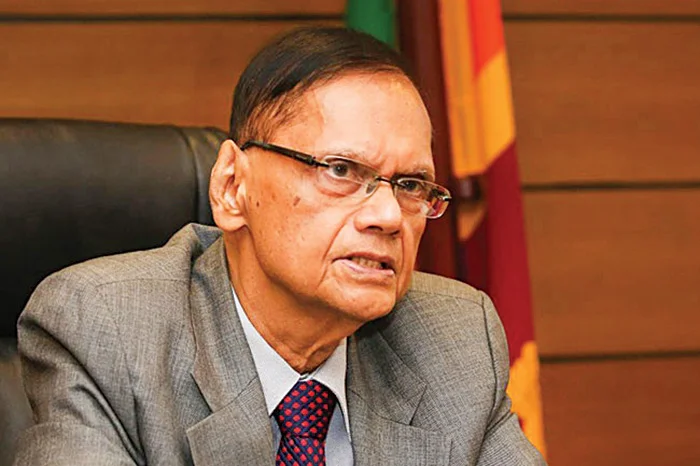
Convenor of the Janathawadi Joint Opposition, Prof. G. L. Peiris, yesterday (16), said that the NPP government was under fire in Geneva due to its failure to keep its promise to do away with the Prevention of Terrorism Act (PTA).
The government had to withdraw the proposed new antiterrorism law as it failed to secure the support of the international community. Addressing the media at the Flower Road Office of former President Ranil Wickremesinghe, the former External Affairs Minister explained how the NPP government had ended up in an extremely difficult and embarrassing situation at the UNHRC for want of an acceptable anti-terrorism law to replace the PTA, enacted in 1979.
Prof. Peiris accused the government of failing to initiate talks with the interested parties. Alleging that the process had failed to address the concerns of all, he said that the proposed law that was made public, in Dec. 2025, and the subsequent one, too, failed to have the backing of the interested parties.
The UNHRC was waiting for the government to unveil a new proposal acceptable to all, Prof. Peiris said, pointing out that last year 44 persons had been detained in terms of the PTA and there were 12 cases so far this year. The former Minister stressed that the NPP government was using the PTA that itself was found to be unacceptable and should be repealed.
Prof. Peiris quoted the Geneva Human Rights Chief, Turk, as saying that the PTA should be suspended, pending introduction of a new law.
Prof. Peiris also attacked the NPP over its failure to at least begin the process to do away with the controversial Bill. The ex-Minister censured the NPP over its handling of the alleged Chemmani mass graves while explaining how the government bungled the re-election of Turk, in New York. While 144 countries backed Turk’s re-election, Sri Lanka refrained from taking a position, Prof. Peiris said, explaining how the mishandling of the issue weakened the country’s position. Prof. Peiris said that Sri Lanka’s decision to abstain at the vote was counterproductive.
Prof. Peiris suggested that Sri Lanka should have supported the re-election of Turk. The position taken by the government led to Turk taking a strong stand in respect of Sri Lanka. The former Minister said that the country was at risk of Turk’s anger due to wrong government policy.
Prof. Peiris also raised the failure of the government to introduce a new Independent Prosecutor, a pledge included in its manifesto. The government shouldn’t make empty promises, Prof. Peiris said, urging the government to be mindful in making promises to the people here and to the international community. (SF)

22A: LAWASIA questions compostion of five-judge bench

Sri Lanka’s lifestyle coffee culture boom and the two faces of its economy

England thrash Sri Lanka after Harry Brook blasts brilliant century

Patriots, terrorists and succour for terror

BRICS upholds inclusive growth; re-affirms South-South cooperation

SIS officer arrested soon after allegation made in court

‘Dates have the highest sugar content to fight Coronavirus’

Sunday Island 27 December – Headlines

#SundayIsland 17th December – Headlines

Sunday Island – 28th March

Sunday Island Headlines – 21 March

Sunday Island – 21st February – Headlines
-

 Sports6 days ago
DDS set to lose Test captaincy
-

 News6 days ago
Sri Lanka faces new grid challenge as rooftop solar surges: former CEB GM
-

 Latest News6 days ago
Shafali, Deepti power India into sixth T20 Asia Cup final
-

 News4 days ago
Gnanasara Thero absconding after SC ruling
-

 Latest News5 days ago
Sri Lanka thwart Fatima Sana challenge to secure Asia Cup final spot
-

 News5 days ago
Ammunition cache found in old Kandy bungalow
-

 Editorial6 days ago
A flight of fancy
-

 News5 days ago
Green Climate Fund (GCF) Regional Dialogue for East and South Asia will be held from 14 to 17 September 2026 at Cinnamon Life at City of Dreams Hotel, Colombo