
News
CPJ urgeS Prez AKD to uphold press freedom


The Committee to Protect Journalists yesterday (13) joined 24 civil society organizations in urging recently elected President Anura Kumara Dissanayake to uphold press freedom.
CPJ has documented a persistent pattern of impunity for murders and attacks against journalists in Sri Lanka, including dozens that occurred during and in the aftermath of the country’s 26-year civil war that ended in 2009.
Its letter titled ‘Press Freedom Protections in Sri Lanka’ addressed to the President and copied to Justice Minister Harshana Nanayakkara and Mass Media Minister Dr. Nalinda Jayatissa in full: “Congratulations on your recent election as president of Sri Lanka. We, the undersigned 25 civil society organisations, are writing to respectfully urge your leadership to ensure that Sri Lanka upholds press freedom and the right to freedom of expression, which are protected by the country’s constitution and the International Covenant on Civil and Political Rights, to which Sri Lanka is a state party.
“We welcome the expressed commitment of the National People’s Power to uphold media freedom and pursue accountability for past crimes against journalists, as outlined in the coalition’s election manifesto. To that end, we call upon the newly elected government to:
1. Reopen or initiate prompt, impartial, and transparent investigations to ensure accountability in cases of violence against the press and other violations of human rights and freedom of expression, including, but not limited, to dozens of murders, abductions, and physical attacks on journalists and media offices during and in the aftermath of the country’s 26-year civil war that ended in 2009. The investigations should meet international standards, including those outlined under the United Nations’ Minnesota Protocol on the Investigation of Potentially Unlawful Death.
We stress that effective investigations require robust protection mechanisms for witnesses and investigators— an issue thoroughly described in the 2022 case hearing on slain journalist Lasantha Wickrematunge for The People’s Tribunal on the Murder of Journalists, a joint initiative of the Committee to Protect Journalists, Free Press Unlimited, and Reporters Without Borders. We welcome the recent order for a reinvestigation into the 2005 murder of journalist Dharmeratnam Sivaram. We further urge authorities to bring the prolonged prosecution for the 2010 enforced disappearance and suspected murder of journalist and cartoonist Prageeth Ekneligoda to a timely and effective end while ensuring accountability for all perpetrators and providing access to justice and effective remedies for Ekneligoda’s family.
2. Ensure that law enforcement agencies end the harassment and intimidation of journalists, especially ethnic Tamils, who have long faced intensive surveillance and other undue restrictions on their reporting. Law enforcement agencies should facilitate the withdrawal of criminal cases brought against journalists in retaliation for their work. Further, authorities should not take legal action against journalists for “intimidating public servants.”
3. Repeal the Online Safety Act, which grants sweeping powers to a commission appointed by the president to censor online content, thereby creating a chilling effect on human rights, including the right to freedom of expression. The law should be replaced with new cybersecurity legislation aimed at addressing genuine online harms, such as harassment and fraud, rather than enabling disproportionate and unjustified restrictions on peaceful online speech and jeopardizing the right to privacy.
4. Repeal the Prevention of Terrorism Act, which has long been used to harass and imprison journalists for their work. The relevant offenses should instead be addressed within the framework of the country’s existing criminal laws.
5. Amend the Parliamentary (Powers and Privileges) Act, which curtails reporting on parliamentary affairs that are crucial matters of public interest and introduce proactive measures to ensure greater media access to parliamentary committees.
6. Amend the Personal Data Protection Act to remove provisions allowing the law to override the Right to Information Act, which is essential for investigative journalism. Neither law should override the other in their respective implementation processes.
7. Establish an independent, self-regulatory media commission that will uphold press freedom and adjudicate matters of journalistic ethics without criminalizing reporters or placing undue restrictions on their work. The commission should ensure fair and adequate representation of the media sector within its membership and guarantee the right to appeal against its decisions, including in a court of law.
Your election as president of Sri Lanka, a country haunted by impunity for brutal attacks on the media, offers a historic opportunity to demonstrate a genuine commitment to human rights and the rule of law. We urge you to seize this critical moment and stand ready to support your efforts to protect media freedom, as well as the rights to freedom of expression and access to information. The Sri Lankan people deserve no less.”
The letter has been signed by the following organisations: Access Now, Amnesty International, Bolo Bhi Center for Investigative Reporting (CIR), Center for Justice and Accountability, CIVICUS: World Alliance for Citizen Participation, Committee to Protect Journalists, Dart Center for Journalism and Trauma, Federation of Media Employees Trade Unions (FMETU), Free Media Movement, Free Press Unlimited, Free Speech Collective, Freedom Forum Nepal, Human Rights Watch, IFEX, International Federation for Human Rights (FIDH), International Federation of Journalists, International Press Institute, Journalists for Democracy in Sri Lanka (JDS), Overseas Press Club of America, Inc. PEN International, PEN Sri Lanka, Reporters Without Borders, Robert F. Kennedy Human Rights and Sri Lanka Working Journalists Association.

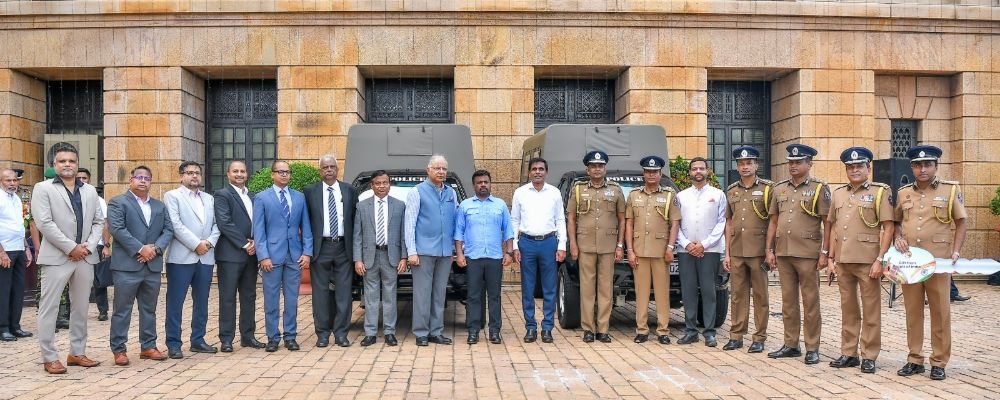
A consignment of 134 single cabs gifted by the Government of India under the Indo–Sri Lanka Friendship Programme for the use of the Sri Lanka Police was officially handed over to President Anura Kumara Dissanayake on Monday (25) morning at the Presidential Secretariat.
The Government of India has incurred an expenditure of approximately LKR.300 million for this initiative and the vehicles are scheduled to be distributed among police stations in the Northern Province.
Speaking at the occasion, Indian High Commissioner Santosh Jha stated that similar assistance would continue to be extended to Sri Lanka in the future.
In appreciation of this gift by the Government of India, Inspector General of Police Priyantha Weerasooriya presented a commemorative memento to Indian High Commissioner Santosh Jha.
Minister of Public Security and Parliamentary Affairs, Ananda Wijepala, Deputy Minister of Public Security and Parliamentary Affairs, Sunil Watagala, Secretary to the Ministry of Public Security Ravi Seneviratne, General Manager of DIMO Rajeev Pandithage, officials of the Indian High Commission and senior officers of the Sri Lanka Police were also present at the occasion.
(PMD)
Latest News
Landslide Early Warnings issued to the Districts of Colombo, Gampaha, Kalutara, Kegalle, Nuwara Eliya and Ratnapura extended till 1600 hrs on Tuesday [26]

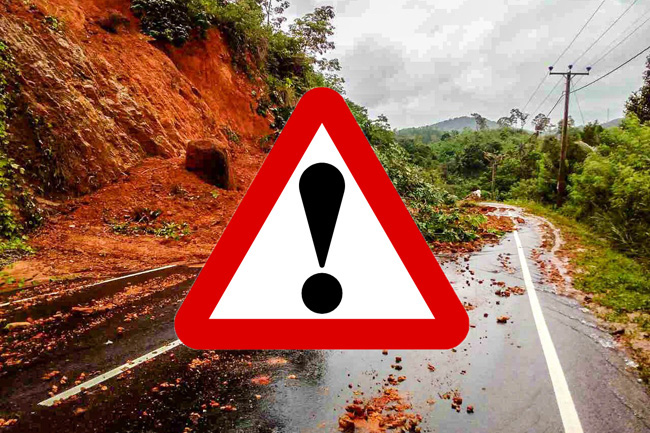
The National Building Reasearch Organisation [NBRO] has extended the landslide early warnings issued to the districts of Colombo, Gampaha, Kalutara, Kegalle, Nuwara Eliya and Ratnapura till 1600 hrs on Tuesday 26th May 2026.
Accordingly,
The LEVEL II [AMBER] landslide early warnings issued to the Divisional Secretaries Divisions and surrounding areas of Dehiowita, Deraniyagala, Ruwanwella and Yatiyanthota in the Kegalle district and Kuruwita, Ratnapura, Ayagama and Eheliyagoda in the Ratnapura district and
The LEVEL I [YELLOW] landslide early warnings issued to the Divisional Secretaries Divisions and surrounding areas of Seethawaka and Padukka in the Colombo district, Attanagalla in the Gampaha district, Palindanuwara, Mathugama, Bulathsinhala, Agalawatta, Ingiriya and Horana in the Kalutara district, Bulathkohupitiya in the Kegalle district, Ambagamuwa in the Nuwara Eliya district and Kiriella, Pelmadulla, Nivithigala, Elapatha and Kalawana in the Ratnapura district have been extended.

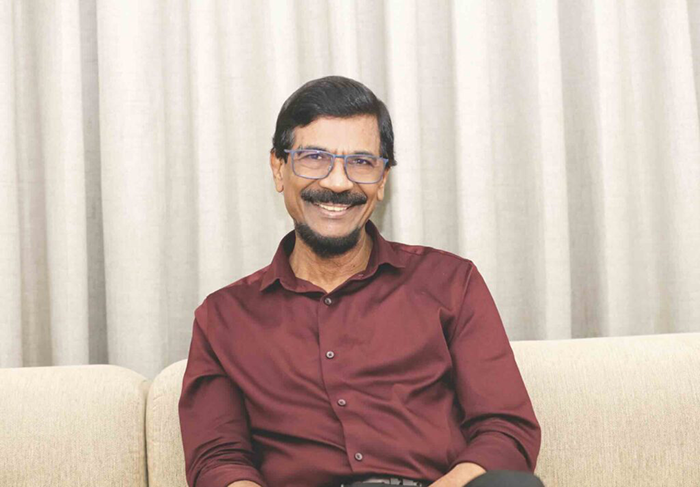
The much-delayed Provincial Council (PC) elections cannot be held this year due to financial and legal constraints, JVP General Secretary Tilvin Silva has said in Jaffna.Silva said so, fielding questions from journalists after the opening of the NPP coordination office in the Jaffna District on Saturday.
When asked whether the government was under Indian pressure to conduct the Provincial Council elections soon, Silva answered in the negative, claiming that Sri Lankan and Indian governments maintained close and friendly relations with a strong level of understanding.
He said budgetary allocations had been made for the PC elections, but the government had been compelled to divert resources for disaster relief following the impact of Cyclone Ditwah. According to Silva, nearly Rs. 500 billion had to be allocated for relief measures, making it difficult to hold the elections this year. He further said legal complications in the electoral reform process had also contributed to the delay in holding the PC elections, noting that a parliamentary committee had been appointed to determine the electoral systems under which the PC polls should be conducted. Once the committee submitted its report and if no further issues arose, the elections could possibly be held next year, he said.
Silva also said the government had taken measures to strengthen reconciliation and development in the North by releasing lands previously occupied by military camps and improving road infrastructure.He added that empowerment initiatives were being implemented under the Praja Shakthi programme and that both Sri Lanka and India were continuing to work in close cooperation.

Cambodia’s former opposition leader receives royal pardon for 27-year sentence

Death toll rises to four in Philippines building collapse; 17 missing

India gifts 134 cabs to Sri Lanka Police

Landslide Early Warnings issued to the Districts of Colombo, Gampaha, Kalutara, Kegalle, Nuwara Eliya and Ratnapura extended till 1600 hrs on Tuesday [26]

Attacks on Ebola centres intensify in eastern DRC amid outbreak fears

Oil prices fall amid mixed signals on US-Iran peace deal

‘Dates have the highest sugar content to fight Coronavirus’

Sunday Island 27 December – Headlines

#SundayIsland 17th December – Headlines

Sunday Island – 28th March

Sunday Island Headlines – 21 March

Sunday Island – 21st February – Headlines
-
 Features6 days ago
Octopus, Leech, and Snake: How Sri Lanka’s banks feast while the nation starves
-
 Sports6 days ago
Sri Lanka women’s volleyball team ready for Central Asian challenge
-
 Opinion5 days ago
Murder of Ehelepola family, Bogambara Wewa and Sightings of Wangediya
-
 News5 days ago
Steps underway to safeguard Sri Lanka’s maritime heritage
-
 Features2 days ago
The NPP’s pivot to the past
-

 Editorial5 days ago
A play without its protagonist
-

 Business4 days ago
Historic launch of CCWE Fashion Week & International Summit 2026
-

 Opinion4 days ago
The need to reform Buddhist ecclesiastical order