
News
Covid-19 vaccination programme: MPs not in priority group; President, armed forces chiefs in ‘third category’

By Shamindra Ferdinando
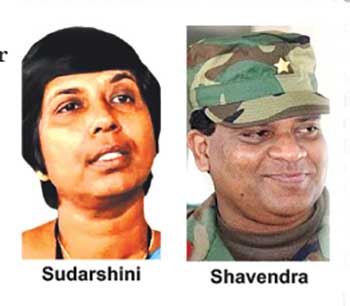
State Minister for Primary Health Care, Epidemics and COVID Disease Control, Dr. Sudarshini Fernandopulle yesterday (25) said that members of Parliament were not among those categorised as priority groups expected to be vaccinated against the Covid-19 pandemic.
Dr. Fernandopulle said so in response to The Island query whether parliamentarians would receive the vaccine scheduled to be delivered by India this week. Asked to explain, Dr. Fernandopulle said that health workers, armed forces and law enforcement personnel engaged in Covid-19 prevention operations would be given priority.
“Lawmakers haven’t been listed under priority groups. However, some members may get the vaccine if they are accommodated in the over 60 years category and those suffering from diabetes, heart disease, cancer et al,” the State minister said.
In addition to State Minister Dayasiri Jayasekera, several lawmakers, representing both the government and the Opposition had been afflicted over the past several weeks. SLPP lawmaker Wasantha Yapa Bandara (Kandy district) is the latest victim. Health minister Pavitradevi Wanniarachchi was among over half a dozen lawmakers tested positive.
Army Commander General Shavendra Silva told Derana yesterday morning Sri Lanka would receive approximately 500,000 to 600,000 doses from India. Responding to a spate of questions from Derana anchor Sanka Amarjith, Gen. Silva explained the measures taken by the government to ensure a smooth vaccination programme. The Army Chief who also functions as the Chief of Defence Staff revealed India had paid for the consignment obtained from the UK.
Later in the day, The Island sought an explanation from the Army Chief regarding the President, Service Commanders, Secretary Defence given the vaccination along with frontline health workers et al, the celebrated battlefield commander said: “Will be in third priority group.”
Asked whether the student population would be accommodated at an early stage of the vaccination programme, Dr. Fernandopulle said that those under 18 years of age, pregnant and lactating mothers wouldn’t be included at all as such groups hadn’t been subjected to trials. Education Secretary Prof. Kapila Perera wasn’t available for comment.
Dr. Fernandopulle emphasized the pivotal importance of following health guidelines strictly in spite of the launch of the vaccination programme. “We shouldn’t lower our guard under any circumstances,” Dr. Fernandopulle said, urging the population to be mindful of those unable to receive the vaccination due to no fault of theirs. As those under 18 years of age had been left out of the vaccination programme, a substantial section of the population would be denied the protection, the State Minister said.
Sri Lanka is also expected to procure vaccines from China and Russia in addition to the doses from India. Health Secretary Maj. Gen. Sanjeewa Munasinghe wasn’t available for comment.
Sri Lanka launches the vaccination programme with the total number of positive cases nearing 60,000 with nearly 50,000 recoveries. The government recently re-opened the Bandaranaike International Airport (BIA) following a pilot programme that brought over 1,200 Ukrainians in dozen flights through the Mattala International Airport.
Dr. Fernandopulle said that the government was ready to launch the vaccination programme as soon as the first consignment arrived from India.




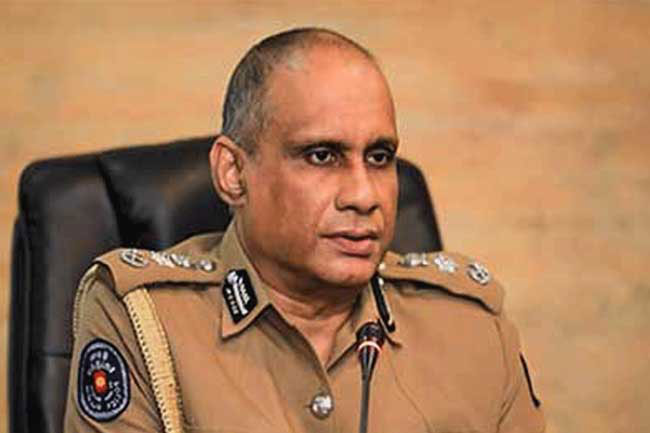
He was examining security officer’s new weapon while waiting for his wife to join him on a morning walk
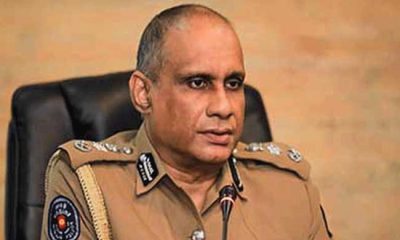
Friday’s shock death of former IGP Chandana Wickramaratne due to gunshot injuries on his chest was possibly due to an accidental discharge of his personal security officer’s (PSO’s) pistol. Wickramaratne, who was kitted for his walk and waiting on the verandah for his wife to join him, was examining the PSO’s new weapon, knowledgeable sources said.
These sources said the wife who was putting on her shoes inside the house heard a bang and found Wickramaratne fallen on the verandah.
The retired IGP had noticed the security officer carrying a new weapon and had asked to examine it. Saying he carried a similar weapon years ago, he found no magazine and said, “are you planning to accompany me on my walk with a pistol without a magazine?”
The PSO had then handed the loaded magazine and gone into the house to fetch a requested bottle of water when the weapon had gone off.
The sources said that Wickramaratne was in no way depressed and had attended an Ananda College old boy’s event a few days ago, had dinner with friends and chatted with them. He had an appointment to meet a friend on Saturday.
Friends and family saw no reason for Wickramaratne to take his own life and there was no evidence whatever of an external agent shooting him. The former IGP was pronounced dead at the Colombo East Teaching Hospital to which he was rushed.
Police said investigations were proceeding and an autopsy report was awaited.
Wickramaratne was appointed the 35th Inspector General on November 25, 2020 and retired three years later in 2023. He had also set a record as the longest serving acting IGP since his naming to that position in May 2019 after his predecessor Pujith Jayasundara was sent on compulsory leave.
He joined as a trainee Assistant Superintendent in June 1986 after graduating from the Colombo University. He was absorbed to the National Intelligence Bureau where he worked till 1995. Thereafter he reverted to the uniform service and had been posted across the country, including the northern and eastern areas at the height of the war.
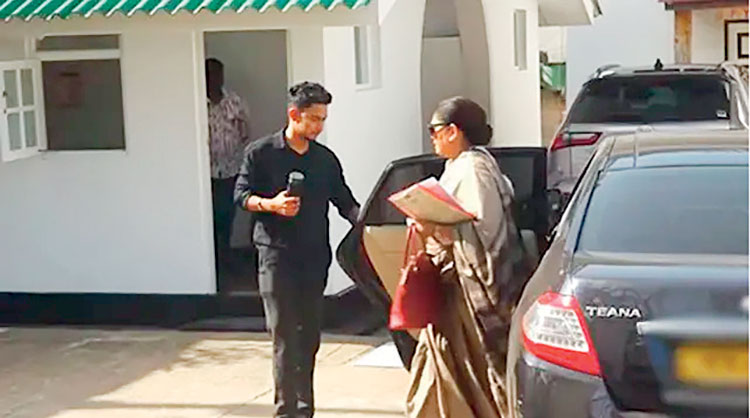
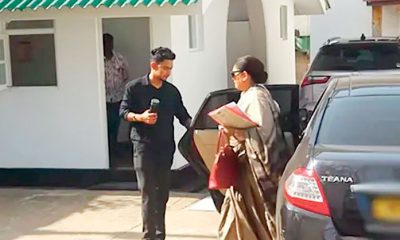
Former Colombo Mayor Rosy Senanayake appeared before the Presidential Commission of Inquiry appointed to investigate allegations of corruption and fraud at the Colombo Municipal Council (CMC) on Friday (17).
Speaking to the media after appearing before the commission, Senanayake said she had been summoned to provide information regarding a food voucher programme implemented during her tenure as Mayor amid the COVID-19 pandemic and the economic crisis.
She said the programme, carried out through state-owned Lanka Sathosa, was introduced to provide assistance to low-income and vulnerable families affected by the economic hardships during the period.
“We gave food vouchers from Sathosa to the poor during the pandemic and economic crisis.
They wanted answers to some questions they had regarding the programme,” Senanayake said.The Presidential Commission is currently investigating allegations relating to financial irregularities, corruption and other misconduct within the Colombo Municipal Council.
A police constable has been suspended from service following an inquiry into allegations that he sat on the lap of a female police constable while under the influence of alcohol at the Makalugaswewa Police Station.
Police said the constable had reported for duty at a musical concert held at the Dambulla Gam Udawa Stadium on July 15 and later returned to the police station to resume duties.
According to initial reports, the constable allegedly sat on the female officer’s lap after seeing her seated on a chair at the station.
The female police constable subsequently lodged a complaint with the Assistant Superintendent of Police (ASP) in charge of the area through the Officer-in-Charge (OIC) of the police station.
A preliminary investigation into the incident found that the constable had allegedly been under the influence of alcohol at the time of the incident.
Following the inquiry into the alleged harassment of the female officer and the constable’s conduct while on duty, police authorities took steps to suspend his service pending further action.
by Norman Palihawadane ✍️

Showers will occur in the Western, Sabaragamuwa and North-western provinces and in Kandy, Nuwara-Eliya, Galle and Matara districts

Former IGP’s death likely due to an accidental weapon discharge

Rosy Senanayake appears before CMC corruption probe commission

Cop suspended after sitting on female cop’s lap

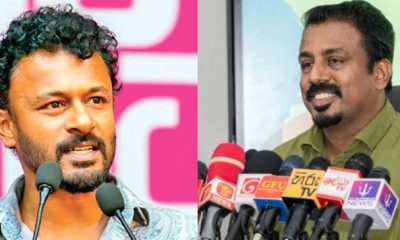
Arrest warrants issued for Deputy Minister Eranga Gunasekara, MP Jagath Manuwarna

America at 250: Most unfitting President, Biggest World Cup Tournament

‘Dates have the highest sugar content to fight Coronavirus’

Sunday Island 27 December – Headlines

#SundayIsland 17th December – Headlines

Sunday Island – 28th March

Sunday Island Headlines – 21 March

Sunday Island – 21st February – Headlines
-
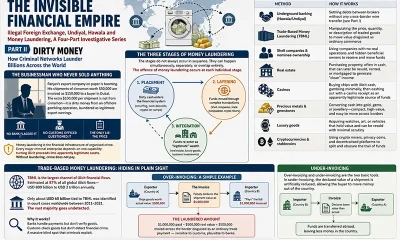
 Features4 days ago
Dirty Money
-
 News1 day ago
Dengue outbreak gallops ahead: Infections surpasses 73,455, leaving 50 dead
-
 News1 day ago
Evidence recorded in money laundering case against Yoshitha Rajapaksa
-
 News2 days ago
Money laundering case against Yoshitha, fixed for pre-trial conference
-
 Midweek Review4 days ago
The sordid tale of theft and tragedy at Finance Ministry
-
 Latest News5 days ago
Oil prices hit 1-month high as US-Iran attacks dim Strait of Hormuz outlook
-

 Editorial2 days ago
Overwhelming fire power and stubborn resilience
-

 Features6 days ago
Deepening Democracy – Constitutions and Constitutionalism