
Features
Rating President’s visit to India

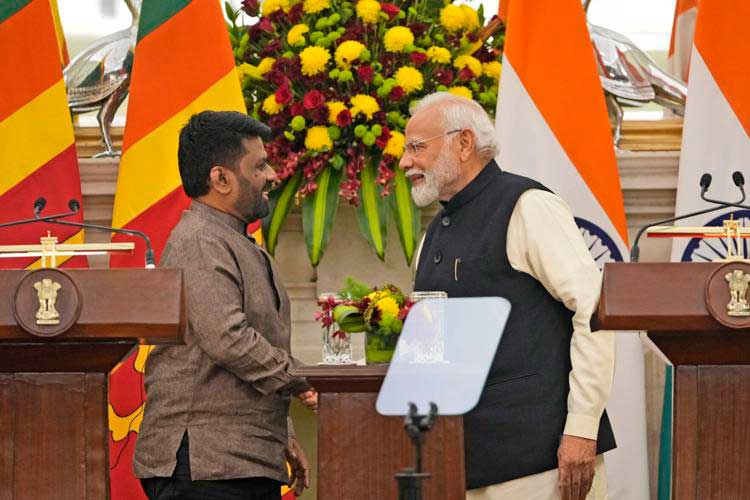
by Neville Ladduwahetty
Sri Lanka’s credit ratings are somewhat positive, according to Fitch and Moody’s, but the general rating of what was achieved during President Anura Kumara Dissanayake’s India visit is mixed. Nothing of much significance was achieved in respect of Sri Lanka’s interests in comparison with what India gained.
The outcome of President Dissanayake’s visit could be summarised as the signing of two MOUs and the 32 topics that were discussed and incorporated in the Joint Statement (JS) between the two leaders. One MOU is on training public officials and the other is on abolishing double taxation.
ISSUES RELATING to the JOINT STATEMENT
President Dissanayake “acknowledged the positive and impactful role of India’s development assistance to Sri Lanka … and India’s decision to extend grant assistance for projects that were originally undertaken through Lines of Credit, thereby reducing the debt burden of Sri Lanka” (The Island, December 17, 2024),
While such measures benefit Sri Lanka as a whole, projects such as “the timely completion of ongoing projects such as Phase III and IV of Indian Housing Project, 3 Islands Hybrid Renewable Project … and projects for the Indian Origin Tamil community, Eastern Province are specific to the Tamil community, even though the JS also refers to “High Impact Community Development Projects across Sri Lanka and the solar electrification of religious places” (Ibid).
In addition, topic 12 is titled “Building Connectivity”. Topic 12 (1) states: “While expressing satisfaction at the resumption of the passenger ferry service between Nagapattinam and Kankesanthuria, they agreed that officials should work towards the early recommencement of the passenger ferry service between Rameshwaram and Talaimannar” (Ibid).
As the sub-title states, “Building Connectivity” the benefits of these, so called development projects would be to boost the economic growth in the 5 Southern States, namely, Kerala, Karnataka, Tamil Nadu, Andhra Pradesh and Telangana in India and the predominantly Tamil regions in Sri Lanka. The outcome of this skewed growth will serve India’s interests but it will be a fetter to the inclusive growth that the NPP has been harping on during and after parliamentary elections. Furthermore, it was the appeal of this slogan that caused the people to respond the way they did in both elections, and the NPP government should not disappoint the public.
The concept guiding this strategy is the misguided logic that Sri Lanka’s economic growth could be ensured by hitching Sri Lanka’s wagon to the rapidly growing economy of India. Since an array of influential individuals, political parties and think-tanks are convinced by this notion, it appears that the NPP government has fallen victim to those compulsions. However, the disparities between the 5 Southern Indian States and Sri Lanka are such that if most of what is in the JS is adopted by the Sri Lankan government, the outcomes would be not only disappointing but also detrimental to Sri Lanka’s interests to foster an inclusive society.
DISPARITIES BETWEEN 5 SOUTHERN INDIAN STATES and SRI LANKA
TRADE: The JS 17 states: “Underscoring the pace of economic growth and opportunities in India as the growing market size and its potential for enhancing trade and investment for Sri Lanka, both leaders agreed that it is now opportune to enhance the trade partnership by committing to (i) Continuing discussions on the Economic & Technological Cooperation Agreement (ECTA)(ii) Enhance INR-LKR trade settlements between the two countries ….”
While the need to enhance Trade and Investments cannot be denied, the existential realities are such that the expectations are not achievable because of the inherent disparities. For instance, the Imports from India are around $ 4.5 billion and $3.58 billion, depending on the source, while the exports from Sri Lanka to India were only $ 850 million in 2022. Other disparities are that while the per capita GDP of the five Southern States varies from $ 2,500 to low $ 3,000, the per capita GDP of Sri Lanka is more than $ 3,800. Furthermore, the cost of labour in India is lower than in Sri Lanka. This coupled with the fact that nearly 50% of labour in India is engaged in agriculture as opposed to about 30% in Sri Lanka, besides the lower cost of agricultural inputs in India, makes the cost of production in India lower than in Sri Lanka. Consequently, imports from India to Sri Lanka would remain significantly higher than exports from Sri Lanka, thus making the prospect of “enhancing trade and investment for Sri Lanka” JS, 17) a myth.
INVESTMENTS: JS 17 III states “Encourage investments in key sectors in Sri Lanka to enhance its export potential”.
“In the fiscal year 2023, the Reserve Bank of India (RBI) granted permission for international trade for invoicing and payments to be conducted in Indian Rupees. This move allowed for exports and imports to be denominated and invoiced in Rupees, with trade transactions settled in the currency. The RBI’s decision aims to stimulate global trade growth, particularly Indian exports, while also working towards the internationalisation of the Indian Rupee” (Ceylon Today, February 28, 2024).
“Last year, Sri Lanka officially recognised the Indian Rupee as a designated currency, enabling trade settlements between the two countries to be conducted in rupees” (Ibid).
“Currently, Indian Investors typically engage in investments in Sri Lanka using international currencies like the US Dollar. Since this involves additional complexities and conversion costs, the transition to Rupee investments is expected to streamline market entry for Indian companies, with the Ministry of External Affairs reportedly advocating for this transition” (Ibid). The consequence then would be for Indian companies to deploy cheap Indian labour, thus displacing Sri Lankan labour; a fact that would particularly apply to the IT sector.
The report finally states: “The push for rupee investments aligns with India’s broader vision to elevate its currency to the status of hard currency in the future, potentially leading to inclusion in the IMF’s SDR basket and bolstering its foreign exchange reserves. This move is anticipated to benefit Indian firms with significant investments in Sri Lanka, such as the Adani Group’s development projects in the country’s port and power sector” (Ibid).
THUS, the compulsion to convert TRADE and INVESTMENTS to Indian rupees is entirely driven for the benefit of India.
MPACT of UPI on TOURISM
A former State Minister is reported to have stated: “The UPI is beneficial to both countries. If you look at the events in Sri Lanka and what took place one and a half years ago, it mainly started out as a foreign exchange crisis mainly due to lack of dollars. So, we have to ensure that our dollar dependency is reduced. Now, for example, our biggest tourist market is from India and if we can collect the tourist remittances from India and we import about $ 5.5 billion worth of goods from India and we use those …to pay in Indian rupees for the Indian imports, then we will reduce our dollar dependence. And it also becomes very flexible and very easy for the Indians to travel to Sri Lanka and then they pay in Indian rupees”. (Sunday Island, February 25, 2024).
Despite this misguided understanding of the former State Minister, the fact is that out of a total of 1.48 million tourists that arrived here in 2023, Indians numbered only 302,844. This represents 20 % of the total. The revenue from tourism for the year 2023 was USD 2.1 billion. Therefore, on an average, earnings from Indian tourists would be 20% of USD 2.1 billion. Although this amounts to only USD 420,000, since Indian tourists pay in Indian rupees, UPI favours the Indian tourist over other tourists who pay in international currencies. Consequently, at current levels of tourist arrivals from India, Sri Lanka is at a loss of $ 420,000 and growing because of UPI (ECONOMYNEXT, January 1, 2024 & January 5, 2024).
INVESTMENTS IN INDIAN RUPEES
When Sri Lanka calls for competitive bids for projects it is understood that bids would be based on international currencies so that all bids are evaluated on a level playing field. If an Indian investor such as Adani or any other, is given a special privilege and permitted to submit proposals based on Indian rupees which is still not recognised as an internationally recognised currency, it would amount to an act of discrimination. Furthermore, it would amount to an unsolicited offer that puts other bidders at a disadvantage.
In addition, any dollar inflows into Sri Lanka would add to the reserves of Sri Lanka and could be used for debt payments. On the other hand, any Indian rupee inflows, even if considered to be part of Sri Lanka’s reserves, would serve little or no purpose for international transactions.
Therefore, if Sri Lanka fails to recognize these implications and caves under Indian pressure to recognize Indian Rupees for investments in Sri Lanka for the sake of connectivity, it would be a grave injustice to the sovereign rights and independence of the People of Sri Lanka with consequences to Sri Lanka’s relations with other countries.
FISHERIES ISSUES
Topic 27 of the JS states: “Acknowledging the issues faced by the fishermen on both sides and factoring the livelihood concerns, the leaders agreed on the need to continue to address those in a humanitarian manner”. It is extremely disappointing that Sri Lanka’s President capitulated and agreed to address issues relating to fisheries in a “humanitarian manner” when what is at state is the impact on the livelihood of the Sri Lankans engaged in fishing and the rampant destruction of Sri Lanka’s resources by resorting to bottom trawling that belong to the whole nation driven by the greed of the politically backed Indian fishing community.
According to the Northern Province Fisheries Association Chief M.V. Subramanium the financial loss to Sri Lanka amounts to Rs. 900 Billion (approximately USD 3.0 Billion) annually due to pillage by Indian fishing vessels operating illegally in Sri Lankan waters. Similarly, it costs Indonesia and Malaysia annually, $2 Billion and $1,4 Billion respectively from illegal fishing.
The NPP Government must get real and stop attempts to explore “humanitarian” approaches and seek the assistance of the International Court of Justice to establish International Maritime boundaries and Reparations for the damages inflicted because no amount of talking would resolve this issue.
CONCLUSION.
Issues of consequence to Sri Lanka presented in the Joint Statement (JS) following the inaugural visit of Sri Lanka’s President to India are: No double taxation; Enhancing Trade with India; ECTA; Use of Indian Rupees for investments by Indian companies; Use of Unified Payments Interface (UPI) and its impact on tourists; Fisheries Issues. As far as these issues are concerned India the gain to India far outweighs gains to Sri Lanka. As for issues relating to Fisheries, the outcome was a disaster because of the misguided notion that issues relating to it could be resolved in a “humanitarian manner”. Therefore, the collective rating has to be that what was achieved during the President’s visit was far from hoped for expectations.
Another issue that is of relevance is the practice of Governments to grant aid projects to specific communities as reflected in the JS. This habit undermines the much touted slogan of this Government to foster an inclusive Sri Lankan society. This Government has to vigorously oppose the practice of gaining advantages by exploiting “division”; a practice that that continues to haunt Sri Lanka .


When discussions turn to Sri Lanka’s freshwater fish diversity and the urgent need to conserve it, attention is often focused on rivers, streams, reservoirs and water quality.
Yet scientists are increasingly finding that what happens on the land surrounding these waterways can be just as important as what happens in the water itself.
A recent study led by researcher Janamina Bandara of the Wildlife Conservation Society, Galle, together with researchers Sudath Nanayakkara and Sahan Randeniya, highlights how changes in forest cover caused by human activities can significantly influence freshwater fish populations in the hill streams surrounding the Sinharaja rainforest.
Their research sheds light on a relatively understudied aspect of tropical freshwater ecosystems—how alterations to vegetation cover, particularly through commercial cultivation such as tea and cardamom plantations, affect fish communities inhabiting headwater streams.
Hidden Riches of Tropical Streams
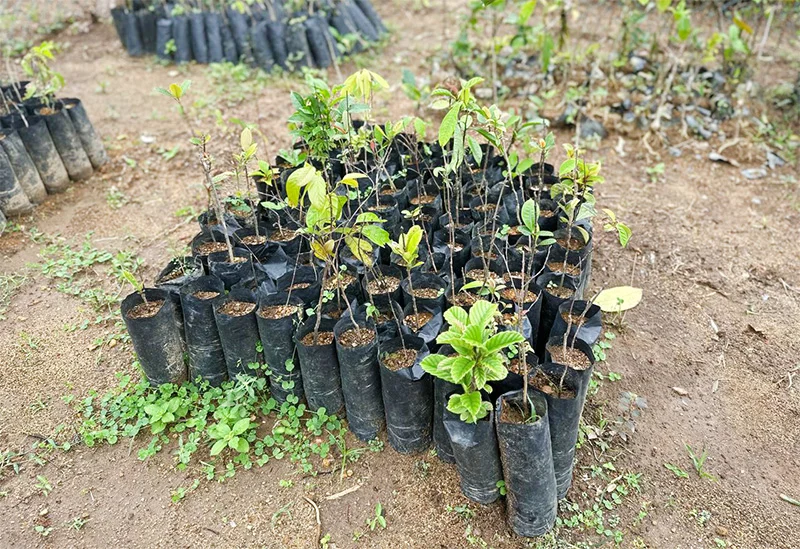
Forest plant saplings
Sri Lanka’s freshwater ecosystems are globally recognised for their remarkable biodiversity and high levels of endemism. However, despite their ecological significance, many ecological processes operating within these habitats remain poorly understood.
“Freshwater ecosystems in the tropics harbour extraordinary biodiversity, but many of the ecological relationships within these systems are still not fully documented,” researcher Janamina Bandara told The Island.
The study focused on sub-montane streams in the Sinharaja landscape, examining how varying levels of forest cover influence freshwater fish assemblages.
Researchers investigated whether fish communities differed between streams flowing through relatively undisturbed forests and those surrounded by modified vegetation resulting from agricultural activities.
Spotlight on a Critically Endangered Species
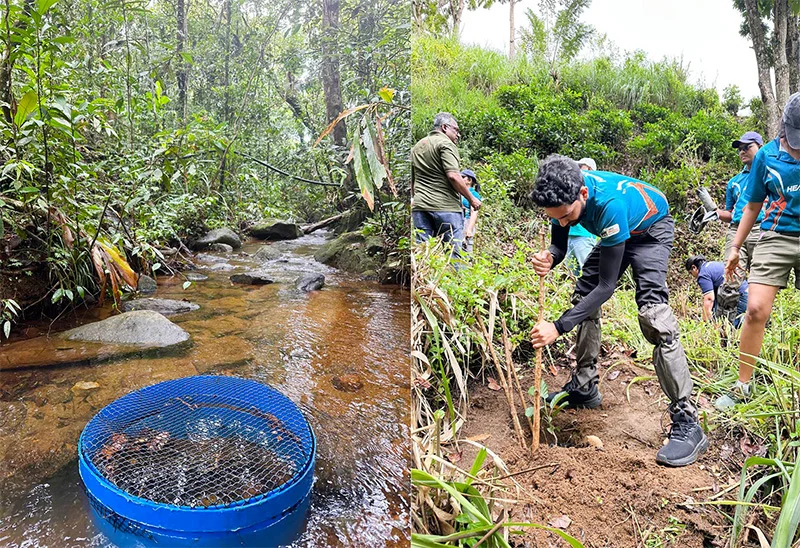
Leaf litter bay / Restoration activities
Particular attention was given to the critically endangered Rakwana loach (Schistura madhavai), a highly restricted endemic fish species first described from the Suriyakanda-Rakwana region.
Commonly referred to as a hill-stream loach, the species inhabits clear, fast-flowing streams and is considered highly sensitive to environmental disturbances.
According to Bandara, while broad community-level analyses did not reveal dramatic differences across all fish populations, species-specific responses painted a very different picture.
“Our findings show that Schistura madhavai exhibits a clear preference for streams flowing through intact forest habitats,” he explained. “The species becomes less common in areas where surrounding vegetation has been altered by human activities.”
Why Forests Matter to Fish
Forests bordering streams play multiple ecological roles. They regulate water temperature by providing shade, contribute organic matter that supports aquatic food webs, stabilise stream banks and help maintain water quality.
When these forests are removed or replaced with plantation crops, the resulting environmental changes can cascade through freshwater ecosystems.
Bandara noted that altered forest cover can influence water chemistry, microclimatic conditions, stream-bed composition and the availability of food resources.
“As riparian vegetation changes, a series of environmental conditions within the stream also change. Sensitive species such as Schistura madhavai appear particularly vulnerable to these shifts and may gradually disappear from modified habitats,” he said.
The research suggests that even subtle changes in habitat structure can have disproportionate impacts on species with narrow ecological requirements.
The Importance of Looking Beyond Numbers

Schistura madhavai
One of the most intriguing findings of the study is that ecosystem degradation may not always be apparent when scientists assess entire fish communities collectively.
In some instances, environmental variables appeared to have little effect on overall fish abundance or diversity. However, when individual species were examined separately, clear patterns emerged.
For example, variations in the amount of detritus—organic matter that accumulates on stream beds and serves as a vital food resource—did not significantly affect the overall fish assemblage. Yet for certain species, including habitat specialists, such changes proved critically important.
“This highlights a key conservation challenge,” Bandara said. “If we only look at total fish numbers or community-wide patterns, we may overlook serious declines occurring among environmentally sensitive species.”
Indicator Species as Ecological Sentinels
The findings underscore the importance of using so-called “indicator species” in environmental monitoring programmes.
Indicator species are organisms whose presence, absence or abundance reflects the health of an ecosystem. Because they respond rapidly to environmental change, they can provide early warnings of ecological degradation.
The Rakwana loach appears to fit this role exceptionally well.
“Species with narrow habitat requirements often act as ecological sentinels,” Bandara observed. “Monitoring them can provide a much clearer picture of ecosystem health than relying solely on broad biodiversity assessments.”
For conservation practitioners, this means that protecting sensitive endemic species may also help safeguard entire freshwater ecosystems.
Restoring Streamside Forests
Perhaps the study’s most important conservation message concerns the restoration of degraded riparian forests—the vegetation growing alongside streams and rivers.
Researchers argue that restoring these streamside habitats should be a priority in freshwater biodiversity conservation efforts.
Healthy riparian vegetation provides shade, reduces erosion, filters pollutants, enhances habitat complexity and supports the intricate ecological interactions upon which aquatic life depends.
“The restoration of degraded riparian forests is likely to be one of the most effective conservation measures for protecting freshwater biodiversity,” Bandara emphasised.
Such efforts could prove particularly valuable in landscapes where agricultural expansion has fragmented natural habitats.
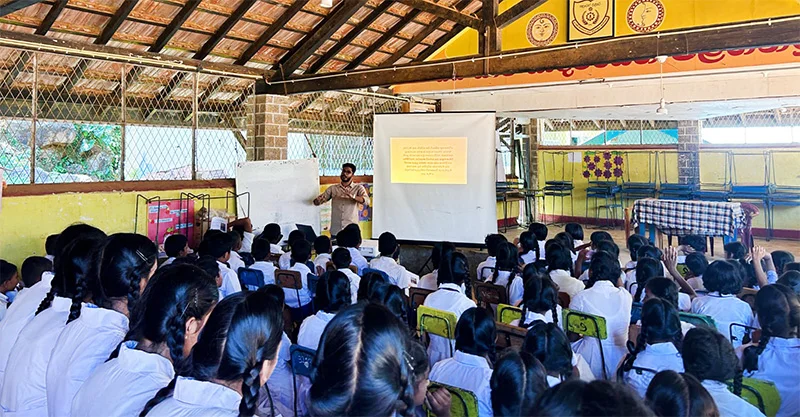
Awareness sessions
A Broader Lesson for Conservation
The study offers a timely reminder that freshwater conservation cannot be achieved by focusing exclusively on water bodies themselves. The surrounding landscape matters immensely.
From the mist-laden streams flowing down the Sinharaja foothills to the countless rivulets nourishing Sri Lanka’s river systems, the fate of freshwater biodiversity is intimately linked to the health of adjacent forests.
As conservationists grapple with accelerating habitat loss and climate-related pressures, the research demonstrates that protecting and restoring forest cover may be just as important as safeguarding the streams themselves.
In the case of the elusive Rakwana loach, the message is clear: save the forest, and you may save the fish.
For Sri Lanka’s unique freshwater biodiversity, that lesson could not be more important.
By Ifham Nizam
Sri Lankans have reason to take satisfaction in their country’s latest international achievement. Sri Lanka has climbed 14 places in the 2026 Global Peace Index to rank 67 in the world out of 163 countries that were assessed. At a time when global peacefulness is reported to be at its lowest level since the inception of the Index, and when more countries are experiencing deterioration than improvement, Sri Lanka’s progress stands out. The ranking reflects the country’s recovery from nearly three decades of war, its efforts to strengthen political stability and public security, and its resilience in overcoming the economic and political crises of recent years. The Global Peace Index assesses the strength of institutions, societal safety and security, and the capacity of societies to manage conflict peacefully.
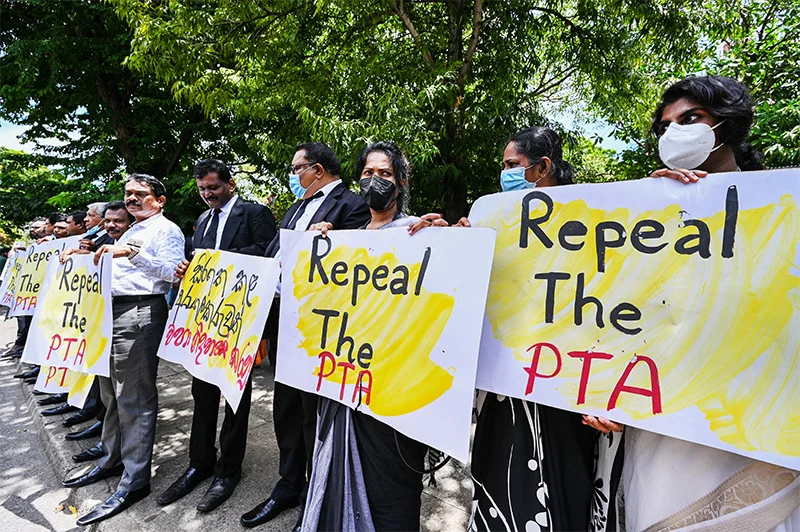
The challenge is to consolidate the gains that have been made and address those unresolved issues that continue to cast a shadow over the country’s future. It is in this context that two recent announcements by the government assume particular significance. Foreign Minister Vijitha Herath has announced that the Prevention of Terrorism Act (PTA), one of the most controversial laws in the country, will be repealed and replaced within two months. A report prepared by a committee appointed to make recommendations has already been handed over to him. According to the minister, the new legislation, to be known as the State Prevention of Terrorism Act, incorporates recommendations from civil society and is intended to comply with international standards on counter terrorism.
At the same time, Justice and National Integration Minister Harshana Nanayakkara has reaffirmed the government’s commitment to uncovering the truth about missing persons. During a visit to the Chemmani mass grave excavation site in Jaffna, he stated that the excavations should be completed expeditiously so that justice can be done and assured that the necessary resources have been allocated for the task. The excavations are taking place under judicial supervision with the participation of forensic experts, archaeologists, lawyers and representatives of the Office on Missing Persons. These commitments made by the government address two of the most contentious issues that have troubled Sri Lanka for decades. They also suggest that the government believes the country is now in a position to deal with difficult questions from its past rather than postpone them indefinitely.
After Breakthroughs
The timing of the pledge to repeal the PTA is particularly noteworthy. For many years successive governments promised to replace the law but failed to do so. Sri Lanka undertook to repeal it in 2017 as part of its commitments linked to retaining GSP Plus trade concessions by the European Union. Yet despite repeated assurances the law remained in force. The question therefore arises as to why the government now appears determined to act. One possible explanation is that the Easter Sunday investigations have reached a decisive stage. The investigation into the bombings that killed more than 260 people in 2019 appears to have made significant breakthroughs. If these investigations continue along their present course, it is possible that accountability will extend beyond those who directly carried out the attacks to those who may have facilitated, enabled or been part of a wider criminal conspiracy.
There is broad agreement within society that those who masterminded the dastardly Easter bombing must be held accountable and that the victims deserve the truth and justice. However, it is important that the process by which responsibility is determined is seen by the public to be fair, lawful and impartial. If those accused are convicted following a transparent judicial process that respects due process and the rule of law, the outcome is far more likely to gain acceptance across society. This is where the repeal of the PTA becomes important. A transition from a law associated with prolonged detention and exceptional powers to one that is more consistent with human rights standards would strengthen rather than weaken the legitimacy of the investigations. Accountability obtained through a process that is visibly fair will be more durable and less vulnerable to allegations of political motivation or selective justice.
The Chemmani excavations may also provide an example of how such credibility can be built. The process is taking place under judicial supervision and in full public view with the participation of independent experts. Whatever conclusions emerge, and follow up action is decided on, the process itself should command respect because it is transparent and accountable. The same principles can be applied to the Easter Sunday investigations. Public confidence is strengthened when investigations are conducted openly, when legal safeguards are respected and when the rights of both victims and accused persons are protected. The significance of these investigations may extend beyond the tragedy itself. There is likely to be an overlap between those who are eventually found responsible for the Easter Sunday conspiracy and elements of the state apparatus that exercised power during the final stages of the war.
Setting Precedent
For many years Sri Lanka has struggled to address allegations of wartime abuses. The issue has remained politically sensitive because it touches upon the conduct of those who were regarded by many as wartime heroes. Yet if the Easter Sunday investigations establish that senior officials can be investigated and held accountable when evidence warrants it, an important precedent will have been set. Once the deck is cleared through the Easter Sunday investigations and the judicial process that follows, it may become less difficult to address allegations relating to wartime abuses, including those connected to sites such as Chemmani where evidence is now being painstakingly uncovered. This would also strengthen Sri Lanka’s position internationally.
Since the end of the war in 2009, the country has remained under varying degrees of scrutiny by the United Nations Human Rights Council. In October 2025, the Council renewed the mandate of the Office of the High Commissioner for Human Rights to continue collecting and preserving evidence relating to past violations. The next review of Sri Lanka is due in September this year. The government now has an opportunity to demonstrate that Sri Lanka is capable of addressing difficult issues through its own institutions and according to its own democratic values. The commitments to repeal the PTA and to pursue investigations into missing persons can be seen in that light. Those who were victimized query as to what happened to their loved ones and to the information they know full well they entrusted to the government authorities and to the commissions of inquiry that were appointed. These are opportunities to show that accountability and national ownership can go hand in hand.
Reconciliation requires the difficult task of remembering truthfully. Too often Sri Lanka has sought stability by postponing difficult questions. Yet unresolved grievances do not disappear. They persist across generations and continue to shape political attitudes and communal relationships. Sri Lanka’s rise in the Global Peace Index is an achievement worth celebrating. But the true measure of peace is not only the absence of conflict. It is the presence of justice, trust and confidence in public institutions. The government’s commitments on PTA repeal, the Easter Sunday investigations and the search for truth regarding the disappeared suggest an awareness that old approaches have run their course. The government has an opportunity to break with the patterns of the past. The test now lies in implementation.
by Jehan Perera

 The biggest part of the challenge of a critical scholar in the humanities is having to engage critically with the very realities that define her existence as a social being. She cannot even begin to comment on the focus of her study without creating shock waves that would hit her own self in some form. One could argue that the scholars in the field of the humanities are part of what is being studied in one way or another. Critical scholarship in those fields entails destabilising the ground beneath their own feet.
An essential part of scholarly inquiry is being able to objectify what is being studied and examine it closely but at a distance, that, too, in a manner that scholar’s personal biases do not affect the judgement. Any failure to comply with this requirement immediately brands the study as unscientific. To try to understand this using an example situation, I would assume that a scientist who experiments with sodium and chlorine as chemical elements have the privilege of entering the experiment without any personal and emotional ties to either of the elements, placing one element in contact with the other without having to raise questions about her own existence, and observing and recording the outcome of the experiment without having to simultaneously examine what sort of implications the outcome has had for her as a person. The findings of the experiment may certainly advance her/him in the domain of science, but it is unlikely that the outcome of the study would result in any transformation within her as a social being.
The same privilege is not available for the (critical) scholars in the humanities. What chemical elements are for the scientist, the different social, political, cultural, gender, ethnic, racial, and religious identities are for those in the humanities. What the controlled, and also largely predictable, laboratory environment is for the scientist, the uncontrolled, even erratic, society is for those in the humanities. What the scientific experiments where the composition and behaviour of the individual chemical elements are explored is for the scientist, a close examination of phenomena and topics that cut across the categories of the social, the political, the cultural, and the religious is for those in the humanities.
The relatively clear differentiation or separation that is there between the scientist’s personal space and the laboratory setting where she conducts her research is not there in the case of her counterpart in the humanities. The latter does not have a separate laboratory setting that she can step into from her personal space, as the social space, which is her site of research, has her personal space already embedded in it. The freedom that the scientist has to cut herself off from what shapes her existence as a social and political being, as she enters her laboratory, is not available for her counterpart in the humanities, for the simple reason that the social and the political, which define her life outside her research, is also at the core of what they engage with in their research. Even in a setting where the latter locks herself up in a room and cuts herself off from the rest of society, the social and the political continue to define both her perspective and the object of study. Even the most effective scientist (but may not be the ideal scientist) has the option of taking her life, defined by the social, the political, the cultural and the religious, for granted, as her success is measured purely on the basis of her scholarly output; however, even the most ineffective scholar in the humanities would have to acknowledge the nexus between her personal life and her scholarly life, explicitly or implicitly, and her engagement with the chosen object of study will entail some sort of an engagement with her existence.
To use an example from the field of language studies which my work is primarily in, New Varieties of English, like what is called Sri Lankan English, is a topic that I try to engage with in both my teaching and research. Approached from a critical point of view, Sri Lankan English as a New Variety of English is more a political category than a linguistic one. The claims that you make may be based on linguistic evidence, but the conceptualisation of a separate form of English as Sri Lankan English even on the basis of objective linguistic evidence is primarily a political claim. The creation of such a category invariably results in a reconfiguration of the linguistic terrain of the country. Every claim that is made in favour of Sri Lankan English as a category results in a certain destablilisation of Sinhala and English, which are my first language and second language respectively, and the tense relations between which two languages have shaped my identity in a fundamental way. It is not only the two languages that get shaken; the broader ethnic identities that are associated with the two languages also undergo transformation, and this transformation certainly has an impact on who/what I am.
Even when I find the case for Sri Lankan English to be convincing, I feel compelled to word the arguments carefully. This feeling of compulsion to word the arguments carefully is certainly in recognition of the need to make academically-sound arguments; however, in addition to that, it has also to do with my position outside the social class which has traditionally been seen as having proprietary rights over the language. In that setting, I am less of an academic with an objective mindset than of a strategist who is enmeshed in the ethnic and class relations that define the topic of Sri Lankan English. At the same time, in a context where one’s knowledge of English is a primary determiner of her success in society and what is predominantly valued is the so-called proper forms of English, I have had to ask myself if any claims, including the most convincing, academically-sound ones, in the direction of legitimising Sri Lankan English should not be with caution.
I have also had to reconcile between two seemingly contradictory positions involved in making a case for Sri Lankan English, especially in the context of an English Honours programme, that, too, at a leading university in the country. On the one hand, making a case for Sri Lankan English entails encouraging deviation from the established norm/s of the language; on the other hand, considering the nature of the programme, the need to require the students to make that case using a normative form of English that would be recognised internationally could not be overlooked. At one level, this seeming contradiction could easily be dismissed as hypocrisy, but a closer and more serious reading of the situation would see in it a certain “maneuvering” and “negotiating” that the scholars in the discipline of English Studies stationed in peripheral contexts like ours are constrained to undertake in their engagement with the topic at hand. Although the arguments that get made have the appearance of truth, a close analysis of those arguments would indicate a certain identity politics that is being played. This identity politics has a direct bearing on the identity of the scholar who engages with the topic.
Accordingly, to make a claim in the humanities from a critical point of view is also to question in some form what defines one’s own identity, and this may not be the most comfortable undertaking for many of us in the field. This explains, at least to a certain extent, why some scholarly engagements with history results in mere glorifications of the mainstream historical narratives; why some scholarly engagements with literature and language results in a mere celebration of the mainstream literary traditions and hegemonic languages; how some scholarly engagements with the idea of culture directly subscribe to the position that culture should always be preserved and celebrated. Such approaches leave the status-quo largely untouched, and therefore the amount of unsettling that the scholars have to deal with is minimal. How much value that they are in a position to add to the existing scholarship, of course, is a question.
Any act of critical scholarship in the field of the humanities entails the scholar having to challenge in some form what defines her personal existence. This may not be the most comfortable move to make, but that is the only way the scholar could try to make a contribution of value to the field. It is important that this dilemma that the critical scholars in the humanities have to go through is recognised for what it is.
(Nandaka Maduranga Kalugampitiya is attached to the Department of English, University of Peradeniya.)
Kuppi is a politics and pedagogy happening on the margins of the lecture hall that parodies, subverts, and simultaneously reaffirms social hierarchies.
by Nandaka Maduranga
Kalugampitiya

Modern computer network for Department of Exam8nations
July 6th declared as Sri Lanka National Legal Aid Day
New circular for grade 1 admission to government schools
Appointment of a special Committee for protection of lands in Eastern Province

Ellyse Perry runs the show as Australia brush past Pakistan

Zambia ex-president’s family wins latest legal battle over what should happen to his body

‘Dates have the highest sugar content to fight Coronavirus’

Sunday Island 27 December – Headlines

#SundayIsland 17th December – Headlines

Sunday Island – 28th March

Sunday Island Headlines – 21 March

Sunday Island – 21st February – Headlines
-
 Features7 days ago
Killing of Colombo’s ancient trees — a warning on UN’s World Desertification Day – 17 June
-

 News5 days ago
Creditor receives USD 2.5 mn as Lankan public bears loss from theft of Treasury funds
-

 News4 days ago
Creditor not yet paid
-
 News4 days ago
Consumers bearing 22% tax burden despite 18% VAT claim: Dr. Harsha de Silva
-

 Opinion6 days ago
Beyond diagnosis: A strategic design for 7% growth by 2029 (Part I)
-
 News7 days ago
India provides military stores worth USD 5.5 mn to SL
-

 Opinion5 days ago
SriLankan Airbus struck by lightning
-

 Latest News2 days ago
Sooryavanshi thumps fastest List A fifty as India A win tri-series