
News
Mystery surrounds dropping of two vital hydro power projects by CEB during yahapalana rule

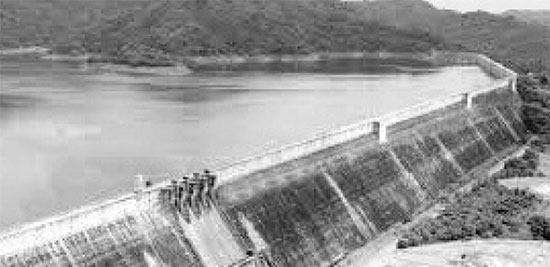
35MW Broadlands Hydro power plant expected to be completed next month
By Ifham Nizam
The Power Ministry will go all out to complete the 35MW Broadlands Hydro power plant next month especially to cut down expensive oil fired power generation and avoid emergency power purchases.
The plant was scheduled to be completed last December but it got delayed due to the non- availability of top Chinese experts owing to the pandemic, but, with their return, the Ministry is confident of getting it completed now. Forty five Chinese experts are in the process of completing the plant.
With the commissioning of the plant, the CEB would be able to save more than Rs. 10 million a day. In 2020, CEB losses were Rs. 60 billion as against Rs 85 billion in the previous year, a senior official said.
The 35 MW Hydro Power Plant will generate 125 million units or 125 GWh annually saving Rs. 3.75 billion.
Members of the CEB senior management recently visited inside the 3.5 km tunnel of the 35MW Broadlands Project on the initiative and instructions of the Presidential Task Force led by Senior Presidential Advisor Basil Rajapaksa.
The 35 MW plant over the Kelani Ganga at Kitulgala is constructed by the Chinese government-owned China National Electric Equipment Corporation while consultancy and monitoring are handled by the Central Engineering Consultancy Bureau of Sri Lanka.
The estimated cost of the project is USD 82 million and it is partly financed by a USD 69.7 million loan from the Industrial and Commercial Bank of China. The balance is financed by the Hatton National Bank of Sri Lanka.
The Broadlands project is the last plant in the Lakshapana cascade power station complex on the Kelani River system.
The construction of the plant would prevent some 88,000 metric tonnes of carbon dioxide emissions per year. A unique feature of the project is that it is Sri Lanka’s first large-scale hydro power plant associated with the Clean Development Mechanism established under the International Kyoto Protocol.
Plans have been prepared to construct an energy park, including a hydro power museum in the area expecting the area to become a tourist attraction
Senior engineers of the CEB said that sidelining two important hydro power projects, which were scheduled to go into operation from 2015, were among some controversial proposals included in the Board’s previous Least Cost Generation Plan.
A senior engineer said that the plan to sideline crucial and inexpensive hydro generation projects cost the CEB a minimum of Rs. 5 billion annually as it had to rely on costly thermal power to meet the shortfall in supply. “That resulted in a loss of Rs. 20 and Rs. 25 billion since 2015,” the official said
The Broadlands 35MW and Uma Oya 120MW hydro plants were scheduled to commence operations by the start of 2015, as per the 2011 plan. However, they had been removed from the 2011 and 2013 plans for some unknown reason, an official said.
It had to be investigated, according to senior engineers who pointed out that the delay in constructing hydro plants would have adverse cost implications.

News
State patronage for the cremation ceremony of the late deputy prelate (Anu Nayaka Thero) of the Sri Laka Ramangya Maha Nikaya, Gatambe Rajopawanramadhipatha, Siri Chandawimala Wanshalankara, Chandrakeerthi Sri Amarawansha, Sadhdharmawageeshwara, Shasanashobhanna Most Venerable Keppetiyagoda Siriwimalabhidhana Thero


The cremation ceremony of the late Deputy Prelate (Anu Nayaka Thero) of Sri Laka Ramangya Maha Nikaya,
Gatambe Rajopawanramadhipatha, Siri Chandawimala Wanshalankara, Chandrakeerthi Sri Amarawansha,
Sadhdharmawageeshwara, Shasanashobhanna Most Venerable Keppetiyagoda Siriwimalabhidhana Thero who passed away on 18.10.2026 is scheduled to be held at the Gatambe Urban Council playground on 21.10.2026.
The Cabinet of Ministers approved the joint resolution furnished by the Minister of Public Administration, Provincial Councils and Local Governments and the Minister of Buddha Shasana, Religions and Cultural Activities to conduct the cremation ceremony with state patronage.
The Suraksha Student Insurance Program has been initiated with the primary objective of the creation of the necessary environment for the students who encounter various obstacles due to various health issues to overcome barriers and continue their education without any interruption.
The students studying in government schools, government approved private schools, Pirivenas and Assisted special schools are eligible to obtain the benefits under this program.
The Cabinet of Ministers, decided to grant their approval for the resolution furnished by the Prime Minister, in her capacity as the Minister of Education, Higher Education, and Vocational Education, to revise and implement the currently enforced agreement regarding the aforementioned Suraksha Student Insurance Program between the Ministry of Education, Higher Education, and Vocational Education and Sri Lanka Insurance Corporation for the period from 01-09-2026 to 31-08-2027,
with the inclusion of the following new benefits as well.
• Providing the opportunity to claim benefits up to Rs. 75,000/- for repairing hearing accessories and for the service charges incurred thereof.
• Providing the opportunity to claim benefits up to Rs.20,000/-for the students who are taking medicines in long term for the diseases such as for chronic kidney diseases and Chronic
Inflammatory Arthritis.
• Providing the opportunity to claim benefits up to Rs.20,000/- for the expenses incurred for the tests Malignancy Screening Test for Skin Cancer, Post-transplant Lymphoproliferative Disorder (PTLD), Screening Test for Osteoporosis, Screening Test for Hepatitis B, Hepatitis C, and HIV.
• Revising ‘Cancer Treatment’ under the critical illness category to ‘Cancer Treatment and related Testing’, and covering expenses incurred for major surgeries required for hip, shoulder, and knee joint replacements due to sudden accidents, as well as PET Scans, under the critical illness category.
• Providing the opportunity to claim an amount of Rs. 100,000/- under the accidental category for student fatalities occurring due to sudden accidents during activities organized by institutions under the Ministry of Education, Higher Education, and Vocational Education, and conducted under the supervision of educational authorities (such as educational terms/excursions and sports meets, etc.) either within or outside the school.
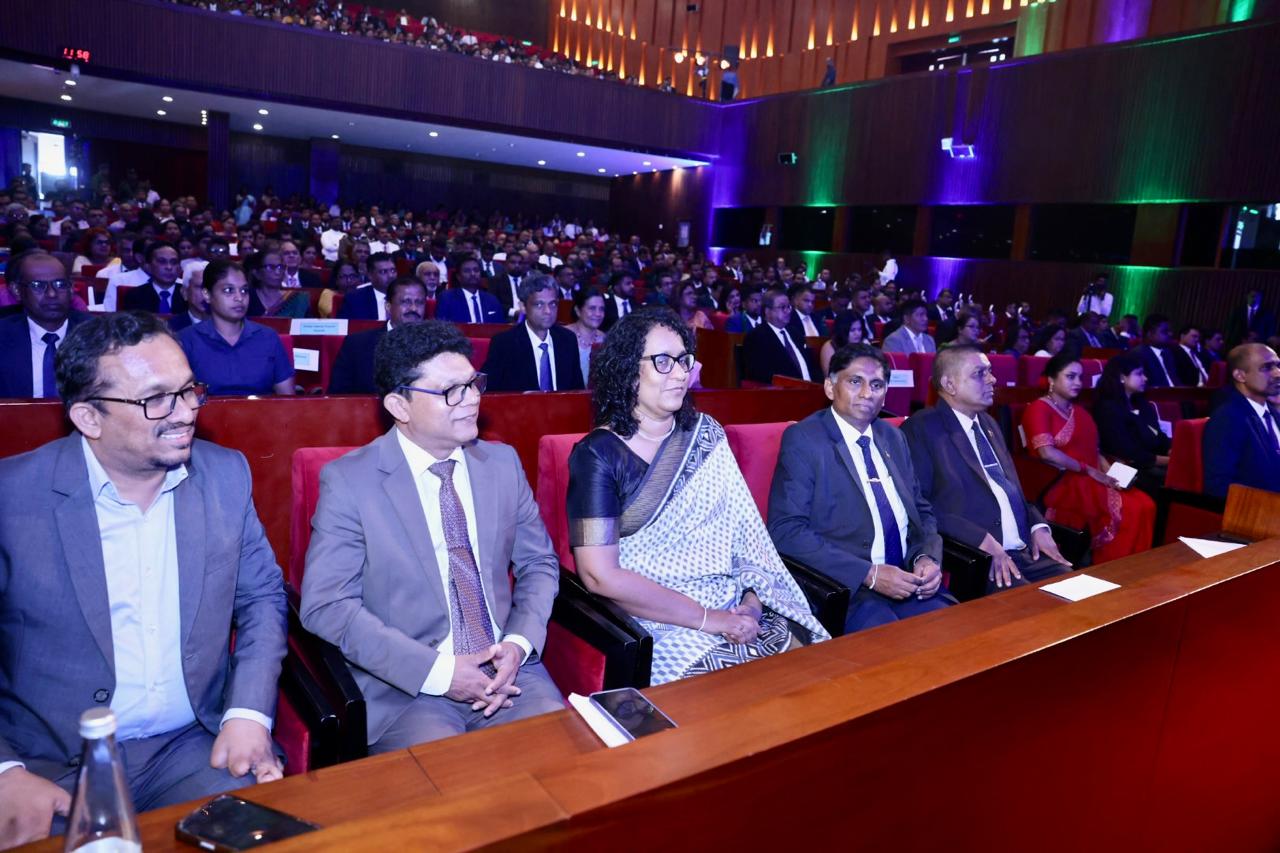
Prime Minister Dr. Harini Amarasuriya stated that the Government was deeply saddened by the unfortunate death of the Tusker Kavanthissa, a national treasure who sustained severe injuries from gunshot wounds. She emphasised that environmental laws would be strictly enforced against those responsible for environmental crimes, without discrimination or favouritism.
The Prime Minister made these remarks while addressing the Presidential Environmental Awards 2026, organised for the 11th time by the Central Environmental Authority under the Ministry of Environment, at the Bandaranaike Memorial International Conference Hall (BMICH) in Colombo on Monday (19 October).
A total of 195 awards, comprising Gold, Silver, Bronze and Merit Awards, were presented to institutions recognised for their sustainable management of natural resources. The Prime Minister participated in presenting the Gold Awards.
Addressing the occasion, the Prime Minister stated:
“A country’s prosperity is measured not only by its economic indicators. Clean air, safe drinking water and a healthy ecosystem are equally essential to ensuring a better quality of life for its people.
The Clean Sri Lanka programme, launched with this objective, is not merely about cleaning roads. It is a national transformation aimed at reducing waste, ensuring proper waste management and changing the way we think about and treating the environment.
We cannot allow tragedies such as the one that befell Tusker Kavanthissa to happen again. Environmental laws must not be influenced by a person’s position, wealth or connections. The law will be enforced equally against everyone. Everything from the issuance of licences to the approval of projects must be carried out on the basis of scientific evidence and with complete transparency.
Development achieved at the expense of environmental destruction can never be considered sustainable development. Wildlife officers and veterinary teams made significant efforts to save the Tusker Kavanthissa. However, the Tusker could not be saved due to the severity of its injuries and the resulting infections.
The Government is deeply saddened by this loss. In order to prevent similar incidents in the future, we will further strengthen veterinary care for wildlife and veterinary education. The Government has already taken a number of practical measures to address the long-standing human-elephant conflict.
Accordingly, 113 forest areas have been designated as reserves, bringing 71,900 hectares (approximately 180,000 acres) under protection. In addition, three elephant corridors are being established to facilitate the free movement of elephants, alongside a dedicated reserve for elephant management.
In order to strengthen the field operations of the Department of Wildlife Conservation, 100 pickup vehicles, 185 motorcycles and nine tractors have been provided. Furthermore, 3,500 elephant fence assistants and 5,000 members of the Civil Security Department have been deployed to maintain elephant fences.
Steps have also been taken to amend the National Environmental Act after 26 years. More than 1,600 new officers are being recruited to the Ministry of Environment.
Environmental conservation must not be treated as a temporary project. It must become an essential component of government policy and the daily lives of every citizen. It is vital to support small and medium-sized enterprises in adopting green technologies, promoting practical environmental skills through school and university education, and fostering environmental responsibility through religious institutions. We seek the support and cooperation of the entire public to ensure that we leave behind a safe, beautiful and clean country for future generations.
The event was attended by Minister of Environment Dhammika Patabendi; Minister of Industry and Entrepreneurship Development Sunil Handunnetti; Deputy Minister of Environment Anton Jayakody; Secretary to the Ministry of Environment K. R. Uduwawala; Chairman of the Central Environmental Authority, Professor Tilak Hewawasam; and a large gathering of government officials, foreign representatives and award recipients.
Prime Minister’s Media Division

State patronage for the cremation ceremony of the late deputy prelate (Anu Nayaka Thero) of the Sri Laka Ramangya Maha Nikaya, Gatambe Rajopawanramadhipatha, Siri Chandawimala Wanshalankara, Chandrakeerthi Sri Amarawansha, Sadhdharmawageeshwara, Shasanashobhanna Most Venerable Keppetiyagoda Siriwimalabhidhana Thero
Implementation of Suraksha Student Insurance Program for the Year 2026/2027

Environmental laws will be enforced equally against everyone

President pays last respects to Most Venerable Kappetiyagoda Siri Wimala Thera

Shafali receives demerit point for breaching Level 1 of ICC code of conduct

Heavy showers about 100 mm are likely at some places in the Northern, North-central, Central, Eastern, North-western and Uva provinces

‘Dates have the highest sugar content to fight Coronavirus’

Sunday Island 27 December – Headlines

#SundayIsland 17th December – Headlines

Sunday Island – 28th March

Sunday Island Headlines – 21 March

Sunday Island – 21st February – Headlines
-

 Features3 days ago
Kotahena:A Small Enclave, An Extraordinary Legacy
-

 News7 days ago
Sri Lanka, India caught in US-Iran ship crisis
-

 News4 days ago
Asgiri Mahanayake calls for immediate release of Gnanasara Thera
-

 Latest News7 days ago
Missiles intercepted near Riyadh after Saudi coalition hits Yemen fuel depot
-

 Latest News7 days ago
Kusal Mendis’ unbeaten 87 hands Sri Lanka consolation win
-

 News2 days ago
Record 1,600 students take Russian Classical Ballet examination in Sri Lanka
-
 News6 days ago
AC President recuses himself from hearing prison attire case pertaining to Gnanasara Thera
-

 Latest News7 days ago
Heavy showers above 100 mm are likely at some places in the Western, Sabaragamuwa, Southern, Central, and North-western provinces and in Anuradhapura district.