
News
Lawyers Collective call for end to executive presidency, online policing law, PTA


ECONOMYNEXT –The Lawyers Collective has called on the National Poeople’s Power administration to abolish of the executive presidency, repeal an anti-terror law and an online policing law.
“The autocratic rule made possible in the role of the executive president has been extremely damaging to democracy, the rule of law and the independence of institutions including the judiciary,” the lawyers said in a statement.
“The abuse of power and undermining of all public institutions and the corruption that has accompanied this have been witnessed by citizens for decades, especially in 2009-2024.
The grouping also raised an issue a university.
The full statement is reproduced below:
Lawyers’ Collective Statement – 2024 December 05
Lawyers Collective on a Legislative
Agenda for the New Government and Parliament and Rule of Law Issues
The Lawyers’ Collective writes to the new Cabinet of Ministers and all members of the newly elected 10th Parliament of Sri Lanka on the importance of recognizing the legislative mandate signalled by the people at this election. We congratulate all elected representatives of the new parliament and emphasize that the mandate given is a clarion call to ensure that the legislative agenda reflects the sovereign will of the people.
We urge the new government to recognize now and without further delay the need for action on the promises given to the nation on an urgent national legislative agenda. The absence of a 2/3 majority hampered progress on earlier attempts at constitutional reform and this type of agenda. The massive mandate given by the Sovereign People of Sri Lanka for vital legislative reform must be accompanied by swift action to carry this promised agenda forward, with due attention to urgent priorities.
In light of the massive mandate to carry forward this vision of accountable governance to the Sovereign People of Sri Lanka, the Lawyers’ Collective wishes to highlight the need to carry forward promised reforms in a new legislative agenda prioritizing the following areas:
The Preamble to the Constitution has been a reminder of the purpose of the confidence reposed by the People in their Representatives. It is to ‘…constitute SRI LANKA into a DEMOCRATIC SOCIALIST REPUBLIC whilst ratifying the immutable republican principles of REPRESENTATIVE DEMOCRACY and assuring to all Peoples FREEDOM, EQUALITY, JUSTICE, FUNDAMENTAL HUMAN RIGHTS and the INDEPENDENCE OF THE JUDICIARY as the intangible heritage that guarantees the dignity and well-being of succeeding generations of the People of SRI LANKA and of all the People of the World, who come to share with those generations the effort of working for the creation and preservation of a JUST AND FREE SOCIETY:’
Towards constituting this vision of Sri Lanka, the Lawyers Collective highlights the most urgent of the legislative reform that must be prioritized.
1. Abolish the Executive Presidency
The autocratic rule made possible in the role of the executive president has been extremely damaging to democracy, the rule of law and the independence of institutions including the judiciary. The abuse of power and undermining of all public institutions and the corruption that has accompanied this have been witnessed by citizens for decades, especially in 2009-2024.
The Janatha Vimukthi Peramuna drew attention to this reality and sought the abolition of the Executive Presidency through the Twentieth Amendment to the Constitution, 2018. The Samagi Jathika Balavegaya, the main opposition party, unsuccessfully brought the Twenty-First Amendment to the Constitution, 2022, during the last government to achieve this goal. Both the National People’s Power and the Samagi Jathika Balavegaya promised this reform in their manifestos as a foundational basis to eliminate corruption and achieve accountable governance for the Sovereign People of Sri Lanka.
The Lawyers’ Collective urges the President and the Government to place this matter at the top of the legislative agenda and take the necessary steps towards achieving it as a matter of priority. A great deal of work has already been done on this issue reform, and there are important reports from both official agencies and civil society organizations in the public domain. We also have the Constitution Bill of 2000 and the Twentieth and Twenty-first Amendment Bills referred to above. The Constitutional Assembly of 2016-17, to which the Janatha Vimukthi Peramuna contributed immensely, also worked on this issue and presented an Interim Report and a draft constitutional bill. Thus, the task of drafting a constitution to abolish the Executive Presidency can be completed in a few months in the first year of office. This can enable the President, as promised, to head the government as the Prime Minister of the country, responsible for accountable governance to Parliament and the People.
Prioritizing this reform is vital. As the reform requires approval at a referendum, history has shown us that proposing such reform at later stages of a parliamentary term becomes a referendum on a government’s performance instead of a referendum on the constitutional amendment. Governments also have to deal with political opposition by spoilers and an opposition that finds political gain making in retracting support for necessary reforms. To put it in another way, the Government must strike when the iron is hot. As the late Maduluwawe Sobhitha Nayaka Thero put it in pithy Sinhala in 2015 when advocating the immediate abolition of the Executive Presidency, the roti must be made while the pan is hot (‘thatiya rathvela thiyanakota rotiya puchchanna’).
2. Repeal the Prevention of Terrorism Act of 1979 (PTA)
The PTA has made a mockery of the anti-terrorism legal framework in Sri Lanka and has been repeatedly used by successive governments against individuals, groups and institutions to suppress legitimate freedoms of expression, assembly and other civic rights. The law has become infamous for its draconian provisions, which fully undermine the human rights safeguards that ought to be ordinarily provided to citizens. The PTA gives broad powers of arrest and detention based on a vague and broad definition of terrorism, and such powers are not subject to judicial review. It also provides for broad, extraordinary presidential powers. Repealing this law is thus crucial from human rights as well as reconciliation, accountability and institutional reform point of view.
The Lawyers’ Collective is distressed to note that the draconian PTA is still being used even in cases where the ordinary law of the land can be used.
3. Repeal the Online Safety Act of 2023
The Online Safety Act was proposed under the guise of protecting the rights of women and children, and its scheme is overwhelmingly focused on defamation and critique. This law regressed Sri Lanka’s position of removing criminal liability from defamation. The law serves no purpose and is poorly crafted with overly broad definitions and powers. As such, it cannot sit in the law books of Sri Lanka as a necessary piece of legislation.
4. Some current and recent issues of governance of concern
The Lawyers’ Collective notes that the powers of the executive presidency have been abused to undermine the autonomy of the public University system in Sri Lanka. We urge the legislature to consider the reforms that strengthen the independence and internal accountability mechanisms of the public university system.
The most recent issue that the Lawyers Collective takes this opportunity to highlight is the long-standing need for independence of institutions. An example of concern is the matter relating to the Vice Chancellor of Ruhuna University. The recent incidents in Ruhuna University demonstrate the manner in which governing bodies and academic bodies in public universities have become dysfunctional due to the years of political interference in university administration. The Lawyers’ Collective notes that the Minister of Education has exercised powers under the University’s Act to manage the current crisis. A Competent Authority has been appointed as an interim measure. However, for the Rule of Law to be followed and sustained, there must be an independent inquiry, with due process and respect for norms of natural justice and the right of the Vice-Chancellor of the Ruhuna University to be heard before a Competent Authority is appointed or he is removed from office. This is a Presidential appointment and it is the President who can remove a Vice-Chancellor in consultation with the UGC. Such a decision would also require due process be observed by all involved in the decision. The President may act on the basis of a report by an inquiry committee forwarded to him by the Minister of Education with her recommendation.
The legislative agenda outlined above represents a clear break from autocratic and oppressive centralized rule to ruling by people for people. Signalling this break with these legislative reforms will be received as a fulfilment of the mandate and will set the tone for institutional governance that is people-focused.
The Lawyers’ Collective has been a voice for democracy, the rule of law and the independence of the judiciary in Sri Lanka. As evidenced by our several statements in the last few years, the process of law-making has failed the people of this country. We remind the government and the representatives in the legislature that it is important to adopt a transparent and inclusive process of policy and law-making that is proportionate and responsive to the needs of the people. Dialogue and communication with the sovereign people of this country will deepen legitimacy and public trust in governance.
Yours faithfully,
On behalf of the Lawyers’ Collective, Upul Jayasuriya, President’s Counsel, Dr. Jayampathy Wickramaratne, President’s Counsel, Professor Savitri Goonesekere, Attorney-at-Law, Geoffrey Alagaratnam, President’s Counsel, Saliya Pieris, President’s Counsel, S.T. Jayanaga, President’s Counsel, Professor Deepika Udagama, Professor Camena Gunaratne, Rev. Fr. Noel Dias, Attorney-at-Law, K.W. Janaranjana, Attorney-at-Law, Srinath Perera, Attorney-at-law, Ermiza Tegal, Attorney-at-Law and Darshana Kuruppu, Attorney-at-Law.

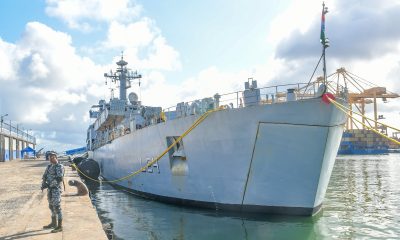


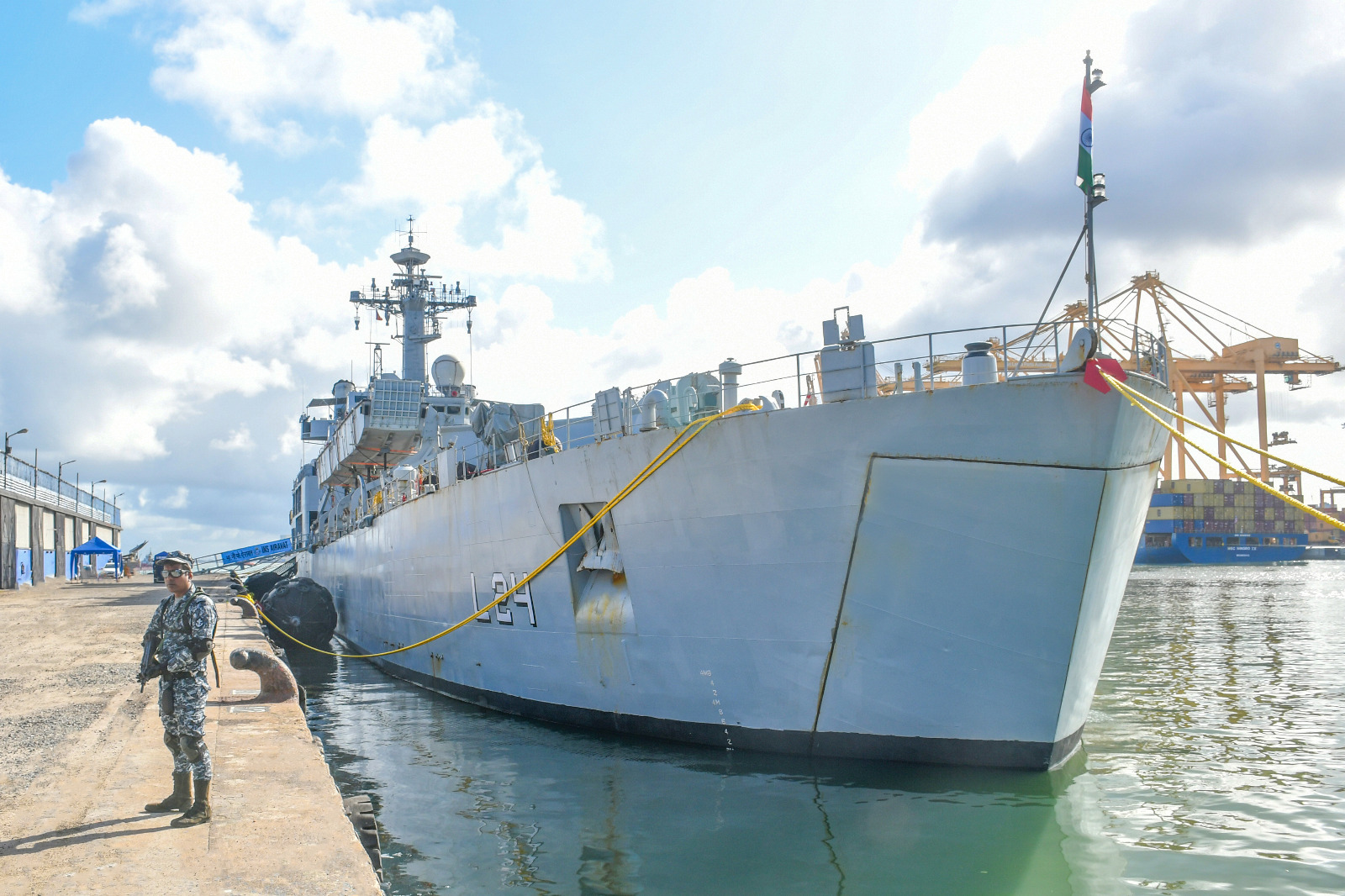
The Indian Naval Ship (INS) Airavat arrived at the Port of Colombo for Operational Turnaround on 01 Jun 26. The visiting ship was welcomed by the Sri Lanka Navy (SLN) in compliance with time-noured naval traditions.
INS Airavat is a Landing Ship Tank, commanded by Commander IP Patil.
During their stay in the island, the ship’s crew is scheduled to take part in a series of professionally enriching events and camaraderie-building programmes organised by the Sri Lanka Navy.
The Indian naval personnel will also tour several historic and prominent tourist attractions across the country before the ship concludes her deployment.

… tells Prez such arbitrary change neither necessary nor desirable
The Bar Association of Sri Lanka (BASL) has urged President Anura Kumara Dissanayake to abandon the controversial plan to increase the retirement age of the judiciary, including the Court of Appeal and the Supreme Court.
In a statement issued by the BASL President Rajeev Amarasuriya and its Secretary Nalin de Silva, the BASL pointed out that the proposed increase of the retirement age of the judiciary would undermine the independence, integrity, dignity, and public confidence in the Judiciary, which is essential for the maintenance of the Rule of Law and democratic governance in Sri Lanka.
The text of the BASL statement: “The Bar Association of Sri Lanka (hereinafter referred to as “BASL”) notes with grave concern reports in the public domain that the Government is considering the introduction of an amendment to the Constitution to increase the age of retirement of Judges of the Court of Appeal and the Supreme Court.
It is the considered view of the BASL that the age of retirement of the judges of the Court of Appeal and the Supreme Court which has stood at 63 years and 65 years respectively from the promulgation of the 1978 Constitution, should not be changed arbitrarily and that such a change is neither necessary nor desirable.
To do so will result in the loss of public confidence in the integrity of the legal system and of the Government’s commitment to preserve and protect the rule of law and the independence of the judiciary. Members of the public are likely to question the motives of the Government in bringing in a Constitutional amendment solely for this purpose.
Your Excellency is no doubt aware that the cadre of the Judges of the Court of Appeal was increased from 12 to 20 Judges (including the President of the Court of Appeal) and that of the Supreme Court from 11 to 17 Judges (including the Chief Justice) by the 20th Amendment to the constitution certified on 29th of October 2020. With such enhancement, workwise, there cannot be a real requirement to extend the retirement ages of these judges.
Your Excellency is aware that altering the retirement age of judges of the apex courts would have to be done through a Constitutional amendment. For many years Sri Lanka’s Constitution has been subject to ad hoc amendments, sometimes in order to cater to the political needs of the government in power and often contrary to the interests of the rule of law, the independence of the judiciary and the judiciary.
Extending the retirement age of the sitting Judges of these Courts at this point of time is likely to be viewed by the public as a blatant attempt to interfere with the judiciary. We believe that to go ahead with such an ad hoc move will also be an affront to the Honourable Judges of those courts.
If the Government goes ahead with such a move it will set a dangerous precedent for future Governments too to introduce ad hoc amendments to the Constitution in respect of the functions of the Judiciary.
The independence of the Judiciary and the public confidence reposed in it, are indispensable pillars of the Rule of Law and the democratic framework of our Republic. In that regard, it is of paramount importance that the Judiciary must not only remain independent in fact, but must also be seen by the public to be wholly independent, impartial, and free from even the slightest perception of influence, favour, accommodation, or impropriety.
The Bar Association of Sri Lanka is therefore constrained, in the discharge of its duty to uphold and safeguard the Rule of Law and the independence of the Judiciary, to respectfully express its serious concern regarding any such proposed amendment, which is neither in the interests of the Judiciary and nor of the people.
In the circumstances, the BASL respectfully urges Your Excellency not to proceed with any proposed constitutional amendment seeking to increase the retirement age of the members of the Judiciary including Judges of the Court of Appeal and the Supreme Court.
We remain confident that Your Excellency will give due consideration to the importance of preserving and protecting the independence, integrity, dignity, and public confidence in the Judiciary, which is essential to the maintenance of the Rule of Law and democratic governance in Sri Lanka.”
Govt. declines to respond
A member of the Cabinet yesterday declined to comment on the BASL’s letter to President Anura Kumara Dissanayake. The Minister said that he wouldn’t comment for the time being.
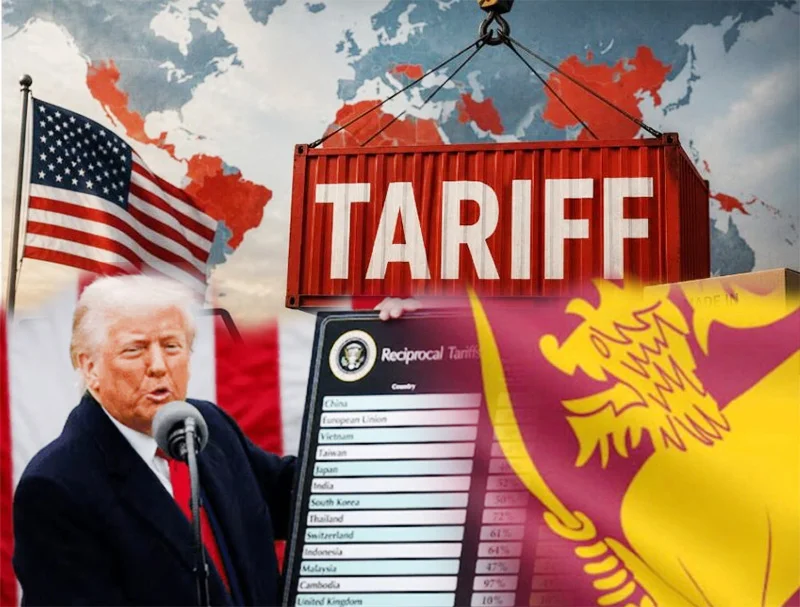
12.5% additional duties on goods imported from Colombo
The US has proposed additional duties of 10% or 12.5% on imports from 60 economies, including Sri Lanka, over their alleged failure to curb trade in goods made with forced labour.
The proposal made by US Trade Representative’s (USTR) office in terms of Section 301 unfair trade practices investigation to be released, news agencies reported, pointing out that the Trump administration was seeking to rebuild its emergency tariffs, which were struck down by a US Supreme Court decision in February.
The USTR said it determined that it would impose 10% duties related to the forced labour investigation on imports from Canada, Ecuador, the European Union, Indonesia, Mexico, Pakistan, Argentina, Bangladesh, Cambodia, El Salvador, Guatemala, Indonesia, Malaysia, Taiwan and Britain.
The trade agency said it would impose additional duties of 12.5% on the remaining 45 countries that were investigated.
“The failure of our most important trading partners to address the importation of goods made with forced labour is unacceptable,” US Trade Representative Jamieson Greer said in a statement. “This creates a dynamic where American workers are forced to compete globally on an unlevel playing field.”
According to the trade agency, the USTR found that Sri Lanka has failed to impose and effectively enforce a forced labour import prohibition.
The USTR noted that the results of its investigation indicate that the acts, policies and practices of Sri Lanka related to the failure to impose and effectively enforce a forced labour import prohibition are unreasonable and burden or restrict US commerce.
Accordingly, it has proposed to impose 12.5% additional duties on goods imported from Sri Lanka.
The USTR said it also was proposing a textile mechanism that would allow for a certain volume of apparel and textile imports to enter the US at a reduced tariff rate, though the duties and volumes were not disclosed.
The announcement comes ahead of the July 24 expiration of a 10% temporary tariff imposed by the Trump administration on February 20, the day the Supreme Court struck down US President Donald Trump’s tariffs under the International Emergency Economic Powers Act.
On Monday, the USTR proposed a 25% duty on many Brazilian goods as a result of a Section 301 investigation into the country’s digital trade practices and preferential tariffs. The trade agency is also expected to soon unveil the findings of another major Section 301 probe into the buildup of excess industrial capacity in 16 trading partners, including China.
In the forced labour findings, the USTR said it would exempt from the tariffs a number of products, including energy, rare earths and certain other metals, beef, coffee, certain fruits and vegetables, pharmaceuticals, organic chemicals and aircraft parts.
The USTR said it would accept public comments on the proposed tariffs and other remedies through July 6, with a public hearing scheduled for July 7.

SLC name squads for Tri-Nation ‘A’ series and Four-Day series
SLC name squads for West Indies Emerging Tour of Sri Lanka 2026

ICC delegation visits Bangladesh to ‘review developments linked to the BCB’

Indonesia’s rupiah falls to record low against US dollar

INS Airavat makes port call in Colombo

Netanyahu downplays US-Israel rift after Trump confirms criticism

‘Dates have the highest sugar content to fight Coronavirus’

Sunday Island 27 December – Headlines

#SundayIsland 17th December – Headlines

Sunday Island – 28th March

Sunday Island Headlines – 21 March

Sunday Island – 21st February – Headlines
-
 News6 days ago
IMF urges Lanka not to meddle with exchange rate
-

 News3 days ago
Lankan duo emerge winners in Latin dance championship held in Blackpool, UK
-
 Business7 days ago
Sri Lanka’s construction industry losing ground while no one watches
-

 Business4 days ago
IMF’s unstated rate:Sri Lanka’s $695m loan costs about 5.33% per annum
-
 News6 days ago
State of emergency extended
-
 Features7 days ago
The Division Bell Mystery
-
 Features5 days ago
Are threats to Buddha Sasana external or from within?
-

 News4 days ago
UNP challenges NPP move to amend Vihara – Devalagam Act