
Sports
When rain and number drowned South Africa’s World Cup dreams

Rex Clementine
in Durban
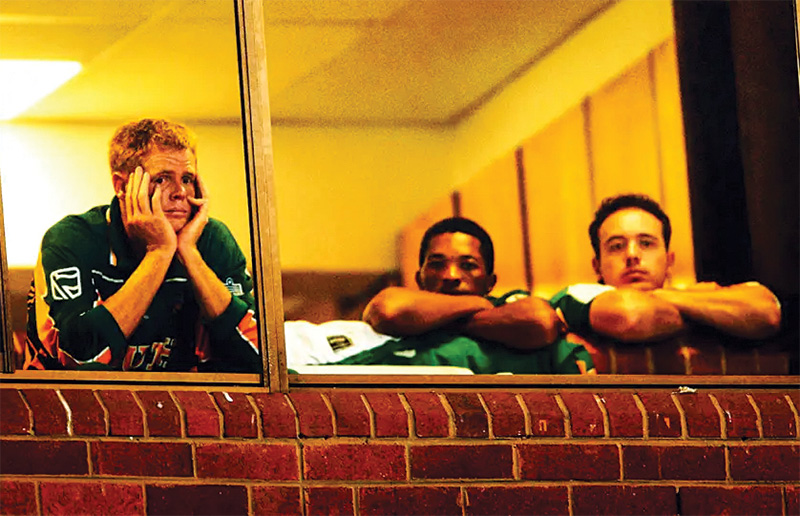
It was the unlikeliest of scripts: the host nation, South Africa, bowing out of the 2003 Cricket World Cup in their backyard, undone by a bizarre twist of fate – and a misread Duckworth-Lewis sheet. To borrow a line from Shakespeare, the fault lay not in the stars but in themselves.
South Africa’s hopes were sky-high as they hosted cricket’s crown jewel, much like the unifying fervor of the 1995 Rugby World Cup, where Nelson Mandela’s charm and Francois Pienaar’s leadership wove a fractured nation into a tapestry of pride. But on a rainy night in Durban, those dreams were washed away—quite literally—by Sri Lanka, in what remains one of the most talked-about matches in cricketing folklore.
Sri Lanka didn’t even win the game, but they didn’t need to. The Proteas, staring at a rain-curtailed chase, fell victim to faulty math – or more precisely, an incorrect interpretation of the Duckworth-Lewis method. With just one run needed to clinch the game, Mark Boucher blocked a ball, thinking the job was done. It wasn’t.
Jehan Mubarak, now Sri Lanka’s Data Analyst, was then a young 12th man with a critical role: carrying the Duckworth-Lewis sheet to the middle. A son of scientist Dr. Aziz Mubarak, Jehan was born in Washington DC and educated at Royal College. He was well-equipped for the task. Reflecting on the drama, he shared:
“I had to deliver the Duckworth-Lewis sheet to the team. Nicky Boje, South Africa’s 12th man, was doing the same for his side. The sheet clearly states that the scores listed are for a tie, not a win. You always need one more run to win. We read it correctly; they didn’t—and it cost them dearly.”
Mubarak’s delivery may not have been on the scorecard, but it was game-changing. As the rain began to pour, South Africa believed they were safe. They weren’t. The match ended in a tie, knocking the Proteas out and allowing Sri Lanka to advance.
During the game, Mubarak also made a brief appearance as a substitute fielder for Marvan Atapattu. But things didn’t go entirely smoothly:
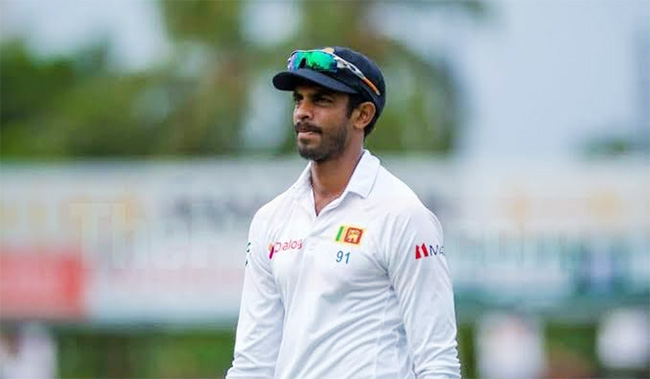 Jehan Mubarak played an important role in knocking South Africa out of the 2003 World Cup. He didn’t play the game, but as 12th man, he carried the Duckworth Lewis sheet and had to convey the important message.
“Sanath (Jayasuriya) was yelling for me to take a catch, so I sprinted toward the ball. It was a tough chance, and I couldn’t hold on. The ball went for four, and I got an earful from the captain. In a game like that, every chance counts. Thankfully, it didn’t affect the result.”
At 22, Mubarak was the youngest player in the squad, playing just one match in the tournament—a forgettable outing against India where he fell for a second-ball duck to Javagal Srinath, the current Match Referee. But for Mubarak, the World Cup was a crash course in high-stakes cricket:
“It was a fantastic learning experience. Against South Africa, Marvan made a stunning hundred, and Aravinda de Silva chipped in with a brilliant 70. We were struggling at 90 for three, but their 150-run partnership turned things around. Watching those legends adjust to different conditions and handle pressure was invaluable for a young player.”
Mubarak recalls the advice he received from stalwarts like Sanath, Marvan, Hashan Tillakaratne, and Aravinda.
“They’d always say, ‘Play positive cricket. Don’t be afraid. Whatever the opposition does – sledging or pressure tactics – hold your ground and never take a backward step.’ Those words stayed with me.”
After hanging up his boots, Mubarak transitioned into coaching, even leading Sri Lanka’s Under-19 team to a series win in England. Later, Sanath Jayasuriya brought him into the senior team setup, recognizing his analytical mind. Today, Mubarak serves as the team’s Data Analyst, a role that suits his methodical nature:
“My job is to analyze data and share it with the coaches and players. We study not just our team but the opposition as well. At SLC’s Brain Center, we look at everything—batting patterns, bowling trends, field placements—and pass on actionable insights.”



When Gary Kirsten coached India to ODI World Cup glory in 2011, 20 million Sri Lankan hearts were shattered. Now, as Sri Lanka’s new head coach, his mission is to mend them.
In a wide-ranging Q&A session with the local media, his first since being appointed last month for two years – officially from April 14 – Kirsten laid out the roadmap as he sought to blend data-driven modernisation with the island’s cricketing DNA.
Kirsten’s first week has been defined by a comprehensive “team audit”. While Sri Lanka has never lacked for talent in the game, Kirsten believes the discrepancy between that talent and the team’s current world rankings don’t “match up”.
“The formula – we will progress as we go along,” he said. “I have certainly been spending the first week doing a bit of a team audit, just to get to understand where everyone is at. You can’t only rely on talent. You need a good work ethic and a good attitude.”
To broaden this audit, Kirsten is already looking at the next generation, confirming plans to head down to Galle immediately to watch the ‘A’ team in action against New Zealand A.
“I am quite excited just to see all the players and what talent is out there,” he said, adding that his vision for a “balanced outfit” extended well beyond the current senior squad. This also goes along with a desire to build more squad depth, to aid with player workload management.
“For me, what’s important around that is that we have a lot of depth in the group across the different formats. So you are able to rotate players when you need to. You can’t expect one guy just to be playing all the time. He’ll blow up quite quickly.”
Having begun his coaching career in 2008, Kirsten’s coaching style has evolved significantly over the years, including several seasons spent on the franchise circuit. In this time, he has moved away from a “top-down” approach to coaching, with the growing realisation that the modern player is now highly informed and resistant to being told what to do without objective evidence.
“The modern player often doesn’t listen to a ‘we’ll-tell-you-what-to-do’ approach because he’s got a strong argument to tell you otherwise,” Kirsten said, with his solution to this being to present “compelling arguments” backed by data.
He pointed to a specific metric – the number of ODI hundreds Sri Lanka have scored over their last 30 matches – as an example. Despite having played 100 ODIs since the start of 2020 – more than any other Full Member, with India (91), New Zealand (83) and Australia (80) behind – Sri Lanka have just 25 ODI hundreds. In comparison, India have 38, New Zealand have 35, and Australia 32.
“I just looked at where they are ranked in the world,” Kirsten said. “If you present it in a good way to the players and it’s compelling, you’ll get movement.”
In terms of player selection, while acknowledging that the information derived from the data would be “weighted massively”, Kirsten is cognisant of the fact that big-game players might sometimes appear outside of the data – though that is something that will “take time” for him to identify.
“I think the next component to that is every team needs individuals in the team that are willing to step up and make those hard performances when the team needs it,” he said. “And each team, when you’ve got a good group of those guys, they win games out of nowhere and perform when you really need it. Those are the individuals I’m really excited by. Now that’s going to take time for me to understand and learn.”
Talking about the rise of global T20 leagues, Kirsten was pragmatic. With several Sri Lankan players involved in major leagues, he viewed match-readiness as superior to training-camp drills – even if that meant that he wouldn’t be able to work with his full allotment of players until much closer to the start of Sri Lanka’s tour of the West Indies in June.
“We’ll probably have the full complement of players available just two or three days before their first ODI,” Kirsten said. “So it’s not an easy thing, but we do what we can. And you try and adapt because that’s what international cricket requires. To be honest with you, I prefer guys to be in competition and playing matches. I always think that’s the best form of preparation that you can have. So to have a group of players that are match-ready by the time we play the first ODI against West Indies, I’m happy with it.
“In fact, in all the coaching opportunities that I’ve had around the world, I’ve generally had about ten days’ prep before we play the first game. So this time I’ve got six weeks. That’s pretty cool.”
On the topic of fitness protocols, Kirsten offered a performance-based defence of the current standards, reframing them as a “tool for availability” so as to ensure key players remain match-fit. Sri Lanka lost all three of Eshan Malinga, Matheesha Pathirana and Wanidu Hasarnga at different points across the T20 World Cup earlier this year.
Kirsten also effectively ended any debate on whether the requirements were too harsh. “Fitness is about keeping people on the field for as long as possible. You don’t want to have injuries where, in an important match, guys are not available. And as I understand in Sri Lankan cricket, there are protocols in place. And players have got to reach pretty standard levels, to be honest with you. I don’t think that the fitness protocols are too hard on the players. Certainly, your basic and standard levels.”
With approximately 20-25 ODIs remaining before the 2027 World Cup in southern Africa, Kirsten is already reverse-engineering the squad for those specific conditions. His native South Africa, especially, demands a different brand of cricket, and he is looking for a very specific set of skills.
“It’s going to be very different conditions to what a lot of the guys are used to, so how do plan for that? It’s about making sure all our bases are covered in the skillsets of the team,” Kirsten said. “Do we have guys with great air speed? Do we have guys that can swing the ball? Do we have guys that can bowl with bounce? Do you have top spinners? And do you have six batters who can bat on those kind of conditions?”
As Kirsten prepared to immerse himself in his new country of work – literally, with plans to cycle around the entire island – the South African knows that results in the interim will continue to matter as the World Cup build-up carries on.
“Results count, we can’t hide from that,” he said. “Every series we play going into the World Cup, we want to give a good account of ourselves. We’ll be aiming at progressing and improving as we get closer.”
[Cricinfo]

Sri Lanka seamer Nuwan Thushara has withdrawn his lawsuit against Sri Lanka Cricket (SLC), just weeks after filing it when SLC denied him a no-objection certificate (NOC) to play in IPL 2026, where he is a part of Royal Challengers Bengaluru (RCB), who are yet to name a replacement for the 31-year-old slinger.
Thushara told the Colombo District Court that he wished to withdraw his case as much of the IPL was now already completed. ESPNcricinfo understands that Thushara had also sent a written apology to SLC last week, indicating his willingness to withdraw his lawsuit.
In his original court petition, Thushara had stated his desire to retire from international cricket. It is unclear at this point if that has changed or was the same. Either way, in accordance with SLC’s new fitness protocols, Thushara would not be eligible for selection until he met the minimum requirements.
Thushara had been denied his NOC on grounds of him not reaching SLCs required fitness standards, something he had argued had not been a barrier in previous years – periods that Thushara claimed his fitness had remained more or less the same as at present.
It was during this impasse that Thushara had signalled his decision to retire, and filed his lawsuit soon after. Thushara had contended that the enforcement of a fitness-based NOC was unreasonable and a barrier to his livelihood.
The timing – April 2 – had raised eyebrows, as it coincided with the Easter court holiday, meaning a swift resolution was always unlikely. The case was taken up once more on April 9, where SLC indicated its desire to file objections, before finally being taken up on April 23, which was when the case was dismissed.
Thushara, 30 matches old internationally, all T20Is, had been part of Mumbai Indians in IPL 2024 before moving to RCB in 2025.
[Cricinfo]
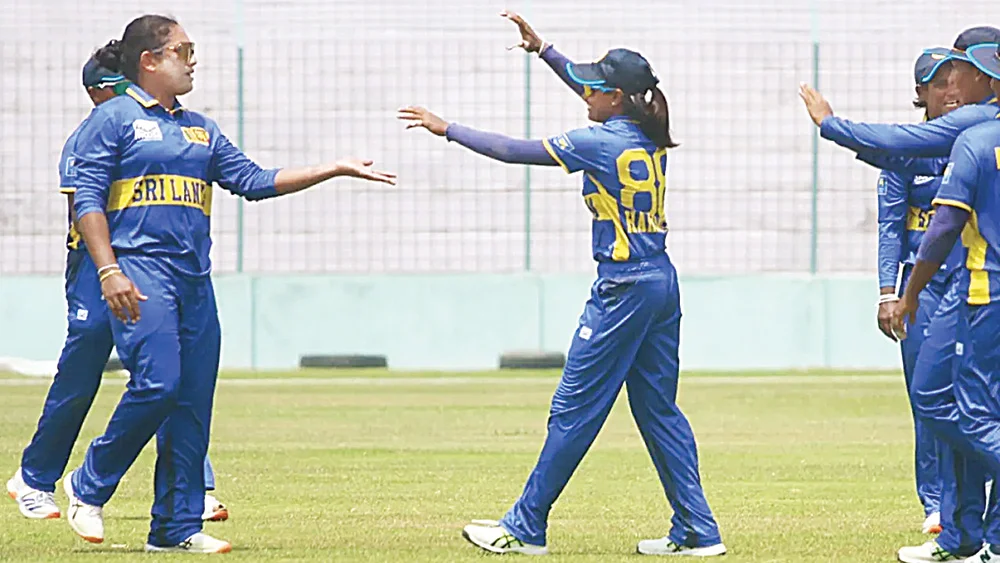
Chamari Athapaththu’s all-round show helped Sri Lanka level the ODI series against Bangladesh in Rajshahi. The visitors won by four wickets after chasing down the home side’s sub-par 165 all out in 45.5 overs.
Athapaththu, who had missed the first match due to a finger injury, roared back into action with three wickets. She started off with Sarmin Sultana’s wicket in the 16th over, although the batter expressed her disbelief at the umpire’s lbw decision against her. Athapaththu then removed Sobhana Mostary in her next over by having her caught at square leg.
Nilakshika Silva then took a brilliant catch at mid-off to help Athapaththu take her third wicket when Ritu Moni had mistimed a cover drive in the 31st over. Sharmin Akhter, Bangladesh’s top-scorer from the first ODI, fell for a duck to Malki Madara in the fifth over.
Captain Nigar Sultana top-scored on Wednesday with 58 off 101 balls with four boundaries. She had little support at the other end, before Nimesha Meepage had her caught behind in the 41st over.
Madara, Meepage and Inoka Ranaweera took two wickets each while Kavisha Dilhari picked up one.
During the chase, Athapaththu dominated the Bangladesh attack despite little support from her top order. She made 40 off 39 balls with eight fours, before falling to left-arm spinner Nahida Akhter in the 17th over. Nahida gave her a send-off, with Athapaththu staring back at her for several seconds before walking off.
Harshitha Samarawickrema and Hansima Karunaratne then added 79 runs for the fourth wicket to get Sri Lanka close to the 166-run target. Samarawickrama made 50 off 76 balls with seven fours, while Karunaratne struck six fours in her 40 off 64 balls.
Nahida removed both batters, before getting Kaushini Nuthyangana to complete her four-wicket haul. Sultana Khatun and Moni, meanwhile, took one wicket each.
The third and final ODI of the three-match series will also be held in Rajshahi, on April 25.
Brief scores:
Sri Lanka Women
166 for 6 in 38.2 overs (Chamari Athapaththu 40, Harshitha Samarawickrama 50, Hansima Karunaratne 40; Sultana Khatun 1-36, Ritu Moni 1-27, Nahida Akter 4-21) beat Bangladesh Women 165 in 45.5 overs (Sarmin Sultana 25, Nigar Sultana 58, Nahider Akter 20; Malki Madara 2-30, Nimesha Meepage 2-29, Inoka Ranaweera 2-28, Chamari Athapaththu 3-36, ) by four wickets
[Cricinfo]

Landslide Early Warnings issued to the Districts of Kurunegala and Ratnapura

US boards ship carrying Iranian oil, as Iran MP says first Strait of Hormuz toll paid

Advisory for Severe Lightning issued for the Western, Sabaragamuwa, Central, North-western, North-central, Southern, Uva provinces, and Ampara and Batticaloa districts

Will another film star be able to sway the election in India’s Tamil Nadu?

‘Team audit’ done, Kirsten hopes Sri Lanka keep ‘progressing and improving’

Nuwan Thusara withdraws lawsuit against Sri Lanka Cricket

‘Dates have the highest sugar content to fight Coronavirus’

Sunday Island 27 December – Headlines

#SundayIsland 17th December – Headlines

Sunday Island – 28th March

Sunday Island Headlines – 21 March

Sunday Island – 21st February – Headlines
-

 News3 days ago
Rs 13 bn NDB fraud: Int’l forensic audit ordered
-

 Business6 days ago
Harnessing nature’s wisdom: Experts highlight “Resist–Align” path to resilience
-

 Opinion4 days ago
Shutting roof top solar panels – a crime
-

 News6 days ago
Gratiaen Trust announces longlist for the 33rd Annual Gratiaen Prize
-

 News5 days ago
From Nuwara Eliya to Dubai: Isha Holdings markets Agri products abroad
-

 News6 days ago
Heroin haul transported on 50-million-rupee contract
-

 News4 days ago
Church calls for Deputy Defence Minister’s removal, establishment of Independent Prosecutor’s Office
-

 News5 days ago
‘Agents of the devil’ seeking to block Easter probe, Cardinal warns