
Business
GSP+: Can it drive inclusive growth in Sri Lanka?

By Rashmi Anupama, Chaya Dissanayake, and Dr Asanka Wijesinghe
In a mid-October 2024 meeting with the European Union (EU) Ambassador, Sri Lanka reaffirmed its commitment to strengthening trade relations with the EU, particularly highlighting the role of the GSP+ programme in boosting Sri Lankan exports. This discussion underscores the significance of the GSP+, which offers tariff preferences for Sri Lanka’s exports to the EU. The GSP+ offers reduced tariffs on exports, conditional upon the recipient countries implementing 27 international conventions. These conventions include standards on labour and human rights, environmental sustainability, and good governance. Sri Lanka’s major exports to the EU, such as wearing apparel, employ low and medium-skilled, and female workers, as well as estate and rural sector workers, directing benefits of GSP+ to vulnerable communities.
GSP+: A Lifeline for Sri Lanka’s Economy
In 2023, Sri Lanka exported goods worth USD 3.63 billion (Bn) to the EU and the United Kingdom (UK) representing 30% of total exports of Sri Lanka. The 1,301 products exported by Sri Lanka under the six-digit Harmonized System (HS) codes, concentrate on key sectors such as wearing apparel, rubber, seafood, and tea. Notably, the EU and the UK are major export destinations for wearing apparel accounting for over half (54.9%) of Sri Lanka’s total wearing apparel exports.
GSP+ preference offers Sri Lanka zero tariffs on many goods, granting relative price competitiveness in the EU market. Without GSP+, tariffs would revert to the EU’s Most Favoured Nation (MFN) rates. The preference margin – the difference between MFN and GSP+ – is more than 10 percentage points for high-value export sectors like wearing apparel.
However, GSP+ benefits are not fully utilised. Complex rules of origin make compliance challenging and costly, particularly for the wearing apparel sector. For instance, in 2019, Sri Lanka exported USD 1.31 Bn of knitted or crocheted apparel to the EU and UK, with only about half the exports (52.3%) benefiting from GSP+. Similarly, 52.3% of non-knitted apparel exports, valued at USD 842.45 million (Mn), used GSP+, while rubber products had a 96.4% utilisation rate, contributing USD 340.95 Mn in exports.
Consequently, the effect of a potential tariff increase will differ across export sectors, depending on factors like export volume, utilisation rates, and the size of the tariff hike. The forthcoming publication “Who Stands to Lose? Examining the Fallout of GSP+ Preference Erosion in Sri Lanka”, shows that once all these factors are accounted for, reverting to MFN tariffs due to the loss of GSP+ could lead to a decline in exports of USD 1.23 Bn, or 36.7%, compared to 2019, after accounting for utilisation rates.
The wearing apparel sector is expected to experience the largest hit, with a projected loss of USD 996.38 Mn, representing a 44.63% drop in exports. Although the utilisation rate for GSP+ in the wearing apparel sector is relatively low at 52.3%, the large volume of exports and the 10-percentage point difference between MFN and GSP+ rates mean that the sector would suffer significant losses. Key products such as men’s underpants, brassieres, and shirts, which are among Sri Lanka’s top 10 exports to the EU, are vulnerable to the negative effects of GSP+ withdrawal.
The Impact on Jobs and Inclusive Economic Growth
Sectors highly vulnerable to export changes play a crucial role in promoting inclusive economic growth in Sri Lanka, as they provide significant employment opportunities for women and rural workers. As a result, any potential decline in exports would disproportionately affect these vulnerable groups within the labour force, intensifying the economic challenges they face.
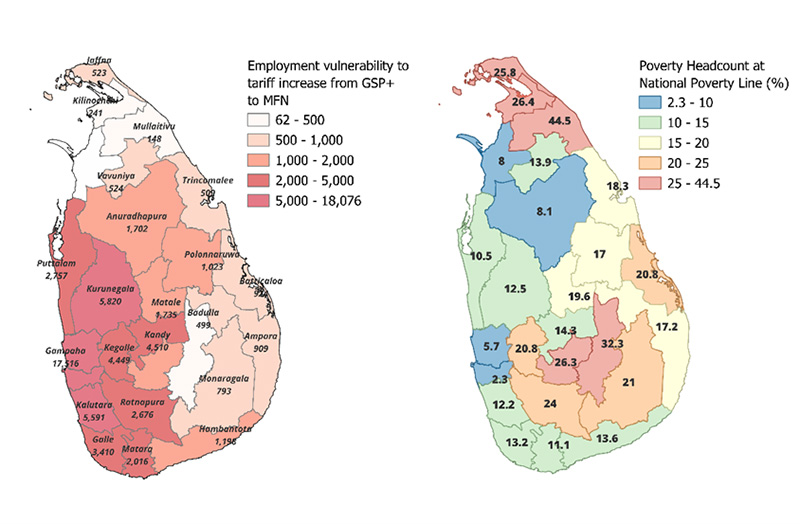
The IPS analysis suggests that the loss of GSP+ could put 73,574 workers at risk of losing their jobs. The apparel sector employs 87.1% of these vulnerable workers. The apparel industry currently employs 475,741 workers, of whom 70.5% are women.
When the embedded employment in the export losses is broken down by gender and skill level, it becomes clear that women, along with low and medium-skilled workers, will be the hardest hit. Out of the 73,574 workers at risk, 42,958 are women in low or medium-skilled roles. In the wearing apparel sector, 61.4% of vulnerable employees are females employed in low and medium-skilled occupations. Overall, 82% of all vulnerable workers are low and medium-skilled, highlighting the disproportionate impact on these workers if GSP+ is withdrawn.
The Road Ahead: Strategies for Inclusive Growth
Sri Lanka cannot afford to lose GSP+ given the current economic situation and the growth stage of the country. The slowly growing employment numbers show that alternative sectors are not in existence to absorb the labour force vulnerable to the GSP+ loss. Finding alternative jobs in the formal sector will be even more difficult.
To avoid this scenario, it is in Sri Lanka’s best interest to comply with the agreed-upon conventions and retain the GSP+ status. In the future, as the country reaches higher income levels, the GSP+ loss may be more manageable. However, at this stage, GSP+ is a driving force for increasing Sri Lanka’s exports and overall income.
While maintaining the crucial GSP+ preference, Sri Lanka should attempt to increase its utilisation by expanding the cumulation of non-originating materials, similar to the recent EU approval of cumulation between Sri Lanka and Indonesia. Enhanced cumulation will especially benefit the country’s wearing apparel sector. The Trade Preference Outlook-2024 of the UNCTAD also underscores the importance of reforming rules of origin, accounting for supply chain realities. In the longer term, Sri Lanka can look into options like entering a free trade agreement with the EU to cope with the adverse effects of GSP+ loss at a higher income stage of the country. This is particularly important as Sri Lanka’s eligibility for GSP+ is not only tied to compliance with the required conventions but also to its income classification. If Sri Lanka transitions to upper-middle-income status, it will no longer qualify for the GSP+. This highlights the need for long-term solutions to maintain preferential market access.
Dr Asanka Wijesinghe is a Research Fellow at IPS with research interests in macroeconomic policy, international trade, labour and health economics. He holds a BSc in Agricultural Technology and Management from the University of Peradeniya, an MS in Agribusiness and Applied Economics from North Dakota State University, and an MS and PhD in Agricultural, Environmental and Development Economics from The Ohio State University.
Chaya Dissanayake is a Research Officer at the Institute of Policy Studies of Sri Lanka (IPS). She holds a B.Sc. (Hons) in Agriculture specialised in Agricultural Economics from the University of Jaffna and is currently reading for an MSc in Integrated Water Resource Management at the Postgraduate Institute of Agriculture, Peradeniya. Her research interests include agricultural policies and institutions, disaster risk management, poverty and inequality, SMEs, women and the workforce.
Rashmi Anupama is a Research Assistant at the Institute of Policy Studies of Sri Lanka (IPS). She holds a BSc in Agriculture, specialised in Agricultural Economics, with a First Class from the Faculty of Agriculture, Rajarata University of Sri Lanka. Her research interests include international trade, regional integration, macroeconomic policy, structural reforms, and entrepreneurship.



The Asian Development Bank (ADB) has approved a $100 million results-based loan to help Sri Lanka transform its technical and vocational education and training (TVET) system, equip more young people with industry-relevant skills, and strengthen the country’s competitiveness and inclusive growth.
The Skills Development System Transformation Program will support the Government of Sri Lanka’s efforts in improving the quality and relevance of skills training, strengthening links between training providers and industries, and expanding employment opportunities for youth. The program will increase women’s employment opportunities in nontraditional jobs in fields including automotive technology, engineering, information and communications technology, construction, and renewable energy.
“A skilled workforce is essential to Sri Lanka’s long-term economic transformation and competitiveness,” said ADB Country Director for Sri Lanka Shannon Cowlin. “This program will help create stronger pathways from education to employment by making training more responsive to industry needs, expanding opportunities for young people and women, and ensuring that graduates have the skills required by a modern and evolving economy.”
Though Sri Lanka’s economy is recovering, it faces skills shortages in priority sectors, high youth unemployment, and low female labor force participation. Many employers report difficulty finding workers with the skills needed in a changing economy.
Aligned with the Government of Sri Lanka’s Technical and Vocational Education and Training Sector Strategic Framework 2026–2035, the nationwide program will be implemented from 2027 to 2031 and is expected to directly benefit more than 100,000 young people through improved access to quality, employment-oriented training.
By Ifham Nizam
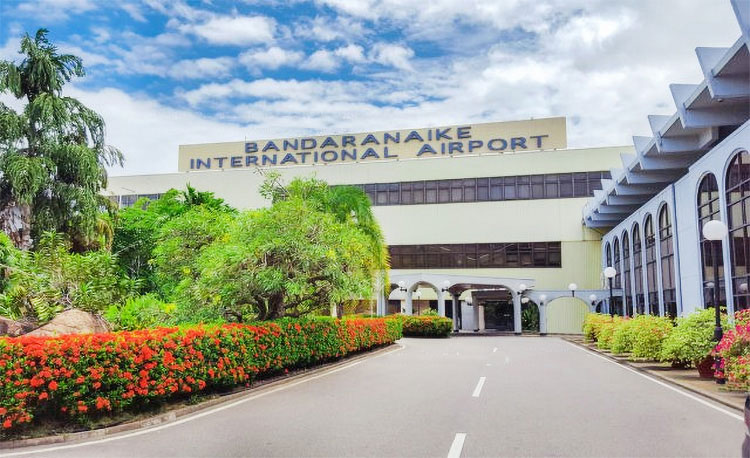
The government has cleared a USD 40.84 million and Rs. 8,548.75 million contract to build a dedicated aviation fuel pipeline from Muthurajawela to Bandaranaike International Airport (BIA), alongside a massive new fuel storage facility with a capacity of 92,000 cubic metres.
Energy Minister Anura Karunatilaka said the project represented a major investment in strengthening the infrastructure underpinning Sri Lanka’s aviation fuel supply and ensuring more reliable fuel availability at the country’s main international airport.
‘This project will provide the infrastructure required to strengthen the reliability and continuity of aviation fuel supplies to Bandaranaike International Airport, Karunatilaka said.
The contract has been awarded to China Petroleum Pipeline Engineering Company Limited, following an international competitive procurement process in which three bids were received.
The project will see a new aviation fuel storage tank complex constructed at Muthurajawela, together with the associated infrastructure required for handling and transferring aviation fuel.

By Hiran H Senewiratne
Trading activity on the Colombo Stock Exchange (CSE) gathered pace yesterday as global fuel prices began to show signs of easing, according to market analysts.In this context, both indices moved upwards. All Share Price Index up by 67.97 points while S and P SL20 up by 8.30 points.
Turnover stood at Rs 1.4 billion with seven crossings. Those crossings were reported in Sampath Bank 1.7 million shares crossed to the tune of Rs 238 million and its share price traded at Rs 140, Access Engineering two million shares crossed to the tune of Rs 159 million and its share price traded at Rs 79.50, LOLC one million shares crossed to the tune of Rs 129 million and its share price traded at Rs 129, HNB 100,000 shares crossed to the tune of Rs 38.4 million and its share price traded at Rs 384, JKH 1.9 million shares crossed to the tune of Rs 35 million and its share price traded at Rs 18.60, Hayleys 100,000 shares crossed to the tune of Rs 22.50 million and its share price traded at Rs 225 and Richard Pieris 847,000 shares crossed to the tune of Rs 22 million and its share price traded at Rs 25.50.
In the retail market top seven companies that have mainly contributed to the turnover were Sampath Bank Rs 114 million (813,000 shares traded), JKH Rs 100 million (5.3 million shares traded) LB Finance Rs 49 million (325,000 shares traded), HNB Finance Rs 30 million (27 million shares traded), HNB Rs 27 million (70000 shares traded), NTB Rs 25 million (82000 shares traded ) and Lanka IOC Rs 21 million (666,000 shares traded). During the day 65 million shares volumes changed hands in 10433 transactions.
The Banking and manufacturing sector counters performed well. In the banking sector Sampath Bank let the market while manufacturing sector especially JKH also significantly performed well. With the fuel revision Land IOC also a significant stock at the floor.
Meanwhile, First Capital Treasuries said that Ramesh Schaffter resigned as a Non-Independent Non-Executive Director with effect from October 1, to facilitate the restructuring of the company’s board.
Yesterday the Central Bank announced the US Dollar rate as against rupee. The rupee was quoted flat at Rs 330.65/80 to the US dollar in the spot market , while bond yields dropped, dealers said.

Showers or thundershowers will occur in most parts of the island after 1.00 p.m.

Unions resist tripartite EPF management plan

Two arrest warrants issued for Gnanasara thera

CA dismisses GR’s writ petition against arrest

ADB-backed virtual net metering project faces policy contradiction

Media action group flays NPP over new anti-terrorism law

‘Dates have the highest sugar content to fight Coronavirus’

Sunday Island 27 December – Headlines

#SundayIsland 17th December – Headlines

Sunday Island – 28th March

Sunday Island Headlines – 21 March

Sunday Island – 21st February – Headlines
-

 Editorial6 days ago
Birth of a bad law
-

 News4 days ago
Police remove Thileepan statue in Jaffna
-

 News6 days ago
TIN mandatory for key transactions from Nov. 1
-

 Features4 days ago
The 22nd Amendment, constitutional recovery and illiberal slippage
-

 Features4 days ago
Of foreigners as CEOs of Lankan ventures
-

 News4 days ago
Sajith rejects Jt. Opp. protest sabotage claim; SJB TU chief demands remedial action
-

 Latest News2 days ago
Gold winner Tharanga gets brand-new Honda Vezel from SLAAJ
-

 Features3 days ago
Thailand’s biggest new global star …