
News
Mihikataha Policy: Sri Lanka’s bold step toward Environmental Sustainability- Dr. Kariyawasam


By Ifham Nizam
In a landmark move to address pressing ecological challenges, Sri Lanka has unveiled the Mihikataha Policy, an ambitious framework aimed at ensuring environmental sustainability and resilience.
Spearheaded by a multi-disciplinary team of policymakers, scientists, and activists, the policy is a testament to the country’s commitment to balancing development with environmental preservation. At its core is the vision of fostering sustainable resource management, mitigating climate change, and empowering local communities to safeguard their natural heritage.
Mihikataha Policy is a monumental step toward achieving sustainable development and environmental resilience. Envisioned as a comprehensive strategy, the policy addresses critical ecological challenges such as biodiversity loss, climate change, and resource depletion. The contributions of scientists and activists like Dr. Ravindra Kariyawasam amplify the policy’s depth, ensuring it is rooted in scientific understanding and community-centered approaches.
Dr. Kariyawasam, a well-known environmental scientist and activist, has been pivotal in promoting ecological sustainability in Sri Lanka. His relentless efforts in areas such as land management, pollution control, and grassroots environmentalism have significantly influenced the design and implementation of the Mihikataha Policy.
“The Mihikataha Policy is not just about environmental protection—it is about reshaping our relationship with nature and prioritising sustainability for future generations,” he said in an exclusive interview with The Island.
The Mihikataha Policy has drawn praise for its science-driven strategies and its emphasis on community participation. Highlights include:
Biodiversity Conservation: The policy introduces measures to preserve Sri Lanka’s unique ecosystems, including the creation of biological corridors and protected areas. These initiatives align with Dr. Kariyawasam’s long-standing advocacy for safeguarding endangered species and their habitats.
Dr. Kariyawasam has been an outspoken advocate for preserving Sri Lanka’s unique biodiversity. His research highlights the ecological and economic importance of maintaining balance in natural ecosystems. Reflecting his contributions, the Mihikataha Policy includes:
Establishing Protected Areas: Dr. Kariyawasam emphasizes the need for biological corridors that connect fragmented habitats, ensuring species survival and genetic diversity.
Conservation of Endangered Species: Programs under the policy align with his call for targeted interventions to save at-risk species like the Sri Lankan leopard and endemic flora.
Sustainable Land Use: His advocacy for integrating biodiversity considerations into agriculture and urban planning has informed land-use policies within Mihikataha, encouraging eco-friendly practices such as agroforestry.
Pollution Control: Enforcing the “Polluter Pays Principle,” the policy aims to hold industries accountable for environmental damage while promoting recycling and advanced waste management practices.
Climate Adaptation: Climate-smart agriculture, renewable energy projects, and disaster preparedness programs form a significant part of the policy, ensuring resilience against the impacts of climate change.
Dr. Kariyawasam’s focus on climate change adaptation resonates strongly within the Mihikataha Policy, particularly in the areas of disaster preparedness and renewable energy:
Community-Centered Climate Adaptation: He has advocated for local solutions to climate challenges, such as community-based water harvesting and drought-resilient crops, both of which are key elements of the policy.
Transition to Renewable Energy: The policy’s commitment to renewable energy sources, such as solar and wind, reflects Dr. Kariyawasam’s long-standing efforts to reduce dependency on fossil fuels and promote green energy transitions.
Disaster Preparedness Programmes: Informed by Dr. Kariyawasam’s research, the policy outlines robust mechanisms to mitigate and respond to natural disasters, particularly in vulnerable areas.
Empowering Communities at the Grassroots
Dr. Kariyawasam stressed the critical role of grassroots involvement in the policy’s success. “Communities are the true custodians of the environment. By involving them in decision-making and providing education on sustainable practices, we ensure lasting impact,” he explained.
The policy outlines programmes to train farmers in eco-friendly agricultural techniques, educate youth about conservation, and offer incentives for adopting renewable energy solutions. This participatory approach has already begun to inspire local leaders, who see the policy as an opportunity to create sustainable livelihoods.
Challenges Ahead
Despite its promise, the Mihikataha Policy faces significant challenges, including funding constraints, resistance from industrial stakeholders, and the need for strong enforcement mechanisms. Dr. Kariyawasam has called for innovative solutions to these issues, such as establishing independent monitoring bodies and securing international green grants.
“The success of this policy hinges on accountability and collaboration,” Dr. Kariyawasam noted. “It requires the government, private sector, and citizens to work together with a shared vision for sustainability.”
A Visionary Path Forward
The Mihikataha Policy is poised to position Sri Lanka as a regional leader in sustainable development. By integrating scientific expertise, grassroots engagement, and robust regulations, it represents a bold step toward addressing the global environmental crisis at a national level.
Dr. Kariyawasam’s involvement underscores the importance of bridging the gap between research and policy, ensuring that environmental strategies are both effective and inclusive. “This is not just a policy document—it’s a blueprint for a sustainable future,” he said.
As Sri Lanka takes this pioneering step, the world watches closely, hopeful that the Mihikataha Policy will serve as a model for countries navigating the delicate balance between development and conservation.

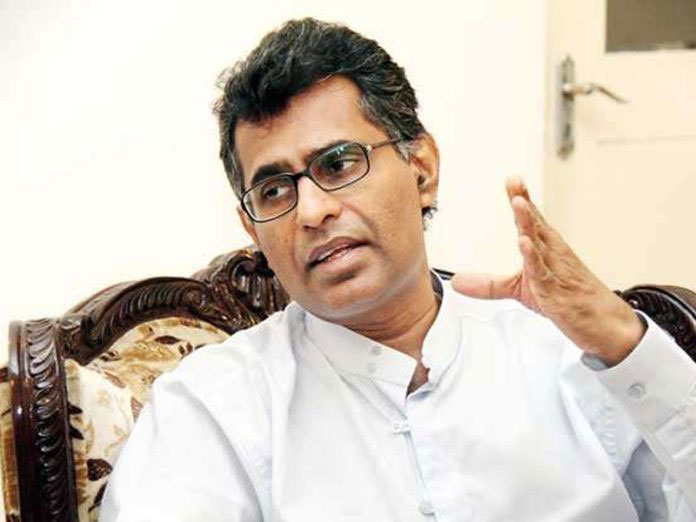
… reminds AKD led over 560 protests during Yahapalanaya
Former Yahapalana Minister and United Republican Front (URF) leader Patali Champika Ranawaka yesterday (19) alleged that the JVP, which carried out over 560 protests during the 2015-2019 period, was now bent on preventing the Opposition from exercising its democratic right to protest.
Recalling the declaration made by the JVP at the height of the violent protest campaign in July 2022 that it would set the Parliament ablaze, the former parliamentarian lashed out at the JVP-led administration for using the police excessively to curb political opposition. Ranawaka said this while addressing the media at the former President Ranil Wickremesinghe’s Flower Road Office .
Commenting on the protest campaign launched by the Maha Sangha, demanding presidential pardon for General Secretary of the Bodu Bala Sena (BBS) Ven. Galagotaatte Gnanasara, the ex-Colombo District lawmaker alleged that President Anura Kumara Dissanayake used a combination of police, investigative units and JVP cadres to break up the monks’ protest. The government went to the extent of compelling the JVP/NPP-run Colombo Municipal Council (CMC) to deprive the peaceful protesters of basic toilet facilities, he alleged.
The government’s actions proved that only those with prior approval from JVP Pelawatte headquarters could launch protests in Colombo, its suburbs or in the provinces. The police have become a political tool in the hands of the JVP, the ex-Minister said. (SF)

By SK Samaranayake
Six people were killed and seven others injured when a speeding bulker lorry carrying cement and concrete ploughed into several vehicles and a shop on the Kandy-Jaffna A9 road at Kurugoda, Akurana, yesterday (19).
Four of the victims, two women and two men, died on the spot in the accident which occurred around 10.30 am, according to Alawathugoda Police.
Police said the bulker, travelling at high speed from the Matale direction, collided with three three-wheelers, two motorcycles and two lorries before veering off the road and crashing into a commercial establishment.
Five of the injured were rushed to the National Hospital of Kandy, where hospital sources said two remained in critical condition.
The bodies of the four victims were placed at the Akurana Hospital, where two others, who suffered minor injuries, were also receiving treatment.
The driver of the bulker was arrested by the Alawathugoda Police Traffic Division and is to be produced before court.
Investigations are being conducted under the supervision of Central Province Senior DIG Lalith Pathinayake.

By Shamindra Ferdinando
owledging that there had been an administrative lapse on the part of the President’s Office in 2019 when Maithripala Sirisena granted presidential pardon to Ven. Gnanasara Thera, Convener of Janathawadi Joint Opposition Prof. G.L. Peiris yesterday (19) urged President Anura Kumara Dissanayake to rectify whatever those shortcomings and release the General Secretary of Bodu Bala Sena.
Addressing the media at the former President Ranil Wickrekmesinghe’s Flower Road Office, Prof. Peiris emphasized that it was not fair to hold Ven. Gnanasara accountable for lapse or technical fault of others at the Presidential Secretariat during President Sirisena’s tenure.
Prof. Peiris was flanked by UNP Chairman Wajira Abeywardena and United Republican Front (URF) leader Patali Champika Ranawaka.
The fresh appeal was made on behalf of Ven. Gnanasara in the wake of President Dissanayake and JVP heavyweight Anura Kumara Dissanayake ruling out fresh presidential pardon for the monk. Minister Lal Kantha declared that the government couldn’t under any circumstances meet the continuing monks’ protest demanding Ven. Gnanasara’s release. President Dissanayake dismissed repeated appeals for Ven. Gnanasara’s release when he addressed the NPP really in Badulla.
Sirisena granted presidential pardon in May 2019 even before he completed a year of his six-year term of rigorous imprisonment for contempt of court during proceedings of the media personality Prageeth Ekneligoda’s 2010 January disappearance in the Homagama Magistrate’s court.
At the onset of the regular weekly briefing, Prof. Peiris said that he would report to the Commission to Investigate Allegations of Bribery or Corruption (CIABOC) today (20) morning as requested by the commission. “The CIABOC wanted to record my statement regarding a meeting I chaired at the ministry after the conclusion of the war in 2009 pertaining to an ongoing investigation.”
Commenting further on the imprisonment of Ven. Gnanasara, the former parliamentarian said that President Sirisena intervened following a spate of requests made on behalf of BBS General Secretary by the Mahanayakes, Anunayakes and other Maha Sangha.
The Supreme Court on 10 September, 2026 rescinded the presidential pardon granted in late May 2019.

Shafali receives demerit point for breaching Level 1 of ICC code of conduct

Heavy showers about 100 mm are likely at some places in the Northern, North-central, Central, Eastern, North-western and Uva provinces

Molineux, Dunkley enter WPL 2027 auction with top base price of INR 50 lakh

Ranawaka accuses govt. of using JVP cadres and police to suppress political opponents

Six killed as speeding bulker crashes into vehicles, shop in Akurana

Prof. Peiris, summoned by CIABOC, appeals for Ven. Gnanasara’s release

‘Dates have the highest sugar content to fight Coronavirus’

Sunday Island 27 December – Headlines

#SundayIsland 17th December – Headlines

Sunday Island – 28th March

Sunday Island Headlines – 21 March

Sunday Island – 21st February – Headlines
-

 Features2 days ago
Kotahena:A Small Enclave, An Extraordinary Legacy
-

 News6 days ago
Sri Lanka, India caught in US-Iran ship crisis
-
 News3 days ago
Asgiri Mahanayake calls for immediate release of Gnanasara Thera
-

 Latest News7 days ago
Missiles intercepted near Riyadh after Saudi coalition hits Yemen fuel depot
-

 Latest News7 days ago
Kusal Mendis’ unbeaten 87 hands Sri Lanka consolation win
-

 News2 days ago
Record 1,600 students take Russian Classical Ballet examination in Sri Lanka
-
 News5 days ago
AC President recuses himself from hearing prison attire case pertaining to Gnanasara Thera
-

 Latest News6 days ago
Heavy showers above 100 mm are likely at some places in the Western, Sabaragamuwa, Southern, Central, and North-western provinces and in Anuradhapura district.