
Latest News
President stresses need to strengthen the National Procurement Commission


President Anura Kumara Dissanayake emphasized the importance of implementing a procurement plan and strengthening the National Procurement Commission (NPC).
The President shared these views in a meeting held at the Presidential Secretariat this morning (28), where he engaged in an in-depth discussion with NPC officials on the current procurement laws and procedures.
Officials from the National Procurement Commission informed the President that although around 60% of all government expenditures, including capital expenses, should ideally follow a proper procurement process, shortcomings in this process are causing significant losses to the government. This, they noted, creates greater opportunities for fraud and corruption.
The discussion also covered issues related to delays, lack of transparency, and inefficiencies in the procurement process. Attention was given to minimizing shortcomings in handling unsolicited proposals and Public-Private Partnership (PPP) procurements.
President Dissanayake pointed out the need to further expand the authority of the NPC to establish more systematic procurement planning.
The meeting was attended by Secretary to the Presidential Dr. Nandika Sanath Kumanayake, NPC Chairperson Sudharma Karunaratne, and other officials from the National Procurement Commission.

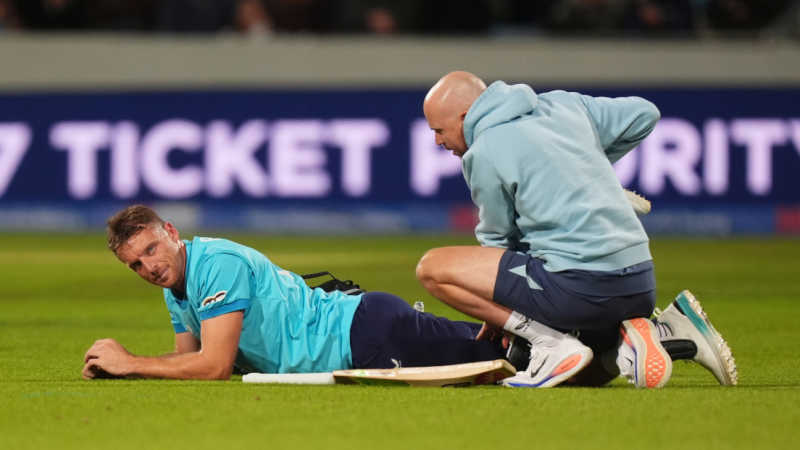
Jos Buttler has been ruled out of England’s ODI series decider against Sri Lanka at The Oval on Sunday, with Jordan Cox likely to replace him and keep wicket. Don Lawrence who is yet to win an international cap in either white-ball format, has been called up to the squad as cover.
Buttler pulled up with a left hamstring injury while running between the wickets in Thursday’s second ODI at Headingley and received treatment from England physio Steve Haw, a recent recruit from rugby union club Exeter Chiefs. He faced two more balls before retiring hurt, and briefly hobbled back to the middle before holing out as England slipped to a 16-run defeat.
Buttler’s eventual 69 was his highest score in ODIs in three years, but his injury will be something of a concern. He is now 36, and has been affected by various soft-tissue injuries in recent years. These have mainly been calf injuries, but he also suffered a similar left-hamstring issue during the 2024 IPL season.
England do not yet know the extent of Buttler’s injury but expect to have more information early next week once he has been for an MRI scan.
In Buttler’s absence, Cox is likely to win only his fourth ODI cap on Sunday and is expected to take the gloves ahead of Tom Banton. Kevin Pietersen, England’s new white-ball mentor, said on Thursday night that opportunities available through injuries would help build depth ahead of next year’s World Cup.
“[We need to] have certain players in certain positions, in order for us to know that if something like this happens to Jos in, say, the final round of whatever game in South Africa, and you’ve got to go and play a quarter-final, that somebody can step up into Jos’s boots – like we’re going to need to have on Sunday,” Pietersen said.
Lawrence, who made three half-centuries in four innings in England’s recent Test series win over Pakistan, has been withdrawn from Surrey’s ongoing Country Championship match at Somerset, having made his sixth hundred of the season on Thursday. He will train with the ODI squad at The Oval on Saturday.
Lawrence was previously called up to England’s ODI squad to face Pakistan in 2021 when their first-choice side went into Covid isolation, but did not play a game in the series. He has only played 28 List A games in his career, the most recent of them in May 2019.
(Cricinfo)
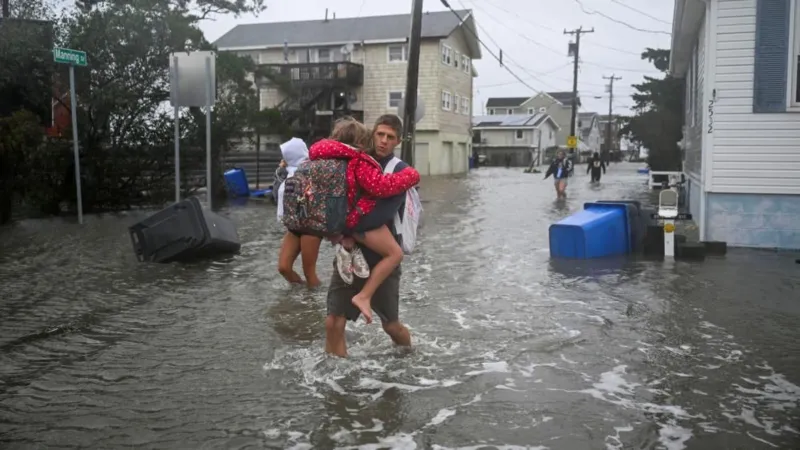
Tens of millions of people across the north-eastern US are in the path of a powerful storm bringing coastal flooding, power cuts, travel chaos and cancelled stadium events.
The so-called nor’easter is bringing “dangerous coastal flooding and beach conditions, strong winds and heavy rainfall” to areas including New York City and Boston on Saturday, the US National Weather Service (NWS) said.
States of emergency have been declared in New York and New Jersey, both of which faced a coastal deluge in some areas. Rain and strong winds are forecast from Virginia to Maine.
Ed Sheeran’s much-awaited Boston concert was among events called off due to the weather.
 Residents on kayaks in a Beach Haven West, New Jersey, neighbourhood (BBC)
The nor’easter caused widespread power cuts. More than 100,000 households, nearly all in the northeast US, have lost electricity, according to tracker PowerOutage.
The Federal Aviation Administration recommended air passengers check with airlines about their flight status. More than 2,400 flights have been delayed and another 1,199 grounded, according to FlightAware.
Saturday’s full moon is projected to worsen coastal flooding. Streets and homes were inundated with floodwater in the coastal New Jersey communities of Surf City and Manasquan on Saturday.
“I urge all New Jerseyans to take this storm seriously, stay alert and follow local guidance,” Governor Mikie Sherrill said.


NWS said in its alert: “Prepare immediately for significant inundation in low-lying areas near the shore, including roads underwater and impacts to homes and businesses.”
In New York, officials are warning of wind gusts of up to 55mph (86km/h) throughout the weekend, leading to downed trees and power lines
“Don’t travel if you don’t have to,” NYC Mayor Zohran Mamdani told residents in a video message. “Do not drive or walk through floodwater.”
In the Boston area, the Red Sox moved the last game in their series against the Chicago Cubs to Sunday afternoon in Florida.

A professional football match between Red Bull New York and St Louis City SC was also cancelled.
(BBC)
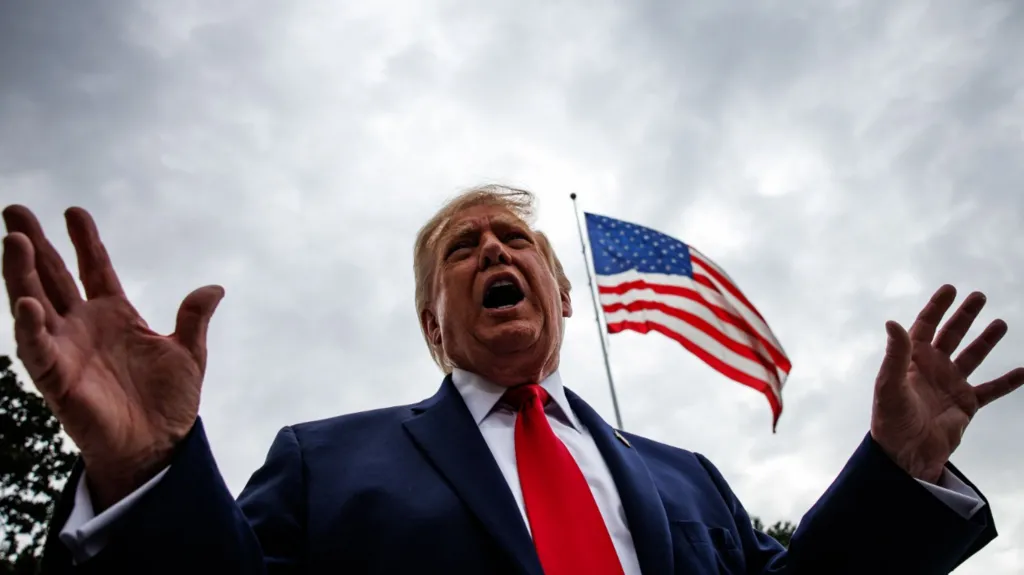
US President Donald Trump has rejected an Iranian proposal to reopen the Strait of Hormuz to commercial shipping within a week
He told reporters at the White House that Tehran “want to make a deal where they open the Strait immediately because they’re losing so badly”.
In a post on Telegram, Iran’s Foreign Minister Abbas Araghchi acknowledged Trump’s comments, but said Tehran would wait for an official response from mediators.
On Friday, Araghchi had told reporters at the UN in New York that an agreement could be reached “if the necessary conditions are met” and that these were contained in a memorandum of understanding (MOU) signed by the two countries in June.
The vital waterway through which around a fifth of the world’s gas and oil supply usually flows has been effectively closed since the outbreak of war in February.
“I’m rejecting their deal,” Trump said on Saturday, adding that the US already had “total control” of the strait, with “massive amounts of oil” passing through it.
“They want to make a deal, and I think that’s fine. I like making a deal, too. But that deal would not be acceptable,” he added.
Araghchi wrote that Trump “has made many good statements, as well as many contradictory ones, which unfortunately we hear frequently.”
He added that he would await the “definitive views” of mediators, and that Tehran “will make a decision based on that.”
On Friday the Wall Street Journal cited officials as saying Trump was sceptical that Iran would meet his demands and had told his staff that he saw a renewed bombing campaign as probable.
Iran responded to US and Israeli air strikes, beginning in late February, by attacking Israel and US bases in the Gulf and Arab Gulf allies of the US – as well as blocking the Strait of Hormuz. Its closure has caused wild fluctuations of energy prices.
The economic effects have also increased pressure on Trump to find a way of ending the conflict – particularly as the US heads towards Congressional elections in November.

(BBC)

Buttler out of Oval decider as Lawrence earns ODI call-up

Showers will occur in the Western, Eastern, Uva and Sabaragamuwa provinces and in Galle, Matara, Kandy and Nuwara-Eliya districts.

Nor’easter brings flooding as New York and New Jersey declare emergency 2 hours ago

Trump rejects Iran deal to reopen Strait of Hormuz in seven days

Govt plans to hire 121,000 state workers, redistribute tax revenue

Parliament clears 22A amid protests

‘Dates have the highest sugar content to fight Coronavirus’

Sunday Island 27 December – Headlines

#SundayIsland 17th December – Headlines

Sunday Island – 28th March

Sunday Island Headlines – 21 March

Sunday Island – 21st February – Headlines
-

 News6 days ago
Hatton youth protest against reported death sentence for Lankan in Saudi Arabia
-

 News4 days ago
Mastermind Naufer Moulavi among 15 found guilty
-

 News5 days ago
Protest against setting up of cement factory in highly populated area near BIA
-
 News6 days ago
Mahaweli rises as heavy rain triggers flood, landslide fears
-

 Latest News7 days ago
Landslide Red Alerts issued to the districts of Kandy, Kegalle and Nuwara Eliya
-

 Midweek Review4 days ago
Thileepan’s fast unto death: An authentic narrative that many missed
-

 Editorial4 days ago
Big Bad Bills
-
Editorial5 days ago
Trouble beginning in earnest