
Foreign News
King Charles begins Australia tour with church service

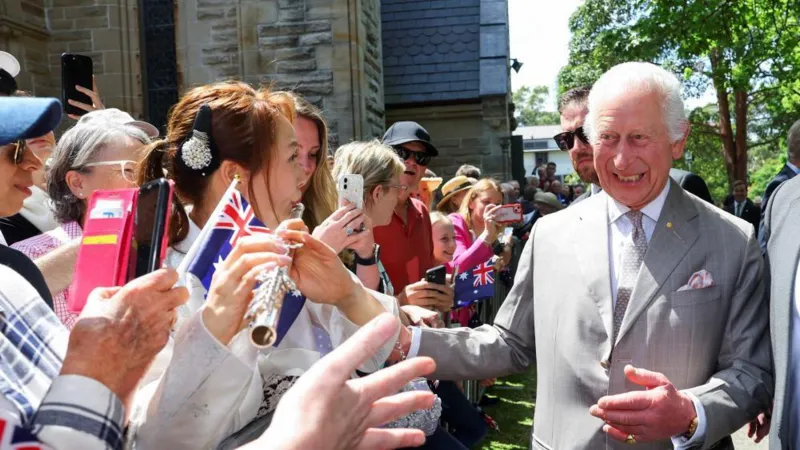
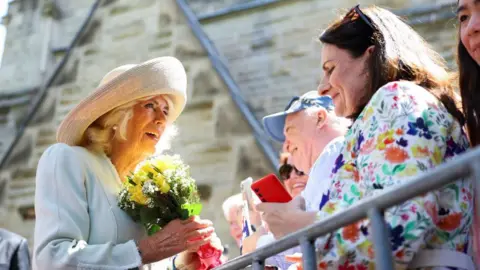
King Charles and Queen Camilla joined a church congregation in Sydney for a Sunday service on the first day of engagements during their tour of Australia.
It is the King’s first visit to Australia since he became the country’s head of state in September 2022 and is the biggest trip the King has made since starting cancer treatment in February.
Their six-day visit to the Commonwealth country will involve meeting political and community leaders, and also celebrating the nation’s people, culture, and heritage.
They were joined by members of St Thomas’ Anglican Church in northern Sydney for the service, which was officiated by the city’s archbishop, the Most Reverend Kanishka Raffel.
The royal couple met some well-wishers after a crowd of a couple of hundred people – many who had queued since early morning – were allowed into the church precinct to speak to the royal couple after the service.
For most it was a snatched hello and a chance to hand over flowers or take a photo.
Lyn Tarbuck attended with her husband Bob, a republican, and her two King Charles spaniels. She said of the monarchy: “I think it’s joined forces – if we have a problem in Australia they will help us out. We are a very big country but small in population so the more help we get the better.”
Roslyn Durie, who saw the Queen on her 1980 visit to Australia, said she was “so emotional” after receiving “a good firm handshake” from the King.
Sandra Hall and her husband Peter were also there to greet the royal couple. Ms Hall said: “I shook hands with Camilla first and welcomed her to Sydney, then Charles came along. I said ‘look, it’s a beautiful sunny day’ – and he said ‘it’s always sunny in Sydney’.”
Outside the church, a small but noisy group of about 20 protesters shouted “not our King”.
They held banners, one reading “decolonise”, and waved Aboriginal and Palestinian flags.
Wayne Wharton, an Indigenous Kooma protester from Brisbane, called out: “I charge you, I charge the King … with crimes against the sovereign nations of this country … of war crimes against our people.”
“I do not recognise the illegal occupation of this country,” he said.
He had started with a megaphone but was told by police to put it down or face receiving a fine.
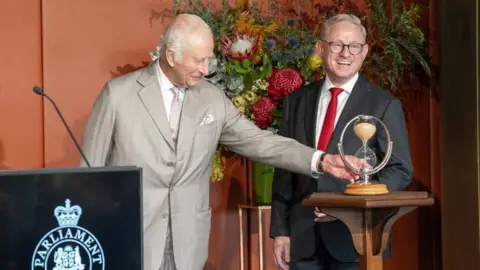
Also on Sunday, the King presented the New South Wales state parliament with an hourglass to celebrate the 200th anniversary of its upper house.
He also gave a speech to guests, in which he spoke of his “great joy” of visiting Australia for the first time as Sovereign, “and to renew a love of this country and its people which I have cherished for so long”.
On Saturday, a rest day for the couple, an image was released of the King and Queen Camilla showing the royals after their arrival on Friday at Admiralty House, the official residence of Australia’s governor-general, who represents the King in the country.
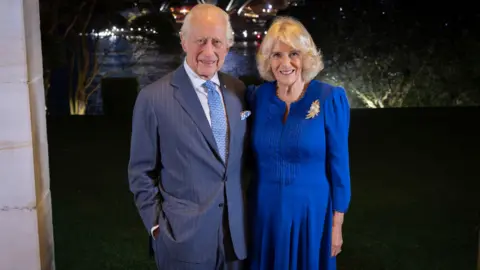
The couple were said to be touched when Sydney Opera House, which can be viewed from Admiralty House, was lit up with a rolling projection of images of them.
The King’s trip has been marked by his appointment to the honorary ranks of Admiral of the Fleet, Field Marshal, and Marshal in the three services of the Australian Defence Force.
Elsewhere, the Association of Commonwealth Universities, of which the King is a patron, has announced the launch of the King’s Commonwealth Fellowship programme.
It has been developed in response to urgent economic, social, and environmental challenges affecting small island developing states.
“There is so much we can learn from one another as we work together within the Commonwealth to tackle the major challenges of our age and, as these fellowships do in small island developing states, to address them where they are felt most acutely,” the King has said.
While in the Commonwealth country, the King’s visit will include supporting environmental projects and a naval review in Sydney Harbour.
The 75-year-old monarch is also expected to meet two Australian scientists, Georgina Long and Richard Scolyer, who have carried out pioneering research on melanoma – one of the country’s most common cancers.
There will be a reception in the capital on Monday to welcome King Charles, but the six state premiers – of New South Wales, Victoria, Queensland, Western Australia, South Australia, and Tasmania – have said they are unable to attend.
A post on the Royal Family’s X account said the trip would include the King addressing the Australian parliament in the capital Canberra.
The King’s cancer treatment has been suspended while in Australia and during the trip’s next leg in Samoa, where he will attend a Commonwealth leaders’ summit.
The timetables for the royal tour do not include evening engagements, state dinners, or trips out late in the day.
A message on the the Royal Family’s social media account said: “Ahead of our first visit to Australia as King and Queen, we are really looking forward to returning to this beautiful country to celebrate the extraordinarily rich cultures and communities that make it so special.”
[BBC]

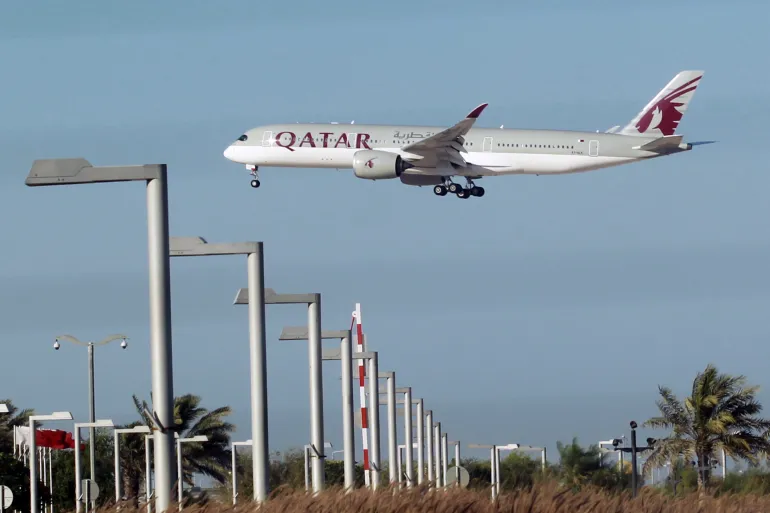
Qatar has partially reopened its airspace days after Iranian missile and drone strikes forced the country to ground all flights as a United States-Israeli military campaign against Iran continues into its seventh day.
The Qatar Civil Aviation Authority announced the limited opening on Friday evening, saying flights would operate through “designated navigational contingency routes with limited operational capacity” in coordination with the Qatari armed forces.
The move marks a cautious first step towards restoring air links to one of the Gulf’s most important aviation hubs but falls well short of a return to normality, with scheduled commercial flights to and from Doha remaining suspended until a further official announcement is made.
The Qatar Civil Aviation Authority said the partial reopening covers only a narrow category of flights “designated for passenger evacuation” and air cargo services.
Passengers with confirmed bookings were urged to follow updates from their airlines directly before travelling to the airport.
Early on Saturday, Qatar Airways said it “intends to operate repatriation flights on 07 March, departing Hamad International Airport to the following airports: London (LHR), Paris (CDG), Madrid (MAD), Rome (FCO), Frankfurt (FRA)”.
It added that priority would be given to “stranded passengers with families, elderly passengers, and those with urgent medical and compassionate travel needs”.
The Gulf country has been repeatedly struck by Iranian missiles and drones throughout the now seven-day conflict, forcing the country to activate its air force and use interceptors to defend its territory. Qatar’s Ministry of Defence confirmed the country had been struck by 14 ballistic missiles and four drones fired from Iran on Thursday.
More than 2,000 flights have been cancelled at Doha’s Hamad international airport since the conflict began.
Aviation across the Gulf
Across the Gulf, airports and airlines have been scrambling to manage the fallout from nearly a week of Iranian missile and drone barrages, launched in retaliation for the ongoing US-Israeli military campaign – codenamed Operation Epic Fury – which has killed at least 1,332 people in Iran since strikes began last Saturday, according to Iranian officials.
Emirates airline announced it is operating a reduced schedule while working to restore full network operations, carrying approximately 30,000 passengers out of Dubai on Friday alone.
By Saturday, the airline said it would have 106 daily return flights operating to 83 destinations, close to 60 percent of its full network, with a return to 100 percent expected “within the coming days, subject to airspace availability”.
Dubai international airport, the world’s busiest airport for international passengers, was evacuated on Sunday following Iranian strikes and has recorded close to 4,000 flight cancellations since Monday.
Abu Dhabi’s Zayed international airport has seen more than 1,000 cancellations and continues to operate at limited capacity.
Kuwait, also impacted by Iranian strikes, saw its airport undergo sustained physical damage in drone strikes, leaving some workers with minor injuries, and its airspace remains fully closed to commercial traffic.
Kuwait Airways has begun rerouting citizens with prior bookings through Jeddah, Saudi Arabia.
An estimated 23,000 flights have been cancelled since late February, according to analytics firm Cirium.
[Aljazeera]

The Inter-American Court of Human Rights (IACHR) has ordered Peru to pay reparations to the family of Celia Ramos, a mother of three whose death resulted from a campaign of forced sterilizations during the 1990s.
Thursday’s landmark ruling stated that the 34-year-old Ramos was coerced into sterilization against her will, causing an allergic reaction that led to her death.
The court ordered Peru to pay her family $340,000 as part of the ruling.
It noted that the Peruvian government had “failed to fulfill its obligation to initiate and conduct a thorough investigation” into Ramos’s case, heightening the strain on her family.
“Ms Ramos Durand’s family members — especially her three daughters, who were children at the time of the events — suffered profound harm as a consequence of the sterilization and death of Celia Edith Ramos Durand and the impunity surrounding the case,” the IACHR wrote in its decision.
Peru’s campaign of forced sterilization took place under the late President Alberto Fujimori, whose tenure included widespread human rights abuses that continue to cast a shadow over the country.
The scheme largely targeted poor and Indigenous women who were often tricked or coerced into sterilisation procedures.
This week’s ruling is the first time the human rights court has weighed in on the issue, which has been the subject of years of legal contestation in Peru.
“After almost 30 years of searching for justice, the Inter-American Court of Human Rights recognised the responsibility of the Peruvian state in the forced sterilization and death of Celia Ramos,” the Peruvian feminist organisation DEMUS said in a social media post, celebrating the ruling.
“This ruling marks a fundamental step in reparations for Celia, her family and the thousands of victims of forced sterilizations in Peru.”
As many as 314,000 women and 24,000 men were sterilized against their will in Peru under Fujimori’s government, which sought to forcibly lower the birth rate as a means of addressing poverty.
The procedures were particularly invasive for the women involved, and some suffered long-term complications, including death.
Family members often received little information about the circumstances that led to loved ones dying after the unnecessary operations. Some survivors did not realise what had happened to them until years later, when they discovered they were unable to have children.
In Ramos’s case, the 34-year-old mother had gone to a state health clinic for medical assistance on July 3, 1997, but was instead forced to undergo tubal ligation.
Ramos, however, suffered a severe allergic reaction during the procedure. She was placed in a recovery room, but the clinic was not able to treat her adequately.
In its decision, the IACHR explained that the clinic “lacked the necessary equipment and medications for adequate risk assessment or to handle emergencies”.
Ramos was ultimately transferred to an intensive care unit in the city of Piura, where she died 19 days later, on July 22, 1997.
The state did not carry out an autopsy and declined to share details with her family.
The compensation outlined in this week’s ruling includes reimbursement for the costs of medical procedures conducted to save Ramos’s life and the estimated loss of income from her death.
In October 2024, the Committee on the Elimination of Discrimination against Women at the United Nations ruled that Peru’s sterilization programme amounted to sex-based violence and discrimination against poor, rural and Indigenous women.
The committee’s statement cited a lack of adequate medical facilities and a lack of informed consent, just as the IACHR did in its decision this week.
“The victims described a consistent pattern of being coerced, pressured, or deceived into undergoing sterilizations at clinics lacking proper infrastructure or trained personnel,” committee member Leticia Bonifaz said.
“The procedures were carried out without informed consent from these victims, with some of them, especially those from remote areas, unable to read and speak Spanish, or fully understand the nature of the procedure.”
Scholars have concluded that Fujimori’s sterilization campaign was driven, in part, by racist views among government officials who saw rural, Indigenous communities as an obstacle to economic modernisation.
[Aljazeera]

The United States-Israeli war on Iran is estimated to have cost Washington $3.7bn so far in its first 100 hours alone, or nearly $900m a day, driven largely by the huge expenditure of munitions, according to new research.
An analysis by Washington-based think tank the Center for Strategic and International Studies (CSIS) underlined the colossal cost of the war, which entered its seventh day on Friday, as the US attacks Iran with stealth bombers and advanced weapons systems.
Researchers Mark Cancian and Chris Park said only a small amount of the estimated $3.7bn cost of the war in the first 100 hours – or $891.4m each day – was already budgeted for, while most of the costs – $3.5bn – were not.
That meant the Pentagon would likely need to request more funding soon to cover the unbudgeted costs, they said, which was likely to prove a political challenge for the Trump administration and provide “a focal point for opposition to the war,” they said.
Domestic cost-of-living concerns, inflation, and now a knock-on effect of rising gas prices due to the conflict are likely to further diminish support among US citizens for the war. It is also dividing Trump’s “America First” base, which he had promised in his presidential campaigns to not enter “foreign wars”.
Noting that the US Department of Defense had released limited specifics on its operations, the researchers said their analysis drew on Congressional Budget Office (CBO) estimates of the operations and support costs for each unit, adjusting for inflation and unit size, and adding 10 percent for costs of “a higher operational tempo”.
Their analysis said the US had expended more than 2,000 munitions of various types in the first 100 hours of the war, and estimated it would cost $3.1bn to replenish the munitions inventory on a like-for-like basis, with the costs increasing by $758.1m a day.
(Aljazeera)

Sutherland’s sublime century and Hamilton’s night-time burst flatten India

Trump says US does not need UK aircraft carriers for Iran war

Our goal is to build a “Thriving Nation” where a woman can walk without fear or doubt, where her talents are duly recognized, and where she can lead a life of dignity – PM

Dry weather will prevail except for a few showers in the Southern province and Rathnapura district

Heat Index at Caution Level in the Sabaragamuwa, North-western and North-central provinces and in Colombo, Gampaha, Vavuniya, Mannar, Hambantota and Monaragala districts

Lanka tea industry may lose $ 10-15 mn per week from ME war

‘Dates have the highest sugar content to fight Coronavirus’

Sunday Island 27 December – Headlines

#SundayIsland 17th December – Headlines

Sunday Island – 28th March

Sunday Island Headlines – 21 March

Sunday Island – 21st February – Headlines
-

 Features6 days ago
Brilliant Navy officer no more
-

 News2 days ago
University of Wolverhampton confirms Ranil was officially invited
-

 Opinion6 days ago
Sri Lanka – world’s worst facilities for cricket fans
-

 News3 days ago
Legal experts decry move to demolish STC dining hall
-

 Features6 days ago
A life in colour and song: Rajika Gamage’s new bird guide captures Sri Lanka’s avian soul
-

 News2 days ago
Female lawyer given 12 years RI for preparing forged deeds for Borella land
-

 Business4 days ago
Cabinet nod for the removal of Cess tax imposed on imported good
-
 Business4 days ago
War in Middle East sends shockwaves through Sri Lanka’s export sector