
Sports
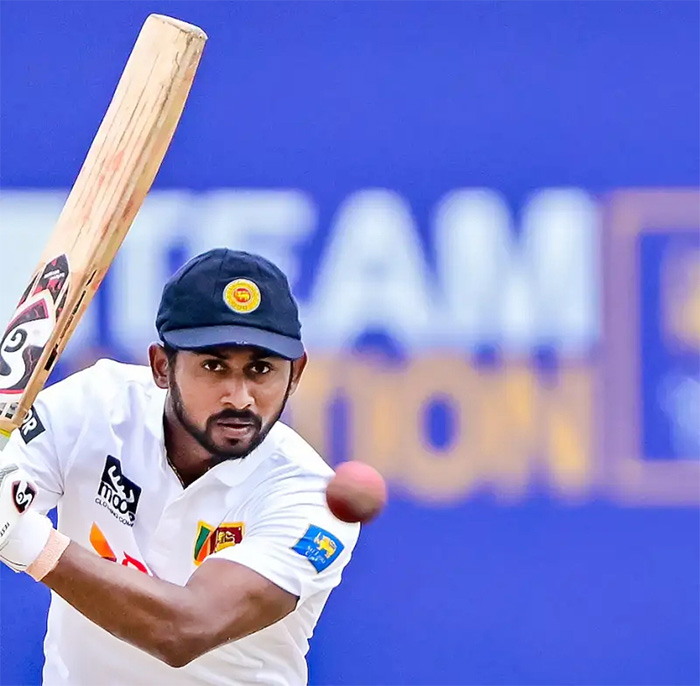
Kamindu Mendis on the brink of breaking into top ten chart

By Rex Clementine
Prolific middle-order batter Kamindu Mendis is knocking on the door of the ICC top ten rankings for batters. In the latest Test rankings, updated on Tuesday after the Bangladesh-India Test series, Kamindu took a giant leap forward, climbing five spots. Now ranked 11th, he’s just a whisker away from making it to the prestigious top ten.
Kamindu has been on fire since his recall to the Test side earlier this year. The left-hander topped the run charts during the Test series in Bangladesh and was Sri Lanka’s standout performer in England, finishing second only to Joe Root in the three-match series. His sizzling form continued against New Zealand, where he once again emerged as the leading run-scorer, a feat that played a pivotal role in Sri Lanka’s 2-0 series triumph — their first series win over New Zealand since 2009.
During his unbeaten 182 in the second Test, Kamindu burst onto the scene like a hurricane joining Sir Don Bradman as the third quickest batsman in the world to reach the milestone of 1000 runs. Just as The Don had crossed the finish line in 13 innings, the don of Boosa followed suit, leaving a trail of awe in his wake.
Meanwhile, seasoned campaigners Dimuth Karunaratne and Dhananjaya de Silva are ranked 16th and 17th, respectively, while Dinesh Chandimal sits at 20th after notching up a half-century and a century in his new role as the team’s number three batter.
On the bowling front, left-arm spinner Prabath Jayasuriya is making waves, climbing to number seven in the ICC rankings for bowlers. The 32-year-old, who bagged 18 wickets in the two-Test series against New Zealand, was deservedly named Player of the Series in Galle. Speedster Asitha Fernando is also gaining ground, currently ranked 13th.
Sri Lanka’s Test outfit has hit a purple patch, winning their last three matches in the World Test Championship. They pulled off a memorable eight-wicket victory against England at The Oval — their first win on English soil in a decade — before sealing their first series victory over New Zealand in 15 years.
Now, Sri Lanka find themselves in prime position to make a push for the World Test Championship finals at Lord’s next June. They sit third on the points table, trailing only India and Australia.
With four Tests remaining in the current cycle, two against South Africa in Port Elizabeth and Durban next month, followed by two more against Australia in Galle, Sri Lanka’s destiny is in their hands. Win all four, and they’ll punch their ticket to the final, regardless of how the other teams fare. Even three wins could keep them in the hunt, but anything less might leave their fate dangling in the balance.


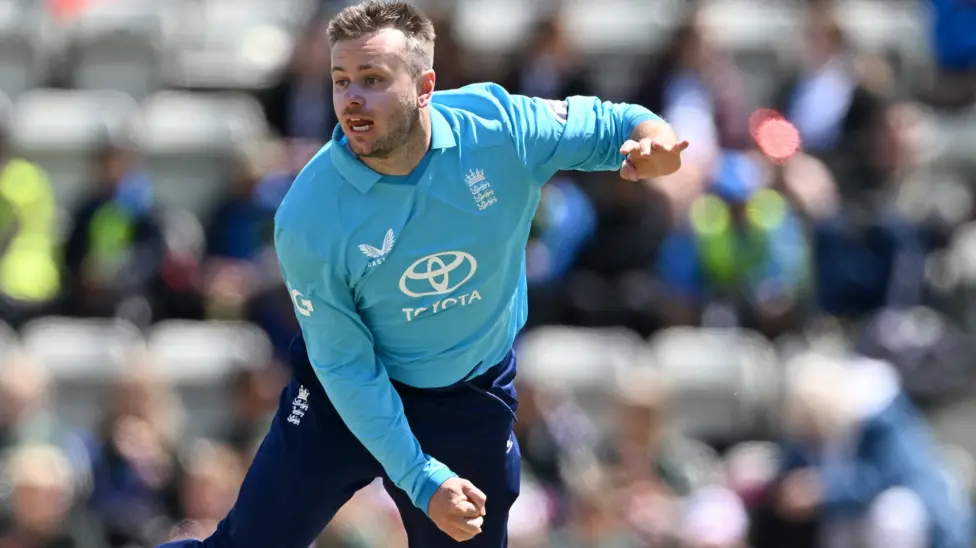
Leg-spinner Mason Crane could play for England for the first time in eight years after being recalled for the one-day international tri-series in Pakistan.
The 29-year-old won his only Test cap against Australia in Sydney in 2018 and is now given an opportunity in the series which also involves Sri Lanka next month.
Crane, who also played two T20 internationals in 2017, could also push his case in the fight to be England’s number one spinner in Test cricket.
Sam Curran and Adil Rashid both return after injuries, and uncapped pair James Coles and Henry Crocombe are included.
Jos Buttler is out with the hamstring injury he sustained last week, while Jacob Bethell is continuing his recovery from knee surgery.
Brydon Carse, who is under an investigation from the Cricket Regulator following an incident outside a nightclub in Derby in August, remains absent.
England are on a diet of white-ball cricket until three Tests in South Africa in December as they build up to the 50-over World Cup in southern Africa next year.
The tri-series in Pakistan involves the three teams taking part playing each other twice, with the top two advancing to the final. Following the trip to Pakistan, England play three one-day internationals and five T20s in Australia in November.
As England continue to shape their backroom staff following the arrival of Stephen Fleming as Test coach, Jeetan Patel, Mike Yardy, David Saker and Carl Hopkinson will assist white-ball head coach Brendon McCullum in Pakistan.
That means Marcus Trescothick, who took temporary charge of the Test team for the series against Pakistan in the home summer, misses the trip.
It is understood the make-up of the coaching staff is part of a plan to rotate the coaches – fielding coach Sarah Taylor and fast-bowling coach Tim Southee are also not going to Pakistan.
All of Trescothick, Taylor and Southee are likely to be part of England’s coaching team for other tours this winter.
England squad for tri-series in Pakistan:
Harry Brook (Yorkshire – captain), Gus Atkinson (Surrey), Sonny Baker (Hampshire), Tom Banton (Somerset), James Coles (Sussex), Jordan Cox (Essex), Mason Crane (Glamorgan), Henry Crocombe (Sussex), Sam Curran (Surrey), Liam Dawson (Hampshire), Ben Duckett (Nottinghamshire), Will Jacks (Surrey), Jamie Overton (Surrey), Adil Rashid (Yorkshire), Joe Root (Yorkshire), Josh Tongue (Nottinghamshire).
(BBC)


Sri Lanka won the toss and elected to bowl first in the Asian games semifinal clash against India.
Sri Lanka XI: Lasith Croospulle, Sineth Jayawardene, Sohan de Livera (wk), Ashen Bandara, Sahan Arachchige (c), Nuwanidu Fernando, Chamika Karunaratne, Wanuja Sahan, Tharindu Rathnayake, Binura Fernando, Vijayakanth Viyaskanth

England call up Crane and rest Archer for Pakistan series

ICC introduces pink-ball daytime Test trial, new time-wasting penalties

Discussion on Anuradhapura Sacred City Development Plan

India enter Asian Games final after Kishan and Bumrah ride roughshod over Sri Lanka

I extend my heartfelt wishes to all the sons and daughters of our country for a Happy World Children’s Day – President

Sri Lanka bowl first in semi final clash against India

‘Dates have the highest sugar content to fight Coronavirus’

Sunday Island 27 December – Headlines

#SundayIsland 17th December – Headlines

Sunday Island – 28th March

Sunday Island Headlines – 21 March

Sunday Island – 21st February – Headlines
-

 Editorial6 days ago
Birth of a bad law
-

 News4 days ago
Police remove Thileepan statue in Jaffna
-

 Features7 days ago
Beyond traditional jobs: Why Sri Lanka needs to facilitate the gig economy
-

 News6 days ago
TIN mandatory for key transactions from Nov. 1
-
 Latest News7 days ago
Kusal, Wellalage star as Sri Lanka defend 322 in Headingley thriller
-

 Features4 days ago
The 22nd Amendment, constitutional recovery and illiberal slippage
-

 Features4 days ago
Of foreigners as CEOs of Lankan ventures
-

 News4 days ago
Sajith rejects Jt. Opp. protest sabotage claim; SJB TU chief demands remedial action