
Business
iPay joins LankaPay’s ‘JustPay Web’

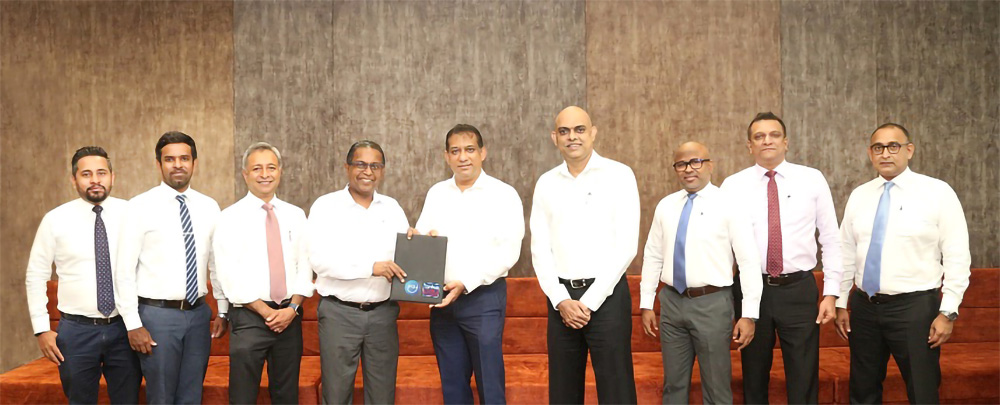
Elevating Digital Payments in Sri Lanka
Marking a significant advancement in Sri Lanka’s digital payment ecosystem, iPay – Sri Lanka’s leading digital payment solution, has integrated with JustPay Web, a cutting-edge online payment platform developed by LankaPay. This feature enablement signifies a new chapter in the evolution of online payments, offering customers of any bank the option to pay seamlessly, securely and in real time, by making direct payments via their bank accounts.
iPay has been one of the first mobile applications to get onboard with JustPay Mobile platform launched by LankaPay in 2017. The application has been leading ‘Pay by Account’ retail payment transaction space with over 60% market share. With the integration with JustPay Web, iPay has enabled ‘Pay by Account’ feature on both iPay Internet Payment Gateways & iPay merchant app. Accordingly, both existing and potential merchants of iPay can share a payment link with their customers, allowing them to select ‘Pay by Account’ and complete transactions seamlessly in real time irrespective of what their bank is.
This new feature is expected to accelerate transactions and eliminate the need for using credit or debit cards for online payments. Therefore, even small-scale entrepreneurs, SMEs, micro-SMEs, freelancers and unregistered businesses can now accept payments digitally, tapping into new customer segments. Additionally, by eliminating checkout complexity, ‘Pay by Account’ feature ensures greater success rate of online transactions. Merchants can also enjoy the benefit of extremely low commission rates.
The benefit to the customers would be the flexibility of paying anytime, anywhere, on any device at no additional cost to or hidden fees or charges. This new feature also provides the customer with smoother and more efficient payment process with enhanced customer experience. Welcoming iPay aboard to JustPay Web, Channa de Silva, CEO – LankaPay said “This partnership signifies our shared vision to advance digital payments in the country to greater heights, by driving the adoption of cashless transactions and fostering a more inclusive and digitally enabled society.
“I am confident that this collaboration between two like-minded organizations will continue to enhance the country’s digital ecosystem and iPay’s 600,000+ customers can look forward to experiencing the simplicity and convenience of JustPay Web – our latest innovation.”

By Sanath Nanayakkare
Continuing its mission to drive inclusive economic recovery and empower Sri Lanka’s grassroots business sector, the Commercial Bank of Ceylon PLC has actively accelerated the disbursement of the Asian Development Bank’s (ADB) Enhancing Small and Medium-Sized Enterprises Finance Project line of credit.
As Sri Lanka’s premier private sector lender, Commercial Bank drives regional development by bridging financial gaps outside the Western Province. Jaffna and the broader Northern Province remain pivotal focus areas due to their immense potential for industrial regeneration, vibrant agricultural output, and entrepreneurial resilience in the post-crisis economic landscape.
Directing targeted, affordable financing enables local enterprises to overcome historical financing barriers, expand production capacity, and stimulate employment across regional supply chains.

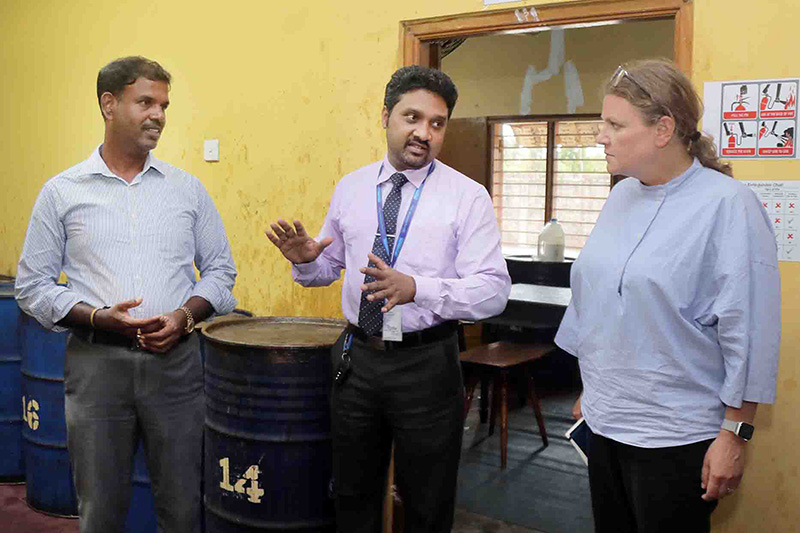
Quality at the Source: ADB Country Director Shannon Cowlin inspects a bottle of premium sesame oil at the New V.S.P. Gingelly Oil factory floor in Jaffna. Working capital facilities extended through Commercial Bank under the ADB line of credit enable manufacturers like Harish Industries to meet growing wholesale and retail demand across Sri Lanka while securing long-term economic resilience.
The dedicated credit scheme offers affordable interest rates to help small and medium-sized enterprises (SMEs) rebound from recent macroeconomic shocks, maintain employment stability, and build long-term sustainability. Designed to target underserved segments, the funding line prioritizes viable enterprises located outside the Colombo district, women-owned and women-led businesses, and ventures incorporating strong climate finance components. Eligible sectors span manufacturing, agriculture, animal husbandry, technology, tourism, and direct export industries.
A standout beneficiary showcasing the transformative impact of this regional focus is Harish Industries, a flourishing manufacturing firm located within the purview of Commercial Bank’s Manipay branch in Jaffna. Owned and operated by proprietor Ponnuchamy Prabakaran, Harish Industries manufactures premium sesame oil under the popular brand name “New VSP Gingelly Oil”.
The working capital facility extended by the line of credit to Harish Industries helped to cater to short-term liquidity needs, ease out cash flow pressure, and operate the business in a sustainable manner.
Additionally, this financial backing helped create more employment opportunities, strengthen its supply chain, and expand business operations to meet growing wholesale and retail demand across Sri Lanka.
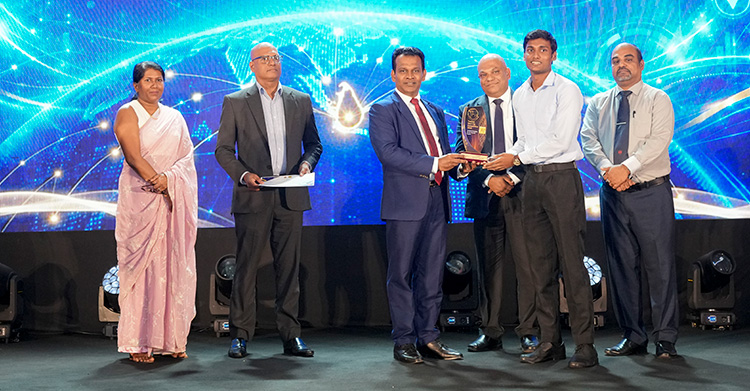
The grand halls of the Taj Samudra in Colombo buzzed with a distinct energy on the morning of September 25, 2026, as leaders gathered for the National Celebration of World Tourism Day.
Yet, beneath the formal discussions on digital agendas and artificial intelligence, a deeper, more vibrant narrative was quietly unfolding. This was not merely a story of algorithms and automated efficiency; it was a human story – a tale of Sri Lanka’s youth stepping forward to redesign the future of hospitality.
For generations, Sri Lanka’s allure has been rooted in its timeless landscapes, golden shores, and the legendary warmth of its people. But as global travel evolves, a new generation of tech-savvy local innovators is finding ways to weave cutting-edge technology into the rich tapestry of Sri Lankan culture. This shift took center stage during the Tourism Start-Up Competition 2026, held under the theme “AI-Driven Innovation for the Future of Tourism”.
Out of 52 competitive applications spanning tertiary and commercial levels, young minds proved that technology and tradition can go hand in hand.
The twenty-five shortlisted teams stood before expert panels to defend visions that bridge the gap between ancient heritage and modern data intelligence.
Behind every submitted AI solution was a young entrepreneur eager to protect local destinations, enhance visitor experiences, and elevate service delivery.
When the twelve winners were finally honoured, the celebration transformed into something much greater than an awards ceremony.
It served as a powerful reminder that the true engine of Sri Lanka’s digital transformation is its youth. Armed with code, creativity, and a profound love for their country, these young visionaries are ensuring that when travelers explore Sri Lanka, they do not just witness the future – they feel the heartbeat of a new, digitally empowered era of hospitality.
Business
IRD enforces mandatory TIN certificate submission for specified transactions starting November 01


The Inland Revenue Department (IRD) has announced a sweeping regulatory shift, confirming that the submission of a valid Taxpayer Identification Number (TIN) Certificate will become mandatory for a wide range of essential financial, commercial, and property transactions starting November 1, 2026.
The decisive directive, enforced under the legal framework of the Inland Revenue (Amendment) Act, No. 11 of 2026, applies directly to individuals specified under Section 102(3) of the principal Inland Revenue Act.
Under the new mandate, relevant authorities and corporate entities across the island have been instructed to withhold processing or completion of key procedures unless applicants present a verified TIN document. The specified transactions include:
Financial Services: Opening any account at a bank or financial institution, and obtaining a credit card.
Property and Construction: Obtaining approval for building plans, and registering land or titles to land.
Automotive Administration: Registering a motor vehicle or renewing a motor vehicle license.
Commercial Activity: Registering a new business.
Corporate Transfers: Transferring shares of a company incorporated in Sri Lanka—a requirement binding on both the transferor and the transferee.
The IRD has reiterated that acquiring a TIN remains a statutory obligation for all resident individuals who were aged 18 or older as of December 31, 2023, as well as those who attain the age of 18 on or after January 1, 2024, upon reaching that milestone. Officials handling the designated services have been sternly directed to verify compliance before moving forward with any customer requests.
To streamline the transition and prevent administrative bottlenecks, the department has encouraged members of the public who have not yet secured their numbers to register promptly via the official IRD e-Services platform. Furthermore, recognizing potential logistical hurdles, the IRD noted that a printout of the online TIN verification result—clearly displaying the applicant’s National Identity Card (NIC) number and TIN—will be accepted as a valid alternative to the official certificate.
As the November 1 deadline approaches, citizens are urged to secure their documentation beforehand to ensure uninterrupted access to essential public, financial, and legal services.

Strait of Hormuz tensions linger as Iran and US move further from a deal

Showers will occur in the Western, Eastern, Uva and Sabaragamuwa provinces and in Galle, Matara, Kandy, Nuwara-Eliya, Polonnaruwa and Mullativu districts

Sajith rejects Jt. Opp. protest sabotage claim; SJB TU chief demands remedial action

Police remove Thileepan statue in Jaffna

NPP, Lal agree to disagree

Mudalige alleges irregularities in police body-camera tender

‘Dates have the highest sugar content to fight Coronavirus’

Sunday Island 27 December – Headlines

#SundayIsland 17th December – Headlines

Sunday Island – 28th March

Sunday Island Headlines – 21 March

Sunday Island – 21st February – Headlines
-

 News5 days ago
Mastermind Naufer Moulavi among 15 found guilty
-
 News6 days ago
Protest against setting up of cement factory in highly populated area near BIA
-

 Midweek Review5 days ago
Thileepan’s fast unto death: An authentic narrative that many missed
-
 Latest News4 days ago
Showers above 100 mm are likely at some places in the Western, Sabaragamuwa, Central and North-western provinces and in Galle and Matara Districts
-

 Editorial6 days ago
Trouble beginning in earnest
-
Editorial5 days ago
Big Bad Bills
-

 News6 days ago
Govt. confident of 2/3 majority despite NPP split speculation
-
 News6 days ago
Police may seek clarification from US