
Foreign News
Iran launches more than 180 missiles at Israel

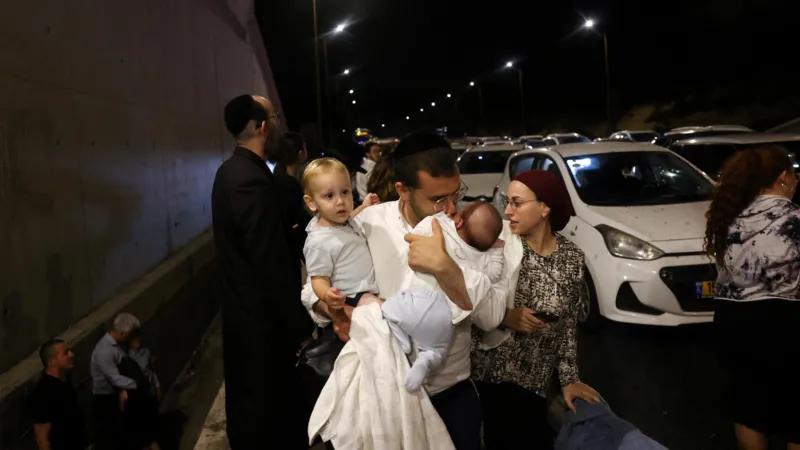
Israel says Iran launched more than 180 missiles towards the country in a large-scale attack that further heightened fears of an all-out regional war.
Millions of people rushed to shelters before explosions lit up the night skies above Tel Aviv and Jerusalem. Paramedics said two were lightly injured by shrapnel.
The Israeli military said most of the missiles were intercepted with US help, but that there were a “small number of hits”. It accused Iran of a “dangerous escalation” and warned of “consequences”.
Iran’s Revolutionary Guards said the missiles hit their targets and that it had retaliated for the killings of the leaders of its allies Hezbollah and Hamas, as well as a top Iranian general.
The US said the missile attack appeared to have been “defeated and ineffective”, and that it was consulting with Israel on a response.
The UN’s secretary general condemned what he called the “broadening conflict in the Middle East”, adding: “This must stop. We absolutely need a ceasefire.”
The missile attack came hours after Israeli troops began an invasion of southern Lebanon to remove what the military said were “Hezbollah terror targets” in border villages that posed a threat to residents of northern Israel.
Israel has gone on the offensive against the Iran-backed Shia Islamist political and military organisation after almost a year of cross-border hostilities sparked by the war with Hamas in Gaza, saying it wants to ensure the safe return of residents of border areas displaced by Hezbollah rocket, drone and missile attacks.
Air raid sirens sounded all across Israel at around 19:30 local time (16:30 GMT) on Tuesday, as the Israel Defense Forces (IDF) warned missiles had been launched from Iran.
Within a few minutes in Jerusalem, loud explosions were heard in Jerusalem as missiles flew overhead and were intercepted by Israeli air defence systems.
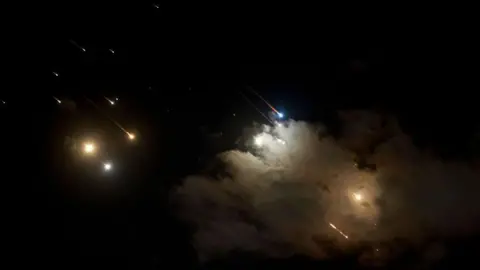
Videos shared on social media showed streams of light as the missiles flew over Israel, and clouds of smoke as they were intercepted or detonated on impact.
Just over an hour later, the IDF announced that people were allowed to leave their protected spaces because it did “not identify any additional aerial threats from Iran”.
Later, IDF spokesman Rear Admiral Daniel Hagari said in a statement that “there were a small number of hits in the centre of Israel, and other hits in Southern Israel”.
“The majority of the incoming missiles were intercepted by Israel and a defensive coalition led by the United States.”
He added: “Iran’s attack is a severe and dangerous escalation. There will be consequences.
“Our defensive and offensive capabilities are at the highest levels of readiness. Our operational plans are ready. “We will respond wherever, whenever, and however we choose, in accordance with the directive of the government of Israel.”
US National Security Adviser Jake Sullivan told reporters at the White House that he did “not know of any damage to aircraft or strategic military assets in Israel”.
“In short, based on what we know at this point, this attack appears to have been defeated and ineffective,” he added.
He also condemned the attack as “a significant escalation” and warned: “We have made clear that there will be consequences, severe consequences, for this attack, and we will work with Israel to make that the case.”
Iran’s Islamic Revolution Guard Corps (IRGC) put out a statement saying it had launched scores of ballistic missiles at “the heart of the occupied territories” and targeted unspecified “sensitive security and military” centres.
The attack was retaliation for “the violation of Iran’s sovereignty and the martyrdom” of Hamas political leader Ismail Haniyeh, who was killed by an explosion in Tehran in July that Iranian officials blamed on Israel, but Israeli officials did not claim. The statement described the missile barrage as having been “in line with the legitimate right of the nation to defend itself”.
It also said the attack was in response to the Israeli air strike in the southern suburbs of Beirut on Friday that killed Hezbollah leader Hassan Nasrallah and Brig-Gen Abbas Nilforoushan, the operations commander of the IRGC’s overseas arm, the Quds Force.
The IRGC warned Israel that it would “be faced with subsequent crushing blows” if it responded to the attack.
Later, Iranian state media claimed that missiles had hit the Nevatim, Hazterim and Tel Nof air bases, as well as Israeli tanks in Netzarim – a reference to an Israeli military corridor in central Gaza – and gas installations in the southern Israeli city of Ashkelon.
The attack took place about an hour after a senior White House official told reporters that the US had indications that Iran was preparing to imminently launch missiles at Iran.
Prime Minister Benjamin Netanyahu then told Israelis in a video statement: “We are in the midst of a campaign against Iran’s axis of evil.
“Together, we will stand steadfast in the trying days ahead of us. Together we will stand. Together we will fight and together we will win.”
Meanwhile, the US military’s Central Command announced that three additional squadrons of F-16 and F-15E fighter aircraft and A-10 attack aircraft were arriving in the Middle East, and that one squadron had already arrived.
Over the weekend, the Pentagon had also ordered the USS Abraham Lincoln carrier strike group to remain in the region to “deter aggression”.
In April, Iran launched more than 300 drones and missiles at Israel in retaliation for a deadly strike on the Iranian consulate in Syria that killed several top commanders.
Almost all of them were shot down by Israel, the US and other Western allies and their Arab partners, and an air base in southern Israel sustained only minor damage when it was hit.
Israel responded by launching a missile that hit an Iranian air base.
On Saturday, Iran’s Supreme Leader Ayatollah Ali Khamenei had promised that the death of his close ally Hassan Nasrallah would “not go unavenged”. He gave no details, but said: “The fate of this region will be determined by the forces of resistance, with Hezbollah at the forefront.”
Iran has built a network of allied armed groups across the Middle East, which are all opposed to the US and Israel and sometimes refer to themselves as the “Axis of Resistance”. Besides Hezbollah, they include Hamas in the Palestinian territories, the Houthis in Yemen, and a number of Shia militias in Iraq and Syria.
[BBC]

US authorities have found debris from a medical transport aircraft that went missing with six people on board.
The Federal Aviation Administration told the BBC it had lost contact with the Gulfstream G-100 plane just after 01:00 local time (05:00 GMT) on Saturday, while it was travelling from Bermuda to Boston, Massachusetts.
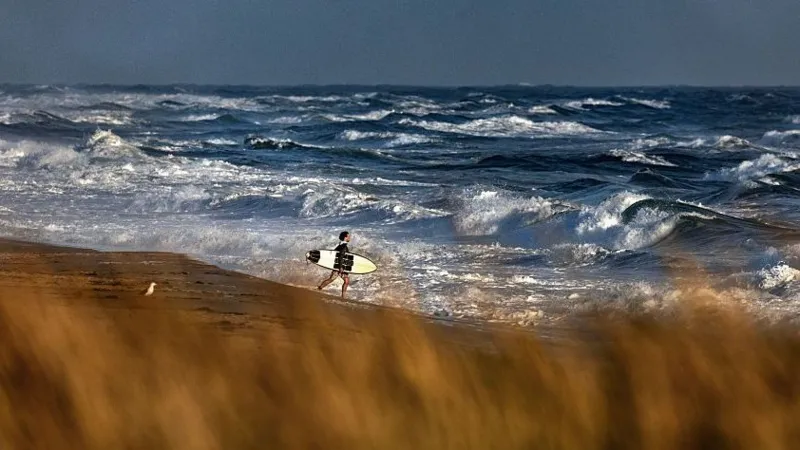
The search for survivors continues off the coast of Nantucket, a Massachusetts island, the US Coast Guard said.
Authorities have notified the next of kin of those on the flight, four Canadian nationals and two Bermudian nationals.
“Search crews located a debris field confirmed to be from the aircraft off the coast of Nantucket,” the US Coast Guard said in an update on Saturday night. It added that ships, helicopters and planes were involved in searches that would through continue the night.
The plane departed from Bermuda’s L.F. Wade International Airport at 23:40 local time, according to flight data from FlightAware, and was due to land at Boston’s Logan International at 01:30 EDT (05:30 GMT).
According to the tail number released by the Coast Guard, the plane belonged to Latitude Air Ambulances, a company that provides international medical flights for patients returning home.
Among those on board were two pilots and two medical staff, both Canadian, Clarence Togeretz, director of flight operations at Latitude, told CBC News.
The crew flew to Bermuda to collect a patient and their relative, who are not Canadian, Togeretz said.
FlightAware’s tracker shows the aircraft significantly dropped in altitude before its communications went dark, plummeting from around 7,300m (24,000ft) to 3,300m (11,000ft).
Radio transmissions shows trouble with communications between the air traffic controller and the pilot, the Boston Globe reported based on transmissions provided by LiveATC.net.
“You’re coming in blind? Is that what you said?,” the air traffic controller asked. “Are you declaring an emergency, or no?”
The pilot’s response was inaudible.
“You’re coming in a little weak so I didn’t hear what your response was, if you were declaring an emergency or not,” the air traffic controller said, according to the Globe.
The air traffic controller later confirmed the pilot had declared an emergency.
An area fire dispatcher asked emergency crews just after 01:00 EDT to prepare to meet a plane with an “electrical issue”.
The dispatcher later said “the aircraft has lost radio and radar”.
The Coast Guard said it would provide an update on Sunday morning local time.
[BBC]
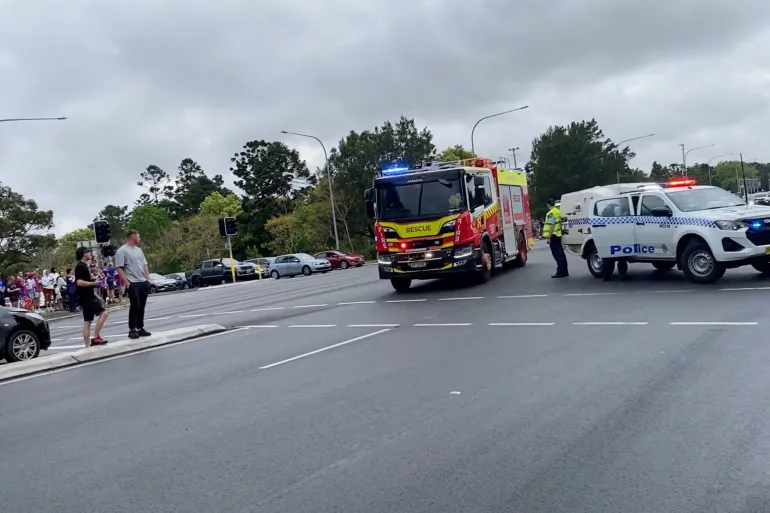
A car has crashed into a crowd of rugby league supporters in the eastern Australian city of Newcastle, injuring 10 people, including three children.
New South Wales police said on Saturday that two of the injured – a five-year-old girl and a 67-year-old man – were in a critical condition and the other eight were in stable condition in hospital.
Police said they had arrested the 18-year-old man driving the vehicle and were investigating what happened. They said the crash was not believed to be related to “terrorism”.
The crowd had gathered to farewell the local rugby league side, the Newcastle Knights, ahead of their grand final against the Sydney Roosters on Sunday.
Newcastle Lord Mayor Gavin Morris said the driver, a rugby league fan, had lost control of his vehicle and had been taken into custody.
“He was revving the car, he was excited, he was a supporter, he was there for the joy of the moment,” Morris told the national broadcaster ABC.
“Somehow he lost control of the car … and he’s gone into the crowd,” he added.
Prime Minister Anthony Albanese said: “My thoughts are with everyone injured or involved in the horrible incident this morning in Newcastle.”
“Rugby league brings people together, and this should have been a weekend of excitement and pride for Newcastle fans,” he wrote in a social media post.
[Aljazeera]
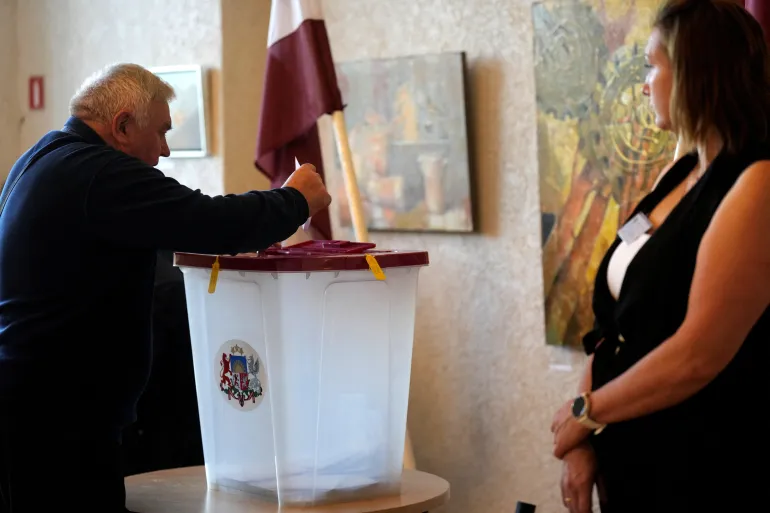
Polls have opened in Latvia for an election taking place against the backdrop of perceived security threats from Russia and a nationwide cost-of-living squeeze.
Saturday’s vote is the first electoral test for Prime Minister Andris Kulbergs after coming to power in May this year when his predecessor resigned due to a backlash from stray drone incursions from Ukraine.
Kulbergs, whose right-wing United List party is currently polling at about 20 percent, is expected to hold onto his position, but the decline of two allies in his current coalition means he is set for a complicated negotiation over the makeup of any future government.
Polls opened at 05:00 GMT and will close at 17:00 GMT. The results are not expected to change Latvia’s pro-European and pro-Ukrainian course.

About 1.5 million people are eligible to vote in the country’s 11th parliamentary election since independence from the Soviet Union in 1991.
Latvian politics are highly fragmented, with parties rarely seeing above 20 percent vote share and coalitions being the norm.
This year, 14 electoral lists are contesting the election, but polls indicate only seven are likely to enter parliament, with the rest expected to fail to meet the minimum 5 percent vote threshold.
Rising living costs, low wages, strains on the healthcare system and long-term population decline have all featured prominently in campaign debates.
Most parties in Latvia are pro-Ukraine; however, the populist Sovereign Power party – which says it wants Ukraine to win but argues money spent supporting Kyiv would be better spent at home – looks likely to become the country’s second-biggest party, with more than 9 percent of the vote. Most other parties have ruled out forming a coalition with Sovereign Power.
Latvia First, a pro-Ukraine and populist nationalist party currently polling at about 9 percent, could be a potential coalition partner for PM Kulbergs.
The Progressives, a pro-European social democratic party, are polling at 6 percent.
Ethnic Russians make up roughly one in four Latvian citizens, but their vote, which has traditionally been cast along identity-based lines, looks set to be made according to economic and social issues.
Latvia is the poorest of the Baltic states, and it has sharply increased its defence spending since Russia invaded Ukraine, now allocating nearly 5 percent of its gross domestic product (GDP) to defence.
[Aljazeera]

Introduction of Flora and Fauna (Regulation of actions of the Indigenous Community within the nominated areas) Regulations
M. M. D. J. Senarathne, appointed Director General of the Department of National Botanical Gardens

Harmanpreet Kaur steps down as India captain

Turkiye, Pakistan agree Saudi Arabia military deployment under Mecca pact

Rumesh Tharanga among nominees announced for World Athlete of the Year 2026
New Chancellor appointed to General Sir John Kotelawala Defence University

‘Dates have the highest sugar content to fight Coronavirus’

Sunday Island 27 December – Headlines

#SundayIsland 17th December – Headlines

Sunday Island – 28th March

Sunday Island Headlines – 21 March

Sunday Island – 21st February – Headlines
-

 Latest News7 days ago
Gold winner Tharanga gets brand-new Honda Vezel from SLAAJ
-

 News6 days ago
US-assisted ‘Ice’ detection: NPC to examine IGP’s move to transfer drug-busting team
-

 Features7 days ago
Why Sri Lanka needs an Inclusive Civic Nationalism – urgently
-

 Editorial5 days ago
Colombo Port drug bust: The plot thickens
-

 News7 days ago
Civil society activist accuses govt. of favouring Ven. Gnanasara
-

 Midweek Review7 days ago
Dappula’s Easter Sunday ‘grand conspiracy’ claim demolished
-

 Editorial7 days ago
When crime bosses rise above law and shrines
-
Editorial6 days ago
Drug busting, transfers and trust deficit