
Sports
Harry Brook 110* fires England chase to help keep series alive

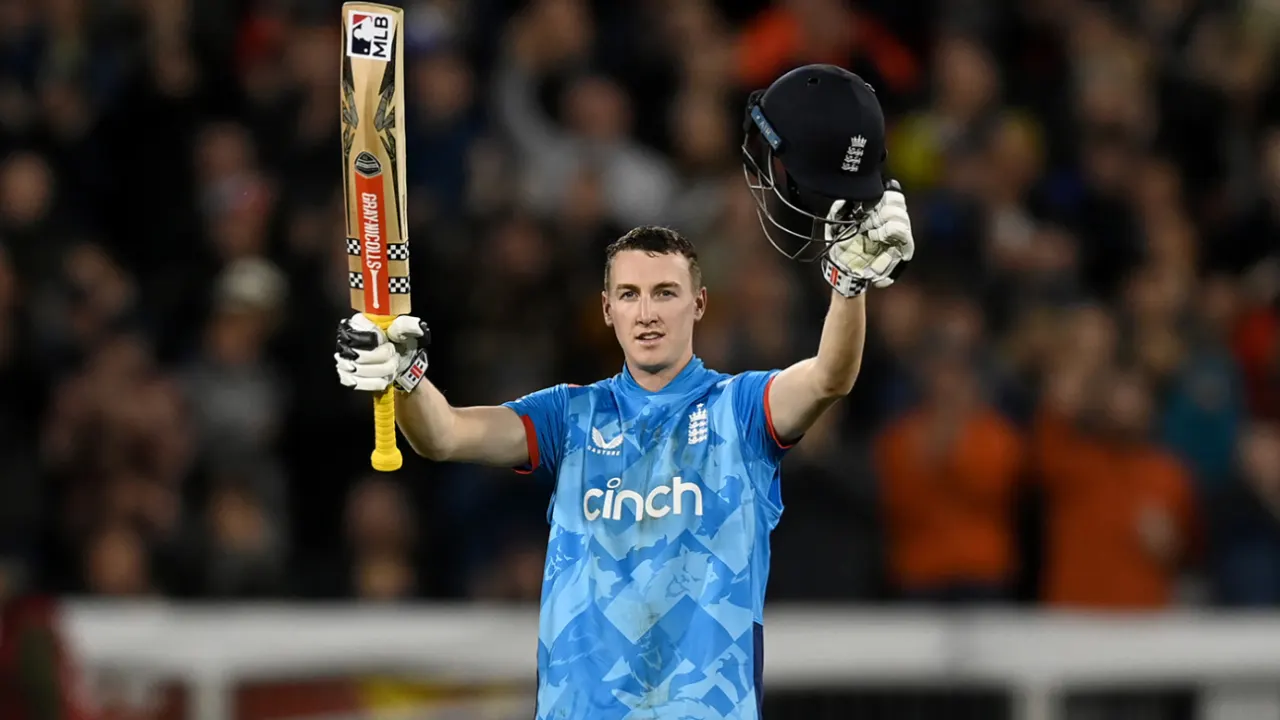
Harry Brook’s scintillating maiden ODI hundred led England to victory over Australia at Chester-le-Street, a seemingly daunting chase handled with some comfort before the rain arrived to produce a 46-run margin on Duckworth-Lewis-Stern. England’s first win in the format since December kept the series alive with two to play, whilst also ending Australia’s 14-game winning run stretching back to the 2023 World Cup.
Brook’s inexperienced side looked to be in trouble after failing to contain Australia with the ball despite helpful conditions early on, Alex Carey’s unbeaten 77 leading the cavalry charge in the second half of the innings. England then stumbled to 11 for 2 in the fourth over, Mitchell Starc removing both openers in the space of five balls.
But a stand of 156 between Brook and Will Jacks, who made 84, flipped the chase on its head. Although Jacks and Jamie Smith were both bounced out by Cameron Green, Brook was joined by Liam Livingstone in another pulsating stand that brought the requirement down to 51 from 74 balls, at which point the weather closed in.
Brook walked off unbeaten on 110 from 94 balls, with 15 boundaries, having become the youngest England captain to score a century in ODIs. Australia were without a key member of their attack, with Adam Zampa missing through illness – they also opted to rest Travis Head – but this was nevertheless a hugely encouraging performance and a vital demonstration of what England’s new-look batting line-up could achieve after two costly implosions at Trent Bridge and Headingley.
Australia’s greater nous had appeared likely to determine the result shortly after the innings break. Faced with making what would have been the second-highest successful chase at the Riverside – after the 311 overhauled against the same opponents in 2018 – England started badly, Phil Salt chipping Starc’s eighth ball to midwicket and Ben Duckett edging a drive to be caught at backward point.
Both Jacks and Brook were quick to show glimpses of what they could do, even amid the wreckage. Jacks clipped his fourth ball, from Hazlewood, serenely back down the ground to long-on, while Brooks’ fifth, a slightly overpitched delivery from Starc, disappeared through extra cover.
By and large they batted watchfully at the outset, occasionally attempting to play with the bowlers’ lengths such as when Jacks advanced to thrash Hazlewood through the off side. England were 45 for 2 at the end of the first powerplay – Australia had been 41 for 1 – and began to open up as Mitchell Marsh shuffled through his bowling options. Brook slapped Glenn Maxwell’s first ball over the head of mid-off, then did the same to Matthew Short with an even bigger hit that sailed all the way.
Brook went to a 54-ball fifty in the same over, his first since taking up the captaincy as cover for the injured Jos Buttler. The hundred partnership arrived two balls later, before Jacks brought up his own half-century, from 55 balls, as the volume levels in the home crowd began to increase. The atmosphere only became more raucous when Starc’s sixth over was ransacked for 19, his third-most expensive in ODIs: Jacks driving and pulling fours before Brook capped the over with a lofted drive over cover.
The momentum was now with England and, although Jacks fell via an uppercut to deep third before Jamie Smith’s top-edged pull ended up in the hands of deep backward square leg, Brook was unperturbed, back-to-back fours off Starc taking him to three figures for only the second time in List A cricket.
Livingstone had by then already struck two of his first seven balls for six and, with the threat of rain in the air, sped England ahead of the DLS requirement with another flurry of boundaries, the result well beyond doubt by the time heavy rain arrived.
Australia, having been inserted, were indebted once again to Carey – only in the side after an injury sustained by Josh Inglis during the T20I series – as he top-scored for the second game in a row. After Steven Smith laid the foundations with his first fifty of the series in testing conditions, Carey and the lower order cut loose to add 104 from the last 10 overs, with Aaron Hardie showing his power in a career-best 44 off 26 that included twice putting Jofra Archer into the stands.
England only struck once during the first powerplay but there was something there for the seamers, as Brook had hoped at the toss. Short, partnered by Marsh in the absence of Head, was caught hooking Archer to deep backward square leg, two balls after hitting the same shot for six. Matthew Potts then thought he had removed Smith lbw, only for ball-tracking to show the delivery would have cleared leg stump on review.
Marsh battled through powerplay while taking several blows to the body but fell straight after, Brydon Carse using home-ground knowledge to locate a nibbly Riverside length and straighten one through to Jamie Smith off the outside edge. From there Australia looked to rebuild, with the third-wicket pair of Smith and Green largely employing low-risk shots during a stand worth 84, seeing off the frontline seamers before looking to target spin, in particular the fifth-bowler combination.
Jacob Bethell and Jacks leaked boundaries initially but, with Australia beginning to look well placed, both spinners struck in quick succession. First Green smacked Bethell to Jacks at straight mid-on, the fielder having just been moved back from a close-in position, then Marnus Labuschagne got in a tangle looking to scoop Jacks and popped a simple catch to the keeper.
Australia were suddenly 132 for 4 and grateful for Smith’s stickability as went on to a 71-ball fifty, reaching the mark with his fifth boundary. Brook then went back to Archer and he finally won a duel with Smith, taking his wicket for the first time in international cricket as Carse pulled off a brilliant running catch at deep square leg.
At 172 for 5, the innings could have fallen away but Carey put on rapid half-century stands with Maxwell and Hardie to tip the game back towards Australia. Hardie’s aggression from No. 8 stood out as 55 runs flowed from the last four overs to put England under pressure. But Brook, with the bat, had a worthy response.
Brief scores:
England 254 for 4 in 37.4overs (Harry Brook 110*, Will Jacks 84; Mitchell Starc 2-63, Cameron Green 2-45) beat Australia 304 for 7 in 50 overs (Mitchell Marsh 24, Alex Carey 77*, Steven Smith 60, Cameron Green 42, Glenn Maxwell 30, Aaron Hardie 44; Jofra Archer 2-67) by 46 runs (DLS method)
[Cricinfo]



The autobiography of Mr. Ranjit Fernando, launched last month, offers a fascinating peek behind the curtain into how a clutch of Sri Lanka’s finest cricketers were groomed in their formative years. Mr. Fernando was in charge when the Sri Lanka Under-19 side toured Australia in 1984 under the captaincy of Aravinda de Silva, a team that read like a who’s who of future stars, featuring Roshan Mahanama, Asanka Gurusinha and Jerome Jayaratne among others. The Aussies had Mark Taylor, the Waugh brothers and Craig McDermott.
As Mr. Fernando kept a watchful eye on his young charges, there was mischief brewing beneath the surface. At the book launch at the Galle Face Hotel, Aravinda let the cat out of the bag. Gurusinha, it turns out, had masterminded a daring escape plan, players sneaking out through the hotel window, climbing onto the roof and sliding down a pole to freedom to enjoy the night life in Brisbane..
Mr. Fernando, ever the hawk-eyed disciplinarian, caught wind of the escapade. Yet in a twist that raised a few eyebrows, it was Gurusinha who was handed the captaincy for the next Under-19 tour to England. Some insist Fernando had missed the mischief; others, who know him better, reckon he was playing a long game, setting a thief to catch thieves, backing a natural leader who could keep the dressing room in check.
Fast forward to 1996 and Gurusinha found himself cast in a very different role on cricket’s biggest stage. During Sri Lanka’s victorious World Cup campaign, he was often seen as the quiet man at the crease, a grafter in a team of dashers. To the untrained eye, his batting seemed workmanlike, even pedestrian. Fans, spoilt for choice with the pyrotechnics of Sanath Jayasuriya, Romesh Kaluwitharana and Aravinda de Silva, wanted fireworks, not forward defence. In a line-up full of strokemakers, many wondered what Gurusinha brought to the table.
Gura was no mug with the bat. He could clear the ropes and put bowlers to the sword when the situation demanded. But in that 1996 campaign, every cog in the wheel had a purpose. His job was to drop anchor, bat time and allow the strokemakers to play with freedom around him. It was a role that demanded discipline, selflessness and a thick skin, especially when the crowd was baying for boundaries.
While others were flaying attacks and ending the careers of bowlers like Manoj Prabhakar and Richard Illingworth, Gura was content to rotate the strike, even if it meant playing second fiddle. The fans, unaware of the team’s blueprint, were not always appreciative. Their impatience did not go unnoticed.
At one point, a frustrated Gurusinha had had enough. He approached captain Arjuna Ranatunga and Manager Duleep Mendis, keen to throw off the shackles and play his natural game. But the think tank stood firm, urging him to see the bigger picture, to play for the team, not the gallery. Gurusinha bought in, rolled up his sleeves and stuck to the script. The rest, as they say, is history.
As Sri Lanka marked the 30th anniversary of that famous triumph this week, Gurusinha reflected on the campaign in an interview with the Australian Broadcasting Corporation, offering fresh insight into the tactical nous that underpinned their success.
Sri Lanka’s batting line-up featured four left-handers in the top seven, no accident, but a calculated move. The plan was clear: take on Shane Warne, Australia’s trump card and knock him off his rhythm.
The Australians had a well-worn blueprint, build pressure through dot balls, squeeze the scoring and force batters into mistakes. Sri Lanka were determined not to fall into that trap. At that stage of his career, Warne was still developing his armoury and did not possess a reliable wrong’un to trouble left-handers.
When Jayasuriya fell early in the final, the baton passed to Gurusinha. True to plan, he stepped up, using his feet, unsettling Warne and disrupting Australia’s chokehold. It was a knock that didn’t grab headlines but played a crucial hand in tilting the contest Sri Lanka’s way.
For many, the World Cup win was life-changing; lucrative contracts for players, solid match fees and financial security followed. But Gurusinha’s story took a different turn. He walked away from the game the very same year, at just 29, missing out on the financial rewards that came in the aftermath.
Cricket, however, remembers more than just numbers and pay cheques. It remembers moments, roles played under pressure and men who put the team before self.In that sense, Asanka Gurusinha remains what every great side needs but few celebrate, the glue that held it all together. An unsung hero, in every sense of the word.
by Rex Clementine
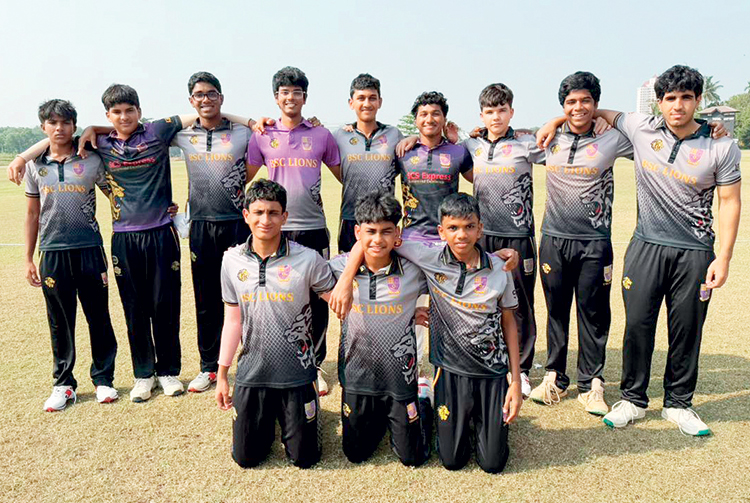
The British School in Colombo will look to retain the Hasan Sohail Memorial Trophy when they take on traditional rivals Colombo International School (CIS) in their annual limited overs cricket encounter on Sunday at the Sri Lanka Land Development Corporation Grounds in Nawala.
The British School in Colombo are the current holders of the Hasan Sohail Memorial Trophy after they edged out CIS by one run in a thrilling match played last year at the same venue.
On that occasion the British School in Colombo piled up 183 for three in 25 overs after they were invited to bat first and then restricted their opponents to 182 for four in 25 overs.
This rivalry between the British School in Colombo and CIS began in 2023 with a Twenty20 match, where CIS claimed victory at the same venue. However, the 2024 encounter was washed out due to bad weather.
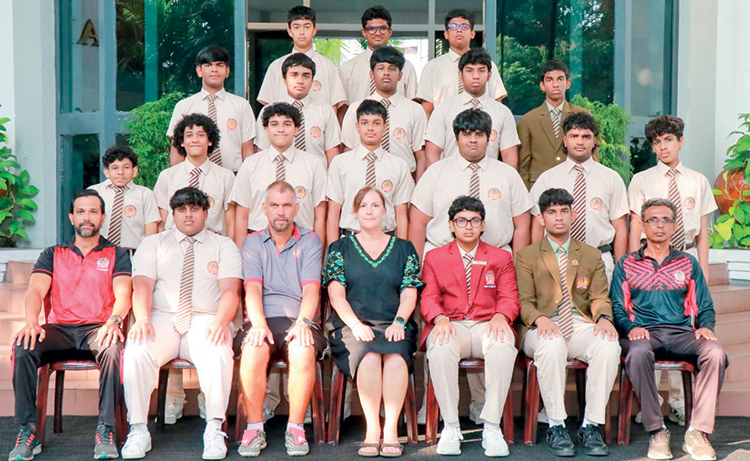
Colombo International School Cricket Squad
Lesith Semika will lead the CIS team while Thisath Ganegoda will captain the British School in Colombo.
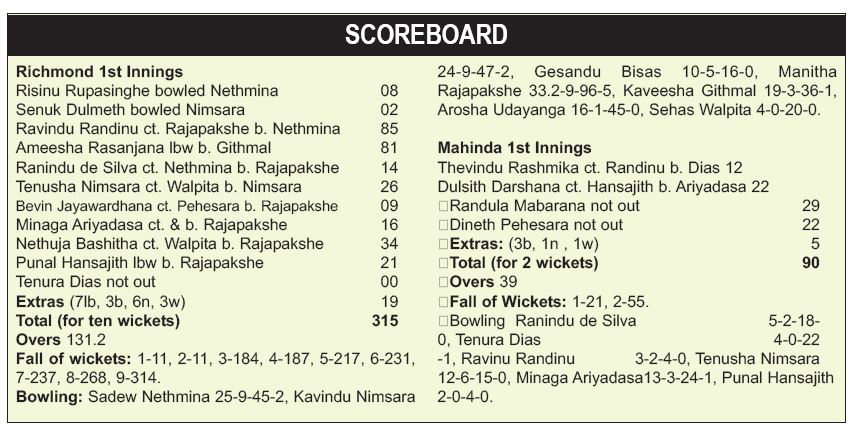
Mahinda College fought back strongly to reach 90 for two wickets at stumps in reply to Richmond College’s 315 on day two of the Lovers’ Quarrel Big Match at the Galle International Stadium on Friday.
In a similar pattern to their arch rivals’ start, Mahinda suffered an early setback, losing two quick wickets in the opening phase of their innings. However, the third-wicket pair of Randula Mabarana and Dineth Pehesara restored stability with a composed stand, ensuring the team closed the day without further damage.
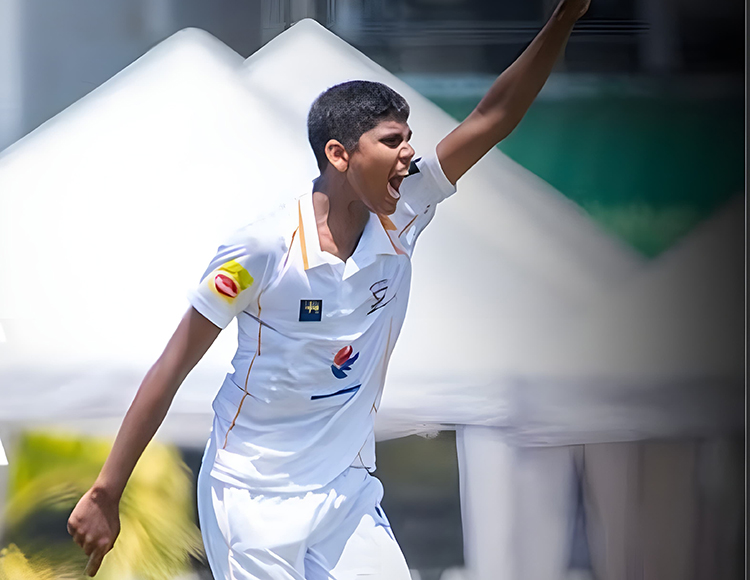
Earlier in the day, spinner Manitha Rajapakshe delivered a standout performance, claiming a five-wicket haul to bring an end to Richmond’s marathon first innings, which extended from day one into the post-lunch session on the second day.
Richmond had recovered impressively from early trouble after slipping to 11 for two on the opening morning. A patient and resilient 173-run partnership for the third wicket between Ravinu Randinu and Ameesha Rasanjana laid the foundation for their competitive total. The duo batted through the bulk of day one and looked set for bigger scores before both were dismissed in the 80s by Sadew Nethmina and Kaveesha Githmal.
Further contributions from Nethusha Nimsara, Nethuja Basitha and Punal Hansajith helped Richmond consolidate, particularly as they faced a sustained and threatening spell from Rajapakshe, who bowled tirelessly to keep Mahinda in the contest.With Mahinda still trailing but having wickets in hand, the match remains finely poised heading into the third day.

Trump says US will ‘obliterate’ Iran’s power plants if Strait of Hormuz not open before 48-hour deadline

Showers may occur at several places in the Western, Sabaragamuwa and Southern provinces and in Nuwara-Eliya district after 1.00 pm.

PM Harini leads panel to protect public services

Sajith slams President over war conduct and economic missteps

Johnston Fernando, sons held in Lanka Sathosa lorry misuse case

Gura: The unsung hero

‘Dates have the highest sugar content to fight Coronavirus’

Sunday Island 27 December – Headlines

#SundayIsland 17th December – Headlines

Sunday Island – 28th March

Sunday Island Headlines – 21 March

Sunday Island – 21st February – Headlines
-

 Business6 days ago
Browns EV launches fast-charging BAW E7 Pro at Rs. 5.8 million
-

 News4 days ago
CIABOC questions Ex-President GR on house for CJ’s maid
-

 News5 days ago
Sri Lankan marine scientist Asha de Vos honoured at UNGA opening
-

 Features6 days ago
Achievements of the Hunduwa!
-

 News5 days ago
Australian HC debunks misleading travel risk claims for Sri Lanka
-

 Latest News6 days ago
Wednesdays declared a government holiday with effect from 18th March
-

 News3 days ago
Bailey Bridge inaugurated at Chilaw
-

 News3 days ago
Pay hike demand: CEB workers climb down from 40 % to 15–20%