
Business
SLITHM chief on a mission to bring back the glories of the Ceylon Hotel School era


By Harischandra Gunaratna
The chairman of the Sri Lanka Institute of Tourism and Hotel Management (SLITHM), Shirantha Peiris, in an interview with The Island Financial Review recently said that his dream was to take the school back to its ‘golden days’ when it functioned as Ceylon Hotel School.
‘The Ceylon Hotel School produced world class hoteliers, where some of them held top positions in hotels owned and operated by international chains in different parts of the world, he said.
Peiris assumed duties as the chairman of SLITHM in June 2022 and the institute has seen steady advancement during this short period, according to SLITHM sources.
When queried as to how the standards and the quality of such a prestigious institution had deteriorated, Pieris admitted that there was a drop in the quality of some of the students. He attributed the deterioration of standards to multiple reasons, which he has identified and rectified.
Some of the improvements effected by him relate to the student enrollment process. For example, students are now enrolled purely on merit, with external influence not being taken into consideration. The same practice is followed with regard to employee recruitment.
Pieris added: ‘When I left school in 1982, it was extremely difficult to join Ceylon Hotel School as there was a very clear and a transparent selection process. At present we adopt the same practice.
‘When I assumed duties, one of my first tasks was to look into the existing value chain of the organization and introduce efficiency.
‘The institution follows a strict enrolment process with multiple eliminating stages to ensure that the right candidate is selected.
‘We must ensure that only the right students who have a passion for hospitality are enrolled as this has a positive impact not only in meeting customer expectations, but often exceeding same when our students are in the industry. We have seen this many a time in the industry, where our students have maintained high standards in a consistent manner.
‘Deteriorating standards of English of some of the staff members and students in the school is an issue. It has to be addressed and recommendations are made to the senior management. English is mandatory when engaging in hospitality as well as when being employed.
‘The standards of students who pass out of the institution are high and they could secure employment in any top-class hotel in Sri Lanka with handsome remuneration packages. We need to ensure that every student meets these criteria and this cannot be done overnight. If you look around the leading hotels, most of the General Managers and senior management are former students of SLITHM (Ceylon Hotel School). We need to maintain these standards, be consistent and adopt the best practices at SLITHM. Our main objective is to train people for the local industry.
‘SLITHM had the very first Innovation Fair last week which was an excellent initiative by the Director General – SLITHM, where we were able to witness our students’ innovation and creativity, not restricting to the usual practices but also introducing AI driven technology. During the last two years we have introduced multiple events for students, including sports activities, which will be an annual event from now on.
‘We have nine schools, covering all provinces and at present seven schools run at full capacity and one of the constraints is that we need more space to run the institution. We have already communicated to the authorities requesting additional space to increase the number of students. We are working towards increasing the number of students at the Jaffna and Batticaloa schools as well.
‘It is imperative that we introduce and engage in global best practices and be current with the rapid changes that take place in hospitality and tourism. Restructuring and succession planning have commenced and are on-going.
‘We are also focused on the wellbeing of our employees and have introduced a “Pink Day”, which takes place in October as it is ‘Breast Cancer Awareness Month’. On this day we have health care experts creating awareness and all our female employees are invited to go through a screening process at no cost. We will be introducing employee engagement initiatives too to ensure that we have a work force that is engaged in being high performers.
‘SLITHM also has the “Samudra Training Hotel” (STH) located in the Colombo School. STH is currently going through a transformation process and will be a fully operational hotel before this winter. The Samudra Restaurant has been fully renovated and is already in operation. The other areas that will be operational soon are the pub, the terrace with a beautiful ocean view and all rooms refurbished with the support of the industry. We have already written to the industry and have received positive responses. The uniqueness of this operation will be that the hotel will be run by students. STH will be a place to talk about very soon.
‘Another area we are working towards is going paperless and introducing automation where applicable. In this day and age, we cannot be comfortable with old practices and need to embrace technology.
‘I must thank my staff for their contribution and continuous support in the transformation process as well as all stakeholders working closely with SLITHM.’

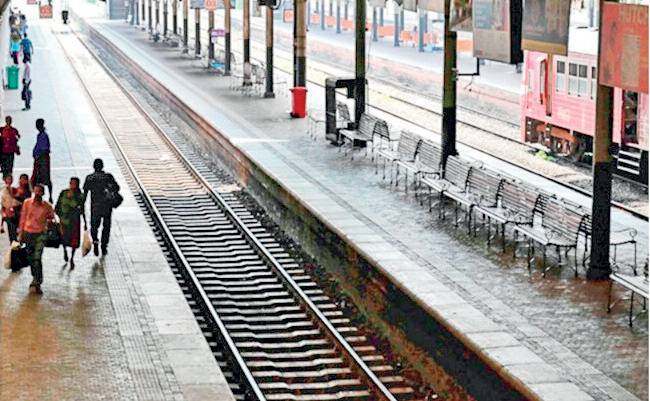
AFP –The International Monetary Fund’s (IMF) board approved two reviews of Sri Lanka’s loan programme, making USD695 million in additional loans immediately available to the island nation.
It is the latest tranche in the country’s four-year USD3 billion bailout, with the Fund warning of further risks due to the economic impact of the Middle East conflict.
Surging oil prices due to the conflict have heavily impacted many import-dependent Asian countries.
“Sri Lanka’s strong implementation under the EFF arrangement has continued despite challenging circumstances,” said the IMF’s Deputy Managing Director and Acting Chair Kenji Okamura.
“Gains from the economic reform programme helped preserve economic resilience and provided room to respond to cyclone Ditwah and the Middle East conflict. The latter, however, has significantly worsened Sri Lanka’s economic outlook and tilted risks to the downside.”
The IMF projects 2026 growth to slow to three per cent, with higher oil prices increasing inflation and weighing on the current account balance.
The board’s approval was contingent on Sri Lanka adjusting certain energy market subsidies issued in the wake of the conflict.
The statement said the Sri Lankan authorities had met the Fund’s requirements on fuel and electricity prices meeting cost-recovery criteria.
Criteria on ensuring no new external debts and on not imposing or intensifying import restrictions “were not observed”, however.
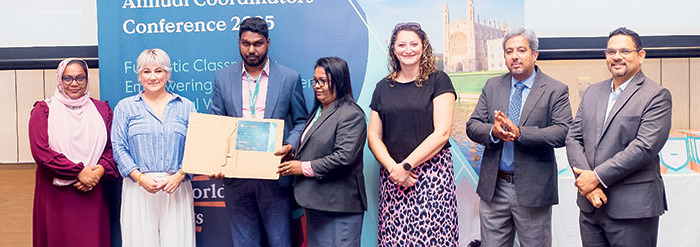
The Cambridge College of English Language Training recently held a certificate and medal awarding ceremony to recognize the academic achievements of students who successfully completed Cambridge English examinations.
The ceremony was held at the Hindu Cultural Hall in Kandy with the Vice Chancellor of the University of Peradeniya, Prof. W.M.T. Madhujith, attending as the Chief Guest, while Kandy Mayor Chandrasiri Wijenayake participated as the Guest of Honour.
Founded on March 1, 2024, by English tutor, author and Cambridge TKT lecturer T. Ravichandran, the institution has emerged as a leading centre for Cambridge English examination preparation in Kandy.
Beginning with an initial intake of 30 students, the college has expanded rapidly and currently serves more than 300 students.
The institution’s achievements were further recognized when it received the “Emerging Star Award 2025” at the Annual Coordinators Conference 2025 (South Asia).
The college provides training for students between the ages of seven and 18 across six stages of Cambridge English examinations, including Young Learners English (YLE) Starters, Movers and Flyers, as well as KET, PET and FCE examinations.
Cambridge English qualifications are internationally recognized and are designed to assess language proficiency in line with the Common European Framework of Reference for Languages (CEFR).
The ceremony concluded with the presentation of certificates and medals to students in recognition of their academic performance and commitment.
Text and Pic by SK Samaranayake
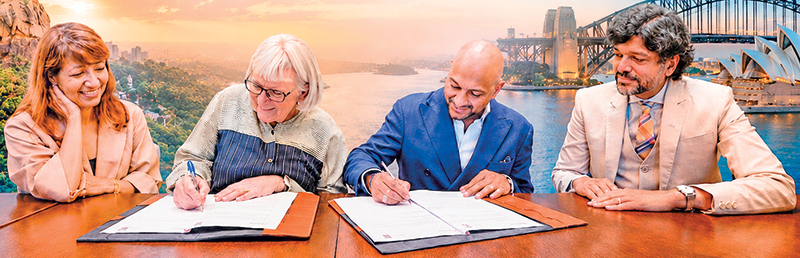
The Australian Broadcasting Corporation (ABC Australia) has signed a Memorandum of Understanding with Sri Lanka’s Maharaja Media Network (MMN), marking a significant expansion of media cooperation aimed at strengthening content exchange, co-productions and professional collaboration across the Indo-Pacific.
The agreement builds on an initial broadcast partnership established in 2022 and an expanded licensing arrangement in 2023, under which ABC programming was made available free-to-air to Sri Lankan audiences through MTV Channel (Private) Limited, part of the Capital Maharaja Group.
Under the new framework, the two organisations will collaborate across television, radio and digital platforms, with a focus on co-produced content, editorial exchange, training opportunities and joint storytelling initiatives.
MMN, Sri Lanka’s largest media network, operates across television, radio, digital media, music and film, including MTV Channel (Private) Limited and MBC Networks (Private) Limited.
Australian High Commission officials described the agreement as a deepening of regional media ties. “This will cover co-production, content sharing and broader cooperation across the Asia-Pacific in telling stories that speak to both countries,” said Matthew Duckworth.
ABC International Head Claire M. Gorman said the partnership reflected a shared commitment to public-interest media and stronger regional storytelling.
Capital Maharaja Group Director Chevaan Daniel said the relationship, which began during Sri Lanka’s economic crisis in 2022, had grown through continued collaboration, including during the 2025 Ditwah cyclone response.

What Hegseth’s comments at Shangri-La Dialogue say about US foreign policy
Home comfort vs championship pedigree as Gujarat Titans and Royal Challengers Bengaluru collide in IPL 2026 final

Minhas’ record-breaking debut sets up handsome Pakistan victory

Showers expected in the Western, Sabaragamuwa and North-western provinces and in Galle, Matara, Kandy and Nuwara-Eliya districts
Fuel prices increased

Sangha reform drives stymied from within: CBK

‘Dates have the highest sugar content to fight Coronavirus’

Sunday Island 27 December – Headlines

#SundayIsland 17th December – Headlines

Sunday Island – 28th March

Sunday Island Headlines – 21 March

Sunday Island – 21st February – Headlines
-
 News6 days ago
Police probe underway to ascertain links between criminals deported from UAE and local politicians
-
 News5 days ago
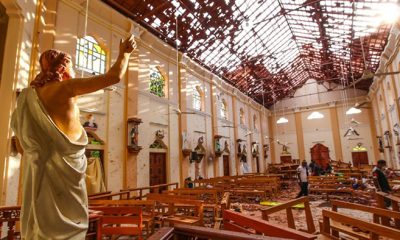
Easter Sunday carnage: Court told Maulana’s statement cannot be accepted without cross-examination
-
 News1 day ago
IMF urges Lanka not to meddle with exchange rate
-
 Opinion5 days ago
Undermining the democratic political framework
-

 News5 days ago
UK passport holder hiding here wants to have deportation order rescinded to leave without blemish
-

 Features2 days ago
The Division Bell Mystery
-

 News6 days ago
Dickoya double murder suspect arrested
-
 Midweek Review4 days ago
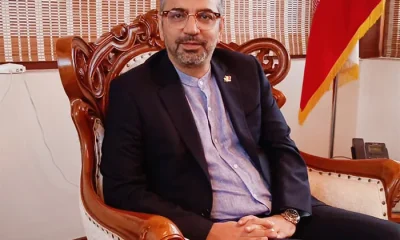
Israeli-US aggression won’t go unanswered -Iranian Ambassador