
Foreign News
A beauty pageant turned ugly: The alleged plot to steal a queen’s crown


In a tucked-away corner of paradise, overlooking the clear waters of the South Pacific, a cyclone of controversy was about to descend on Fiji’s Pearl Resort & Spa.
Standing on stage clutching a bouquet of flowers, 24-year-old MBA student Manshika Prasad had just been crowned Miss Fiji.
But soon after, according to one of the judges, things at the beauty pageant “turned really ugly”.
Ugly is potentially an understatement: what unfolded over the next few days would see beauty queens crowned and unseated, wild allegations thrown around and eventually the emergence of a shadowy figure with a very personal connection to one of the contestants.
Ms Prasad first found out something was wrong two days after her win, when Miss Universe Fiji (MUF) issued a press release. It said a “serious breach of principles” had occurred, and “revised results” would be made public shortly. A couple of hours later, Ms Prasad was told she wouldn’t be travelling to Mexico to compete for the Miss Universe title in November.
Instead, runner-up Nadine Roberts, a 30-year-old model and property developer from Sydney, whose mother is Fijian, would take her place.
The press release alleged the “correct procedures” had not been followed, and that Ms Prasad had been chosen in a rigged vote which favoured a “Fiji Indian” contestant to win because it would bring financial benefits to the event’s manager.
A distraught Ms Prasad issued a statement saying she would be taking a break from social media, but warned that there was “so much the public did not know about”.
The new queen, meanwhile, offered a message of support. “We are all impacted by this,” Ms Roberts wrote on Instagram, before thanking Miss Universe Fiji for its “swift action”.
But those who took part in the contest were not satisfied: there were too many things that didn’t add up.

“Everything had been running so smoothly,” says Melissa White, one of seven judges on the panel.
A marine biologist by trade, she had been flown in from New Zealand to weigh in on the charity and environmental aspects of the contest.
“It was such a great night, such a successful show. So many people were saying they’d never seen pageant girls get along so well,” Ms White tells the BBC.
As the competition drew to a climax on Friday night, the judges were asked to write down the name of who they thought ought to be the next Miss Fiji.
“By this stage, Manshika [Prasad] was the clear winner,” says Jennifer Chan, another judge, who’s a US-based TV host and style and beauty expert. “Not only based on what she presented on stage but also how she interacted with the other girls, how she photographed, how she modelled.”
Ms Chan says she was “100% confident” that Ms Prasad was the strongest candidate to represent Fiji.
Enough of her fellow judges agreed and Ms Prasad was declared the winner – receiving four of the seven votes.
But as the newly-crowned Miss Universe Fiji stood on stage, beaming in her sparkling tiara, the judges sensed something was wrong.
To her right, Nadine Roberts – wearing her runners-up sash – was “seething”, alleges Ms Chan. “I remember going to bed thinking, how could someone feel so entitled to win?
“You win some, you lose some. She’s a seasoned beauty pageant contestant – surely she knew that?”
The next day, Ms Prasad took a celebratory boat trip with the judges. “She was just in awe, saying: my life will be changed now,” says Ms Chan.
“She’s the embodiment of that good-hearted person who deserves it – it just affirmed to me that I’d picked the right girl.”
But there had still been no official confirmation of Ms Prasad’s victory.
Not only this – one of the judges was conspicuously absent from the trip: Riri Febriani, who was representing Lux Projects, the company that bought the licence to hold Miss Universe in Fiji.
“I remember thinking that was odd,” says Ms White, who shared a room with Ms Febriani. “But she just said she had lots of work to do and she needed to talk to her boss.”
Ms Febriani says she didn’t go on the boat trip as she needed to rest – and there’s no way the others would know who she was messaging on her phone.
But Ms White says she worked out her roommate was fielding calls and texts from a man called “Jamie”.

Miss Universe is a multi-million-dollar business which operates like a franchise – you need to buy a licence which enables you to use the brand and sell tickets for the event.
Those licences are expensive and in small countries it’s hard to find anyone willing to fund a national pageant – which is why Fiji hasn’t entered a contestant since 1981.
But this year, one organisation was willing to buy the licence: property development firm Lux Projects.
Ms Febriani was its representative on the judging panel, but also looked after media communications.
“I’d got on so well with her, she seemed a very sweet person,” says Ms White.
“But that day when she didn’t come on the boat, her demeanour kind of changed. She just kept saying she was super busy with work, always on the phone with this ‘Jamie’ guy.”
It turned out that, despite having Ms Febriani on the panel, Lux Projects was not happy with the outcome of the vote.
Its press release on Sunday said the licensee itself should also get a vote – one which the contracted organiser, Grant Dwyer, had “failed to count”.
Lux Projects would have voted for Ms Roberts, bringing the results to a 4-4 tie.
What’s more, it said, the licensee also had the “determining vote” – making Ms Roberts the winner.
“Never at any point were we told about an eighth judge or any kind of absentee judge,” says Ms Chan.
“It wasn’t on the website, it wasn’t anywhere. Besides, how can you vote on a contest if you’re not even there?”
Ms White was also suspicious.
“I did some digging and it turns out that Lux Projects was closely associated with an Australian businessman called Jamie McIntyre,” says Ms White.
“And Jamie McIntyre,” she told the BBC, “is married to Nadine Roberts.”
Mr McIntyre describes himself as an entrepreneur, investor and “world-leading educator”, who has – according to information available online – been married to Ms Roberts since 2022.
He was also banned from doing business in Australia for a decade in 2016 due to his involvement in a property investment scheme that lost investors more than A$7m ($4.7m; £3.6m).The judge in the case said there was “no evidence to suggest that successful reform is likely”
A senator who questioned him as part of a parliamentary committee hearing later described him as “the most evasive witness I have had to deal with – and that’s saying something”, according to the Sydney Morning Herald.
But what was he doing here?
“Mr McIntyre isn’t a director or shareholder of the MUF licensee company, but has acted as an adviser, as he is a shareholder in associated companies,” Jamie McIntyre’s representatives told the BBC.
However, the company’s Instagram page does feature a video of Mr McIntyre giving property investment advice, as well as a link to 21st Century University, a Bali-based property company owned by Mr McIntyre.
The BBC also understands that a “Jamie” was on the line during phone calls between Ms Roberts and the event organiser, Grant Dwyer.
Mr McIntyre’s representatives insist that allegations that he was involved in the judging controversy are a “conspiracy theory” – although they did concede that he had “provided advice to the licence holder”.
Additionally, the press release’s allegation that Mr Dwyer had pressured the panel to choose Ms Prasad because of her race is undermined by the fact that Mr Dwyer is understood to have voted for Ms Roberts.
“It’s just gross to even bring up race,” says Ms Chan. “It was never, ever once uttered amongst any of the judges,” she adds.
The BBC has sought comment from both Ms Roberts and Ms Prasad, but neither has responded.
Several of those involved – including some judges and contestants – have been sent “cease and desist” emails by Lux Projects, the BBC understands, which have been taken as tantamount to gagging orders by the recipients.
This scandal in Fiji is by no means the first to hit the world of beauty pageants, which historically has seen its fair share of controversies.
“Pageants are full of drama, of controversies, of people saying the contest was a fix,” says Prof Hilary Levey Friedman, author of ‘Here She Is: The Complicated Reign of the Beauty Pageant in America.’
“But I will say that in more recent years, these issues have become much more pronounced thanks to social media,” she adds.
Apart from a voting scandal at the Miss America contest in 2022, recent controversies have tended to be in less developed parts of the world.
This is probably because they tend to be non-profit affairs in many Western countries, according to Prof Friedman, while pageants elsewhere have become more popular and more lucrative than ever.
“Historically, beauty pageants have been an amazing tool for social mobility for women,” says Prof Friedman.
“Apart from the prestige and the glory, it gives you a platform to attract followers and sponsorships. When there’s money involved, the stakes are higher.”
For Ms Prasad though, it turns out there is a happy ending.
On Friday, she posted on one of her social media accounts that she had indeed been re-crowned as Miss Fiji 2024.
“What an incredible journey this has been,” she wrote on Instagram.
Miss Universe Organization (MUO) has not responded to a request for comment, but the BBC understands it is extremely unhappy with the events in Fiji and, after having established the facts, worked hard to reinstate Ms Prasad as the island’s queen.
For Ms Prasad there is elation. For the judges, relief.
As for Ms Roberts, she is calling herself the “real Miss Universe Fiji 2024” on Instagram.
Judge Ms White says she’s “so proud of how Manshika [Prasad] has conducted herself throughout this journey. She’s a brilliant, compassionate, and beautiful young woman, who didn’t deserve this.
“We just wanted the truth to come out and now it has.”
[BBC]


A car has crashed into a crowd of rugby league supporters in the eastern Australian city of Newcastle, injuring 10 people, including three children.
New South Wales police said on Saturday that two of the injured – a five-year-old girl and a 67-year-old man – were in a critical condition and the other eight were in stable condition in hospital.
Police said they had arrested the 18-year-old man driving the vehicle and were investigating what happened. They said the crash was not believed to be related to “terrorism”.
The crowd had gathered to farewell the local rugby league side, the Newcastle Knights, ahead of their grand final against the Sydney Roosters on Sunday.
Newcastle Lord Mayor Gavin Morris said the driver, a rugby league fan, had lost control of his vehicle and had been taken into custody.
“He was revving the car, he was excited, he was a supporter, he was there for the joy of the moment,” Morris told the national broadcaster ABC.
“Somehow he lost control of the car … and he’s gone into the crowd,” he added.
Prime Minister Anthony Albanese said: “My thoughts are with everyone injured or involved in the horrible incident this morning in Newcastle.”
“Rugby league brings people together, and this should have been a weekend of excitement and pride for Newcastle fans,” he wrote in a social media post.
[Aljazeera]
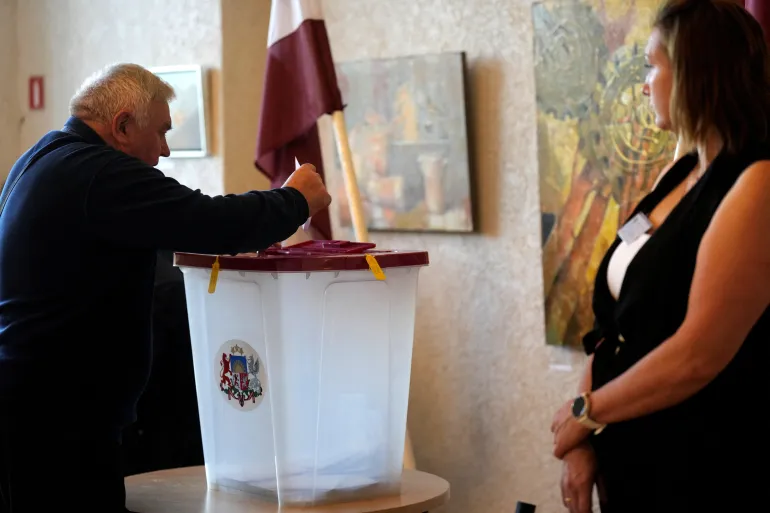
Polls have opened in Latvia for an election taking place against the backdrop of perceived security threats from Russia and a nationwide cost-of-living squeeze.
Saturday’s vote is the first electoral test for Prime Minister Andris Kulbergs after coming to power in May this year when his predecessor resigned due to a backlash from stray drone incursions from Ukraine.
Kulbergs, whose right-wing United List party is currently polling at about 20 percent, is expected to hold onto his position, but the decline of two allies in his current coalition means he is set for a complicated negotiation over the makeup of any future government.
Polls opened at 05:00 GMT and will close at 17:00 GMT. The results are not expected to change Latvia’s pro-European and pro-Ukrainian course.

About 1.5 million people are eligible to vote in the country’s 11th parliamentary election since independence from the Soviet Union in 1991.
Latvian politics are highly fragmented, with parties rarely seeing above 20 percent vote share and coalitions being the norm.
This year, 14 electoral lists are contesting the election, but polls indicate only seven are likely to enter parliament, with the rest expected to fail to meet the minimum 5 percent vote threshold.
Rising living costs, low wages, strains on the healthcare system and long-term population decline have all featured prominently in campaign debates.
Most parties in Latvia are pro-Ukraine; however, the populist Sovereign Power party – which says it wants Ukraine to win but argues money spent supporting Kyiv would be better spent at home – looks likely to become the country’s second-biggest party, with more than 9 percent of the vote. Most other parties have ruled out forming a coalition with Sovereign Power.
Latvia First, a pro-Ukraine and populist nationalist party currently polling at about 9 percent, could be a potential coalition partner for PM Kulbergs.
The Progressives, a pro-European social democratic party, are polling at 6 percent.
Ethnic Russians make up roughly one in four Latvian citizens, but their vote, which has traditionally been cast along identity-based lines, looks set to be made according to economic and social issues.
Latvia is the poorest of the Baltic states, and it has sharply increased its defence spending since Russia invaded Ukraine, now allocating nearly 5 percent of its gross domestic product (GDP) to defence.
[Aljazeera]
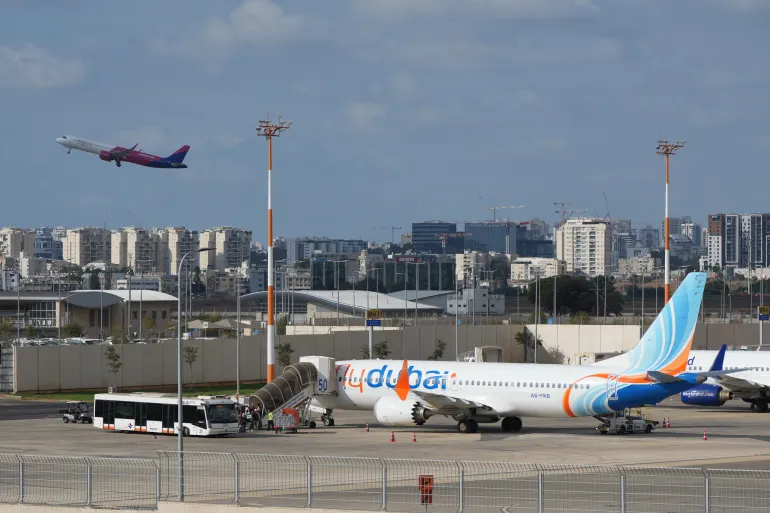
A flight from the United Arab Emirates to Israel was diverted to Saudi Arabia after issuing a distress signal, in what appeared to be a hijacking attempt, on Wednesday.
The Flydubai flight FZ1073 was diverted as it flew from Dubai to Tel Aviv through Jordanian airspace, prompting Israel to deploy warplanes, the Reuters news agency reported.
Israeli Prime Minister Benjamin Netanyahu said one of the pilots had stabbed the other and then tried to crash the plane. He added that Israel was preparing for other “potential threats” after the incident.
There has been no official confirmation of a hijacking attempt, however.
Flydubai said an altercation had occurred on the flight deck and that all passengers were safe and accounted for. The plane was secured by on-duty crew travelling onboard, it added.
At Saudi Arabia’s Tabuk airport, where the plane landed, officials said both the plane’s captain and the first officer had been hospitalised after sustaining injuries. Both were taken to the hospital, according to a statement from the Prince Sultan bin Abdulaziz International Airport in Tabuk carried by the Saudi state-run Alekhbariya television.
The UAE has become a popular vacation destination for Israeli tourists since the countries normalised ties in 2020. Here’s what we know about what happened.
Footage taken onboard the plane appears to show the captain of the aircraft lying on the ground with several stab wounds, and a passenger with a bloody wound to the head.
In another video, passengers weep and cry out in distress as the aircraft shakes.
Yasmin Abukasis, the mother of one of the passengers onboard, said her daughter Miriam thought she was going to die. “The plane started to lose control,” she told journalists at Israel’s Ben Gurion Airport, before other pilots onboard took control of the aircraft.
Flight tracking data indicated the plane descended over 14,000 feet in less than 30 seconds around two and a half hours after leaving Dubai. Flightradar24 said on X that an initial general emergency signal designated by code 7700 was issued at around 05:31 UTC and was later changed to another emergency signal with code 7500 declaring “unlawful interference”.
Passenger Dalia Shpigel told Israeli newspaper Haaretz that some people seated towards the front of the plane broke into the cockpit after the plane began to descend and they realised something was wrong.
“An hour before landing, we felt that there was no control over the plane, that it was starting to jump,” she said. “The guys saw that the plane had begun to dive and broke into the cockpit.”
Netanyahu said he later spoke to one of the Israeli passengers who broke into the cockpit and overpowered one of the pilots who was reportedly trying to sabotage the aircraft’s systems.
“I salute these heroes who demonstrated extraordinary resourcefulness and courage,” Netanyahu said in a statement. “They saved many lives and prevented a major disaster.”
Timeline of events
03:05 – Flight FZ1073 takes off from Dubai05:21 – Altitude fluctuations begin05:22 – Aircraft drops more than 14,000 ft in under 30 seconds05:31 – Signal from aircraft changes to 7700 (general emergency)05:38 – Signal changes to 7500 (unlawful interference)06:45 – Aircraft lands at Tabuk Regional Airport
[Aljazeera]

Turkish court detains football refereeing chief pending corruption trial

Ten injured after car crashes into rugby supporters in Australia

Polls open in Latvia against backdrop of perceived Russia threat

Abhishek, Tilak and spinners secure gold for India at Asian Games again

Tharindu Rathnayake, bowlers secure Asian Games Bronze for Sri Lanka

G7 to release 100 million barrels of oil and diesel after Trump export ban threat

‘Dates have the highest sugar content to fight Coronavirus’

Sunday Island 27 December – Headlines

#SundayIsland 17th December – Headlines

Sunday Island – 28th March

Sunday Island Headlines – 21 March

Sunday Island – 21st February – Headlines
-

 News6 days ago
Police remove Thileepan statue in Jaffna
-

 Features6 days ago
The 22nd Amendment, constitutional recovery and illiberal slippage
-

 Features6 days ago
Of foreigners as CEOs of Lankan ventures
-

 Latest News4 days ago
Gold winner Tharanga gets brand-new Honda Vezel from SLAAJ
-

 News6 days ago
Sajith rejects Jt. Opp. protest sabotage claim; SJB TU chief demands remedial action
-

 Features4 days ago
Why Sri Lanka needs an Inclusive Civic Nationalism – urgently
-

 Features5 days ago
Thailand’s biggest new global star …
-

 News3 days ago
US-assisted ‘Ice’ detection: NPC to examine IGP’s move to transfer drug-busting team