
Editorial
Of that eviction


Saturday 7th September, 2024
State Minister A. Aravindh Kumar is reported to have been evicted from a house belonging to an estate company, in Lindula, following a court order. In 1987, a case was filed against him for refusal to hand over the house, when he left the estate, where he had worked, according to newspaper reports. It took about 37 long years for the property to be returned to its rightful owner!
Worryingly, court cases over such property disputes usually drag on for decades. Delays in the dispensation of justice are multifactorial, and the need to eliminate them as a national priority cannot be overstated. There is a pressing need to ensure that the judiciary is provided with all necessary resources to overcome delays, which have come to characterise the judicial proceedings much to the resentment of the public.
The State Minister’s eviction from the estate bungalow reminds us of the unauthorised occupation of more than 100 state-owned houses at the Madiwela MPs’ housing scheme. These houses are made available to the MPs on rent, and they are required to vacate them upon retirement or defeat.
In 2022, we reported that acting on a slew of complaints that many of the MPs’ official residences at Madiwela were illegally occupied, Speaker Mahinda Yapa Abeywardena had ordered a probe and called for a report. Media reports placed the number of those houses at 120, and among the culprits were outsiders. The possibility of the ownership of some of them having changed hands illegally cannot be ruled out.
It was also brought to the notice of Speaker Abeywardena that a large number of former MPs continued to stay in the official residences in spite of repeated reminders. Some of these houses have reportedly been turned into political party offices. Our report said the Speaker had ordered a separate probe into the complaints against the former MPs refusing to leave the Madiwala housing scheme; he also directed the Mirihana police to conduct an investigation.
Every house in the MPs’ residential complex consists of three bedrooms with sanitary facilities, a kitchen, a living room, a dining area, a staff washroom and a parking lot. Real estate prices in the area have increased exponentially, and the illegal property grab in the Madiwela MPs’ housing scheme has caused a massive loss to the state coffers.
It was reported that the Speaker would inform Parliament of the findings of the aforesaid probe and action he intended to take against the culprits. Nothing has been reported of the promised probes, and the public will be interested in knowing what has become of them.
Much is spoken in Parliament about the need to restore the rule of law and eliminate illegal practices that have cost the state dear. Shouldn’t the lawmakers put their ‘House’ in order and ensure that legal action is taken against the lawbreakers among them?
Meanwhile, there is a campaign against the provision of state-owned houses as part of the Executive Presidents’ retirement benefit packages. One cannot but endorse the call for discontinuing this practice. None of the former Presidents are without privately-owned houses, and it does not make sense to allocate official residences to them.
Politicians never retire penniless in this country, and therefore they do not deserve any retirement benefits. Even those who identify themselves with the proletariat live high on the hog and outspend their capitalist rivals at elections.



Tuesday 12th May, 2026
US President Donald Trump yesterday rejected Iran’s response to his peace proposal. He wants the conflict ended on his own terms, but Iran is not amenable to that idea. Oil prices have gone up again.
The economic cost of the US-Israeli war on Iran is incalculable, as is obvious. There has been a welcome pause in the conflict, thanks to a fragile ceasefire, but economies across the world are still reeling due to a global energy crisis. CEO of Saudi Aramco Amin Nasser is of the view that the world has lost about one billion barrels of oil over the past two months, and it will take energy markets a considerable time to stabilise even if the oil supplies resume via the Hormuz Strait, the closure of which has curtailed shipping and sent energy prices through the roof. It is not only energy supplies that have suffered due to the US-Israel military campaign; many countries are experiencing crippling fertiliser shortages as well, so much so that the Food and Agriculture Organization of the UN has warned of a possible decline in global agricultural output. Most of all, the human cost of the war has been enormous for Iran.
Israeli Prime Minister Benjamin Netanyahu, who considers the war on Iran a dream come true for him, and is trying to turn his country’s military might into political gain, has reportedly said that there is still “work to be done” in Iran. He says Iran has retained many of the capabilities it had at the start of the war. Iran has not given up its enriched uranium or dismantled its nuclear sites, he has said. This claim is at variance with President Trump’s statement that the US military has “beaten and completely decimated” Iran. Netanyahu himself has also bragged that Iran has been militarily weakened as never before.
Netanyahu wants enriched uranium in Iran removed urgently. He says that can be done as part of an agreement to be reached. He has stopped short of mentioning any timeline for the proposed task. Trump has expressed a similar view. An Iranian news outlet linked to the country’s armed forces has denied reports that Tehran agreed to allow its enriched uranium stocks to be removed as part of talks with the United States. Thus, the uranium issue is sure to stand in the way of finding a lasting solution to the West Asia conflict, saving lives and properties and facilitating uninterrupted energy and fertiliser supplies via the Hormuz chokepint.
The US-Israeli military campaign has apparently strengthened Iran’s resolve to acquire nuclear capability. In a world where nuclear weapons are the currency of power, Tehran is not likely to give up its nuclear programme. Any country with nukes is a danger to the world, but only the US has so far carried out nuclear attacks. Not even North Korea has done so. Those who got a head start in the nuclear race decades ago have built huge nuke stockpiles, which are believed to be sufficient to blow up this planet several times over. The new world order based on the law of the jungle has left many countries struggling to safeguard their independence, and some of them are pursuing their nuclear ambitions in keeping with what can be described as the de Gaulle doctrine.
Charles de Gaulle rightly argued that no country without the atomic bomb could properly consider itself independent. He maintained that national sovereignty required an autonomous nuclear force, which he called the force de frappe, which alone, in his opinion, was the ultimate guarantee of political independence and great-power status. So, it is only natural that countries that feel threatened and have the wherewithal are trying either to shore up their nuclear stockpiles or to arm themselves with nukes.
While Trump is devising ways and means of grabbing Iran’s enriched uranium, in a dramatic turn of events, the FBI and other federal agencies have launched investigations into the deaths or disappearances of about 10 top US nuclear and space scientists, according to international media reports. US House Oversight Committee Chairman James Comer has suggested, in an interview with Fox News, that there has been a foreign involvement in these deaths and disappearances. Republican Congressman Eric Burlison has claimed they have “all the hallmarks of a foreign operation” and cited China, Russia and Iran as potential lines of inquiry.
Self-righteous powerful nations’ calls for nuclear non-proliferation to make the world safe ring hollow. If the much-peddled argument that no more countries should acquire nuclear capability to ensure global safety is to gain credibility and wider acceptance, the proponents of it must accelerate nuclear disarmament, decommission their arsenals and lead by example. Most of all, they ought to take cognisance of what US President Dwight D. Eisenhower said in his famous “Cross of Iron speech” on war in 1953, highlighting the opportunity cost of military spending and stressing that resources used on weapons are stolen from the people struggling to meet their basic needs: “Every gun that is made, every warship launched, every rocket fired signifies, in the final sense, a theft from those who hunger and are not fed.” How true!

Monday 11th May, 2026
Tamilaga Vettri Kazhagam (TVK) leader Chandrasekar Joseph Vijay has achieved his chief ministerial dream in Tamil Nadu, with the help of some other parties, including the Congress. His meteoric rise to power was possible mostly due to his popularity as a film star, his unrealistic promises and a massive protest vote fuelled by anti-politics. Winning elections is one thing, but living up to people’s expectations by fulfilling campaign promises is quite another. In politics, a beginner’s luck rarely lasts long. If implemented, the freebies promised by Vijay to garner favour with voters, are estimated to account for more than 50% of Tamil Nadu’s tax revenue. Thus, Vijay has his work cut out to prevent his first chief ministerial term from facing the same fate as his first film, which reportedly became a box office bomb.
The paradigm shift in Tamil Nadu politics has sent the Colombo commentariat into overdrive, with divergent assessments of its implications for Sri Lanka and Indo-Lanka relations. Some commentators are of the view that Vijay’s anti-Sri Lanka utterances were mere campaign rhetoric; Vijay himself will forget them with the passage of time, and even if he wants to pursue his pledges, especially the one to retrieve Katchatheevu, there will be nothing he cannot do, as New Delhi considers the issue long settled. The proponents of this argument have apparently ignored the fact that the Indian Centre is swayed by Tamil Nadu, and New Delhi has even resorted to extreme measures to appease the Tamil Nadu politicians and further its own interests at the expense of Sri Lanka. India trained, armed and funded pro-Eelam terror groups, and rammed the Indo-Lanka Accord down President J. R. Jayewardene’s throat in 1987, paving the way of devolution. India was hoist with its own petard, with the LTTE turning against it, a few years later, and the situation changed.
The current world order is anything but “rules based”. International pacts, accords, covenants, treaties, charters, etc., become worthless when the powerful signatories thereto feel like violating them. The US has violated the UN Charter, perhaps for the umpteenth time, by abducting President of Venezuela Nicolás Maduro and his wife. It has also carried out unprovoked air strikes on Iran, killing its Spiritual Leader and thousands of civilians besides destroying assets worth billions, if not trillions, of dollars.
It has been alleged that at the height of the 2022 uprising here, following the forced resignation of President Gotabaya Rajapaksa, Indian High Commissioner Gopal Baglay pressured Speaker Mahinda Yapa Abeywardene to take over the presidency in violation of the Constitution. Abeywardene told Parliament subsequently that the goal of those who tried to force him to appoint himself the Acting President was to plunge this country into anarchy. Baglay allegedly acted in violation of the Vienna Convention on Diplomatic Relations, which requires diplomats to refrain from interfering with the internal affairs or politics of the host countries. Curiously, this very serious allegation remains unprobed though the grandees of the JVP-NPP government and the SJB-led Opposition wrap themselves in the flag and often declare their commitment to protecting the national interest.
The possibility of the new Tamil Nadu administration escalating the issue of illegal fishing in Sri Lankan waters to such an extent that New Delhi may feel compelled to intervene more assertively, if not aggressively, cannot be ruled out. In 2013, the then Minister of Fisheries and Aquatic Resources Development Dr. Rajitha Senaratne disclosed that certain Tamil Nadu politicians owned trawlers and rented them out on the strict condition that they be used for poaching in Sri Lankan waters. These troublemakers are likely to step up their illegal fishing operations to belittle Sri Lanka’s sovereignty and bring New Delhi and Colombo on a collision course.
Responses to vital bilateral issues should not be grounded solely in suspicions and perceptions if they are to be workable. Tamil Nadu politicians’ hostility towards Sri Lanka is a problem to be managed diplomatically. Foreign relations are layered and dynamic, and diplomacy requires calibrated responses to contentious issues. It is, however, prudent to be cautious.

There seems to be no end to the JVP-NPP government’s volte-face. The ruling party leaders vehemently opposed Emergency regulations while out of power, launching into tirades against the previous governments for abusing Emergency to further their political interests by suppressing the democratic rights of the Opposition and the public. But they are now practising the very opposite of what they preached; they keep on extending the state of Emergency, which was imposed in the aftermath of the landfall of Cyclone Ditwah, six months ago. It also has no qualms about using the Prevention of Terrorism Act, which it promised to do away with.
The government made a mockery of its much-touted commitment to upholding democracy once again on Thursday (07) by extending the state of Emergency. The Opposition never misses an opportunity to condemn the government for doing so, but most of its members are absent when motions seeking parliamentary approval for extending Emergency are put to the vote.
On Thursday, the motion presented by the government to extend Emergency regulations received 145 votes, with only six Opposition MPs being present in the House to vote against it. Seventy-three MPs, including 13 government members, were absent during the crucial vote. That the ayes would have it was a foregone conclusion, but the Opposition MPs should have remained in the House when a division was called on the motion. Last month 60 MPs, representing both sides of the House, were absent when a vote was taken on Emergency. The MPs’ absence during crucial debates and votes amounts to a dereliction of legislative duty and an abdication of parliamentary responsibility.
The Chief Opposition Whip and party whips are responsible for ensuring that the Opposition MPs are present during debates and votes. They only talk nineteen to the dozen in the House. A wag says it is a case of all sizzle and no steak. Shouldn’t these Opposition bigwigs, given to pontification, put their house in order before lecturing the government on how to conduct its affairs?
Our legislators parade their knowledge of Erskine May’s authoritative work, Parliamentary Practice. They however do not follow the principles enunciated by May in his seminal treatise. May has viewed parliamentary attendance not merely as a procedural obligation but also as an essential condition for representative democracy and effective scrutiny. Reflected in his writings is the traditional Westminster belief that Parliament functions properly only when its members are physically present and actively participate in debates, scrutinise government actions, serve on committees and vote.
May’s emphasis is also on the ethical dimension of the MPs’ attendance during debates. The members are expected to be present during the proceedings, listening to dissenting views and responding to questions. He has frowned on the practice of members departing immediately after delivering their speeches in the House. This is something the Sri Lankan Presidents ought to pay attention to. They have the bad habit of haranguing the MPs and hurrying out of the chamber immediately afterwards. They apparently consider it infra dig to remain in the chamber and listen to the Opposition MPs. In Westminster democracies, influenced by May, parliamentary attendance has come to symbolise political responsibility, discipline and commitment to public service. Sadly, the members of the Sri Lankan Parliament do not seem to care much about this cherished tradition.
A parliamentary sitting reportedly costs about Rs. 32.2 million, and it does not make sense to spend so much money if the MPs skip sittings. Those who do not participate in debates and votes in the House make a strong case, albeit unwittingly, for a smaller Parliament.
If Parliament can manage with about 150-170 members, as it does at present, why should the taxpayers be made to pay through the nose to maintain as many as 225 MPs besides 445 provincial council members (including 45 ministers) and more than 8,500 local councillors. No wonder there is a resurgence of anti-politics.

Eshan Malinga keeps getting them in the second half

State Mortgage and Investment Bank Law No. 13 of 1975 to be amended
Animals Act No. 29 of 1958 amended
Cabinet approves establishment of a ‘Trust’ to carry out the management of the Jaffna Thiruvalluvar Cultural Centre

Prime Minister Keir Starmer under pressure as ministers quit, 80 MPs urge him to resign

Nahid Rana rips through Pakistan to seal a final-session win for Bangladesh

‘Dates have the highest sugar content to fight Coronavirus’

Sunday Island 27 December – Headlines

#SundayIsland 17th December – Headlines

Sunday Island – 28th March

Sunday Island Headlines – 21 March

Sunday Island – 21st February – Headlines
-

 News6 days ago
MIT expert warns of catastrophic consequences of USD 2.5 mn Treasury heist
-

 News3 days ago
Lanka Port City officials to meet investors in Dubai
-

 Editorial6 days ago
Clean Sri Lanka and dirty politics
-

 Editorial5 days ago
The Vijay factor
-
 News4 days ago
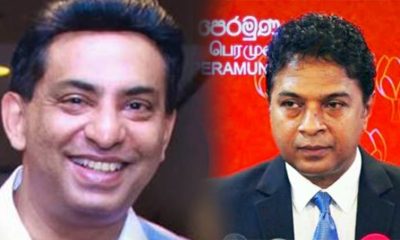
SLPP expresses concern over death of former SriLankan CEO
-

 News7 days ago
Development Officer bids Rs. 48 mn for CPC’s V8 at auction
-
 Opinion7 days ago
Postmortem reports and the pursuit of justice
-
 News4 days ago
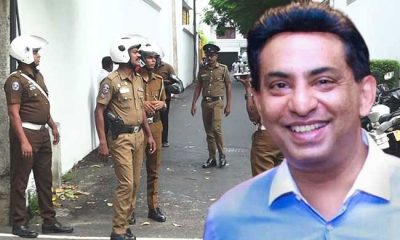
Police inform Fort Magistrate’s Court of finding ex-CEO of SriLankan dead under suspicious circumstances