
News
TISL demands accountability in proposed mineral sands mining project in Puttalam


Transparency International Sri Lanka (TISL) filed a complaint with the Human Rights Commission of Sri Lanka (HRCSL) on July 19th, requesting an investigation into the alleged corruption, malfeasance and abuse of power by the Sri Lanka Cement Corporation (SLCC) in a proposed mineral sands mining project in Puttalam. The HRCSL has requested a detailed report on the project from the SLCC, in response to the formal complaint filed by TISL.
The SLCC has entered into a 30-year agreement with a private limited company last year, for the extraction of mineral sands in the Aruwakkalu area. In its complaint, TISL refers to the allegations that the said agreement has been entered into without following standard procurement guidelines, competitive bidding, or obtaining necessary approvals from relevant authorities.
It is revealed that the said company, which is fully owned by a single individual, and which has a nominal share capital of Rs. 1,000, lacks technical qualifications and experience in the minerals sector. The lack of transparency regarding this project raises concerns of unequal treatment and corruption risks, and thereby, amounts to a violation of the fundamental rights of the people of Sri Lanka, TISL has mentioned in its complaint.
TISL is reliably informed that a company named Puttalam Ilmenite Ltd. (PIL) had conducted systematic exploration in this location for almost a decade, under a license issued by the Geological Survey and Mines Bureau (GSMB). TISL is also informed that in line with the 1992 Mines and Minerals Act, PIL had legitimate expectations of securing the exclusive right to proceed to commercialization.
Therefore, it appears that SLCC may have undermined the role of the GSMB as the regulatory authority in relation to minerals, given that there is a distinction between land rights and mineral rights. In addition, the controversial project site has already been leased out to Siam City Cement Lanka (Pvt.) Ltd. for 50 years in 1993.
PIL also claims that it was planning to bring in the largest Foreign Direct Investment (FDI) ever into the minerals processing sector in Sri Lanka, with the approval by the Board of Investments (BOI). PIL’s value-added processing would generate foreign currency earnings of $100 Million USD annually via sales to a Fortune 500 group customer, who is also an investor in the project. In addition, PIL claims that this investment would introduce new industrial technologies to Sri Lanka to enable the processing of low-grade inland minerals, whilst adopting international best practice in safety and sustainability. PIL forecasts the creation of up to 400+ jobs, and the development of technical skills in rural Eluwankulam and Puttalam.
Therefore, due to the agreement between the SLCC and the said company, the country has lost an estimated $300 Million USD of desperately needed foreign currency earnings over the past years, in addition to royalties and taxes. There is also the loss opportunity of export diversification. In addition, this context will erode investor confidence in apex project approving entities such as the BOI and GSMB.
TISL stresses that the alleged disregard of procurement guidelines and violation of due process by administrative bodies have far-reaching negative consequences on the country’s natural resources, economy and the people.
Therefore, TISL urges the Commission to Investigate Allegations of Bribery or Corruption (CIABOC) to use its powers and initiate a comprehensive investigation on the matter in the public interest. TISL also calls upon the Government to take steps to uphold transparency and accountability in this critical, mineral sands mining project and act in the best interest of the Sri Lankan people.

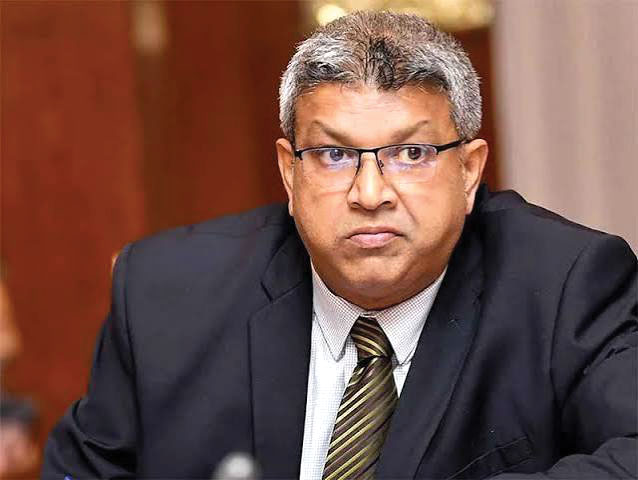
Appointment of committee eyewash, says UNP
The government is considering changes to prison regulations pertaining to the treatment of Buddhist monks serving jail terms, including their right to wear monastic robes when taken outside prison.
Justice and National Integration Minister Harshana Nanayakkara announced the proposed changes yesterday (14) following the submission of an interim report by a committee appointed to review the rules and procedures governing prisons.
The report was handed over to Secretary to the President Dr Nandika Sanath Kumanayake at the Presidential Secretariat.
One of the key recommendations is to amend Prison Standing Order 356 by introducing a new provision, 356(A). The proposed revision would require prison authorities to consult the Department of Buddhist Affairs on the removal of a monk’s robes upon admission to prison. The Commissioner of Prisons would be allowed 10 days to notify the department and take the necessary steps.
A separate amendment to Departmental Order 550 would allow Buddhist monks to wear their robes whenever they are taken outside prison, unless their respective Nikaya formally requests that the privilege be withdrawn.
The committee has also recommended extending similar arrangements, with suitable modifications, to members of other religious clergy who are imprisoned.
The proposals follow concerns raised over the treatment of Ven. Galagoda Aththe Gnanasara Thera after he was taken into custody. President Anura Kumara Dissanayake subsequently held discussions with representatives of the three main Buddhist Nikayas and appointed the committee to examine the existing legal framework.
Nanayakkara said the interim report had been forwarded to the Acting Commissioner General of Prisons, along with instructions to revise the relevant standing orders in accordance with its recommendations.
The proposed amendments have yet to be confirmed as formally implemented.
Meanwhile, the UNP yesterday criticised the government’s decision to appoint a committee to make recommendations on the attire to be worn by imprisoned Buddhist monks and other religious leaders when taken outside prison, describing the move as unnecessary.
In a statement issued yesterday (14), the UNP said the procedures governing the matter were already clearly set out in the Department of Prisons’ Standing Orders, making the appointment of a separate committee unwarranted.
The party cited remarks by Professor G.L. Peiris, Convenor of the Janathawadi Joint Opposition, who had described the committee’s appointment as a
“complete eyewash” and questioned the need for such a move.
Referring to Standing Order 550 of the Prisons Department, the UNP said convicted prisoners appearing before court for legal proceedings should not be required to wear prison uniforms.
It further stated that the regulations allowed prisoners to wear civilian clothing consistent with what they wore before imprisonment, including attire appropriate to their cultural and religious backgrounds.
The UNP accused the government of unnecessarily prolonging the issue by appointing a committee, despite the existence of regulations governing prisoners’ attire.
The party also called on the government to seek forgiveness from the Mahanayake Thera and the Sangha Council of the Kotte Sri Kalyani Samagri Dharma Maha Sangha Sabha of the Siyam Maha Nikaya over the decision concerning the religious attire of Ven. Galagoda Aththe Gnanasara Thera.
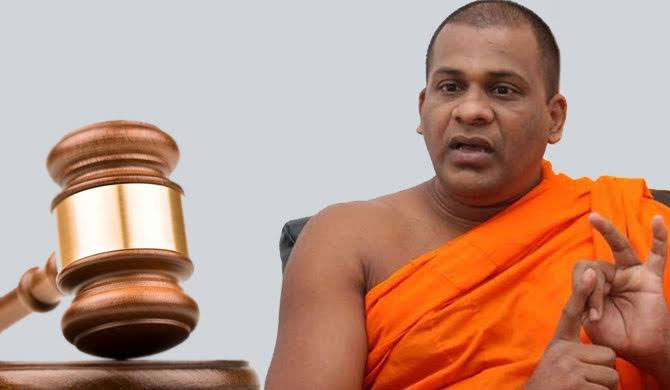
Court of Appeal President Justice Rohantha Abeysuriya yesterday withdrew from the bench hearing petitions challenging the decision by prison authorities to require Ven. Galagoda Aththe Gnanasara Thera to wear prison attire following his imprisonment.
The decision was announced when the petitions seeking to invalidate the prison authorities’ decision were taken up for consideration on October 14.
Following his withdrawal, a three-judge bench was appointed to hear the petitions.
The petitions relate to the prison authorities’ decision to require Gnanasara Thera to wear prison attire after he was taken into custody to serve the remainder of his sentence for contempt of court.
In September this year, the Supreme Court annulled the presidential pardon granted to Gnanasara Thera by former President Maithripala Sirisena in May 2019.
Following the ruling, the Court of Appeal directed the Commissioner General of Prisons to take the necessary steps to enforce the remainder of the monk’s prison sentence.
Gnanasara Thera had originally been sentenced to six years’ imprisonment for contempt of court but had served only around nine months before receiving the presidential pardon in 2019.
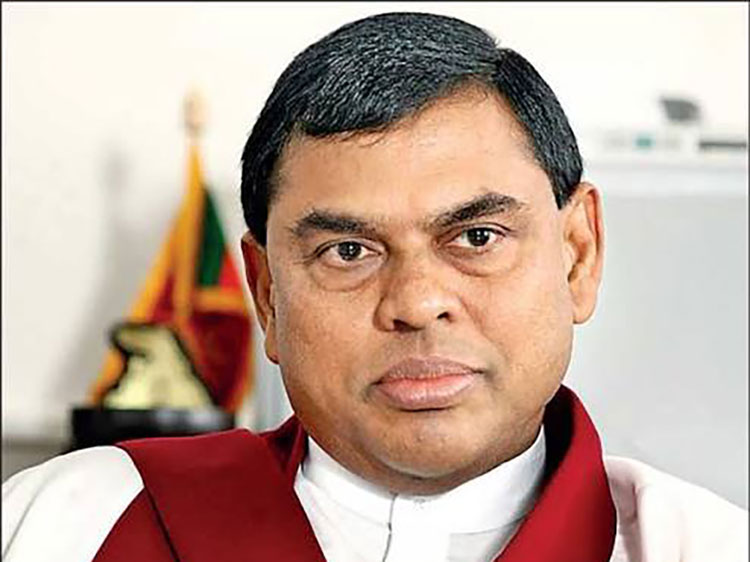
The Fort Magistrate’s Court yesterday issued an arrest warrant for former Minister Basil Rajapaksa over the alleged misuse of funds belonging to the Sri Lanka Tourism Promotion Bureau during the 2014 Uva Provincial Council election.
The Magistrate also directed the CID Illegal Assets Investigation Division to take necessary steps to obtain a Red Notice through Interpol.
The orders were issued following submissions made by the CID in connection with the alleged financial irregularities.
The CID’s Illegal Assets Investigation Unit informed the court that Rs. 7.8 million allocated to the Sri Lanka Tourism Promotion Bureau in 2014 had allegedly not been used for the Bureau’s promotional activities.
Instead, the funds had allegedly been used to provide 12,000 T-shirts during the Uva Provincial Council election, causing a financial loss to the government, the CID told court.

Showers or thundershowers will occur at most parts of the island

Prison rules to be revised over monks’ attire

AC President recuses himself from hearing prison attire case pertaining to Gnanasara Thera

Court orders steps to obtain INTERPOL Red Notice against Basil

CID informs Fort Magistrate’s Court investigation into money laundering case against Namal completed

No force used to make Gnanasara Thera wear prison garb – Prisons

‘Dates have the highest sugar content to fight Coronavirus’

Sunday Island 27 December – Headlines

#SundayIsland 17th December – Headlines

Sunday Island – 28th March

Sunday Island Headlines – 21 March

Sunday Island – 21st February – Headlines
-

 News6 days ago
NDB fraud Rs 60mn more than reported
-

 News6 days ago
Removing monk’s robes matter for Sangha to decide: Mahanayake Theras
-

 News4 days ago
Sri Lanka escalates anti-graft drive with Shiranthi’s jailing
-
 News5 days ago
NPP govt. reminded of its responsibilities as US warship leaves Colombo
-

 Latest News5 days ago
Farhan, Sadaqat help Pakistan ace 183 chase to go 1-0 up
-
 News6 days ago
BHC, Colombo: “LTTE remains a proscribed org. in the UK”
-

 Latest News3 days ago
Farhan and Sadaqat help Pakistan seal series in style
-

 News4 days ago
Iranian ships stranded, Lanka fears US sanctions