
News
Ranil’s manifesto in line with IMF formula


President Ranil Wickremesinghe yesterday (29) reiterated his commitment to the IMF formula meant to ensure the proper and agreed implementation of the post-Aragalaya economic recovery.
In his presidential election manifesto, President Wickremesinghe, who contests as an independent candidate has said that whatever the other candidates said, the country couldn’t under any circumstances deviate from the IMF programme or agreement with China.
Among the key conditions laid down by the IMF/Official Creditor Committee co-chaired by France, India, and Japan as well as China were the prohibition of printing of money to bridge the budget deficit and maintenance of funds allocated for social security, the President said.
President Wickremesinghe said: “We have agreements in place—let’s follow them and continue on this path.
“This publication is based on the agreements between Sri Lanka and the International Monetary Fund (IMF), as well as with the 17 countries of the Official Creditors Committee, including China, the IMF, the World Bank, and the Asian Development Bank (ADB). We must operate within the framework of these agreements.
“I would like to ask the other candidates if they are prepared to act within this framework and if they are willing to implement these agreements without any amendments.”
President Wickremesinghe launched his manifesto at the Taj Samudra yesterday.
President Wickremesinghe said that the economy would be built on the foundation of four newly introduced Acts namely Central Bank Act, Public Finance Management Act, Public Debt Management Act No 33 of 2024 and Economic Transformation Act. He expressed confidence that the ongoing project was meant to achieve the country’s economic targets by 2048 though the manifesto essentially dealt with the next five years.
President Wickremesinghe assured that every citizen would be given the opportunity to own a plot of land and/or house.
In terms of ‘Urumaya’ project, the President promised continuation of the project till the completion of the issuance of 2 mn plots of land and complete the transfer of government-owned low cost housing units to the public within a period of four years.
President Wickremesinghe assured that the government’s dependence on EPF and ETF would be significantly reduced to pave the way for better investment opportunities both here and abroad.
The UNP leader’s manifesto dealt with all sectors including a comprehensive plan to enhance local milk production capacity, tourism, health sector, electricity and export processing zones.
Wickremesinghe identified special projects for the Northern and Eastern provinces as well as the upcountry region.
Commenting on the challenge posed by corruption, President proposed a series of measures to tackle waste, corruption and irregularities and the full implementation of laws now in place to curb bribery and corruption.
The President also promised to disclose the list of companies that received tax relief.
He repeated that the basic salary of public service employees would be increased by a minimum of 24% for primary-level service categories. For all government officials, salaries would be gradually increased from an average of 24% to 50%, depending on current fiscal feasibility, the manifesto announced.
A cost of living allowance of Rs. 25,000 would remain unchanged for three years and be provided to all government employees for three consecutive years, starting from January 2025, with 2025 being considered the base year, the manifesto announced.
The President declared 100,000 new jobs would be created next year. He explained how he intended to achieve that target with the support growing foreign and local investments.
President Wickremesinghe made a series of proposals to address the grievances of those who fought for the LTTE and issues related to the full implementation of the 13th Amendment to the Constitution. The President declared that the next parliament would be granted the power to deal with the granting of police powers to Provincial Councils. Similarly, the parliament would implement a programme to introduce a new electoral system in line with the recommendations made by the Priyasath Dep Committee.

News
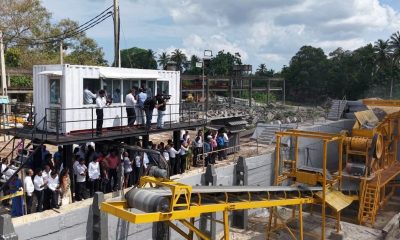
Construction and Concrete waste recycling centre opened in Ekala under the Clean Sri Lanka programme

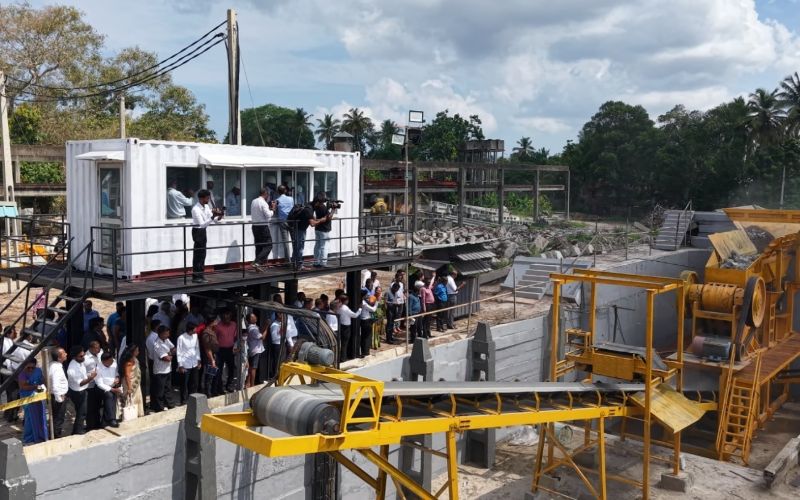
A recycling centre for the management of construction and demolition (C&D) waste, established in line with the Clean Sri Lanka national programme, was declared open this morning (08) at the Ekala Industrial Zone.
The Clean Sri Lanka Secretariat has allocated Rs. 200 million for this project. Established within the precast yard premises belonging to the State Engineering Corporation under the Ministry of Housing, Construction and Water Supply, the project marks a significant step towards a sustainable environmental transformation in Sri Lanka’s construction sector.
Globally, the construction industry accounts for 40% of total waste generation and 25% of carbon emissions. In Sri Lanka, nearly 300 tonnes of such waste are collected daily from the Western Province alone.
Until now, the indiscriminate disposal of such debris has contributed to soil pollution, water contamination and increased flood risks. Under this project, however, such waste will be transformed into valuable raw materials through modern technology. This initiative is expected to minimise the depletion of natural resources while significantly reducing construction costs.
The centre, which is being operated with the full involvement of the State Engineering Corporation, has been provided with machinery and land valued at Rs. 350 million. In addition to the recycling plant, which has a capacity of 200 metric tonnes per hour, a modern laboratory and an administrative building have also been constructed. Under the “Clean Sri Lanka” programme, Rs. 200 million has been allocated for the project, of which Rs. 150 million has already been released.
There are also plans to expand research activities in the future by engaging engineering faculties of State universities in the programme. The support and contribution of all construction contractors and stakeholders are expected in building a circular economy within the construction sector while safeguarding natural resources for future generations.
Minister of Housing, Construction and Water Supply Dr Susil Ranasinghe, Deputy Minister of Environment Anton Jayakody, Deputy Minister of Housing, Construction and Water Supply T.B. Sarath, Deputy Minister of Labour Mahinda Jayasinghe, Member of Parliament Najith Indika, Additional Secretary to the President at the Clean Sri Lanka Secretariat S.P.C. Sugeeshwara, Additional Director General of the Clean Sri Lanka Secretariat Kapila Senarath, Director (Environmental) of the Clean Sri Lanka Secretariat Anjula Premarathna, Chairman of the State Engineering Corporation Engineer Neranjan Fernando and Deputy General Manager of the State Engineering Corporation Charuka Hettiarachchi, along with several others, were present at the occasion.
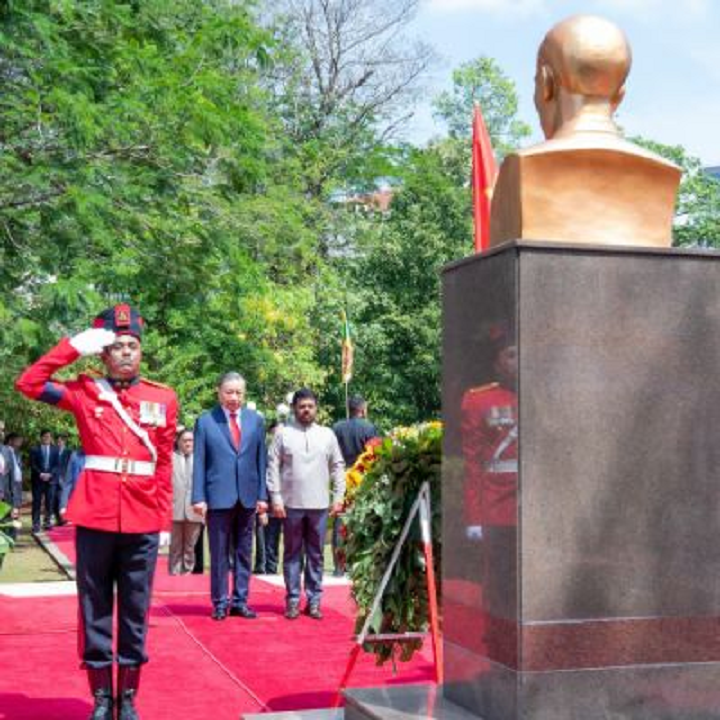
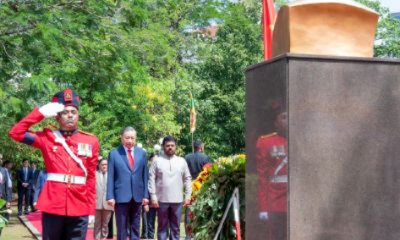
President of the Socialist Republic of Vietnam and General Secretary of the Central Committee of the Communist Party of Vietnam, To Lam, who is on a State visit to Sri Lanka at the invitation of President Anura Kumara Dissanayake, paid floral tribute this morning (08) to the statue of Ho Chi Minh situated within the premises of the Colombo Public Library.
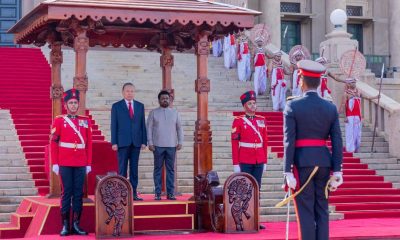
Upon arriving at the Colombo Public Library, President To Lam was warmly received by President Anura Kumara Dissanayake, while a group of children holding the national flags of both countries stood along the route to welcome the Vietnamese President.
Following the floral tribute to the Ho Chi Minh statue, President To Lam also viewed a collection of paintings created by schoolchildren.
Thereafter, the Vietnamese President attended the ceremony marking the commencement of the expansion of the “Vietnam–Ho Chi Minh Space” located at the Colombo Public Library, where he also viewed a collection of historical photographs on display.
On the occasion, Chief Librarian of the Public Library, Mrs Varuni Gangabadarachchi, briefed those present on the architectural plans prepared for the renovation and expansion project of the Ho Chi Minh Space. A donation of US$50,000 for the project was also presented to the Mayor of Colombo, Mrs Vraie Cally Balthazaar, by Nguyen Huu Nghia, Member of the Central Committee of the Communist Party of Vietnam and Auditor General of the State Audit Office of Vietnam.
Minister of Environment, Dr Dhammika Patabendi, Mayor of Colombo Mrs Vraie Cally Balthazaar, Deputy Mayor Hemantha Werakoon and several others were also present at the occasion.
[PMD]
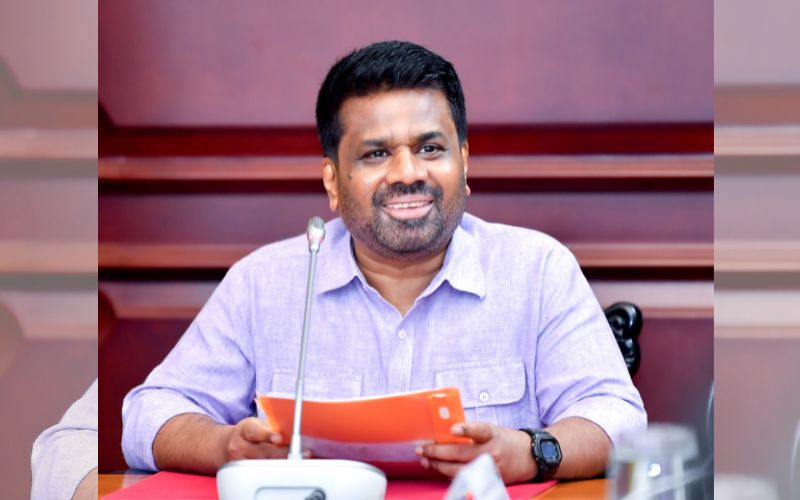
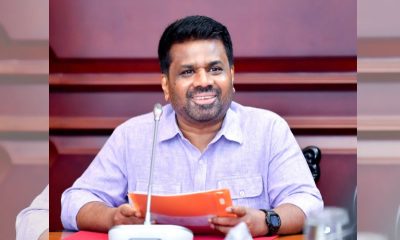
President Anura Kumara Dissanayake has instructed officials to swiftly introduce all necessary reforms, including amendments to existing laws, in order to eliminate the drug menace from the country.
The President issued these instructions while attending the meeting of the “Ratama Ekata” National Steering Council convened on Thursday (07) morning at the Presidential Secretariat to discuss efforts aimed at eradicating the drug menace.
He also directed the relevant authorities to take all necessary steps to expedite the process of destroying seized narcotics as quickly as possible under proper legal procedures, thereby preventing them from re-entering society and to accelerate the process of punishing offenders.
The President emphasised the need to speed up this process in order to build public confidence, as well as the confidence of the teams engaged in operations, noting that the successful implementation of the “Ratama Ekata” national initiative would thereby be strengthened through collective participation.
The progress of anti-narcotics operations carried out under the “Ratama Ekata” national initiative, including raids and arrests, was extensively reviewed at the meeting. Officials pointed out that raids related to narcotics had increased by 80% since the launch of the programme.
Since the launch of the “Ratama Ekata” national operation on 30 October 2025, authorities have seized 5,437.457 kilogrammes of cannabis, 1,936.325 kilogrammes of heroin, 1,991.414 kilogrammes of crystal methamphetamine (“ice”), 271.724 kilogrammes of cocaine, 1,574,895 narcotic pills, and 629,988 illicit cigarettes. A total of 168,460 suspects have also been arrested in connection with these offences.
The current progress of the legal amendments required to eradicate the narcotics menace from the country was reviewed at the meeting, and it was noted that steps had been taken to submit the Rehabilitation (Amendment) Bill No. 54 of 2007 to the Cabinet in due course. Discussions were also held regarding the rehabilitation process, the strategies that could be adopted in that regard, and the measures taken to develop related facilities.
It was further revealed that, at Divisional Secretariat level, 25 families most severely affected by narcotics in each division had been selected for attitude development programmes. The President stressed the importance of implementing all such programmes through local religious centres.
The President also made clear that anti-drug awareness programmes should not merely be limited to conducting awareness campaigns, but should include continuous follow-up to assess whether the message had been properly communicated to society and to monitor progress. He highlighted the importance of maintaining this mechanism continuously with the involvement of religious leaders, including members of the Maha Sangha in the respective areas.
The President also inquired into measures being taken to establish a separate court for narcotics-related cases, expedite the receipt of Government Analyst reports, and accelerate the filing of cases.
He also stressed the urgent need for a rapid programme to expedite legal proceedings and rehabilitation processes concerning inmates imprisoned for narcotics-related offences, in order to ease prison overcrowding.
The Inspector General of Police also briefed the meeting on investigations and the current status relating to Buddhist monks who were recently arrested in connection with narcotics offences.
The President was further briefed on the progress of programmes jointly implemented by the Ministry of Education and the Women and Children’s Bureau to curb organised efforts to draw schoolchildren into narcotics use. He was also informed about community-based programmes planned in conjunction with the International Day Against Drug Abuse and Illicit Trafficking, which falls on 26 June.
Among those present at the meeting were the Anunayaka Theros of the Malwathu and Asgiri Chapters, senior clergy representing several Buddhist Nikayas, Christian priests, Hindu Kurukkals, Muslim religious leaders, senior government officials including Secretary to the President Dr Nandika Sanath Kumanayake, ministry secretaries, senior tri-forces commanders, Inspector General of Police Priyantha Weerasooriya, heads of relevant institutions, senior security officials, and representatives of the “Ratama Ekata” National Steering Council.
[PMD]

Construction and Concrete waste recycling centre opened in Ekala under the Clean Sri Lanka programme

President of the Socialist Republic of Vietnam pays floral tribute to the Ho Chi Minh Statue

Urgent reforms needed to eradicate drug menace, says President

Warm welcome extended to the President of the Socialist Republic of Vietnam at the Presidential Secretariat

BCCI to conduct surprise checks on IPL teams over compliance of guidelines

President of the Socialist Republic of Vietnam arrives in Sri Lanka on State Visit

‘Dates have the highest sugar content to fight Coronavirus’

Sunday Island 27 December – Headlines

#SundayIsland 17th December – Headlines

Sunday Island – 28th March

Sunday Island Headlines – 21 March

Sunday Island – 21st February – Headlines
-
 News4 days ago
CJ urged to inquire into AKD’s remarks on May 25 court verdict
-
 News2 days ago
MIT expert warns of catastrophic consequences of USD 2.5 mn Treasury heist
-
 News5 days ago
USD 3.7 bn H’tota refinery: China won’t launch project without bigger local market share
-
 News6 days ago
Easter Sunday Case: Ex-SIS Chief concealed intel, former Defence Secy tells court
-
 News7 days ago
Ten corruption cases set for court in May, verdict ordered in one case – President
-

 Business6 days ago
Dialog Surpasses 1,000 5G Sites, Strengthening Nationwide 5G Coverage
-

 Editorial2 days ago
Clean Sri Lanka and dirty politics
-

 Editorial5 days ago
Deliver or perish