
Connect with us

News

Missing persons must be searched for; their families must receive answers-ICRC

Published

on

The ICRC said that in Sri Lanka, thousands of families of missing persons from all communities across the country were still waiting for answers while struggling to cope with multiple challenges at family, community and societal levels. Not knowing the fate or whereabouts of their missing loved ones, they continue to endure suffering and anguish that transcend differences. Every effort must be made to establish the fate of missing persons while their relatives must be able to live in dignity, the ICRC said in a statement issued mark the International Day of the Disappeared on Aug 30.

The text of the statement: “The International Committee of the Red Cross (ICRC) remembers the hundreds of thousands of people around the world who are missing or separated from their families due to armed conflict, other situations of violence, disasters, humanitarian emergencies and migration.

By the end of 2023, more than 239,700 missing persons were registered by the Family Links Network of the Red Cross and Red Crescent Movement around the world. But this figure does not convey the true extent and severity of the issue.

Behind every missing person, there are countless more suffering from the anguish and uncertainty of not knowing the fate and whereabouts of their loved ones. Those waiting to learn of the whereabouts or fate of a family member live in limbo, afforded neither closure of mourning nor a reason to give up hope. Living in ambiguity can also create legal, administrative, social and economic challenges, often exacerbating poverty and leading to stigmatization. To put an end to their suffering, they need answers. Families have the need, and the right, to know what has happened to their loved ones. The issue of missing persons and the plight of families of missing persons should be acknowledged by authorities, communities and society-at-large.

As we commemorate the 75th anniversary of the Geneva Conventions, the bedrock of international humanitarian law (IHL), it is important to note that IHL contains obligations relevant to missing persons and their families. IHL gives rise to three main obligations, to be observed by state authorities and, parties to an armed conflict, where applicable: the obligation to prevent people from going missing; the obligation to clarify the fate and whereabouts of missing persons, and the obligation to investigate and, when appropriate, prosecute crimes resulting in persons going missing or being forcibly disappeared. Respecting these obligations can also prevent this tragedy.

Searching for missing persons and providing individualized answers on their fate and whereabouts to their families require concerted efforts. These include, amongst many others, the strengthening of national frameworks and systems, including medico-legal ones; putting in place or improving existing processes and mechanisms dedicated to establishing the fate and whereabouts of missing persons; and the collection and processing of information on missing persons and the events in which they went missing, as well as on human remains and gravesites. The inclusion and active participation of families of missing persons in these processes is crucial for the successful resolution of this humanitarian issue.

Acknowledging and addressing the issue of missing persons and the associated needs of their families is also a critical part of broader peace and reconciliation processes. A failure to recognize the experiences of all communities who are still searching for their missing relatives may generate anger and resentment, further making reconciliation out of reach. If the issue is left unaddressed, not only individuals but entire societies are unable to move on.

For over a decade, the ICRC has been implementing an island-wide support programme in Sri Lanka to address the emotional, economic, legal and administrative needs of families of missing persons. The ICRC will continue to engage with families of missing persons to strengthen their capacities to play an active role in the processes aimed at providing them with answers and encourage them to work together, where possible. The ICRC also works with the authorities and relevant stakeholders to build their capacities to address the multifaceted needs of families of missing persons, including their need to know.

Worldwide, the ICRC carries out a range of activities to search for and identify missing persons, address the needs of families of missing persons, protect and restore family links and protect the dignity of the dead. Drawing on its experience, the ICRC stands ready to continue sharing its global expertise with relevant stakeholders in Sri Lanka, in order to contribute to the process of clarifying the fate and whereabouts of missing persons, in accordance with its humanitarian mandate.”


Continue Reading
Click to comment

Leave a Reply

Your email address will not be published. Required fields are marked *

Latest News

A new curriculum will be introduced for preschools in 2027, while steps will also be taken to train teachers accordingly – PM

Published

on

By

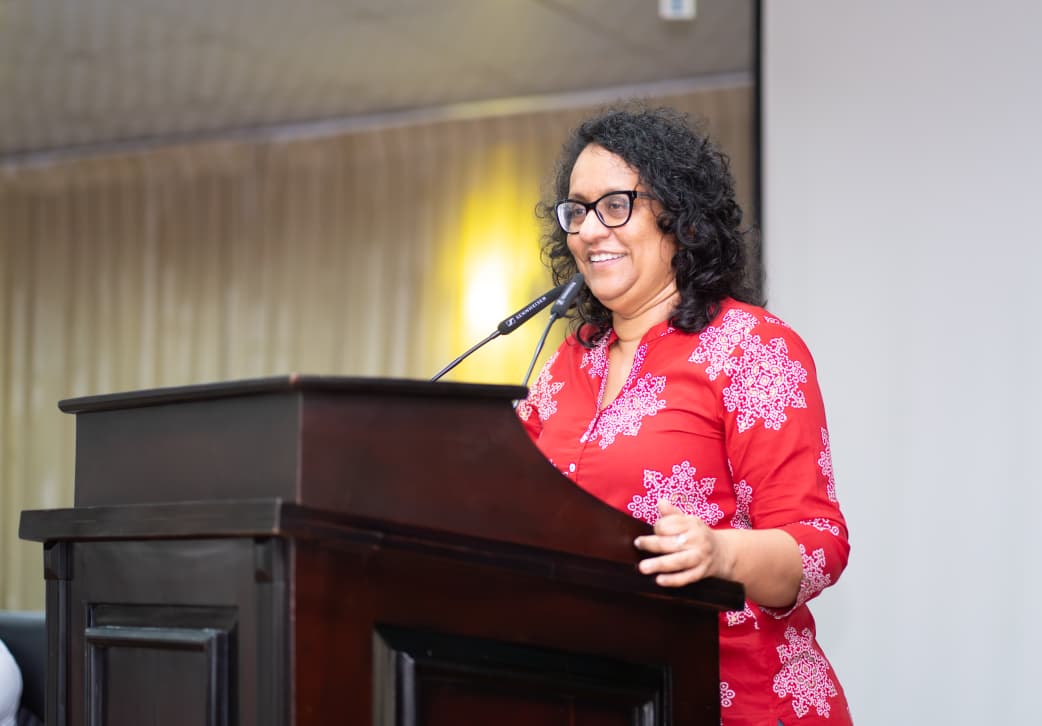
Prime Minister Dr. Harini Amarasuriya stated that a new curriculum will be introduced for preschools in 2027, while steps will also be taken to train teachers accordingly and to regulate preschools through a regulatory authority.

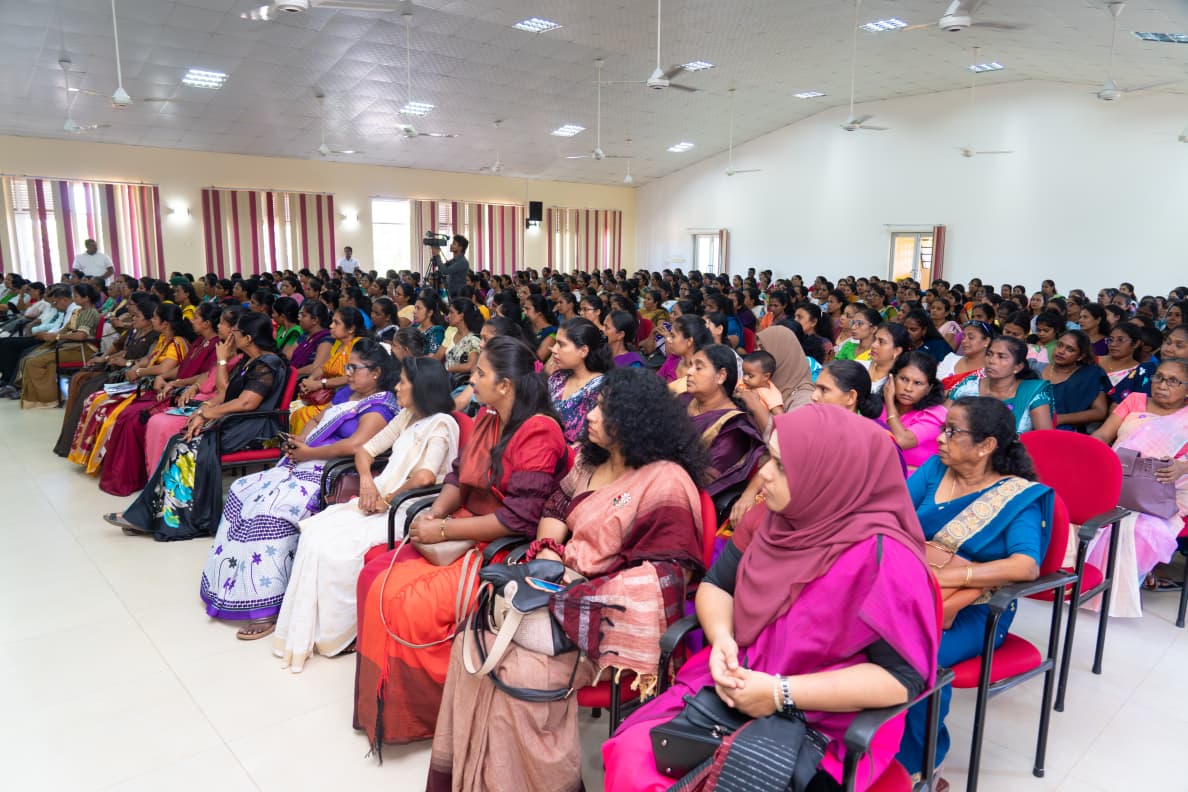
The Prime Minister made these remarks while addressing an awareness programme for preschool teachers in the Hambantota District on education reforms, held  on Sunday (15) at the Ambalantota Pradeshiya Sabha Auditorium.

During the programme, preschool teachers briefed  the Prime Minister about the challenges they currently face. Responding to their concerns, Dr. Harini Amarasuriya further stated:

“The issues within the preschool system cannot be discussed separately from the broader crisis in society and in the education sector. When we assumed office in 2024, our primary challenge was to free the country from its debt burden and to establish. a  sound economic indicators.

Although 2025 was a challenging year, we were able to bring the country’s economy to a certain level of stability and manage the national budget accordingly.

While we were working towards economic recovery, the war in the Middle East began, which has had certain impacts on our country as well.

A significant amount of Sri Lanka’s foreign remittances come from our fellow citizens working in the Middle East. Today, both their livelihoods and employment are under threat. In addition, a large number of tourists travelled to Sri Lanka through Middle Eastern airspace, and the closure of those air routes and airports has reduced tourist arrivals. Another issue concerns fuel transportation. This problem has affected not only Sri Lanka but many countries around the world. If the war continues for a long period, it will have further impacts on us, and therefore we must be prepared. We also need to manage the economy carefully and reduce certain expenditures.

Although we have the ability to borrow, our intention is not to weaken the country’s economy by relying on loans.

You are aware that we have begun implementing education reforms. Within that policy framework, we are also taking steps to reform preschool education. So far, the establishment of preschools and early childhood development has not been carried out in a systematic manner. Therefore, we must regulate and standardize all preschools, which is not an easy task.

First, all preschools must be formally registered. We have already prepared a curriculum for teacher training. In addition, we plan to introduce a new curriculum for preschools in 2027, provide teacher training accordingly, and regulate preschools through a regulatory authority. A recognized curriculum has also been prepared for the preschool diploma. In the future, priority for preschool teachers will be given based on these qualifications. We will also take gradual steps to enhance the professionalism of preschool teachers and establish a proper salary structure”.

The Prime Minister further stated that preschools fall under the authority of Provincial Councils and Pradeshiya Sabhas, while the line ministry can only provide policy recommendations. She also emphasized that issues related to preschools should be addressed in a systematic manner through structural committees and District Development Committees.

Member of Parliament Nihal Galappaththi and other public representatives, along with preschool teachers from the Hambantota District attended the awareness program.

(Prime Minister’s Media Division)

Continue Reading

News

Be mindful of the accuracy of information before sharing it on social media – PM

Published

on

By

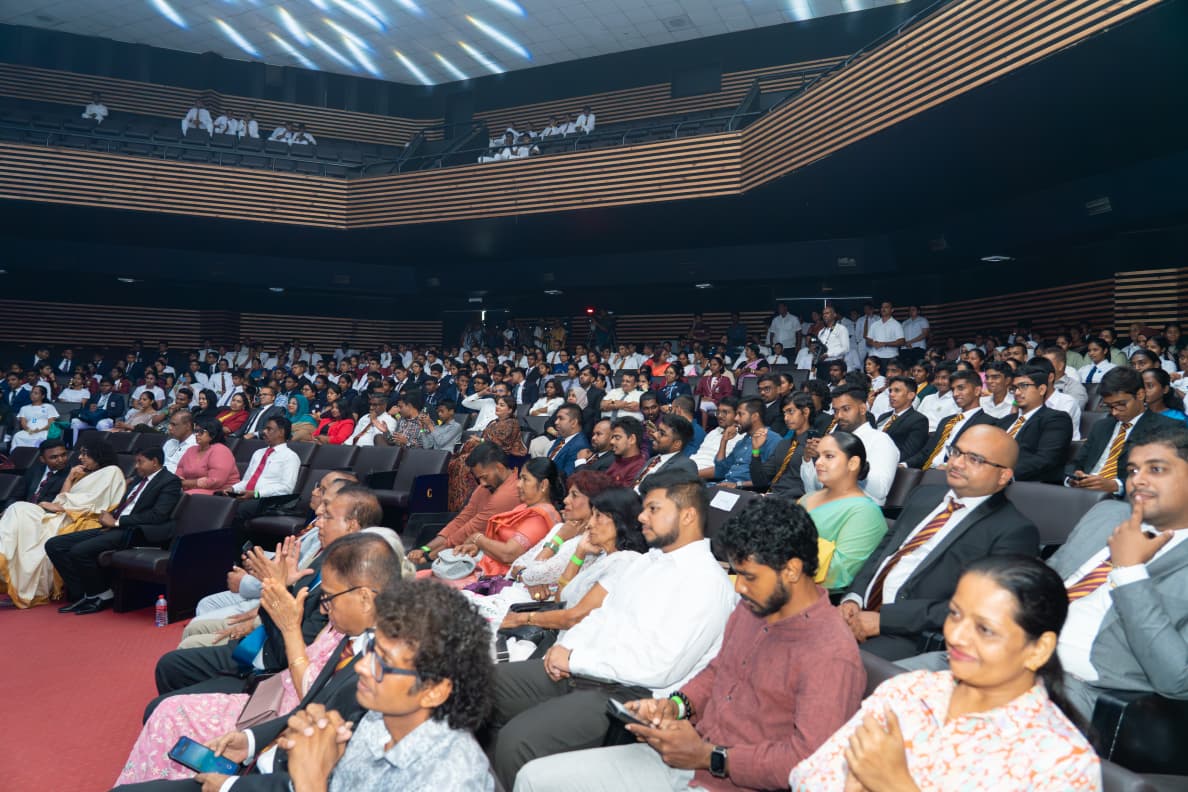
The Prime Minister made these remarks while addressing the “Sandeshaya” Media Awards Ceremony held on 14 March at the Kularathne Hall of Ananda College, Colombo. The event was organized with the aim of providing Sri Lankan school students with an opportunity to actively contribute to the national media discourse while promoting ethics, responsibility, and critical thinking.

During the “Sandeshaya” Awards Ceremony , lifetime awards granted only once in a lifetime were presented to distinguished veterans in the media field, while media awards were also presented to talented students in the school category. The ceremony was held under the patronage of the Prime Minister.

Expressing her views further, the Prime Minister stated:

“We live in an era where information technology and the media are changing rapidly. Along with these changes, many opportunities have emerged, but we are also confronted with numerous challenges.

We must prepare our younger generation to live in a society and a world transformed by information technology and the media.

When we observe the changes taking place in the media today, we can say that the media and information have become democratized. In the past, access to knowledge and information was largely limited to privileged or powerful groups. The authority to communicate information and decide what should be disseminated was held by a small group. However, with the advancement of technology, this has changed dramatically. As a result of this revolutionary transformation, information, data, and knowledge have now become accessible to everyone. In that sense, it is a positive development.

At the same time, we are no longer merely media viewers or consumers. As citizens, we can also become media creators. Citizens now have significant space to engage with the media and share information. While this is positive in one sense, it also carries certain dangers. There are serious questions, issues, and challenges regarding responsibility and credibility in the dissemination of information. Today, information flows so rapidly that it is sometimes difficult to determine what is true. Making decisions has become increasingly challenging. Not only in our country but globally, there have been many instances where societies have been set ablaze due to misinformation or deliberately distorted information. We have witnessed numerous occasions where people’s lives have been destroyed as a result.

Sometimes, without even realizing it, we get trapped on the internet. We share various things through our social media platforms, both necessary and unnecessary. However, what we often forget is that a large amount of personal information accumulates on the internet through these actions. Once incorrect information becomes widespread in this way, it becomes extremely difficult to erase.

The spread of false information weakens public trust in the information provided by the media, and this is extremely dangerous for a society. For the sustainability of a society, it is essential to maintain trust among citizens and trust in the institutions that influence people’s lives. Only through the trust we can safeguard the sustainability, continuity, and security of a society.

However, what has happened today due to the spread of misinformation? We no longer have confidence in our leaders. We do not even trust elders. There is doubt about whether the news we receive can be trusted. When credibility weakens within a society, it can push that society into crisis.

Therefore, it is extremely important to cultivate a culture that strengthens trust in leadership, promotes confidence in elders, and enhances awareness about reliable sources of information. In this context, those entering the field of media carry a significant responsibility.

Just like the senior professionals we honored today, you too may one day enter this field. However, there is a vast difference between the era in which they entered the profession and the era you will enter. You will carry a unique responsibility to strengthen the credibility of the media and to stand firmly behind the information you present.

You must be able to stand by the information you provide. You must reflect on whether the information you share is true and who might be affected by it. Ensuring the credibility of the information you disseminate is also your responsibility.

Similarly, as users of any form of media, we all bear a responsibility to verify the reliability of the information we receive and to be aware of how to distinguish between truth and falsehood. That is why digital literacy and media literacy are essential. It is also for this reason that we believe such subjects and concepts must be incorporated into education reforms so that our student generation can learn them.’

The Prime Minister further stated that citizens have a responsibility to be mindful of the truthfulness of information before sharing content found on the internet and social media with others.

The event was attended by the Secretary to the Ministry of Health and Mass Media Anil Jasinghe, Principal of Ananda College D.M.L.P. Dissanayake, journalists, principals, teachers, and students.

(Prime Minister’s Media Division)
Continue Reading

Latest News

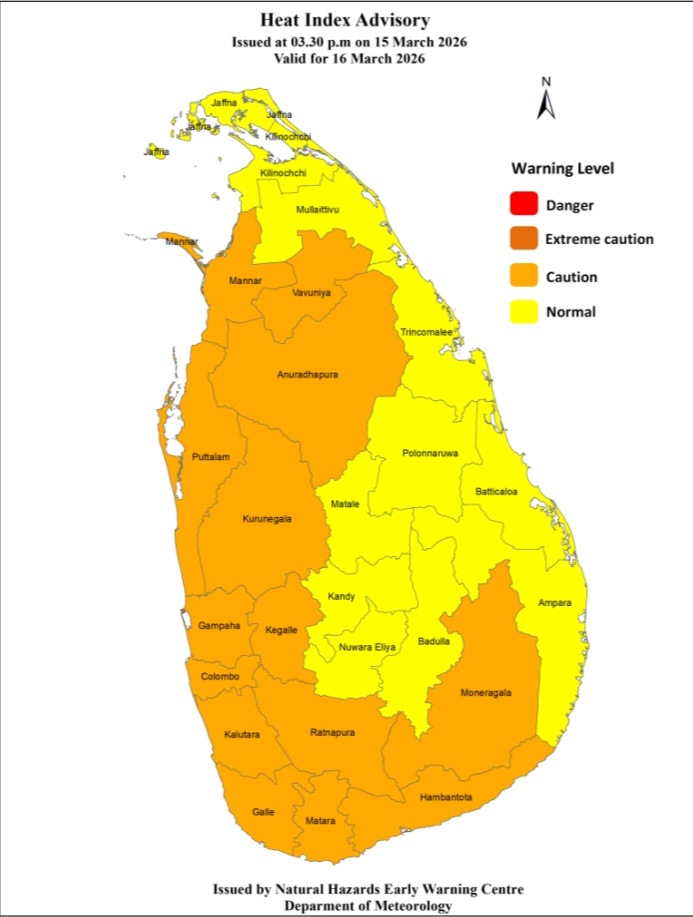
Heat Index at ‘Caution level’ at some places in the Western, Sabaragamuwa, Southern and North-western provinces and in Monaragala, Mannar, Anuradhapura and Vavuniya districts

Published

on

By

Warm Weather Advisory
Issued by the Natural Hazards Early Warning Centre of the Department of Meteorology  at 3.30 p.m. on 15 March 2026, valid for 16 March 2026.

The public is warned that the Heat index, the temperature felt on human body is likely to increase up to ‘Caution level’ at
some places in the Western, Sabaragamuwa, Southern and North-western provinces and in Monaragala, Mannar, Anuradhapura and Vavuniya districts.

The Heat Index Forecast is calculated by using relative humidity and maximum temperature and this is the condition that is felt on your body. This is not the forecast of maximum temperature. It is generated by the Department of Meteorology for the next day period and prepared by using global numerical weather prediction model data.


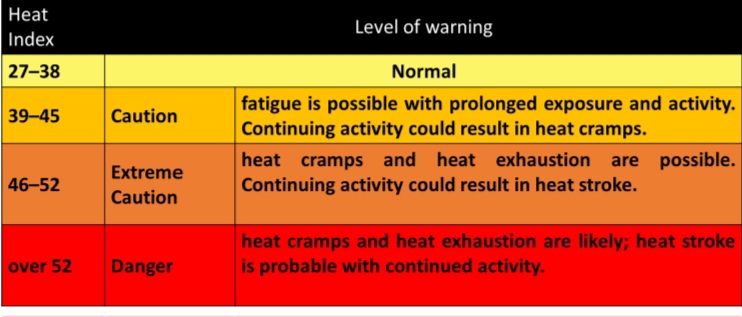
Effect of the heat index on human body is mentioned in the above table and it is prepared on the advice of the Ministry of Health and Indigenous Medical Services.

ACTION REQUIRED
Job sites: Stay hydrated and takes breaks in the shade as often as possible.
Indoors: Check up on the elderly and the sick.
Vehicles: Never leave children unattended.
Outdoors: Limit strenuous outdoor activities, find shade and stay hydrated.
Dress: Wear lightweight and white or light-colored clothing.

Note:
In addition, please refer to advisories issued by the Disaster Preparedness & Response Division, Ministry of Health in this regard as well. For further clarifications please contact 011-7446491


Continue Reading

Trending