
Sports
Cricket needs IPL money, but is it good for the future of the game?

BY IAN CHAPPELL
If cricket needed another red-light warning for the game to tread warily, it came with the simple announcement of the IPL’s entry into the English game.
It was explained that the GMR group – co owners of the IPL’s Delhi Capitals – was bidding to acquire the Hampshire County Cricket Club. With bidding soon to begin on the purchase of a large share of teams in the Hundred, this was never going to be the last splurge from an IPL conglomerate.
None of this is surprising as county teams are desperate for money and the IPL owners are extremely rich.
However, it’s worth recalling that back in the mid-1990s Kerry Packer, the former boss of World Series Cricket, uttered the immortal words “Don’t let a media company run your sport.”
The trend of successful companies having a greater say in the running of the game is increasing rapidly as IPL owners already own large stakes in T20 teams playing in the UAE, USA, South Africa, and the Caribbean. The shrewd owners are also starting to sign top-rated players to longer contracts and that should be a warning to cricket administrations.
The better players could become beholden to an IPL owner rather than their own cricket board. That is when conflict of interest becomes a divisive issue.
This isn’t a surprise as the game in most countries desperately needs money and the IPL owners are financially flush.
Cricket administrators must accept the blame for not producing a long-term blueprint for the game a couple of decades ago. That way they could at least have had a viable plan for the game to deal with this issue. That is unless cricket administrators worldwide are convinced the future is purely the T20 game run by rich franchises.
The weaknesses in this theory are more than just “Is this good for cricket?”
Most successful business people don’t achieve their prominent positions by being philanthropists.
Will sufficient funds be channelled back into the game or will a large proportion end up as shareholder bonuses awarded by rich business conglomerates? Do shrewd business people necessarily make good cricket team owners? Will the business people want to have a large say in the on-field product? Are the many unpaid people who serve the game still going to willingly provide their services?
While large financial incentives are inviting to all parties, it’s my experience that business people either don’t understand or don’t care about the important difference between laws and rules.
Business people are prone to manipulating matters their own way regardless. The master statistician Irving Rosenwater stated years ago: cricket has laws that are not meant to be broken.
When the administrators warmly welcomed the T20 craze they had no idea how much power they were acceding to the players. The better players now have both wealth and choice, which is ironic when you consider that for many years they had neither. Former successful Australian opening batter Arthur Morris summed that up best when in retirement he was asked what he gained from cricket. His succinct answer was: “Poverty”.
One of the biggest failings in cricket administration is the lack of utilisation of former top players’ knowledge of the game at the highest level. In Australia this has been a blatant omission.
Cricket administration is a difficult and challenging job with many wide-ranging aspects – so difficult, it’s impossible to satisfy every fan’s wishes. However, the job is made even more difficult by the game not having a visible plan for the future that includes financial security for players, mixed with playing satisfaction. Cricket’s future needs to be a partnership planned by a combination of players and administrators.
I’m no financial or company expert, but it’ll be a sad day if a young player is not able to experience the challenges of long-form cricket. If a player chooses not to play long-form cricket that’s their prerogative, but it would be really sad if that choice is not available.
[Cricinfo]


A 36 ball 63 by Sahan Arachchige and three wickets each by Eshan Malinga [3-13] and Tharindu Rathnayake [3-19] helped Galle Gallants defeat Jaffna Kings by 60 runs in the 10th match of the Lanka Premier League 2026. Galle Gallants lead the points table with three wins from four outings.
Scores:
Galle Gallants 193/8 in 20 overs [Chris Lynn 46, Sahan Arachchige 63, Dasun Shanaka 12, Dinura Kalupahana 10, Mohammad Nawaz 27; Mohamed Shiraz 1-23, Dunith Wellalage 1-13, Shakib Al Hasan 1-27, Dilshan Madushanaka 2-35, Lizaad Williams 2-37]
Jaffna Kings 133 in 17.5 overs [Kamil Mishara 15, Ibrahim Zadran 11, David Weise 22, Dunith Wellalage 56; Dasun Shanaka 1-21, Tharindu Rathnayake 3-19, Akif Javed 1-22, Eshan Malinga 3-13, Vijayakanth Viyaskanth 1-32]
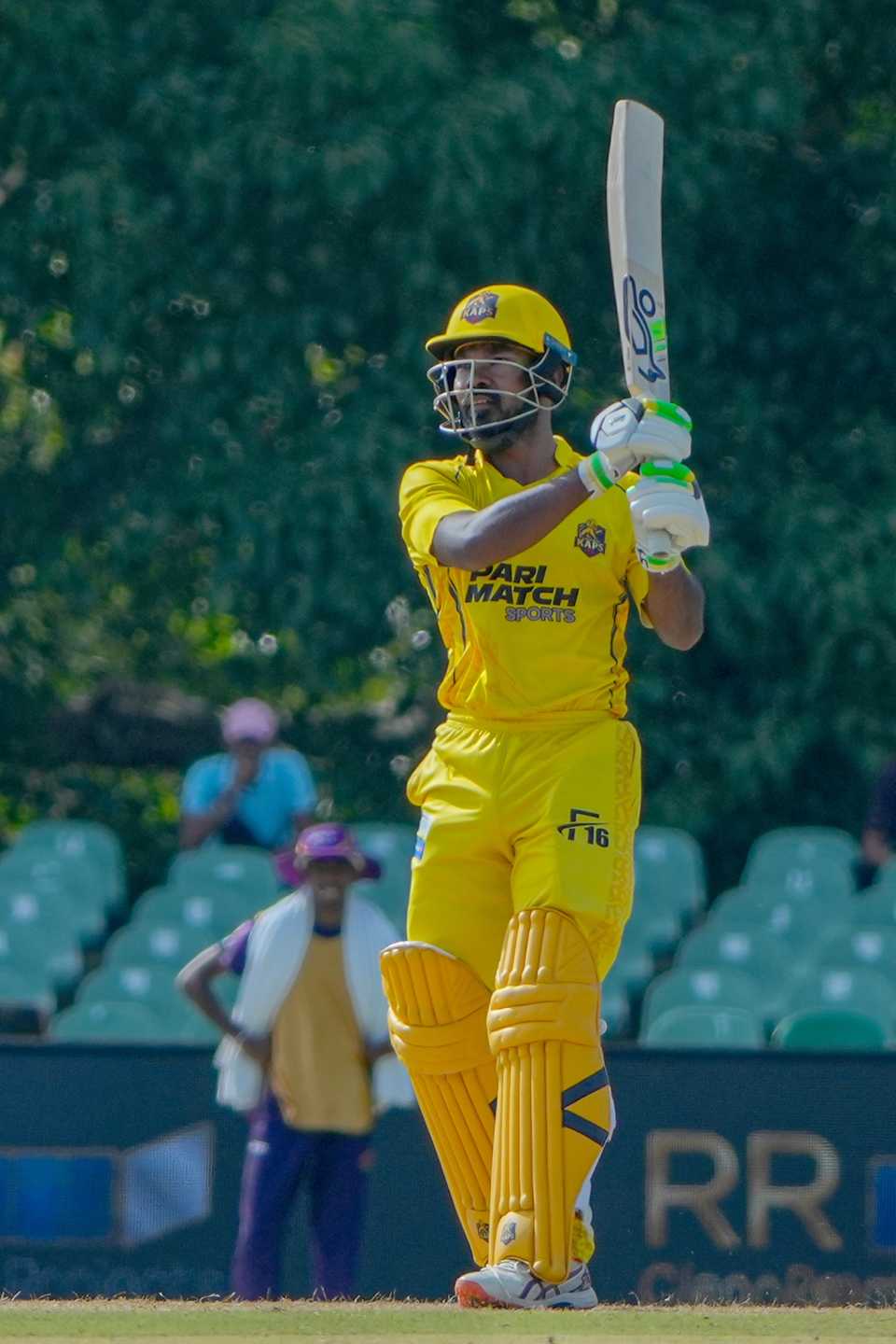
Half centuries by Rubin Hermann and Janith Liyanage and a three wicket haul by Mujeeb Ur Rahman helped Colombo Kaps defeat Kandy Royals by 24 runs in the 9th match of the Lanka Premier League 2026 played at Dambulla on Thursday [23rd July]’
Scores:
Colombo Kaps 192/9 in 20 overs [Rubin Hermann 53, Sharujan Shanmuganathan 14, Janith Liyanage 52*, James Neesham 24, Binura Fernando 21; Vijay Shankar 1-0, Shaheen Shah Afridi 2-34, Nuwan Thushara 1-31, Moeen Ali 2-31, Dushan Hemantha 2-20]
Kandy Royals 169/8 in 20 overs [Kusal Perera 19, Dale Phillips 38, Vijay Shankar 30, Angelo Mathews 39*, Dushan Hemantha 11*; Shahnawaz Dahani 1-35, Wanuja Sahan 1-24, Mujeeb Ur Rahman 3-34, Malsha Tharupathi 1-29, James Neesham 1-07]

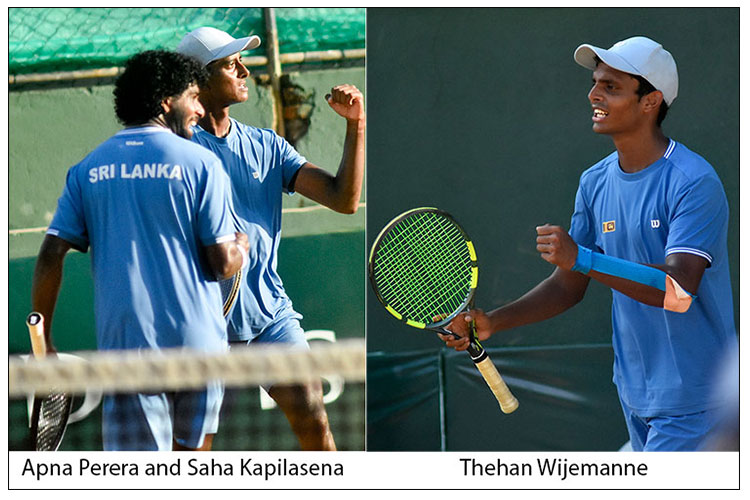
Hosts Sri Lanka made a winning start to their Davis Cup Asia/Oceania Group IV campaign, edging out Qatar 2-1 in a closely contested opening-day tie at the Sri Lanka Tennis Association courts in Colombo on Wednesday.
The visitors struck first when Mubarak Alharrasi defeated Sri Lanka’s Apna Perera 6-3, 4-6, 6-2 in a hard-fought opening singles encounter, giving Qatar an early 1-0 lead.
Sri Lanka bounced back in the second singles as Thehan Wijemanne produced a spirited comeback to overcome Mossa Alharrasi 3-6, 6-4, 6-4. After dropping the opening set, Wijemanne showed great composure to win the next two sets and level the tie at 1-1.
The decisive doubles match proved to be a tense affair, with Apna Perera returning to partner Saha Kapilasena. The Sri Lankan duo held their nerve in two tie-breaks to defeat Jabar Al Mutawan and Mossa Alharrasi 7-6, 7-6, sealing the tie 2-1 for the hosts.
Sri Lanka’s ability to recover from the opening singles defeat highlighted the team’s resilience as Wijemanne’s comeback victory and the doubles pair’s clutch performance ensured a successful start to their campaign. The hosts will now look to build on the opening-day victory as they continue their quest for promotion in the Asia/Oceania Group IV competition.

Sheikh Hasina ally resigns as Bangladesh’s president

Oil prices hit $100 for the first time since May

US hits dozens of trading partners with new wave of tariffs

Arachchige, Rathnayake and Malinga pump Jaffna

Hermann, Liyanage and Mujeeb steer Colombo Kaps to a 23 run win

Showers expected in the Western and North-western provinces and in Galle and Matara districts

‘Dates have the highest sugar content to fight Coronavirus’

Sunday Island 27 December – Headlines

#SundayIsland 17th December – Headlines

Sunday Island – 28th March

Sunday Island Headlines – 21 March

Sunday Island – 21st February – Headlines
-

 Features6 days ago
Two memorable excerpts from a former SLAF commander’s memoir
-

 Business6 days ago
‘Giving up was never an option’: The fisherman who fought back after losing millions in SL
-
 Latest News6 days ago
Davis cup Asia/Oceania Group IV 2026 to be held in Colombo from 20th to 25th July
-

 Life style6 days ago
Taste of the Swiss Alps comes to Colombo
-

 Features6 days ago
Erdoğan’s New Republic
-
 Midweek Review3 days ago
Three high-profile alleged suicides shaping key investigations
-
 News7 days ago
Evidence recorded in money laundering case against Yoshitha Rajapaksa
-

 News7 days ago
Dengue outbreak gallops ahead: Infections surpasses 73,455, leaving 50 dead