
Foreign News
Parents beg US diplomat for apology over fatal crash

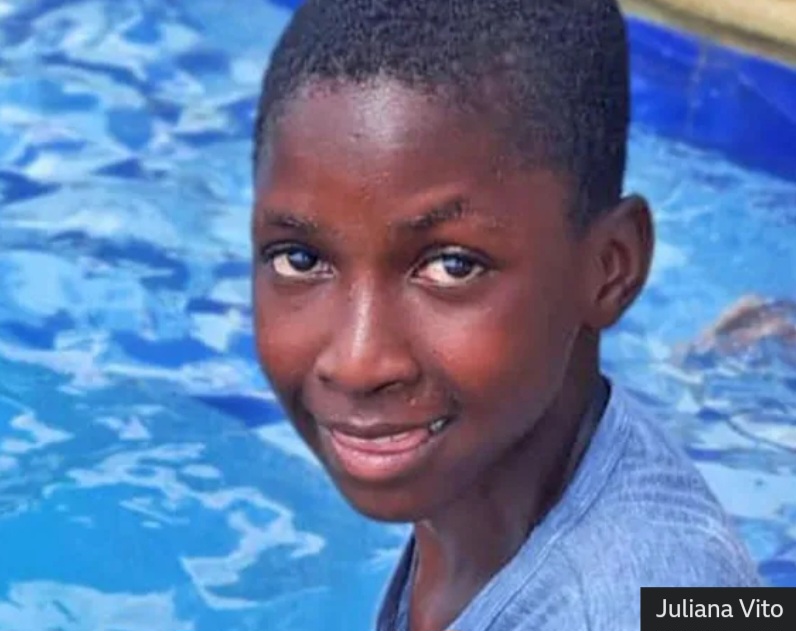
The family of an 11-year-old girl allegedly killed by a US diplomat in Zimbabwe in a road accident in June have told the BBC they want him to return to the country and apologise to them in person.
Ruvarashe Takamhanya is believed to have been run over by a vehicle driven by the diplomat as she was on her way to school in Dema, a town 40km (24 miles) south-east of the capital, Harare.
Her parents say they realise the US diplomat has diplomatic immunity but an apology might help them recover from the pain and give them a sense of closure.
“Our thoughts are with the family and loved ones of the girl,” a US State Department spokesperson told the BBC, adding that its Harare embassy was co-operating with local officials.
The embassy “recognises the devastation of this accident for all involved”, the spokesperson said.
Ruvarashe was heading to school with her best friend on a Monday morning when she was hit as she crossed the main road that runs through Dema, the BBC has been told.
Her mother, Juliana Vito, said she found out about the accident from neighbours and ran to the scene.
“I thought she was going to wake up. Till now I keep thinking it’s just a dream. I’m deeply hurt,” the 24-year-old told the BBC.
She said that the driver of the car was not there when she got to the crash site – and had not reached out directly to the family since.
His colleagues apologised on his behalf, she said, and told her that that he left the scene because he was “affected by the accident”.
“I felt like he wasn’t really sorry,” she said. “I wish he came directly so I could pour my heart out.”
The girl’s father, Silvester Takhamanya, told the BBC they were given $2,000 (£1,575) by the US embassy to cover funeral arrangements.
The US State Department spokesperson confirmed the embassy had provided “support to the girl’s family” and said representatives attended the funeral.
But the family feel abandoned in their grief.
“We are trying to be brave,” Mr Takamhanya told the BBC.
Ruvarashe’s parents say she lived up to her name, which means “flower of God” in the Shona language, describing her as sweet, kind and intelligent.
“People were always amazed by her,” her mother, who is a baker, said proudly.
Police spokesman Paul Nyathi told the BBC the diplomat had initially said he wanted to rest after the accident, which happened on 3 June, and that he would then make contact with investigators.
But investigations had stalled as the diplomat left Zimbabwe not long after the accident, according to Mr Nyathi.
Zimbabwe’s presidential spokesman George Charamba has expressed outrage at his conduct.
“When a diplomat is involved in a fatal traffic accident, uses the pretext of counselling, which he thinks is only available in his country, and then decides to stay away from police, he or she moves from being a diplomat to a fugitive,” he told the state-run Herald newspaper last month.
Government spokesperson Nick Mangwana was more tactful in his response to the BBC.
But he explained the Vienna Convention, on which diplomatic immunity is founded, “gives both privileges and responsibilities”.
“Whilst what happened was an unfortunate fatal accident which resulted in the tragic loss of the life of one of our nationals, there is an expectation that the parties involved would take responsibility and do the right thing by the family of the victim as well as by the laws of this country.
“It is part of diplomats’ responsibility to abide by and comply with the laws of the host country.”
(BBC)


Qatar’s prime minister has held meetings in the Iranian capital, discussing key issues including the future of the Strait of Hormuz, amid international hopes that dialogue between the United States and Iran on ending the war will resume.
Iran’s Foreign Minister Abbas Araghchi and Qatar’s Sheikh Mohammed bin Abdulrahman bin Jassim Al Thani on Thursday discussed a proposed framework that includes the creation of a temporary shipping corridor through the Strait of Hormuz, as well as a possible “joint project” to clear the strait of mines, the Qatari Ministry of Foreign Affairs said in a statement. Iran says the mines were laid during the war.
The two officials also reviewed “the latest developments in the regional situation … along with the efforts being made to reduce escalation and create appropriate conditions for dialogue, contributing to the enhancement of regional security and stability”, the statement added.
Sheikh Mohammed, who is both prime minister and foreign minister of Qatar, later met separately with Iranian President Masoud Pezeshkian and parliament speaker and top negotiator, Mohammad Bagher Ghalibaf.
Ghalibaf emphasised the need to de-escalate regional tensions, according to Iran’s Tasnim news agency. He and Sheikh Mohammed also exchanged views on the current developments in the region and efforts to create suitable conditions for resuming dialogue, the report added.
“Qatar believes that dialogue and diplomatic solutions remain the optimal path for addressing disputes and overcoming crises,” Sheikh Mohammed said in a post on X, adding that his discussions in Tehran serve as “confirmation of our continued efforts to de-escalate tensions … while opening the door to peaceful solutions – including underscoring the importance of respecting freedom of navigation in the Strait of Hormuz in accordance with international law.”
Sheikh Mohammed also met with Iran’s security chief, Mohsen Rezai.
Rezai told him the “US must first take practical steps to fulfil Iran’s conditions and then Iran will proceed to open the Strait of Hormuz”, the Islamic Republic News Agency (IRNA) reported.
Rezai also reiterated previous pledges by Tehran that if Washington “starts any evil”, Iran would “bring disaster to its military and economic interests”.
Sheikh Mohamed’s visit follows a week of intense diplomacy in Iran involving separate meetings with Oman’s Foreign Minister Badr Albusaidi and senior Pakistani officials seeking ways to end the US-Israel war on Iran and reopen the strategic waterway through which about 20 percent of the world’s oil passes in peacetime.
[Aljazeera]

Nepal sent helicopters to the rescue after a huge flash flood swept away villages, killing at least eight people and damaging roads, bridges and power projects in areas near Tibet, authorities said.
Officials said 384 tourists, including 291 from countries including the United Kingdom, the United States, India and Malaysia were reported missing as a result of the flash flood on Wednesday.
The waters were too high for helicopters to land in Nepal’s affected areas of Syapru Besi and Timure in the mountainous district of Rasuwa, with a population of about 50,000, officials said.
“There could be heavy casualties or loss of property,” district administrator Narendra Pariyar told the Reuters news agency. “But I cannot say for sure now.”
Pariyar urged those living on the banks of the Bhote Koshi River in the area to seek higher ground, pointing to reports that nearby villages and infrastructure project sites were washed away.
Across the border, Tibet reported “major casualties” with people missing in the neighbouring county of Gyirong after a mudslide hit a land crossing between China and Nepal, the Xinhua official news agency said.
The mudslide hit China’s Gyirong port, cutting off roads, communications and power in the Shigatse region, Xinhua added, without giving details.
President Xi Jinping urged “all-out” efforts to search for the missing, and called for strengthening monitoring and early warning systems to prevent secondary disasters.
Prayash Adhikari, a climate justice activist in Nepal, said the “devastating” flood has wiped out “whole villages”
“Hundreds of people are missing,” Adhikari told Al Jazeera from Kathmandu, stating it wiped out buildings, schools, bridges and highways.
Videos shared by Nepal Police and others on social media showed torrents of muddy water crashing through mountain valleys.
Many people were caught off guard when the flash flood hit, as there was no heavy rainfall, said Kosh Raj Koirala, an editor of Republica Daily, an English newspaper in Nepal’s capital.
“People were at home … several houses have been washed away, swept away by the river,” Koirala told Al Jazeera.
Prime Minister Balendra Shah convened an emergency meeting of the National Disaster Risk Reduction and Management Authority to take stock of the situation.
“Work has started to take necessary steps in coordination with the medical team, scouts, and Red Cross,” Shah said in a social media post.

The Nepal Army said it had deployed helicopters and disaster response personnel to the affected area.
“The work of collecting details of the damage is under way,” it said in a statement.
The Nepal Electricity Authority said about 430 megawatts of production capacity, including from hydropower and solar facilities, have been damaged.
“The disaster has damaged the production, transmission and distribution facilities of the Authority … resulting in disruption of electricity supply,” it said.
Several highways were also closed, according to the authorities.
‘Glacial lake outburst’ could be underlying cause
Climate experts at the International Centre for Integrated Mountain Development in Nepal say an avalanche from a glacier likely caused the flash flood.
The Lhende Khola River, a tributary of the Bhote Koshi River, witnessed maximum flooding on Wednesday, they said.
“The Lhende Khola has flooded twice in 14 months, this time triggered by an ice rock avalanche from a glacier on the Nepal side that blocked the river and released a sudden surge downstream,” said Saswata Sanyal, a disaster risk reduction specialist at the climate research group.
Adhikari, the climate activist, told Al Jazeera that early warning systems are crucial to protect communities.
“This can’t be completely turned around because we are on the verge of climate catastrophe, but still we can protect our communities,” he said.
The Bhote Koshi River originates in Tibet and empties into Nepal’s Trishuli River, which eventually flows into India as the Gandak River.
A flood last year in the Bhote Koshi River killed nine people, with 24 missing, and washed away the “Friendship Bridge” linking Nepal and China, disrupting transport and trade for several months. That flood was triggered by the draining of a supraglacial lake in Tibet, a regional climate monitor said.
Monsoon rains from June to September regularly trigger deadly floods and landslides across South Asia.
Scientists say climate change is increasing the frequency and intensity of extreme weather events in the region.

Damaged houses stand precariously near the swollen, debris-choked banks of the Trishuli river after flash floods in Nepal’s Nuwakot district [Aljazeera]
[Aljazeera]

New Zealand is to introduce a bill seeking to ban under-16s from using social media.
Under the latest proposals, platforms including TikTok, Instagram, Snapchat and Facebook, will have to take steps to check users are over 16 and platforms that fail to meet their obligations could face fines of up to 10% of their global revenue.
Prime Minister Christopher Luxon said social media was exposing children to “harmful content, addictive technology and pressures they are not equipped to deal with”. But several political parties have said they will vote against the bill.
The move follows a similar ban in Australia, while countries including the UK and Greece are set to introduce restrictions next year.
Luxon said social media was affecting children’s family life, mental health, sleep and education.
“We have protections to keep children safe in the real world and we need them in the virtual world too,” he said.
New Zealand’s government has not outlined which other “high risk” platforms could be impacted.
A statement said that under the Online Safety Bill, which is being introduced to parliament on Monday, social media companies would be required to “take reasonable steps” to check users are over the age of 16 by using methods including existing account information, facial age estimation and digital identity checks.
Platforms regularly used by children would also be required to regularly assess the risks they pose and report on how they are being identified and reduced.
No penalties are proposed for children, parents or caregivers for breaches of the ban, but fines for social media companies could be substantially higher than in Australia, where the maximum penalty is $99m.
It is unclear if the bill will get enough votes to pass however, after both the Act and New Zealand First (NZF) parties – which are coalition partners in the government – said they would oppose it.
David Seymour, New Zealand’s deputy prime minister and leader of Act, said the ban would not work.
Foreign affairs minister Winston Peters, who leads the NZF party, said: “We have been concerned with the proposed legislation and the direction and slippery slope that legislation like this will inevitably take our country.”
Peters also described a ban introduced in Australia in December as a “colossal failure”.
The ban has been difficult for Australia to enforce, and it has been widely acknowledged that many children under the age of 16 have still been able to access and use banned apps.
Earlier this month, France’s top court struck down a similar proposed social media ban, saying it infringed upon freedom of expression.
[BBC]

Trump announces ‘biggest oil deal in world history’ with Venezuela

Sun directly overhead Pallawarayankaddu, Akkarayankulam, Ariviyal Nagar, Puthukkudiyiruppu, Ananthapuram at about 12.11 noon today (29)

Showers will occur at times in the Western, Sabaragamuwa and North-western provinces and in Galle, Matara, Kandy and Nuwara-Eliya districts

FSP fires fresh salvo at Govt.

Dengue cases near 95,000 as death toll reaches 72

Over two million attend Kandy Esala Perahera

‘Dates have the highest sugar content to fight Coronavirus’

Sunday Island 27 December – Headlines

#SundayIsland 17th December – Headlines

Sunday Island – 28th March

Sunday Island Headlines – 21 March

Sunday Island – 21st February – Headlines
-
 Features6 days ago
My secondary schooling after Royal Primary
-

 Features6 days ago
From the First to the 22nd: A short history of Amendment Politics and Reform Frustrations
-

 News4 days ago
Missing doctor’s body found in Mahiyanganaya
-
 Features6 days ago
How Shelton Kodikara became first Professor of International Relations
-
 Features6 days ago
How St. John’s College Shaped Panadura for 150 Years
-
 News4 days ago
Australia declines to release Finance Secy Suriyapperuma’s citizenship details
-
 News6 days ago
Ex- Atamasthanadhipathi uses Magistrate’s gate to enter court
-
 News4 days ago
22A: BASL suggests CJ recuse himself from hearing petitions