
Latest News
Spirited SL scent famous series win against shaky India

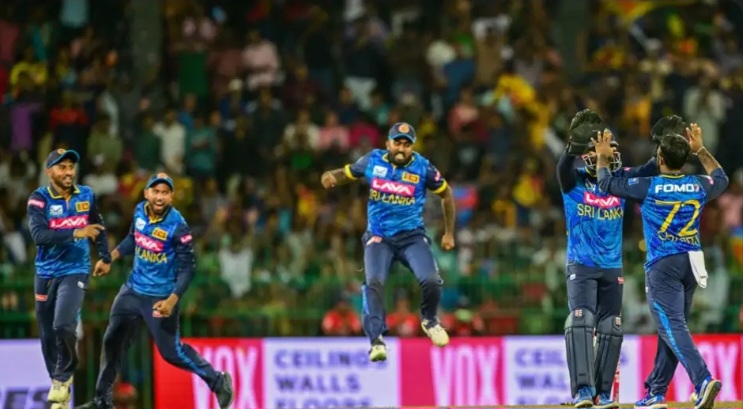
And they said the middle overs in an ODI are dull. India and Sri Lanka are playing a series where all of the action is contained in the exact period where the 50-over format tends to be dull. And that’s largely because they have been playing these games – the first of which ended in a tie – on pitches that challenge a batter, in ways that extend far beyond technique.
The Khettarama is asking people to play cricket thinking two overs ahead; to avoid the expansive drive just even if the ball seems to be tossed up, because that juicy half-volley is actually going to dip and turn to go past the middle of the bat and take the edge through to slip.
Restraint is the very thing that India have spent the better part of two years beating out of themselves, but now it is the very thing that stands between them and a bit of a black mark on a very proud record. They have lost only five out of 22 bilateral ODI series. They have won the last 10 rubbers against Sri Lanka – a streak that will come to an end regardless of the result on today – and that is tribute to the way this Sri Lanka side has performed even though it is missing several first-teamers. They are certainly shading the middle-overs battle, averaging 24.7 and losing only 10 wickets to India’s 17.8 and 14 wickets.
Throughout the series, the aggression of Rohit Sharma at the top of the order has made Sri Lankan fans wax nostalgic about the days when their line-up was littered with all-time greats too. In the same way perhaps, India fans might be looking at Dunith Wellalage, all of 21 years old, shepherding Sri Lanka through back-to-back collapses like someone who used to do it for them. He is one of two men in this series to strike at better than a run a ball and the other one has been playing this format for almost as long as he has been alive.
Whether India win and level the series or Sri Lanka win and claim it 2-0, these three games are likely to be an important learning curve for both teams and that is a check in the box next to why bilateral ODI cricket is still worth it (just, does it have to be eight hours long?).
Virat Kohli has only one fifty in his last 15 innings for India across formats. But here’s the thing. He doesn’t look out of form. And this is ODI cricket as well. He could probably write five different books about it – and star in their movie adaptations – and still not be done explaining how well he knows it. So a big score is probably on the horizon, and even if it isn’t, he isn’t the sort to be fussed about his numbers, not as long as he feels good in training and doesn’t have to force himself to be involved. That’s when there will be cause for worry.
Avishka Fernando is the best of both worlds. He can finesse the ball to the boundary, or if the mood strikes him, inflict that same ball to a whole lot worse. He puts attacking shots together like the rest of us put two and two together. It’s just that natural to him. Except sometimes he might get carried away, which is why 26 of his 40 innings have ended at or before the 30-run mark and 17 of those innings have been single-digits. He’ll be pushing himself to justify the talent he has and take his place as one of Sri Lanka’s mainstays
Sri Lanka hit a sweet combination packing their side with spinners for the last game, which helped them drag India down from 97 for 0 to 147 for 6.
Sri Lanka (probable): Pathum Nissanka, Avishka Fernando, Kusal Mendis (wk), Sadeera Samarawickrama, Charith Asalanka (capt), Janith Liyanage, Dunith Wellalage, Kamindu Mendis, Jeffrey Vandersay, Akila Dananjaya, Asitha Fernando
India might weigh up the pros and cons of Shivam Dube and Riyan Parag. Dube is a proven spin-hitter, which is sure to come in handy, but Parag offers them a bowling option that is better suited to the conditions. Or if they’re feeling really funky, they might drop a quick bowler to bring in Parag and hand Dube the new ball.
India (probable): Rohit Sharma (capt), Shubman Gill, Virat Kohli, Shreyas Iyer, KL Rahul (wk), Shivam Dube/Riyan Parag, Axar Patel, Washington Sundar, Kuldeep Yadav, Mohammed Siraj, Arshdeep Singh
(Cricinfo)


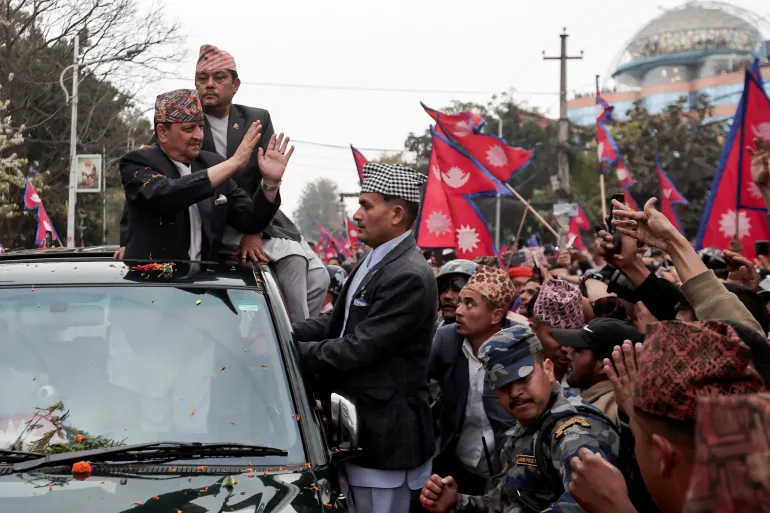
Large crowds have greeted Nepal’s former king in the capital, Kathmandu, calling for the reinstatement of his abolished monarchy amid dissatisfaction over the state of the country.
An estimated 10,000 supporters of Gyanendra Shah on Sunday gathered near the main entrance to Kathmandu’s Tribhuvan International Airport as he arrived from a trip to western Nepal.
“Vacate the royal palace for the king. Come back king, save the country. Long live our beloved king. We want monarchy,” the crowds chanted.
Passengers were forced to walk to and from the airport, with hundreds of riot police blocking the peaceful demonstrators from entering the premises.

Gyanendra, 77, was crowned in 2001 after his elder brother Birendra Bir Bikram Shah and his family were killed in a mass murder that wiped out most of the royal family.
He ruled as the constitutional head of state without executive or political powers until 2005, when he seized absolute power, saying he was acting to defeat anti-monarchy Maoist rebels. The king disbanded the government and parliament, jailed politicians and journalists and cut off communications, declaring a state of emergency and using the army to rule the country.
The moves triggered huge street protests, forcing Gyanendra in 2006 to hand power to a multi-party government. That government signed a peace deal with the Maoists, ending a decade-long civil war that caused thousands of deaths.
In 2008, Gyanendra stepped down from the throne after parliament voted to abolish Nepal’s 240-year-old Hindu monarchy, transforming the country into a secular republic.
But since then, Nepal has had 13 governments, and many in the country have grown frustrated with the republic. They say it has failed to bring about political stability and blame it for a struggling economy and widespread corruption.
Rally participants said they were hoping for a change in the political system to stop the country from further deteriorating.
“We are here to give the king our full support and to rally behind him all the way to reinstating him in the royal throne,” Thir Bahadur Bhandari, 72, told The Associated Press news agency.
Among the thousands was 50-year-old carpenter Kulraj Shrestha, who had taken part in the 2006 protests against the king but has changed his mind and now supports the monarchy.
“The worst thing that is happening to the country is massive corruption and all politicians in power are not doing anything for the country,” Shrestha told AP. “I was in the protests that took away monarchy hoping it would help the country, but I was mistaken and the nation has further plunged so I have changed my mind.”
Gyanendra has not commented on the calls for the return of monarchy. Despite the growing support, Gyanendra has slim chances of returning to power.
Political analyst Lok Raj Baral told the AFP news agency that he did not see any possibility of the monarchy being restored because the institution had been “a source of instability”.
“For some disgruntled groups, it has become a retreat due to incompetence of politicians who have grown increasingly self-centred. This frustration has manifested in such gatherings and demonstrations,” he said.

[Aljazeera]

RCB’s loss to UP Warriorz on Saturday night may have smothered the passage into the playoffs for both MI and GG, but there’s still an extra edge to this contest as the top spot is still not booked.
Giants have to win to entertain thoughts of finishing at No. 1. Mumbai have a game in hand and can get there even if they lose on today, but it would then mean a three-way tie should they beat RCB. They would want to avoid this logjam, having been in a similar position last year and then going down to RCB in the Eliminator.
GG are on a bull run, having won more games (three) over the past week than they did all of last season. But there’s one thing they haven’t done yet: beat MI, who have a 5-0 record against them in the tournament’s short history. If that wasn’t pressure enough, they now face the challenge of playing Harmanpreet Kaur’s MI in Mumbai, at the Brabourne Stadium, where they are yet to lose a single game.
They have been the most explosive side in the middle-overs, courtesy Ash Gardner and new (old) signing Deandra Dottin. But MI have the best economy (6.6 runs an over) and average (17.9) in this phase. This battle will form the crux of the contest.
The return to form of Harleen Deol, instrumental in GG’s stunning chase of 178 the other night against Delhi Capitals, bodes well. Kashvee Gautam’s all-round prowess and Beth Mooney’s unshackling at the top make them look more dangerous.
MI look equally strong but have changed their batting combinations because of Yastika Bhatia’s prolonged lean run. In their previous game, Amelia Kerr was promoted to open with Hayley Mathews. It remains to be seen if this will be their plan at the back end too. If it is, it could mean a bigger batting responsibility for S Sajana and Amanjot Kaur in the middle order.
Dayalan Hemalatha’s poor run at the top of the order may force a change for GG. Simran Shaikh, who plays for Mumbai in domestic cricket, could get a look-in to inject some lower-order firepower. Mumbai have no reason to tinker with their XI.
Gujarat Giants (probable): Beth Mooney (wk), Phoebe Lichfield, Harleen Deol, Ash Gardner (capt), Deandra Dottin, Simran Shaikh, Kashvee Gautam, Bharti Fulmali, Tanuja Kanwar, Meghna Singh, Priya Mishra
Mumbai Indians (probable): Hayley Matthews, Amelia Kerr, Nat Sciver-Brunt, Harmanpreet Kaur (capt), Amanjot Kaur, Yastika Bhatia (wk), G Kamalini, S Sajana, Sanskriti Gupta, Shabnim Ismail, Parunika Sisodia
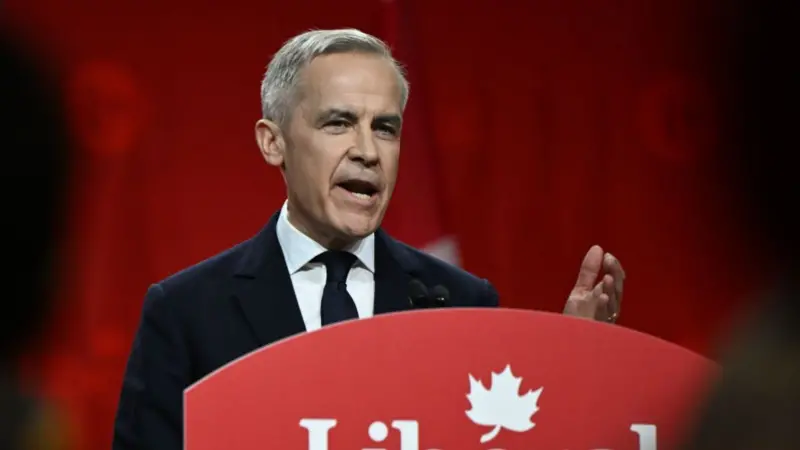
Mark Carney was decisively elected the Liberal Party’s new leader, making him the successor to Justin Trudeau as Canada’s next prime minister.
Carney obtained more than 85% of the votes, beating his closest rival, former Deputy Prime Minister Chrystia Freeland, by a landslide.
[BBC]


IGP in hiding seeks to thwart arrest as manhunt intensifies

NPP govt. urged to explain its defence policy

Authorities working on alternative to moonshine


-

 News3 days ago
Private tuition, etc., for O/L students suspended until the end of exam
-
 Sports6 days ago
Thomians drop wicket taking coloursman for promising young batsman
-
 Features4 days ago
Shyam Selvadurai and his exploration of Yasodhara’s story
-

 Editorial5 days ago
Cooking oil frauds
-

 Features6 days ago
Life, happiness, and the value of existence
-
 News3 days ago
Teachers’ union calls for action against late-night WhatsApp homework
-
 Sports5 days ago
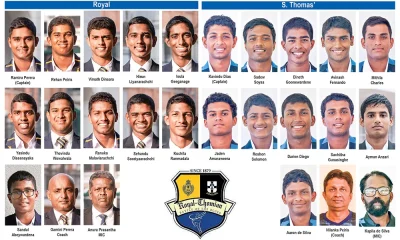
Royal favourites at the 146th Battle of the Blues
-
 Latest News3 days ago
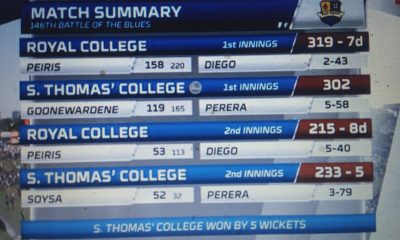
S. Thomas’ beat Royal by five wickets in the 146th Battle of the Blues