
News
HRW demands moratorium on PTA


While Palestine is systematically reduced to dust with its hapless people using American bombs, the Human Rights Watch (HRW) in New York has demanded Sri Lanka to impose a full moratorium on the Prevention of Terrorism Act that helped to crush the LTTE terror network here and work to repeal it. The demand was made by HRW yesterday (18) in a statement that accused Sri Lanka of politically motivated detentions, surveillance and threats.
The following is the text of statement: “Sri Lankan authorities continue to use the notorious Prevention of Terrorism Act (PTA) to target perceived opponents and minority communities without credible evidence to support the allegations despite repeated pledges to end the practice, Human Rights Watch said today. While some victims have suffered years of arbitrary detention and torture, others are persecuted even after the case against them is dropped.
The law, widely known as the PTA, has provisions allowing for extended administrative detention, limited judicial oversight, and inadequate protections against torture. In a 2022 speech to the United Nations Human Rights Council, the then foreign minister pledged a moratorium on its use, but under President Ranil Wickremesinghe, detentions under the PTA have continued. Such is the chilling effect of the law that in September 2023 the International Monetary Fund found that “broad application of counter-terrorism rules” restricts civil society scrutiny of official corruption.
“Sri Lanka’s extensive domestic security apparatus routinely uses baseless accusations of terrorism to target innocent people, silencing critics and stigmatizing minority communities,” said Meenakshi Ganguly, deputy Asia director at Human Rights Watch. “Previous international pressure has led to modest improvements, and Sri Lanka’s foreign partners should renew their call to repeal of the Prevention of Terrorism Act.”
Following government promises to repeal the PTA since 2015, draft legislation to replace it, known as the Anti-Terrorism Bill (ATB), was published in March 2023. While the new bill contains some improvements, it includes provisions that could facilitate abuse.
Since it first came into force in 1979, the PTA has primarily been used to target members of the Tamil minority during a separatist war led by the Liberation Tigers of Tamil Eelam (LTTE), which was defeated in 2009. While many long-term PTA prisoners have been released in recent years, in part due to international pressure by the European Union and others, at least eight who were first detained between 1996 and 2011 remain in prison.
In November 2023, police in the eastern town of Batticaloa arrested nine people under the law for commemorating the war dead. They were released on bail a month later, but one of those detained told Human Rights Watch that he remains under intense surveillance and his family has lost its income because of the case.
A former LTTE child soldier said that she was arrested under the PTA in 2019 and held for three years. Because she was a minor at the end of the war, she had been placed in the care of the Red Cross instead of being sent to government “rehabilitation” with adult combatants. She believes that the ongoing surveillance and harassment is because security agencies regard her as “unrehabilitated.” She said: “I am afraid. I don’t know who is watching me.”
Human Rights Watch also interviewed a man who was among several arrested under the PTA in 2019 after receiving financial support from the Tamil diaspora, which the Sri Lankan authorities sometimes construe as “terrorist financing.” “We don’t know why we were arrested,” he said. “The PTA allows them to keep us without any reason.” He faced abuse in prison, including threats at gunpoint by a government minister. Following his release three years later, he still faces intense police harassment. “My freedom of movement is restricted. People are afraid to give me a job.”
Following the 2019 Easter Sunday attacks, when Islamist suicide bombers targeted churches and hotels, killing over 260 people, the authorities detained at least 125 Muslims in the eastern town of Kattankudy under the PTA. Little or no evidence was produced against most of them, a lawyer familiar with the situation told Human Rights Watch. Most spent between one and three years in detention and were then either discharged altogether or released on bail. Twenty-four are facing trial in a proceeding that is expected to continue for years.
Former detainees from this group told Human Rights Watch that they had experienced torture and ill treatment in custody, and that the police had made extortion demands on their families for their release.
Following their release due to lack of evidence, they said they had received frequent threatening home visits or phone calls and are under surveillance by security agencies. They have been unable to access banking services, obtain passports, or operate their businesses. “They can’t go abroad for work,” said an activist who works with the community. “They can’t live freely in peace with their families.” In many cases, children have been forced by hardship to drop out of school.
A man who had been held under the PTA for about a year, then discharged, said that while there is a tradition of charitable giving in the Muslim community, security officials warn others not to help affected families, and people are afraid to do so for fear that they may be accused of supporting terrorism.
Numerous human rights defenders in the Northern and Eastern provinces said that members of police and intelligence agencies routinely warn that they will be accused of terrorism because of their work. “If we talk of Tamil rights, they use the PTA to silence us, saying we are working to reorganise the LTTE,” said an activist in the Northern Province.
Another rights activist, who works on several PTA cases, said in May 2024, “Just yesterday a [police] CID person called me and said, ‘Where are you? What are you doing?’ They oppress us because they want to stop the information we can provide from reaching the international community.”
Like the PTA, the draft law to replace it appears designed to give the president, police, and military broad powers to detain people without evidence, to make vaguely defined forms of speech a criminal offense, and to arbitrarily ban gatherings and organisations without meaningful judicial oversight.
It would expand the definition of terrorism to include crimes such as property damage, and restrict rights to freedom of assembly and speech. It would give the police and military sweeping powers to stop, question, search, and arrest anyone without a warrant, and allow the attorney general to “impose” “voluntary” custodial “rehabilitation” on a person who has not been convicted of any crime.
Recommendations
The government should impose a full moratorium on the PTA and work to repeal it.
The authorities should draft rights respecting counterterrorism legislation in consultation with experts and civil society.
Foreign partners including the United States, EU, and UK should insist that Sri Lanka abides by commitments to repeal the law.
The UN Human Rights Council should renew the mandates of resolution 46/1 for reporting and investigating human rights violations in Sri Lanka.
“For many Sri Lankans, baseless allegations of terrorism and sweeping powers provided by the PTA remain the most frightening and unaccountable method of repression,” Ganguly said. “Foreign governments seeking to support improved governance and respect for human rights should prioritize action to end the Sri Lankan government’s misuse of counterterrorism powers.”

News
Sun directly overhead Galle, Angulugaha, Imaduwa, Telijjawila, Yatiyana and Tangalle about 12.08 noon today (07)


The sun is going to be directly over the latitudes of Sri Lanka from 28th of August to 07th of September due to its apparent southward relative motion.
The nearest places of Sri Lanka over which the sun is overhead today (07) are Galle, Angulugaha, Imaduwa, Telijjawila, Yatiyana and Tangalle about 12.08 noon.
By Norman Palihawadane
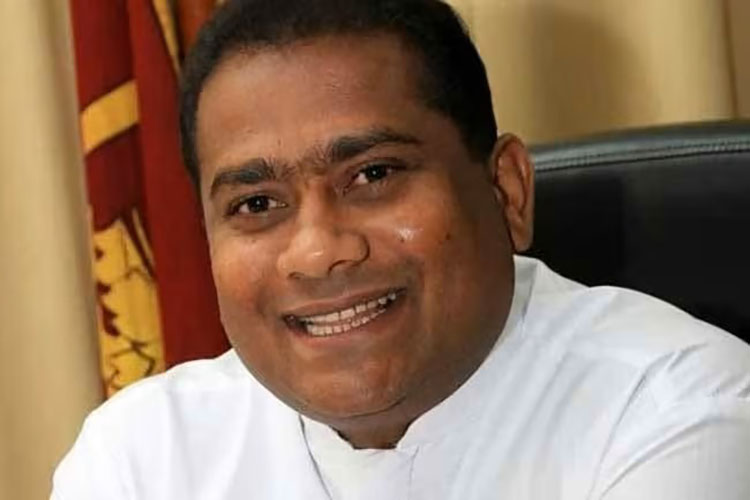
The CID recently found that former SLPP Deputy Minister Premalal Jayasekara, better known as ‘Choka Malli’, had left for Thailand when the Supreme Court imposed an overseas travel ban on him last Friday.
The CID discovered that Jayasekara had left Sri Lanka on August 31, while authorities were taking steps to enforce the travel restriction imposed by the Supreme Court. The Department has subsequently informed the Attorney General’s Department of the development.
The Supreme Court last Friday ordered Jayasekara, and two other men, to appear before court on October 21, and imposed a ban on their overseas travel.
The orders were made as the Supreme Court considered an appeal challenging the acquittal of the three men in connection with the 2015 murder of Shantha Dodangoda, also known as D.G. Sunil Perera.
The appeal was filed by Dodangoda’s wife against a decision of the Court of Appeal to acquit and release Jayasekara and the two other accused, who had previously been convicted and sentenced to death by the Ratnapura High Court.
Dodangoda was killed in a shooting in Kahawatta town, in the early hours of January 5, 2015, while a group of people were putting up decorations for an election rally in support of then common Opposition presidential candidate Maithripala Sirisena.
Two others, Karunadasa Weerasinghe and Mohamed Ilfan, were seriously injured in the shooting.
Following the incident, the Ratnapura High Court convicted Jayasekara, former Chairman of the Kahawatta Pradeshiya Sabha Wajira Darshana de Silva, and former Sabaragamuwa Provincial Council member Nilanta Jayakody, sentencing all three to death.
The Court of Appeal subsequently acquitted the three men and ordered their release.
The victim’s wife later challenged the acquittal before the Supreme Court.
The appeal was taken up before a Supreme Court bench, comprising Justice Preethi Padman Surasena and Justices Achala Wengappuli and Gihan Kulatunga.
During the proceedings, Deputy Solicitor General Janaka Bandara requested that the court impose overseas travel restrictions on Jayasekara and the other respondents.
The Supreme Court subsequently ordered all three to appear before the court on October 21 and imposed travel bans on them.
President’s Counsel Nalin Ladduwahetty, President’s Counsel U.R. de Silva and President’s Counsel Anuja Premaratne appeared for the respondents. President’s Counsel Saliya Peiris represented the aggrieved party.
Police sources said that the discovery that Jayasekara had already left for Thailand, on August 31, has raised concerns over the timing and enforcement of the travel ban.
Sources said that the CID had notified the Attorney General’s Department and was taking further action in relation to the development.
By Pradeep Prasanna Samarakoon
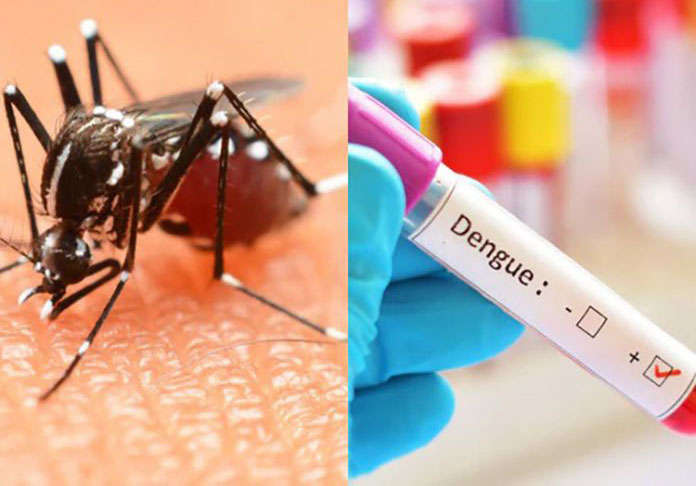
The number of deaths from dengue fever in Sri Lanka has risen to 73 this year, with 96,228 cases reported across the country so far, according to the Dengue Control Unit.
The latest figures indicate that dengue continues to pose a significant public health concern, with 737 new cases recorded during the first four days of September alone.
Dengue infections peaked in July, when 29,964 cases were reported, according to the latest data. June recorded the second-highest monthly total, with 21,533 cases, while 10,155 cases were reported in August.
Earlier in the year, 8,590 cases were recorded in May and 7,866 cases in January.The Western Province remains the worst-affected area, accounting for more than half of all dengue cases reported nationwide. A total of 50,851 cases have been recorded in the province, representing 52.84% of the country’s total.
The Southern Province has recorded 13,950 cases, followed by the Central Province with 8,818 cases and Sabaragamuwa Province with 7,925 cases.

Sun directly overhead Galle, Angulugaha, Imaduwa, Telijjawila, Yatiyana and Tangalle about 12.08 noon today (07)

Showers above 50 mm are likely at some places in the Uva and Eastern provinces.

Harshitha’s composed knock seals Sri Lanka’s semi-final berth

‘Choka Malli’ slips out of country before travel ban

Dengue death toll rises to 73

Ranil accuses govt. of undermining democracy

‘Dates have the highest sugar content to fight Coronavirus’

Sunday Island 27 December – Headlines

#SundayIsland 17th December – Headlines

Sunday Island – 28th March

Sunday Island Headlines – 21 March

Sunday Island – 21st February – Headlines
-

 News5 days ago
Denied of promotion to SC despite vacancies, justice Gurusinghe retires
-

 Latest News5 days ago
Grade 5 scholarship exam results released
-

 News5 days ago
22A: SC urged to suspend hearing, appoint full bench
-

 Midweek Review6 days ago
The local and global dynamics of Sri Lanka’s 22nd Amendment
-
 News3 days ago
Namal remanded until Sept. 18 over Airbus deal investigation
-
 News5 days ago
Govt. seeks NATO assistance
-

 Latest News2 days ago
Tharanga creates history with Diamond League crown in Brussels
-

 News6 days ago
40 professional organisations and TU oppose proposed 22A