
Features
Rights of Nature vis-à-vis Human Rights to Nature:Earth Jurisprudence and Eco-centric Property Law (Wild Law)


by Professor Emeritus Nimal Gunatilleke,
University of Peradeniya
Jurisprudence, as a layman like myself would understand, refers to the knowledge of the law – the norms and rules that govern our lives. In legal parlance, it is defined as the branch of philosophy concerned with the law and the principles that guide the judiciary to make the decisions it does.
Earth Jurisprudence
Earth Jurisprudence is an emerging branch of legal philosophy that critiques law from an Earth-centred perspective and proposes new approaches to law, economics, and governance. It perceives human beings only as a part of the wider Earth Community and was developed as a response to the present environmental crisis. Earth Jurisprudence has drawn its knowledge base from different disciplines of studies, like basic sciences, earth science, and Common Law jurisprudence.
In a sense, Earth Jurisprudence represents an all-embracing ecological theory of law. It was first proposed in 2001 by the cultural historian and poet Thomas Berry, who is considered the ‘father of Earth Jurisprudence’. He held the view that ‘we must understand that our own well-being can be achieved only through the well-being of the entire natural world around us’. Thomas Berry proposed that society’s laws should derive from the laws of nature (Great Laws), explaining that ‘the universe is a communion of subjects, not a collection of objects to be owned and used or misused’.
The rationale of Earth Jurisprudence is rooted in the philosophy of “Deep Ecology” in which all living beings have a moral and ethical claim, regardless of their utility value to humanity. For most of human history, human societies across our planet have seen life from an Earth-centred, rather than a human-centred, perspective. This is evident among indigenous and traditional communities who continue to derive their ethics, customary laws, and governance systems from the laws of Mother Earth or Natural Laws.
It is becoming patently clear that the prevailing human laws should be consistent with, and therefore, need to be realigned with the laws of Mother Earth if we are to live in harmony on our home planet well within its planetary boundaries. The starting point is the recognition that the laws of the Earth are primary. They govern life on the planet and human laws should be derived from these.
This is clear for Indigenous peoples whose languages, customary laws, and governance systems are rooted in the understanding that nature regulates the order of living processes in which humans are inextricably embedded. Thus, to maintain health and well-being for people and the planet, humans need to comply with the dynamics of nature. For indigenous peoples, the relationship between land and species is regarded as sacred and involves reciprocity.
Many of the world’s religious and spiritual traditions offer insights consistent with a nature’s rights worldview. Eastern religious and philosophical traditions embrace a holistic conception of spirituality that includes the Earth. It was Arahath Mahinda, the son of the Emperor of India, over two thousand years ago, who said to King Devanampiya Tissa, at Mihintale, “O’ great king, the beasts that roam the forest and birds that fly the skies have the same right to this land as you. The land belongs to the people and to all other living things, and you are not its owner but only its guardian.”
Earth Jurisprudence calls on us to recognize that Nature is and should be, the source of human laws, ethics, and how we govern ourselves. Earth Jurisprudence calls for us to transform the currently held human-centred (anthropocentric) perspectives to Earth-centred (eco-centric) perceptions of our place on Earth and how we should conduct our lives.
Earth Jurisprudence has been increasingly recognized and promoted worldwide by legal scholars, the United Nations, lawmakers, philosophers, ecological economists, and other experts as a foundation for Earth-centred governance, including laws and economic systems that protect the fundamental rights of nature. Therefore, the primary purpose of legal and governance systems must be to ensure that people protect and contribute to the integrity, health, and well-being of the entire Earth Community. Earth Jurisprudence can be described as a crucial alternative concept of law and governance for sustainability.
Rights of Nature
A novel approach to environmental protection has emerged in the law, known as the ‘Rights of Nature’ (RoN). The rights of nature, or Earth rights, is a legal and jurisprudential theory that describes inherent rights as associated with ecosystems and species, akin to the concept of fundamental human rights. The rights of nature concept challenges that the 20th-century laws are generally grounded in a flawed frame of nature as a ‘resource’ to be owned, exploited, and degraded.
In this currently dominant legal approach world over, only human beings and some of their artificial creations, including corporations, are ‘legal persons’ with rights, while other organisms and nature are objects to be owned or consumed.
In contrast, the RoN crusade considers all beings, organic and inorganic—including organisms, species, ecosystems, land, air, water, and Earth itself—to be members of a planetary community. These beings are in relationships of interdependence with one another. They all have rights, and responsibilities, in their own ways. RoN laws recog nize a variety of non-human entities as holders of rights, from animals to rivers to ecosystems to the entire planet. Different species or parts of nature, all will have different rights, i.e. rivers have river rights, birds have bird rights, and humans have human rights.
Rights of Nature proponents argue that nature is a legal subject possessing inherent rights-based laws grounded in the rights of nature that direct humanity to act appropriately and, in a way, consistent with modern, system-based science, which demonstrates that humans and the natural world are fundamentally interconnected. The Rights of Nature ideology takes the view that human beings need to stop treating nature as objects or property and accordingly change their perception of nature.
This school of thought is underpinned by two basic lines of reasoning. First, since the recognition of human rights is based in part on the philosophical belief that those rights emanate from humanity’s own existence, logically, so too do inherent rights of the natural world arise from the natural world’s own existence. A second and more pragmatic argument asserts that the survival of humans depends on healthy ecosystems, and so protection of nature’s rights, in turn, advances human rights and well-being.
From a rights of nature perspective, most environmental laws of the 20th century are based on an outmoded framework that considers nature to be composed of separate and independent parts, rather than components of a larger whole. The increasing importance of this new way of thinking, situated at the intersection of environmental law and ethics, is directly influenced by growing concerns about the climate and biodiversity crises that we experience today.
For example, the Gaia hypothesis, named after the ancient Greek goddess of Earth, posits that Earth and its biological systems behave as a huge single entity/organism. This entity has closely controlled self-regulatory negative feedback loops that keep the conditions on the planet within boundaries that are favorable to life. Therefore, the Rights of Nature recognizes that non-human elements should be treated as legal entities with the right to exist, thrive, regenerate, and evolve.
Like human rights, the Rights of Nature are inherent, inalienable rights that arise from the mere existence of the rights holder. This means that every being or aspect of nature (including people) must, at a minimum, have the right to exist, the right to occupy space, and the right to interact with other beings in a manner that allows them to fulfill their unique role in ecological and evolutionary processes.
Humans have co-evolved in relationship with other beings, and this community of life is the fountain of our well-being. Therefore, the primary purpose of legal and governance systems must be to ensure that people protect and contribute to the integrity, health, and well-being of the entire Earth Community.
This implies transforming nature from a legal object into a legal subject, possessing its own inherent rights, regardless of its use for humanity. It would then be an ecocentric paradigm shift in our legal system. This ecocentric discourse shows striking similarities with human rights law. The Rights of Nature is one legal tool, among others, through which this paradigm shift can be realized.
Recent recognition of the Rights of Nature within Western legal systems is an important stepping stone towards an ecocentric orientation. Until now, the legal approach towards nature has been too ‘anthropocentric’ and heavily focused on neoliberal sustainable development concepts. It means that nature is perceived from a human perspective and as an object of law (e.g., as property or a source of raw materials). At present, Nature is seen as something that has resources (‘natural resources’) that are meant to benefit human beings having a commodifiable and disposable value.
Legal systems around the world for well over centuries have treated land and nature as “property”. Something that is considered property confers upon the property owner the right to exploit it for profit and in turn, damage or destroy it. Thus, those who “own” wetlands, forestland, and other ecosystems and natural communities, are largely permitted to use them however they wish, even if that includes destroying the health and wellbeing of nature. Laws and contracts are written to protect the property rights of individuals, corporations, and other legal entities. As such, environmental protection laws legalize environmental harm by regulating how much pollution or destruction of nature can occur within the law. Under such law, nature and all of its non-human elements have no legal standing.
Rather than treating nature as property under the current law, the rights of nature acknowledge that nature in all its life forms has the right to exist, persist, maintain, and regenerate its vital cycles.
Nature as Rights-bearing Entities and Wild Laws
A fundamental principle of Earth Jurisprudence is that all components of Nature, including plants, animals, rivers, and even entire species or ecosystems, should be granted legal personality in the same way as human beings. Earth Jurisprudence or Wild law is an emerging theory of law and governance that seeks to evolve law that recognizes our relationship with the broader Earth community.
Earth Jurisprudence aspires to promote a greater respect for nature and all living things on Earth, aiming to intertwine Earth’s natural law with the body of law that governs humanity. Wild Laws are human-made laws that are aligned with the laws of Nature and promote the flourishing of life, diversity, and healthy relationships, instead of legitimizing human exploitation of Earth. Wild laws reflect the understanding that, in order for humans to flourish, we must recognize and respect the rights of every member of the Earth community. Since, human beings are deeply interconnected with and dependent on nature, the ecocentric concept is proposed as a standard and measure for human law.
When we talk about the Rights of Nature, it means our recognition that ecosystems and natural communities are not merely property that can be owned. Rather, they are entities that have an independent and inalienable right to exist and flourish. Laws recognizing the Rights of Nature change the status of ecosystems and natural communities to being recognized as rights-bearing entities, right holders, or Juristic persons. They have rights and obligations according to the law of the land, just like any natural person. Any harm to these bodies would be treated in the same way as if inflicted on human beings.
The recognition of the Rights of Nature has been established through several constitutional, legislative, and judicial enactments in several countries that aim to provide legal protection for non-human entities and natural systems. People, communities, and governments have the authority to defend those rights on behalf of ecosystems and natural communities.
(To be continued)


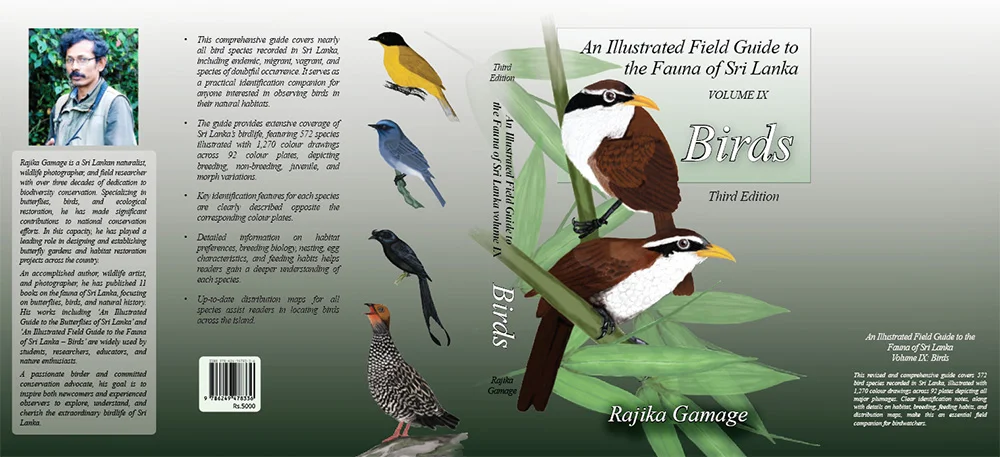
Sri Lanka wakes each morning to wings.
From the liquid whistle of a magpie robin in a garden hedge to the distant circling silhouette of an eagle above a forest canopy, birds define the rhythm of the island’s days.
Their colours ignite the imagination; their calls stir memory; their presence offers reassurance that nature still breathes alongside humanity. For conservation biologist Rajika Gamage, these winged lives are more than fleeting beauty—they are a lifelong calling.
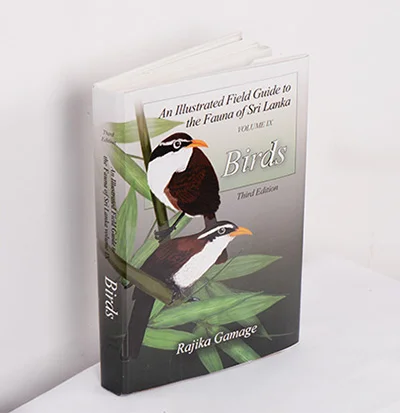
Now, after years of patient observation, artistic collaboration, and scientific dedication, Gamage’s latest book, An Illustrated Field Guide to the Fauna of Sri Lanka – Birds, is set to reach readers when it hits the market on March 6.
The new edition promises to become one of the most comprehensive and visually rich bird guides ever produced for Sri Lanka.
Speaking to The Island, Gamage reflected on the inspiration behind his work and the enduring fascination birds hold for people across the country.
“Birds are an incredibly diverse group,” he said. “Their bright colours, distinct songs and calls, and showy displays contribute to their uniqueness, which is appreciated by all bird-loving individuals.”
Birds, he explained, occupy a special place in the natural world because they are among the most visible forms of wildlife. Unlike elusive mammals or secretive reptiles, birds share human spaces openly.
“Birds are widely distributed in all parts of the globe in large enough populations, making them the most common wildlife around human habitations,” Gamage said. “This offers a unique opportunity for observing and monitoring their diverse plumage and behaviours for conservation and recreational purposes.”
This accessibility has made birdwatching one of the most popular forms of wildlife observation in Sri Lanka, attracting everyone from seasoned scientists to curious schoolchildren.
A remarkable island of avian diversity
Despite its small size, Sri Lanka possesses extraordinary bird diversity.
According to Gamage, the country’s geographic position, varied climate, and diverse habitats—from coastal wetlands and rainforests to montane cloud forests and dry-zone scrublands—have created ideal conditions for birdlife.
“Sri Lanka is home to a rich diversity of birdlife, with a total of 522 bird species recorded in the country,” he said. “These species are spread across 23 orders, 89 families, and 267 genera.”
Of these, 478 species have been fully confirmed. Among them, 209 are breeding residents, meaning they live and reproduce on the island throughout the year.
Even more remarkable is Sri Lanka’s high level of endemism.
“Thirty-five of these breeding resident species are endemic to Sri Lanka,” Gamage noted. “They are confined entirely to the island, making them globally significant.”
These endemic species—from forest-dwelling flycatchers to vividly coloured barbets—represent evolutionary lineages shaped by Sri Lanka’s long geological isolation and ecological uniqueness.
In addition to resident birds, Sri Lanka also serves as a seasonal refuge for migratory species traveling thousands of kilometres.
“There are regular migrants that arrive annually, as well as irregular migrants that visit less predictably,” Gamage explained. “Vagrants, birds that appear outside their typical migratory routes, have also been spotted occasionally.”
Such unexpected visitors often generate excitement among birdwatchers and scientists alike, providing valuable insights into migration patterns and environmental change.
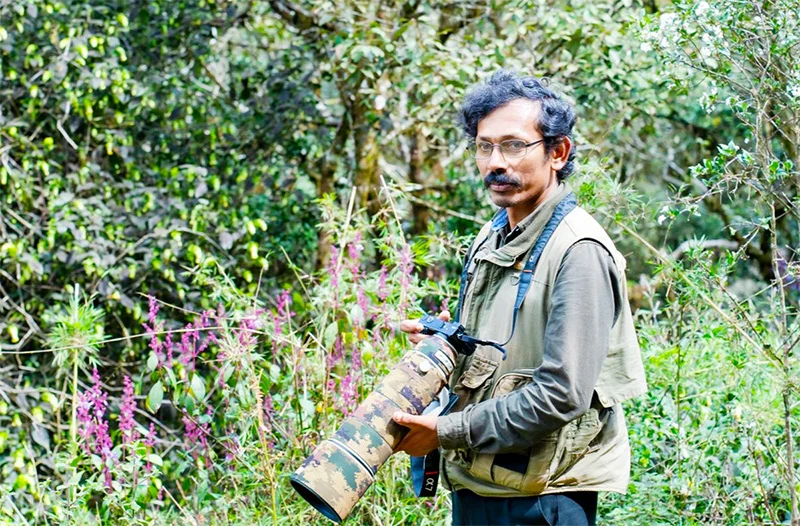
Rajika Gamage
A guide born from passion and necessity
The new field guide represents the culmination of years of research and builds upon Gamage’s earlier publication, which was released in 2017.
“The stimulus for this bird guide was due to the success of my first book,” he said. “This new edition aims to facilitate identification and provide an idea of what to look for in observed habitats or regions.”
The book is designed not merely as a scientific reference but as an accessible companion for anyone interested in birds. Its structure reflects this dual purpose.
“The first section is dedicated to the introduction, geography, and life history of Sri Lankan birds,” Gamage explained. “The second section is the main body of the guide, which illustrates 532 species of birds.”
Each illustration has been carefully crafted in colour to capture the distinctive plumage of each species.
“All illustrations are designed to show each bird’s significant and distinct plumage,” he said. “Where possible, the breeding, non-breeding, and juvenile plumages are provided.”
This attention to detail is especially important because many birds change appearance as they mature.
“Some groups, especially gulls, display many plumages between juveniles and adults,” Gamage noted. “Many take several years to develop full adult plumage and pass through semi-adult stages.”
By illustrating these stages, the guide helps birdwatchers avoid misidentification and deepen their understanding of avian development.
New discoveries and evolving science
One of the most exciting aspects of the new edition is its inclusion of newly recorded species and updated scientific classifications.
“Changes in the bird list of Sri Lanka, especially newly added endemic birds such as the Sri Lankan Shama, Sri Lanka Lesser Flameback, and Greater Flameback, are now included,” Gamage said.
Scientific names and classifications are not static; they evolve as researchers learn more about genetic relationships and species boundaries. The guide reflects these changes, ensuring it remains scientifically current.
The book also incorporates conservation status information based on the latest National Red Data Report and global assessments.
“The conservation status of Sri Lankan birds, as listed in the 2022 National Red Data Report and the global Red Data Report, are included,” Gamage said.
This information is vital for conservation planning and public awareness, highlighting which species face the greatest risk of extinction.
The guide also documents rare and accidental visitors, including species such as the Blue-and-white Flycatcher, Rufous-tailed Rock-thrush, and European Honey-buzzard.
“These represent accidental visitors and newly recorded vagrants,” Gamage said. “Altogether, the first edition offers some 25 additional species, all illustrated.”
Art and science in harmony
Unlike many field guides that rely heavily on photographs, Gamage’s book emphasises detailed illustrations. This choice reflects the unique advantages of scientific art.
Illustrations can emphasise diagnostic features, eliminate distracting backgrounds, and present birds in standardised poses, making identification easier.
“The principal birds on each page are painted to a standard scale,” Gamage explained. “Flight and behavioural sketches are shown at smaller scales.”
The guide also includes descriptions of habitats, distribution, nesting behaviour, and alternative names in English, Sinhala, and Tamil.
“The majority of birds have more than one English, Sinhala, and Tamil name,” he said. “All of these are included.”
This multilingual approach reflects Sri Lanka’s cultural diversity and ensures the guide is accessible to a wider audience.
A tool for conservation and connection
Beyond its scientific value, Gamage believes the book serves a deeper purpose: strengthening the bond between people and nature.
By helping readers identify birds and understand their lives, the guide fosters appreciation and responsibility.
“This field guide aims to facilitate identification and provide a general introduction to birds,” he said.
In an era of rapid environmental change, such knowledge is essential. Habitat loss, climate change, and human activity continue to threaten bird populations worldwide, including in Sri Lanka.
Yet birds also offer hope.
Their presence in gardens, wetlands, and forests reminds people of nature’s resilience—and their own role in protecting it.
Gamage hopes the guide will inspire both seasoned ornithologists and beginners alike.
“All these changes will make An Illustrated Field Guide to the Fauna of Sri Lanka – Birds one of the most comprehensive and accurate guides available within Sri Lanka,” he said.
A lifelong devotion takes flight
For Rajika Gamage, birds are not merely subjects of study—they are companions in a lifelong journey of discovery.
Each call heard at dawn, each silhouette glimpsed against the sky, each feathered visitor from distant lands reinforces the wonder that first drew him to ornithology.
With the release of his new book on March 6, that wonder will now be shared more widely than ever before.
In its pages, readers will find not only identification keys and scientific facts, but also something more enduring—the story of an island, told through wings, colour, and song.
By Ifham Nizam
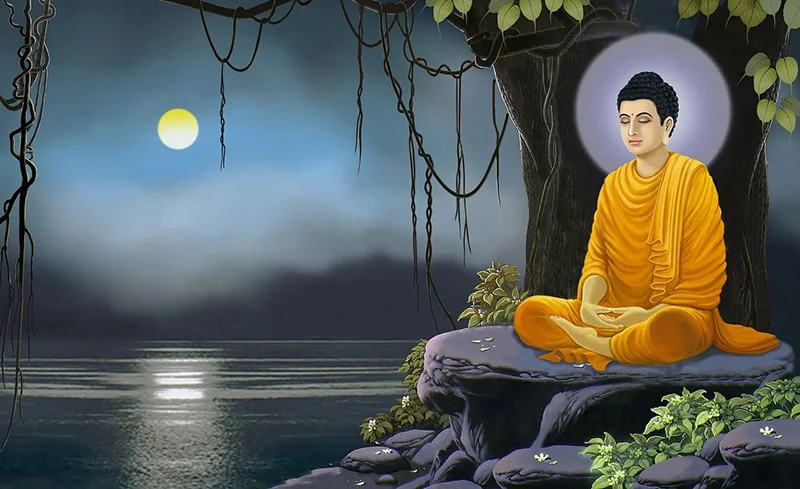
Buddhism, one of the world’s oldest religions, offers profound insights into the nature of existence and the ways we can alleviate our suffering. As one of the world’s most profound spiritual traditions, it offers a transformative solution: the art of letting go. Unlike simply losing interest in things or giving up, letting go in Buddhism is about liberation, releasing ourselves from the chain of attachment that prevents us from experiencing true peace and happiness. Letting go is a profound philosophical concept in Buddhism, deeply intertwined with an understanding of suffering, attachment, and the nature of reality. This philosophy encourages us to release our grip on desires, attachments, and on what we hold dear- whether relationships, material goods, or even their identities, ultimately leading to greater peace and enlightenment. Our tendency to cling tightly to the various aspects of life leads to a significant source of stress. We tend to grasp at things, perceiving them as solid and permanent, yet much of what we hold onto is transient and subject to change. This mistaken belief in permanence can trap us in cycles of worry, fear, and anxiety.
The challenge of letting go is especially evident during difficult periods in life. We may find ourselves ruminating over lost opportunities, failed relationships, and unmet expectations. Such thoughts can keep us ensnared in emotions like hurt, guilt, and shame, hindering our ability to move forward. By holding onto the past, we often prevent ourselves from embracing the present and future.
At the heart of Buddhist practice lies the concept of letting go, often encapsulated in the term “non-attachment.” Letting go is a crucial concept in both Buddhism and Christianity, emphasising the release of attachments that bind us and contribute to our suffering. At its core, letting go is about finding freedom from desires and acknowledging that both relationships and material possessions are fleeting and transient.
In Buddhism, letting go, or non-attachment, is fundamental for achieving inner peace. The First Noble Truth acknowledges that life is filled with suffering, often rooted in our cravings and attachment to things. The Second Noble Truth teaches that by letting go of this craving, we can transcend the cycles of life and attain enlightenment.
Spiritually, Buddhism emphasises the impermanence of all things (annica). We tend to cling to people, experiences, and even our identities, but everything is fleeting. Recogniing this helps us appreciate the present moment and fosters compassion. Instead of allowing attachments to cloud our relationships, letting go encourages us to engage with others without judgment or expectation, fostering deeper connections.
Philosophically, Buddhism challenges the notion of a permanent self (anatta) that is often the focus of human attachment. It teaches that our identity is not a fixed entity but a collection of experiences and perceptions in constant flux. Understanding this can help us see the futility of clinging to desires and identities, paving the way for a liberated state of being built on wisdom cultivated through meditation and mindfulness.
From a psychological standpoint, letting go can significantly improve our emotional health and well-being. Attachment often breeds fear, anxiety, and stress, while non-attachment promotes resilience and adaptability. When we embrace the idea of impermanence, we become more capable of handling life’s challenges without being overwhelmed. Mindfulness—being present and accepting our emotions without judgment—allows us to process difficult feelings constructively, making it easier to let go of what we cannot control.
Letting go is also an essential concept in Christianity, which emphasises surrender and trust in God. Biblical teachings encourage believers to let go of worries and anxieties, placing their faith in divine providence. For instance, verses like Matthew 6:34 remind individuals not to be anxious about tomorrow, but to focus on the present. By surrendering our burdens to God, we find peace and freedom from the weight of excessive attachment.
Moreover, both traditions highlight the importance of community. In Buddhism, the sangha, or community of practitioners, supports individuals on their journeys toward non-attachment. Similarly, the Christian community encourages believers to lean on one another for support, fostering a sense of belonging and shared faith that helps mitigate the loneliness that comes with attachment.
Ultimately, the concept of letting go serves as a powerful antidote to suffering in both Buddhism and Christianity. By embracing impermanence, cultivating wisdom, and practising mindfulness or faith, individuals can experience profound liberation. In our chaotic world, the principles of letting go offer a clear path toward inner peace, fulfilment, and deeper connections with ourselves, others, and the divine.
Buddhism explores the profound concept of letting go, providing valuable insights into the human experience and pathways to alleviating suffering. Rooted in one of the world’s oldest spiritual traditions, Buddhism presents letting go as a transformative practice, distinct from mere disengagement or giving up. Instead, it encompasses liberation from the chains of attachment that hinder us from experiencing genuine peace and happiness. Christianity too explore this profound concept in its teachings
At the core of Buddhist philosophy lies the idea of non-attachment, which encourages individuals to free themselves from desires and possessions, ultimately leading to tranquility and enlightenment. Letting go is intertwined with an understanding of suffering, attachment, and the transient nature of existence. This philosophy instructs us to relinquish our grip on what we hold dear—whether relationships, material goods, or even our identities—recognising that these are impermanent.
Buddhism’s First Noble Truth acknowledges that life inherently involves suffering, often stemming from our cravings and attachments. The Second Noble Truth reveals that overcoming this craving is key to transcending the cycles of life and achieving enlightenment. Emphasising the impermanence of all things, Buddhism invites us to appreciate the present moment and fosters compassion by helping us detach from fixed identities and experiences. This awareness enriches our relationships, allowing us to connect with others free from judgment or expectation.
Philosophically, Buddhism challenges the notion of a static self (anatta), asserting that our identity is not a fixed concept but rather a fluid collection of experiences. Recognising this notion helps highlight the futility of clinging to desires and identities, opening the door to a liberated existence founded on wisdom cultivated through meditation and mindfulness practices.
From a psychological perspective, the act of letting go can significantly enhance emotional health and well-being. Attachment often fuels fear, anxiety, and stress, while embracing non-attachment cultivates resilience and adaptability. By accepting impermanence, we equip ourselves to face life’s challenges with greater ease. Practicing mindfulness—being present and accepting emotions without judgment—further facilitates the process of releasing what is beyond our control.
In Christianity, the theme of letting go is also prominent, emphasizing surrender and trust in God. Scripture encourages believers to release their worries and anxieties by placing their faith in divine providence. For example, Matthew 6:34 advises individuals to focus on the present rather than fret over the future. By surrendering our burdens to God, we can experience relief from the weight of excessive attachment.
Both traditions underscore the significance of community in supporting the journey of letting go. In Buddhism, the sangha, or community of practitioners, encourages the pursuit of non-attachment. Likewise, Christian fellowship fosters belonging and shared faith, helping believers lean on one another for strength and mitigating the loneliness that can arise from attachment.
Ultimately, the concept of letting go serves as a powerful antidote to suffering in both Buddhism and Christianity. Embracing impermanence, nurturing wisdom, and practising mindfulness or trust can lead individuals toward profound liberation. In an increasingly chaotic world, the principles of letting go illuminate a pathway to inner peace, fulfilment, and deeper connections with ourselves, others, and the divine. By understanding and embodying this philosophy, we can navigate life’s complexities with grace and openness.////Buddhism delves into the profound concept of letting go, offering valuable insights into the human experience and pathways to alleviating suffering. As one of the world’s oldest spiritual traditions, Buddhism presents letting go as a transformative practice that goes beyond mere disengagement or resignation. It represents liberation from the chains of attachment that prevent us from experiencing true peace and happiness. Similarly, Christianity explores this profound concept in its teachings.
At the heart of Buddhist philosophy is the idea of non-attachment, which encourages individuals to free themselves from desires and possessions, ultimately leading to tranquility and enlightenment. Letting go is closely related to an understanding of suffering, attachment, and the impermanent nature of existence. This philosophy guides us to loosen our hold on what we cherish—be it relationships, material possessions, or even our own identities—recognizing that everything is transient. Through this understanding, we can cultivate a deeper sense of peace and fulfillment in our lives.
 BY Dr. Justice Chandradasa Nanayakkara

Rear Admiral Udaya Bandara, VSV, USP (retired)
This incident happened in 2006 when I was the Director Naval Operations, Special Forces and Maritime Surveillance under then Commander of the Navy Vice Admiral Wasantha Karannagoda. Udaya (fondly known as Bandi) was a trusted Naval Assistant (NA) to the Commander.
We were going through a very hard time fighting the LTTE Sea Tigers’ explosive-laden suicide boats that our Fast Attack Craft (s) and elite SBS’ Arrow Boats encountered in our littoral sea battles.
Brilliant Marine Engineer Commander (then) Chaminda Dissanayake, who was known for his “out of the box” thinking and superior technical skills on research and development, met me at my office at Naval Headquarters and showed me a blueprint of an explosive- laden remotely controlled small boat.
Udaya’s Naval Assistant’s office was next to mine, the Director Naval Operations office. Both places are very close to the Navy Commander’s office. I walked into Bandi’s office with Commander Dissa and showed this blueprint a brilliant idea. Being a Marine Engineer “par excellence”, Bandi immediately understood the great design. I urged him to brief the Commander of the Navy with Commander Dissa.
My burden was over! Bandi took over the project and within a few weeks we tested our first prototype “Explosive-laden Remotely Controlled arrow boat “at sea off Coral Cove in the Naval Base Trincomalee. It was a complete success.
This remotely controlled boats went out to sea with our SBS arrow boats fleet and had devastating effects against LTTE suicide boats and their small boats fleet. Thanks, Bandi, for your contribution. The present-day Admiral of the Fleet used to tell us during those days “you cannot buy a Navy – you have to build one”!
We built our own small boats squadrons at our boat yards in Welisara and Trincomalee to bring LTTE Sea Tigers. The Special Boats Squadron (SBS) and rapid action boats squadron (RABS) being so useful with remotely controlled explosive-laden arrow boats to win sea battles convincingly.
Bandi used to say, “Navy is a technical service and we should give ALL SRI LANKA NAVY OFFICERS FIRST A TECHNICAL DEGREE AT OUR ACADEMY (BTec degree).” That idea did not receive much attention here, but the Indian Navy—Bandi graduated as a Marine Engineer- at Indian Navy Engineering College SLNS Shivaji in Lonavala, Pune, India— understood this idea well over two decades ago. Indian Navy Commissioned their new Naval Academy at Ezhimala (in Kerala State) which is the largest Naval Academy in Asia (Campus covers area of 2,452 acres) starts its Naval officers training with a BTech degree, regardless of what branch of the navy one joined.
Bandi’s technical expertise was not limited to SLN. He was the pioneer of “Mini – Hydro Power projects” in Sri Lanka. When I was a young officer, he urged me to invest some money in one of these projects and advised me “Sir! as long as water flows through turbines, you will get money from the CEB, which is always short of electricity”. I regret that I did not heed Bandi’s advice.
When he worked under me when I was Commander Southern Naval Area, as my senior Technical Officer, I observed pencil marks on walls of his chalet and I inquired from him what they were. He said it was the result of his “pencil shooting training”, a drill Practical Pistol Firers do to improve their skills. He used to practice “draw and fire” drills and pencil shooting drills late into nights to be a good Practical Pistol firer in Sri Lanka Navy team. He didn’t stop at that. He represented Sri Lanka National Practical Pistol Firing team and won International Championships.
As the Officer in charge of Technical Training in the Navy, he worked as Training Commander to train Royal Oman Navy Engineering Artificers in Sri Lanka, especially on Fast Attack Craft Main Engine Overhauls. The Royal Oman Navy Commander was so impressed with the knowledge acquired by Artificers that he donated money for the construction of a four-storey accommodation building for Sri Lanka Navy Naval and Maritime Academy, Trincomalee now known as “Oman Building”. The credit for this project should go to Bandi.
Bandi’s wife was a senior Judge of Kegalle High Court, and she retired a few years ago. Their only child, a son studied at the British School, Colombo and followed in his mother’s footsteps became a lawyer. Bandi was so much attached to his family and very proud of his son’s accomplishments.
When Bandi was due to retire in 2016 as a Rear Admiral and Director General Training, after distinguished service of 34 years, and reaching retirement age of 55 years, I requested him to serve for some more years after mobilising him into our Naval Reserve Force. He had other plans. He wanted to take his mini-Hydro Power projects to East African countries.
His demise after a very brief illness at age of 64 years was a shock to his family and friends. His funeral was held on Feb. 27 with Full Military Honors befitting a Rear Admiral at his home town Aranayake.
Dear Bandi, the beautiful Sri Lanka Navy, Naval and Maritime Academy in Trincomalee, which was built with your efforts will serve for Sri Lanka Navy Officer Trainees and sailors for a very long time and remember you forever.
May dear Bandi attain the supreme bliss of Nirvana!

Naval and Maritime Academy, Trincomalee
By Admiral Ravindra C Wijegunaratne
WV, RWP and Bar, RSP, VSV, USP, NI (M) (Pakistan), ndc, psn, Bsc
(Hons) (War Studies) (Karachi) MPhil (Madras)
Former Navy Commander and Former Chief of Defence Staff
Former Chairman, Trincomalee Petroleum Terminals Ltd,
Former Managing Director Ceylon Petroleum Corporation,
Former High Commissioner to Pakistan
-

 Opinion4 days ago
Jamming and re-setting the world: What is the role of Donald Trump?
-

 Features4 days ago
An innocent bystander or a passive onlooker?
-

 Features6 days ago
Building on Sand: The Indian market trap
-

 Opinion6 days ago
Future must be won
-

 Features5 days ago
Ratmalana Airport: The Truth, The Whole Truth, And Nothing But The Truth
-

 Business6 days ago
Dialog partners with Xiaomi to introduce Redmi Note 15 5G Series in Sri Lanka
-

 Business5 days ago
IRCSL transforms Sri Lanka’s insurance industry with first-ever Centralized Insurance Data Repository
-

 Sports7 days ago
CEA halts development at Mandativu grounds until EIA completion