
Editorial
Thus spake the man on collapsing vine bridge


Friday 28th June, 2024
President Ranil Wickremesinghe was expected to make a special statement, during his address to the nation on Wednesday, announcing his presidential candidacy. There was no such statement, but he made it abundantly clear that he would enter the fray. He did so by asking the public some rhetorical questions, followed by a warning. Having outlined how he had helped bring about economic stability and raise the country from the depths of despair, he posed these queries: “Will you move forward with me, who comprehended the problem from its inception, offered practical solutions, and delivered results? Or, will you align with those grappling in the dark, still struggling to grasp the issues? Will you stay the course towards a brighter future for yourself and the nation? Or, will you opt for a different path?” Then came his warning, “We are all aware of the perils of veering off course or choosing the wrong path. Therefore, make the right decision. You have the full right and freedom to make that choice.” Pointing out that he had brought the country out of bankruptcy and economic turmoil in just two years although his party, the UNP, had only a single seat in Parliament, he indicated that he would be able to do much more for the nation if he was elected President with the UNP being voted into office.
President Wickremesinghe did not forget to take swipes at the other presidential hopefuls, Sajith Premadasa (SJB) and Anura Kumara Dissanayake (NPP). He said, “They traverse Sri Lanka seeking power, visiting schools and travelling the world in relentless pursuit of authority.” His reference was obviously to Premadasa, who is seen at schools, making political speeches, and Dissanayake, who has caught the travel bug. The President used Premadasa and Dissanayake as a foil in a bid to highlight his brand of patriotism and service to the nation. “I dedicate my days and nights to serving the country, addressing the needs of our people, and launching economic strengthening programmes. I engage globally to garner international support for our nation’s development.”
On listening to President Wickremesinghe, on Wednesday, one was reminded of Bertolt Brecht, not because of his references to characters and imagery in the Brechtian play, The Caucasian Chalk Circle, to drive his points home. Brecht’s poem, ‘A worker reads history’, came to mind when the President made claims such as ‘I have safely guided the child named Mother Sri Lanka through treacherous waters’. Brecht says in his poem, among other things: Who built the seven gates of Thebes? /The books are filled with names of kings. /Was it the kings who hauled the craggy blocks of stone? … Young Alexander conquered India. /He alone? /Caesar beat the Gauls. /Was there not even a cook in his army?
When the LTTE was defeated militarily in 2009, the UNP insisted that the credit for the war victory had to go to the then army Commander Gen. Sarath Fonseka, and not President Mahinda Rajapaksa, who, as the Commander-in-Chief and Minister of Defence, provided unwavering political leadership for the war; it together with its allies fielded Fonseka as a presidential candidate in 2010. But today it says the credit for what has so far been achieved on the economic front should go to its leader, President Wickremesinghe! After the defeat of the LTTE, the UNP argued that Mahinda should not be allowed to have himself re-elected by claiming that he had won the war, but the UNP now claims that President Wickremesinghe should be elected President because of the semblance of economic stability that has been achieved on his watch during the past two years. The UNP finds itself in a contradiction, a huge one at that. Duplicity is the thief of credibility.
The war-winning President Rajapaksa failed during his second term because his administration became a haven for crooks. It is not fair to deny President Wickremesinghe the credit for his political leadership for saving the economy; but for his bold decisions and decisive action, violent mobs would have plunged the country into anarchy by setting Parliament on fire in 2022, and making economic recovery well-nigh impossible. But we see the crooks who ruined the country during the UNP-led Yahapalana government and brought about the UNP’s downfall in 2020, crawling out of the woodwork. They include various racketeers who have defaulted on bank loans to the tune of billions of rupees, got involved in the Treasury bond scandals and sullied their reputations by cutting numerous corrupt deals and having their palms greased. If President Wickremesinghe is seen to be carrying these characters also across the dilapidated vine bridge, he will lose whatever popular support he has been able to rally by steering the economy through the present crisis. He may be able to prevail over his political enemies, but it is doubtful whether even the millions of deities who are believed to have made this country their home will be able to save him from his ‘friends’ under a cloud.


Tuesday 21st April, 2026
‘Mastermind’ has become a household term in this country since the Easter Sunday terror attacks (2019). The last seven years have seen several investigations, conducted by the police, committees and a presidential commission, into the carnage that shook the world, but there has been no general consensus on who actually masterminded the terror strikes. There are several schools of thought and various conspiracy theories about the terror attacks and the mastermind(s) behind them, and how long it will take to put the matter to rest is anybody’s guess.
The Easter Sunday carnage has caused Sri Lankans’ attitudes towards terrorism to undergo a sea change. Everyone has condemned the heinous crime unequivocally, without trotting out anything in extenuation of it. This, we reckon, is something positive.
Terrorism must be condemned and eradicated in all its forms and manifestations. It has no place in the civilised world, regardless of the various causes the perpetrators of it flaunt to justify their crimes and gain legitimacy. Terrorism is no means to an end; it is both the means and the end.
Unfortunately, while the LTTE and the JVP were going on killing sprees, opinion was divided on their terror campaigns and causes. The mastermind behind the LTTE’s terror attacks on civilians was obviously Prabhakaran, but some political and religious leaders and foreign diplomats had no qualms about meeting him and even posing for pictures with him, thereby allowing him to gain legitimacy. There are thousands of JVP members, including the current government leaders, who commemorate Rohana Wijeweera, who masterminded the JVP’s terror campaign. Prabhakaran is commemorated in a similar manner in the North and the East. Thankfully, no such public events are held in memory of Zahran Hashim, who led the National Thowheed Jamaath (NTJ), which carried out the Easter Sunday attacks, killing more than 275 people and injuring about 500 others.
Failure to prevent terror attacks despite the availability of actionable intelligence is also a criminal offence that must not go unpunished. Whoever masterminded the Easter Sunday bombings, lives could have been saved if the police, the then government and the intelligence agencies had acted swiftly upon being warned of impending attacks. Only a few of those who failed to prevent the carnage have faced legal action and been made to pay compensation to the victims. All recommendations made by the Presidential Commission that probed the Easter Sunday terror attacks must be implemented.
Curiously, prominent among those tasked with probing the Easter Sunday carnage afresh in a bid to trace the mastermind(s) behind it are two individuals who were at the helm of the CID in 2019, when it failed to prevent the terror attacks. They are retired SSP Shani Abeysekera and retired SDIG Ravi Seneviratne. They are currently serving as the Director of the CID and the Secretary to the Ministry of Public Security, respectively. Their political affiliations with the ruling NPP, as members of its Retired Police Collective, and the fact that the incumbent government brought them out of retirement and elevated them to their current positions for political reasons have compromised the integrity of the ongoing investigations into the Easter Sunday carnage.
Some of those seeking justice for the victims of the Easter Sunday terror attacks have demanded that Deputy Defence Minister Maj. Gen. (Retd.) Aruna Jayaskera resign forthwith, as he was the Security Forces Commander (East) at the time of the carnage, and some military intelligence officers facing investigations for their alleged links to the NTJ served under him. They insist that there is a conflict of interest on his part. Their argument is tenable, but it defies comprehension why they have not likewise called upon Abeysekera and Seneviratne to step down, thereby helping preserve the integrity of the investigations into the terror attacks.
Meanwhile, the masterminds behind some financial crimes have also not been identified. The Treasury bond scams (2015) were blamed squarely on the then Central Bank Governor Arjuna Mahendran although it is public knowledge that he acted at the behest of his political masters. Neither the Presidential Commission of Inquiry that probed the bond scams nor the COPE (Committee on Public Enterprises), headed by JVP MP Sunil Handunnetti, revealed the mastermind. The JVP was honeymooning with the UNP at the time. The mastermind behind the coal procurement scam, which has caused staggering losses to the Treasury and sent the power tariffs up, must also be identified and brought to justice. It is not possible that Kumara Jayakody, blamed for the scam, acted of his own volition.

Monday 20th April, 2026
Several salespersons have been arrested and remanded for forcibly cutting the hair of a woman as punishment for shoplifting. But neither Kumara Jayakody nor Udayanga Hemapala has been arrested over a mega coal procurement scandal that has caused massive losses, amounting to billions of rupees, to the state coffers. The government had them resign as the Minister of Energy and the Secretary to the Ministry of Energy, respectively, as a face-saving exercise.
The fraudulent procurement of low-grade coal causes a generation shortfall of more than 150MW at the Norochcholai power plant, according to power and energy experts, and hundreds of thousands of litres of diesel have to be burnt daily to prevent power cuts. The government has increased fuel prices and electricity tariffs to make up for the losses caused by the coal scam. Some former ministers have been sentenced to prison for misusing fuel allowances and state-owned vehicles, but Jayakody is seen in the exalted company of the JVP/NPP leaders. So much for the change the NPP promised.
When a Grade Six English language module was found to contain a link to an adult website, a few months ago, the CID was swiftly called in to conduct a probe. But no such action was taken against those involved in the coal procurement scam. This alone is proof that the government has qualms about protecting the corrupt.
A wag might say the JVP/NPP government has got blundering down to a fine art. It blundered by defending Minister Jayakody and defeating a no-confidence motion against him over the coal procurement racket. It has made an even bigger blunder by trying to muddy the water in a bid to open an escape route for Jayakody; President Anura Kumara Dissanayake has appointed a special presidential commission of inquiry to investigate coal procurement since 2009. (Thankfully, the probe does not cover the steam-locomotive era, when coal was imported!) Desperate to cover up the coal scam and shield Jayakody, the JVP-NPP government has resorted to a familiar ruse used by pickpockets who, while fleeing, shout ‘Pickpocket, Pickpocket’, to mislead onlookers into believing that they are also good guys pursuing thieves. But it is highly unlikely that the government will be able to fool all the people all the time.
The coal scandal and the despicable efforts of the JVP/NPP leaders to save Jayakody have revealed a political leadership with a faulty moral compass. Ironically, the JVP-led NPP is popularly known as Malimawa (compass), which is its symbol. The self-righteous JVP/NPP leaders have made a mockery of their commitment to upholding accountability and the rule of law. They find themselves in the same predicament as the proverbial cat that fouled a rock and scrambled to cover it up.
Not even President Ranil Wickremesinghe, vilified by the JVP/NPP for shielding the corrupt, stooped so low as to appoint a presidential commission of inquiry to probe all procurement issues since the establishment of the Health Ministry when the then Health Minister Keheliya Rambukwella and some senior officials were exposed for fraudulent procurement of substandard medicines. True, the SLPP-UNP government unashamedly defended Rambukwella and defeated a no-faith motion against him, but he and his bureaucratic lackeys were arrested, remanded and prosecuted. Shame on the JVP/NPP leaders who are making a determined effort to save Jayakody and other cronies involved in the coal scandal.
President Maithripala Sirisena appointed a special presidential commission of inquiry to investigate the Treasury bond scams (2015). He did not order that all bond issues under previous governments be investigated. President Dissanayake has resorted to smoke and mirrors. His government is now without any moral right to be critical of the corrupt.
While the Treasury bond probe was on, former Central Bank Governor Arjuna Mahendran, went overseas. He never returned. The JVP-NPP government has not cared to have him extradited despite its platform rhetoric. There is no guarantee that Jayakody and others involved in the coal scam will not emulate Mahendran. Hence the need for them to be arrested and prevented from leaving the country.

The Grim Reaper apparently rides shotgun in many vehicles on Sri Lankan roads, where chaos is the norm, with drivers and riders moving like bats out of hell and jaywalkers darting across arterial roads and busy streets in a suicidal rush. The situation takes a turn for the worse during festive seasons, when road users behave as if they had a death wish. This may explain why as many as 44 lives were lost in 42 fatal accidents across the country between April 10 to 15 this year.
Road fatalities average seven to eight a day in Sri Lanka, and an increase therein is to be expected during a festive season. We can only hope that there won’t be any more tragedies like the ones we witnessed at Kotmale and on the Ella-Wellawaya road, in 2025.
Last year, as many as 2,562 lives were lost in fatal road accidents, according to media reports. On 7 April 2026, Director of the Police Traffic Control and Road Safety Division, SSP Manoj Ranagala, told the media that 676 fatal road accidents had occurred by the beginning of the current month. When the aforesaid 42 accidents and 44 fatalities are added to the official statistics, the picture becomes even gloomier.
Road fatalities jolt the police, politicians, road safety officials and the public into expressing concern and finding ways and means of reducing them only when they receive intense media attention. They sadly end up as mere statistics afterwards, making one wonder whether Sri Lankans have become desensitised to the lives lost in road accidents or adopted a fatalistic attitude towards them. There is no other way one can explain the absence of a well-coordinated national effort to make roads safe. Not that the authorities tasked with ensuring road safety have not done anything all these years. They have worked hard, and their good work is to be appreciated, but why they have failed to achieve their goal needs to be examined, and remedial action taken to save lives.
Road fatality statistics are shocking, but they shed light on only a part of the grave problem, which is far more complex than it looks. A World Bank report, Delivering Road Safety in Sri Lanka; Leadership Priorities and Initiatives to 2030, which we have discussed in a previous editorial comment, has revealed that ‘the high road crash fatality and injury rates on Sri Lanka’s roads undermine the economic growth and progress made over the past decade on reducing poverty and boosting prosperity’. The report says the annual crash deaths per capita in Sri Lanka are twice the average rate in high-income countries and five times that of the best performing countries in the world! Sri Lanka reportedly has the worst road fatality rate among its immediate neighbours in the South Asia region.
Last year, Director of the Colombo National Hospital Orthopaedic Services Department, Dr. Indika Jagoda, rightly called road fatalities a ‘silent epidemic’, which had not received the same public attention as dengue and other such diseases. Road accidents also exert a severe strain on the state-run hospitals, besides claiming lives, and their economic and social costs are enormous. In some cases, the victims of fatal road accidents happen to be the breadwinners of their families. Most of the road accident victims are young, as President of the Sri Lanka Medical Association Dr. Manilka Sumanatilleke has revealed at a recent media briefing.
SSP Ranagala has identified the primary causes of road accidents as poor road conditions, reckless driving, excessive speeding, and driving under the influence of alcohol. He is spot on. There are other causative factors, such as distractions, fatigue, inclement weather conditions, tailgating, improper lane changes, inexperience of drivers, poor eyesight of drivers, unroadworthy vehicles, lack of proper road markings, and time pressure. Much is being spoken these days about poor-quality coal consignments, and rightly so, but not much attention has been paid to the sham training courses conducted by the so-called driving schools and corruption in the process of issuing driving licences. These corrupt practices are also responsible for road accidents.
It is clear from the sheer number of lives lost in traffic accidents and the increasing vulnerability of all road users that we have been only scratching the surface of the problem of road fatalities all these years. The time has come for us to make an all-out effort to make roads safe for everyone.

INS NIREEKSHAK makes port call in Colombo

Advisory for Severe Lightning issued to the Western, Sabaragamuwa, Central, North-western, North-central, Southern, Uva provinces, and Mannar, Vavuniya, Ampara, Batticaloa districts

US, Iran exchange threats as fragile ceasefire set to expire

Six Foreign Envoys Present Credentials to President Dissanayake

Tilak ends Mumbai Indian’s losing streak with 45-ball century

Showers or thundershowers will occur at most places of the island after 1.00 pm

‘Dates have the highest sugar content to fight Coronavirus’

Sunday Island 27 December – Headlines

#SundayIsland 17th December – Headlines

Sunday Island – 28th March

Sunday Island Headlines – 21 March

Sunday Island – 21st February – Headlines
-

 Business4 days ago
Harnessing nature’s wisdom: Experts highlight “Resist–Align” path to resilience
-

 News6 days ago
PNS TAIMUR & ASLAT set sail from Colombo
-

 News4 days ago
Gratiaen Trust announces longlist for the 33rd Annual Gratiaen Prize
-

 News3 days ago
From Nuwara Eliya to Dubai: Isha Holdings markets Agri products abroad
-
 News4 days ago
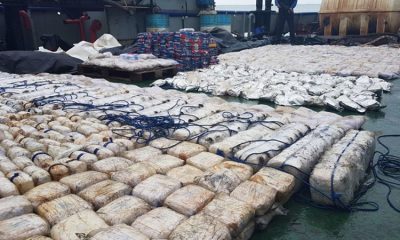
Heroin haul transported on 50-million-rupee contract
-

 Opinion2 days ago
Shutting roof top solar panels – a crime
-
 Latest News5 days ago
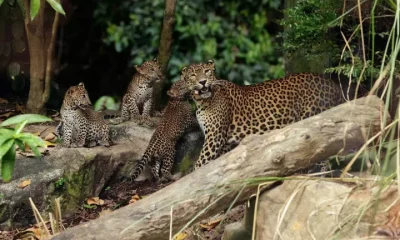
Singapore Zoo’s first Sri Lankan leopard cubs make their public debut
-
 News15 hours ago
Rs 13 bn NDB fraud: Int’l forensic audit ordered