
Features
Unbundling the CEB II: The Politics of Reforming State Owned Enterprises

byRajan Philips
It is an old truism in policy analysis that there is nothing purely ‘technical’ in policy decisions. Every policy decision has a political aspect to it. Technical analysis is necessary and useful to identify and evaluate feasible options, including the costs and benefits of each option. In the end, what is selected or rejected is a political matter based on political preferences. There is nothing wrong with that. What gets to be objectionable is when decisions are made to reach outcomes to benefit some or deny someone else based on inappropriate considerations.
I say all this because the Minister of Power and Energy Kanchana Wijesekara alluded to forces within the CEB and “a political group that supported this section from outside” and accused them of having “obstructed reforms at the CEB” that he has been trying to get underway since becoming the subject Minister. While the Minister did not identify the ‘political group’ opposing reforms, he could not have been unaware of the criticisms that the Electricity (Reform) Act that he has now got passed also has the backing of political groups both within and outside the CEB, and for reasons that may not be entirely technical or altruistic.
It is a common suspicion that the electricity reform measures are intended to benefit vested interests not only within but also outside the country. There is already a public interest litigation in the Supreme Court filed by the Catholic Bishop of Mannar challenging the 250 MW Mannar Wind Power Project seemingly sequestered by India’s Adani Group. There are suspicions that the Adani Group could be a singular beneficiary of the objectives of the new Electricity Act to promote competition in renewable energy generation and transmission “in accordance with Sri Lanka’s national policies and its international obligations.”
These fears were reflected in the petitions challenging the Electricity Bill before the Supreme Court and in the Amendments suggested by the Court for constitutional compliance. The government accepted the Court’s Amendment, but in his intervention in the debate the Minister did not bother to explain why the government drafted Bill the way it did and to be chided by the Supreme Court.
The Minister has had a previous run in with the Court over the Petroleum Products Bill in 2022. The Court’s strictures were similar then to what they have been now. The only lesson the Minister and the government may seem to have learnt is that after being pulled up by the Court for trying to keep the Petroleum Products law outside the purview of the Bribery Act, they did not try to insulate the Electricity Act from the applications of the Bribery Act. For what it is worth, the Bribery Act would apply to the implementation of both laws.
Reform Antecedents
The restructuring of the supply and distribution of petroleum products that the Petroleum Products Act was created to provide for is a more straightforward and far less complex business than reforming the electricity sector. As I have written earlier, the lining up of firms from India, China, Australia and the US to import and distribute petroleum products at their allocated outlets is a stroke of Ranil Wickremesinghe’s genius. That is Sri Lanka’s ‘Quad’ version of blending foreign trade and relationships. The young Minister is entitled to whatever credit that is due on the petroleum front, but matters are not going to be that simple in the electricity sector.
The Minister also tried to answer criticisms that the new legislation was being rushed through by the government. He reminded parliament that the first Cabinet Paper on the new law had been presented in July 2022. But no one reminded him that the roots of the current initiative go back all the to 2002, when Minister Wijesekara would have been still a student somewhere, and that they were revived again in 2015 when the Minister first entered parliament.
There is an ADB Report from 2015 that provides a summary assessment of power sector reforms in Sri Lanka. The Report acknowledges inputs received from Sri Lankan professionals and government agencies including the CEB. Historically, the provision of electricity was the responsibility of a government department until the establishment of the Ceylon Electricity Board in 1969. The ADB Report notes that “The CEB carried out all the functions of electricity generation, transmission, distribution and retail supply, with no competition at any level.” So, introducing competition is taken to be the essence of reform. And two phases of reform are identified, starting from 1983.
The first phase of reform included the creation of state-owned distribution company, Lanka Electricity Company (LECO), that took over electricity distribution from local government agencies in designated areas. Beginning in 1996, the private sector was allowed in power as independent power producers (IPPs) and small power producers (SPPs). And in 2000, the CEB unbundled itself internally into six divisions, responsible for generation, transmission, and four of them for distribution. This was primarily an administrative restructuring without legal or financial separation of the unbundled divisions.
Significant legislative changes came two years later, in 2002, with the enactments of the Electricity Reform Act and the Public Utilities Commission Act. The latter enabled the setting up of the Public Utilities Commission of Sri Lanka (PUCSL) as the national power sector regulator, but the implementation of the Electricity Reform Act was stymied for want of a Ministerial order that in turn was prevented by political opposition including opposition by CEB staffers. A change in government in 2004, a new President in 2005, and a new Electricity Act in 2009 were all needed for the second reform phase.
The ADB Report notes that the Electricity Act No. 20 of 2009, finally enabled the regulatory functioning of the PUCSL, but it reduced the scope of CEB restructuring that had been envisaged by its predecessor, the Electricity Reform Act No. 28 of 2002. The upshot was a partial unbundling of the CEB, virtually continuing the internal unbundling of 2000, with the addition of a license requirement for each of the unbundled division.
In place of financially and legally independent entities in the power sector, the CEB continues its unreformed existence by holding six separate licenses – one for generation, one for transmission, and four for distribution. The PUCSL itself though created for the grand purpose of regulating all or most public utilities, would seem to have been reduced to a license issuer in the power sector. In addition to the six CEB licenses, the PUCSL would seem to have issued 311 other licenses, the vast majority of them for mini hydro power plants and others for solar and wind power generators. This is according to the spreadsheet listing the license holders that is available on the Commission’s website.
The purpose of the new (2024) legislation would seem to restore the objectives of the 2002 legislation that were slashed by the 2009 legislation. That is to break up the CEB not only administratively, but also legally and financially. The ADB Report acknowledges that for all the financial woes of the CEB, there have been remarkable achievements in the technical assets of the electricity sector – especially in hydropower generation and the transmission grid that spans the whole country, in improving national energy supply efficiency, as well as in fulfilling the social purpose of enabling accessibility to virtually every household. It would be a challenge to ensure that these gains are not lost or made unaffordable as a result of wholesale unbundling.
The main shortcomings are two-fold: absence of cost-based pricing for electricity; and the lack of capital for future investment. The CEB’s financial stress is rightly blamed on the approach of successive governments to dictate pricing for electricity that will not cover the cost of producing it. The irony is that this government or any government will not try to stop dictating insufficient pricing, but would rather hand over a whole sector to the market. What connects the two horns of this apparent dilemma is of course corruption. And no amount of institutional unbundling would provide the magical cure unless government corruption itself is bundled out.
Ranil and Reform
If there is one political name that consistently appears in all the efforts to reform the energy sector, it is the name of Ranil Wickremesinghe. It was his co-habitation government in 2002 that started the legislative process for reforming and regulating the electricity sector. Those efforts came to a sudden halt when President Chandrika Kumaratunga dismissed the government ‘headed’ by Ranil Wickremesinghe as Prime Minister. The second set of attempts came as part of Mr. Wickremesinghe’s second co-habilitation government, this time with Maithripala Sirisena as President. Nothing much came out of that government that was all talk and no result.
The ten year period (2005-2015) in between was the first Rajapaksa decade, and as I wrote in my commentary on the 2022 Petroleum law, Mahinda Rajapaksa as President continued from where Ranil Wickremesinghe had left as Prime Minister. Mutatis mutandis, you might say. Here we are again, more than 20 years later, having Ranil Wickremesinghe rescuing the Rajapaksas from the disaster that their second decade was turning into, and spearheading reforms not only in the electricity and the overall energy sectors, but also in all the so called State Owned Enterprises.
As with the electricity sector and the CEB in particular, the SOEs are universally blamed for being a big part of the current economic crisis, and their reform has become a fundamental condition for getting IMF help to overcome the crisis. There are reportedly 400 SOEs, a majority of them likely created after the great liberalization of the economy. The state of affairs is such that full information is not readily available for the vast majority of them. Even an officially accurate list of all the SOEs is apparently not available.
The government, rather the President true to form, has initiated a virtual Shah process to reform the SOEs based on a shortlist that includes a rather long list of 80 or 130 (depending on who is reporting) of SOEs. That too in this election year with hardly four months to go before the presidential election. If these actions of Ranil Wickremesinghe were to be presented to a shareholders meeting, he would be declared Chairman of the Board for life. But political elections are a different world and Mr. Wickremesinghe seems determined to fight one last time for his political life.


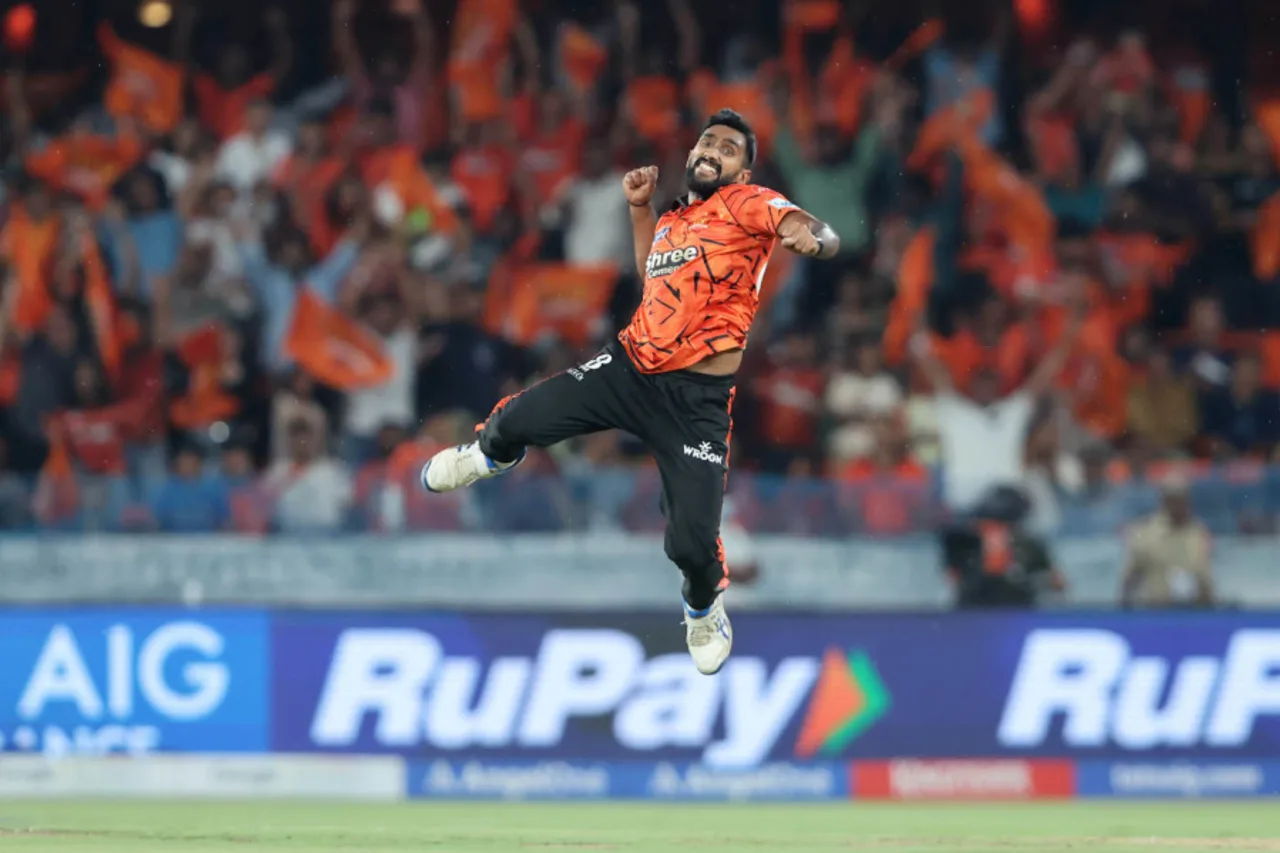
Life keeps throwing hurdles in his way, but Eshan Malinga keeps vaulting over them. Take his February from hell. For several months, Malinga had been building up to his first ever World Cup, a dream for pretty much anyone who ever picks up a cricket ball. But a week before that World Cup, Malinga dislocated his non bowling shoulder while bowling, which the team’s medical staff have since described as a freak injury they had never seen before.
“I was devastated,” Malinga says. “On top of it being my first World Cup, it was also at home and I didn’t know when I would get that chance again. There were a few days there where I did absolutely nothing.”
And yet in mid-May, here he is grinning from atop a pile of 16 IPL wickets, having developed a serious reputation as a reverse-swing operator. Sunrisers Hyderabad’s explosive batters may have seized the spotlight in this frenetic IPL, but on the bowling front, no SRH bowler has neared Malinga’s wicket haul, which is fifth best in the season overall. In a year in which they have not had Pat Cummins for seven of their 11 matches, it is Malinga who has held down the fort, particularly in the second half of the innings.
But trading difficulty for success is just what Malinga does. What he has long been doing. Go back eight years and Malinga had never played a hard-ball cricket match. On top of which his home district of Ratnapura – at the base of Sri Lanka’s central hills – was better known for its gems and waterfalls than cricket, never having produced a men’s international. Malinga, additionally, was not even actively trying to be a cricketer. He had moved from his first school in a village called Opanayake to Ratnapura’s Sivali Central College due to strong academic results, and found, almost by accident, that his new school had a hard-ball cricket team.
But what Malinga knew at that point was that he could bowl fast. That much had been obvious growing up in Opanayaka, where despite his mother’s occasional misgivings, Malinga was highly sought after by the organisers of the village softball team (Sri Lanka has a thriving village-level softball cricket ecosystem). And as had been the case with the better-known Malinga, this one was also aware he possessed a killer yorker – a prized asset in every form of cricket, with any kind of ball.
If he’d been on track to be a softball legend, Malinga found his horizons began to expand at a spectacular rate the moment he got a hard ball in his hands. First, his yorker and his pace began to reap big wickets in the Division Three schools competition for Sivali Central, whose coach had immediately hoisted him into the team upon seeing Malinga bowl at practice one day. Then in mid-2019, about a year into playing hard-ball cricket, came the day he still reflects on as the one that changed his cricketing life. Having missed a fast-bowling competition in Ratnapura because he had been playing for his school that day, Malinga travelled to the hill town of Badulla to bowl in the competition there, and clocked 127kph on the gun, which was enough to win him first place.
This was when he first became a blip, however faint and distant, on Sri Lanka Cricket’s radar. Visions of a cricketing life began to appear as wisps of opportunity began to materialise. The next few years, Covid-riddled though they were, became a crash course into the sport for Malinga. There were coaching camps in Colombo in which the best of the rural talent was trained up and funnelled into a programme at the next level up. There were trials for first-class teams, and eventually a fledgling domestic career.
“I don’t know how many times I came to Colombo from Ratnapura during those times,” he laughs now. “It was a lot! I would leave home at about 3am, and the bus journey to Colombo took about three-and-a-half hours. Then I’d train or play the match, and the bus back home always took longer because of traffic. So every day, I was on the road for more than seven hours.”
The Malinga who made these exhausting daily commutes was, as far as the Sri Lankan cricket system was concerned, a bowler of decent rather than blinding promise. His pace had propelled him to the top of the regional pool, but at the first-class level he was still adapting his yorker and slower ball (another weapon he had developed in his softball days). If he needed another gear, Malinga found it – again almost by accident – sometime in 2022.
“I was playing an Under-23 three-day tournament, and I remember that being the first time I really started reverse-swinging the ball,” he says. “Coaches had anyway told me that with my action and my pace, it should be possible. But it started almost automatically. It’s not something I had to learn.
“But it wasn’t that easy, because it was a long process to learn how to control it. To get reverse swing, you have to release the ball at a different point than a straight ball, because you want it to still hit the stumps when it is swinging. So I scuffed up a lot of balls and trained hard to get that line right.”
And so, the Malinga that emerged at the end of 2022 had sharp enough pace, an excellent yorker, a developing slower ball, mountains of homespun tenacity, and had also discovered that he can naturally reverse-swing the ball earlier in an innings than most. You could have seen where this is going, right? All the ingredients of an ace white-ball bowler were there. And Malinga was already a master of turning wisps of opportunities into tangible advances. Over the next three years, he’d land a spot in the national fast-bowling academy, use that as a trampoline to impress in an Emerging Teams three-dayer against Bangladesh, and from there bounce into a stint at the MRF Pace Academy in 2024, before on the franchise side of things parlaying a trial at Rajasthan Royals at Kumar Sangakkara’s invitation into a decent run at the SA20 for Paarl Royals.
Having leapt up to the fringes of the Sri Lanka team over the past 18 months, Malinga has at this IPL now seized another unusual chance. The square at SRH’s home stadium is among the barest and most abrasive in the league, and Malinga’s reverse swing has prospered upon it. Of his 16 wickets this season, 11 have come at home. In the second half of the innings, when the ball is most likely to reverse, Malinga’s economy rate is 8.37 at a venue where runs have been scored at 9.38 in that period this season.
Malinga had put in a robust 2025 season for SRH as well, so there is a body of work emerging there. Perhaps this is why this year, SRH’s bowling plans have tended to follow the contours of Malinga’s own game.
“After six overs the ball gets damaged here, so we needed to make use of that. When I bowled at practice, the ball reversed, so I think a plan emerged where we were going to use the scuffed up ball and take advantage of that.
“In the first powerplay the ball comes on to the bat nicely here. After that we try to get the advantage of having an older ball. We’ve got bowlers who bowl 140kph-plus, and we have Pat Cummins, who also reverses the ball. So we make sure to look after the ball in a way that will give us reverse.”
At 25, eight years into a serious cricket career, Malinga sees himself as a work in progress. He wants to work on his powerplay bowling. His variations, he thinks, still need some work. He’d like to play Tests, where his reverse swing could really stretch its legs. And, oh, he is still waiting to play that first World Cup.
Even here, his keen nose for opportunity leads him. He points out through the course of our conversation that where the three previous World Cups had been played with a new ball at either end being used right through the innings, the next World Cup, in 2027, will feature rules that seem at least partially designed to enhance reverse swing, an older ball more suited to the craft now available towards the end of the innings.
He isn’t even a sure-fire pick in Sri Lanka’s ODI XI just yet, so this is just a flicker of an opportunity for now. But having made the journey from the village of Opanayaka to the most raucous cricketing showpiece on the planet, Malinga knows just what to do with those.
[Cricinfo]
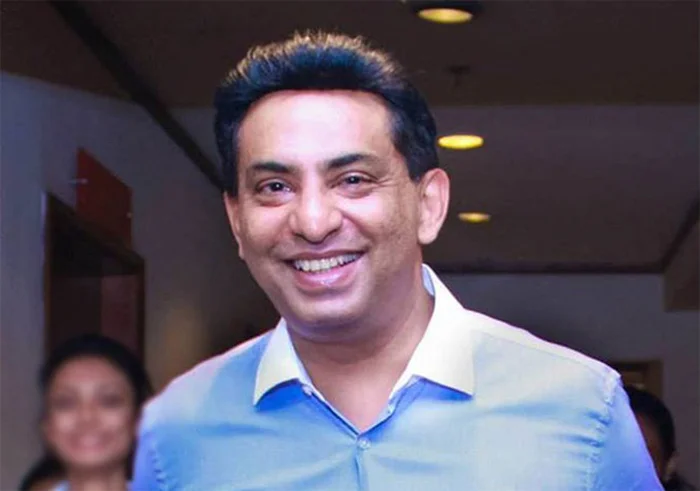
The death of the most important suspect in the Sri Lankan Airlines Airbus deal has drawn intense public speculation. Kapila Chandrasena the former CEO of the heavily loss-making national airline was found dead under circumstances that the police are still investigating.
He had recently been arrested by the Commission to Investigate Allegations of Bribery or Corruption in connection with the controversial Airbus aircraft purchase agreement signed in 2013. Police investigations are continuing into the cause of death and whether or not he committed suicide. The unresolved death brings to light the high stakes involved in accountability efforts of this nature.
The uncertainty surrounding Chandrasena’s death has revived public memories of other mysterious deaths linked to corruption investigations and public scandals. Among them is the death of Rajeewa Jayaweera, a former SriLankan Airlines executive and outspoken critic of the Airbus transaction. He was following in the tradition of his father, the late foreign service officer and public servant Stanley Jayaweera who mentored the younger generation in good governance practices and formed the group “Avadhi Lanka” along with icons such as Prof Siri Hettige. Rajeewa had written a series of articles exposing irregularities in the deal before he was found dead near Independence Square in Colombo in 2020. The CCTV cameras in that high security area were turned off. Questions raised at that time whether or not he had committed suicide were not satisfactorily resolved.
The controversy about the cause of Chandrasena’s death is diverting attention away from the massive damage done to the country by the SriLankan Airlines deal itself. The value of the aircraft agreement was close to the size of the International Monetary Fund bailout package that Sri Lanka desperately needed by 2023 in order to stabilise the economy after bankruptcy. Sri Lanka’s IMF Extended Fund Facility amounted to about USD 3 billion spread over four years. The comparison shows the scale of the losses and liabilities that irresponsible and corrupt decisions have imposed on the country and which must never happen again.
Wider Pattern
The corruption linked to the Airbus transaction came fully into the open only because of investigations conducted outside Sri Lanka. In 2020 Airbus agreed to pay record penalties of more than EUR 3.6 billion to authorities in Britain, France and the United States to settle global corruption investigations. Sri Lanka was identified as one of the countries where bribes had allegedly been paid in order to secure contracts. The Airbus deal involved the purchase of six A330 aircraft and four A350 aircraft valued at approximately USD 2.3 billion. Investigations showed that Airbus paid bribes amounting to nearly USD 16 million in order to secure the contract. According to court submissions, at least part of this money amounting to USD 2 million was transferred through a shell company registered in Brunei and routed through Singapore bank accounts linked to the late airline CEO and his wife.
The commissions involved in this deal may seem comparatively small compared to the overall value of the contracts but devastating in their consequences. But they also show that a few million dollars paid secretly to decision makers could lead to the country assuming liabilities worth hundreds of millions or even billions of dollars over decades. This is why corruption is not simply a moral issue. It is a direct economic assault on the living standards of ordinary people. Money lost through corruption is money unavailable for schools, hospitals, rural development and job creation. In the end the burden falls on ordinary citizens who are left to repay debts incurred in their name without receiving commensurate benefits in return.
The SriLankan Airlines transaction gives an indication of the wider pattern of corruption and misuse of national resources that has taken place over many years. This was not an isolated incident. There were numerous large scale infrastructure and procurement projects that imposed heavy debts on the country while enriching politically connected individuals and their associates. Other projects such as the Colombo Port City, Hambantota Harbour and highway construction reveal a similar pattern.
Less publicised but equally damaging scandals have involved fertiliser medicine and energy contracts. Investigations into medicine procurement in recent years uncovered allegations that substandard pharmaceuticals had been imported at inflated prices causing both financial losses and risks to public health.
Moral Renewal
The present government appears determined to investigate major corruption cases in a manner that no previous government has attempted. Those who ransacked and bankrupted the treasury need to be dealt with according to the law. There is considerable public support for efforts to recover stolen assets and ensure accountability.
In his May Day speech President Anura Kumara Dissanayake stated that around 14 corruption cases were nearing completion in the courts this very month and called upon the public to applaud when verdicts are delivered. Political opponents of the government claim that such comments could place pressure on the judiciary and blur the separation between political leadership and the courts. But the deeper public frustration that underlies the president’s remarks also needs to be understood.
The challenge facing Sri Lanka is twofold. The country must ensure that justice is done through due process and independent institutions. If anti corruption campaigns become politicised they can lose legitimacy. But if corruption and abuse of power continue without consequences the country will remain trapped in a cycle of economic decline and moral decay. Sri Lanka also needs to confront past abuses linked to the war period. There are allegations of kidnapping, extortion, disappearances and criminal activity in which members of the security forces have been implicated. Vulnerable sections of the population suffered greatly during those years. If political leaders turned a blind eye or actively connived in such crimes they too need to be held accountable under the law. Selective justice will not heal the country. Accountability must apply across the board regardless of political position, ethnicity or institutional power.
Sri Lanka has paid a very heavy price for corruption and impunity. The economic collapse of 2022 did not occur overnight. It was the result of years of bad governance, reckless decision making, abuse of power and the misuse of public wealth. If the country is to move forward the focus cannot be diverted by sensational speculation alone. Suspicious deaths and political intrigue may dominate headlines for a few days. But the larger issue is the system that enabled corruption to flourish without accountability for so long. The real national task is to end that system. Sri Lanka cannot build a prosperous future on a foundation of corruption and impunity. Unless those who looted public wealth are held accountable and the systems that enabled them are dismantled, the country risks repeating the same cycle again.
Jehan Perera
Features
When University systems fail:Supreme Court’s landmark intervention in sexual harassment case

 Over seven years after making an initial complaint of sexual harassment against her research supervisor, Dr. Udari Abeyasinghe, then a temporary lecturer and now a senior lecturer at the University of Peradeniya, has been finally served justice. On May 8, 2026, the Supreme Court made the following directions regarding Udari’s fundamental rights case: “1) The 1st Respondent [her research supervisor] is prohibited from accepting any post, whether paid or not or honorary, in any university, educational institute or other academic institution; 2) The UGC to issue a direction to all universities and other institutions, coming under its purview, to abstain from giving any appointment, whether paid or not, or honorary, to the 1st Respondent; and 3) The University of Peradeniya, including the Council and respective Respondent [sic], are directed to take appropriate measures to enforce and raise awareness of the University of Peradeniya’s policy on Sexual or Gender-Based Harassment and Sexual Violence for staff and students, including conducting mandatory annual seminars for all academics, staff and students.” I recently spoke with Udari to learn about her experience battling the University’s sexual and gender-based violence (SGBV) procedures.
Violence and injustice
Udari was a temporary lecturer when she began working on her MPhil degree. Her research supervisor was a Senior Professor and Dean of her faculty. The harassment began in 2017.
When Udari reached out for support to the SGBV Committee of the University of Peradeniya, the Chair explained the complaint procedure, including how a third party could make a complaint on her behalf. In July 2018, Udari’s mother made a written complaint to the Vice Chancellor (VC). “The very next day [my supervisor] called me … and asked me to withdraw the complaint because it would look bad for me … the university should have taken measures to separate the complainant from the perpetrator … but nothing like that happened.”
Before making the formal complaint, Udari reached out to other academic staff at her Faculty. She shared her experience with a few close colleagues. Many advised her to leave the Faculty. “No one in the Faculty supported me publicly, although some sympathised privately … I was a temporary lecturer … no one really cared.” Some of her colleagues and non-academic staff who knew about the harassments, asked her to avoid involving them because they feared retaliation from higher powers.
Udari faced a preliminary inquiry and then a formal inquiry. The preliminary inquiry took place about four months after her complaint, and the inquiry committee recommended proceeding to a formal inquiry. The latter was held about a year after the initial complaint. “I got to know unofficially that [my supervisor] had got hold of all the statements made at the preliminary inquiry and pressured some colleagues to change their statements before the formal inquiry.” During the time of the formal inquiry, an anonymous letter (“kala paththaraya”) was circulated among staff: “It was a character assassination … the same kala paththaraya would get circulated from time to time.” After the formal inquiry committee submitted its report and recommendations, Udari was informed, in writing, that the University Council had dismissed the report.
“Neither the preliminary inquiry report nor the formal inquiry report were shared with me … I had to make a formal request to the VC and only then did I get a copy of the preliminary inquiry report… I had to get the formal inquiry report through an RTI (a request under the Right to Information Act). What I understand is that [my supervisor] had influenced the Council … that’s why they rejected the report…saying there had been a delay of six months to make a complaint ….” (N. B. there are no time limitations for submitting a complaint in the SGBV by-laws of the University of Peradeniya, although such time bars exist at other universities).
Udari then submitted formal complaints to the University Grants Commission (August 2020) and the Human Rights Commission of Sri Lanka (December 2020), and finally filed a fundamental rights case at the Supreme Court in March 2021. Five years later, on May 8th 2026, Udari’s complaint was vindicated.
University procedures and inquiries
When her mother submitted the complaint against her supervisor, Udari was a temporary lecturer. She had given up her dream of pursuing an academic career because she did not think she would be recruited to a permanent position after making a complaint against a faculty member. It is encouraging that Udari was recruited, but in most instances, students and junior staff endure and stay silent to avoid jeopardising their academic careers. We currently have no procedures in place at universities to protect victims and witnesses from backlash.
According to Udari, the former Chair of the SGBV Committee and the members of her preliminary inquiry panel played a crucial role in her case, and, in her words, “could not be influenced.” But SGBV by-laws at state universities place inordinate power in the hands of the Council and VC. According to the SGBV by-laws of the University of Peradeniya, the Council appoints the 15-member SGBV Committee comprising “[t]wo (02) persons from among the members of the Council; [t]en (10) persons drawn from the permanent and senior members of the academic community; and [t]hree (03) persons external to the University, from among the retired academic or administrative staff of the University” (Section 2.1). While the by-laws recommend appointing persons who have demonstrated “gender-sensitivity, proven interest in working on issues of gender equality and equity, and trained to investigate and inquire into cases of sexual or gender-based harassment and sexual violence” (Section 2.1), we know this is often not the case. In many universities, VCs control which cases are taken up and end up in an inquiry. Most students and staff at state universities have little faith in the existing SGBV complaint procedures.
As Udari experienced, the decisions of inquiry committees can be overruled and dismissed by University Councils, indicating the importance of appointing appropriate members to the Councils. The Deans of faculties, who are Ex-officio members, usually collude to protect their own interests and fiefdoms, while the appointment of external members to Councils is deeply politicised. At present, there is no application process or vetting of candidates before they are appointed. They are usually persons who are seen to be sympathetic to the incumbent political dispensation. Furthermore, external members are dependent on the university hierarchy for information on the issues being discussed, the details of which are often hidden from them. It is not surprising then that University Councils would adjudicate on the side of power.
Final recommendation
Beyond barring Udari’s former research supervisor from holding positions in the university system, the Supreme Court has directed the University of Peradeniya to raise awareness on SGBV among staff and students. While SGBV is addressed in the induction courses and orientation programmes at universities, staff and students must be made aware of the nitty-gritties of complaint procedures, including time bars, which were crucial to the outcome of Udari’s case. But is raising awareness sufficient? Do we have ways to hold university authorities accountable for arbitrary and/or prejudicial decision-making and other abuses of power?
For Udari, life continues to be difficult, with constant surveillance of her activities.
“In November 2024 , I shared a post about my case.. it was a newspaper article stating that the Supreme Court had granted leave to proceed… I just took a photograph of it and posted it on my Facebook without any captions… a few weeks later I was summoned by higher authorities…I was informed that several academics had verbally complained about me using my social media to tarnish the name of the faculty and the university and, if that’s the case, that I should know that the University Council has the authority to take action against me … we also spoke briefly about the case and at one point I was told that this incident (harassment) happened to me because I showed some positivity towards (the perpetrator) …”
Let’s hope that university administrations pause before victimising and revictimising SGBV survivors in future. As a community, we have to rethink the hierarchical ways in which universities function and create a meaningful mechanism that supports students and staff to complain without fear of repercussion.
Thank you, Udari, for taking this step forward. University administrations will have to stop, listen and change their ways.
(Ramya Kumar is attached to the Department of Community and Family Medicine, Faculty of Medicine, University of Jaffna, and is an alumna of the University of Peradeniya).
Kuppi is a politics and pedagogy happening on the margins of the lecture hall that parodies, subverts, and simultaneously reaffirms social hierarchies.
By Ramya Kumar

Eshan Malinga keeps getting them in the second half

State Mortgage and Investment Bank Law No. 13 of 1975 to be amended
Animals Act No. 29 of 1958 amended
Cabinet approves establishment of a ‘Trust’ to carry out the management of the Jaffna Thiruvalluvar Cultural Centre

Prime Minister Keir Starmer under pressure as ministers quit, 80 MPs urge him to resign

Nahid Rana rips through Pakistan to seal a final-session win for Bangladesh

‘Dates have the highest sugar content to fight Coronavirus’

Sunday Island 27 December – Headlines

#SundayIsland 17th December – Headlines

Sunday Island – 28th March

Sunday Island Headlines – 21 March

Sunday Island – 21st February – Headlines
-
 News6 days ago
MIT expert warns of catastrophic consequences of USD 2.5 mn Treasury heist
-

 News3 days ago
Lanka Port City officials to meet investors in Dubai
-

 Editorial6 days ago
Clean Sri Lanka and dirty politics
-

 Editorial5 days ago
The Vijay factor
-
 News4 days ago
SLPP expresses concern over death of former SriLankan CEO
-

 News7 days ago
Development Officer bids Rs. 48 mn for CPC’s V8 at auction
-
 Opinion7 days ago
Postmortem reports and the pursuit of justice
-
 News4 days ago
Police inform Fort Magistrate’s Court of finding ex-CEO of SriLankan dead under suspicious circumstances