
Latest News
Salt and Bairstow take West Indies down with ease

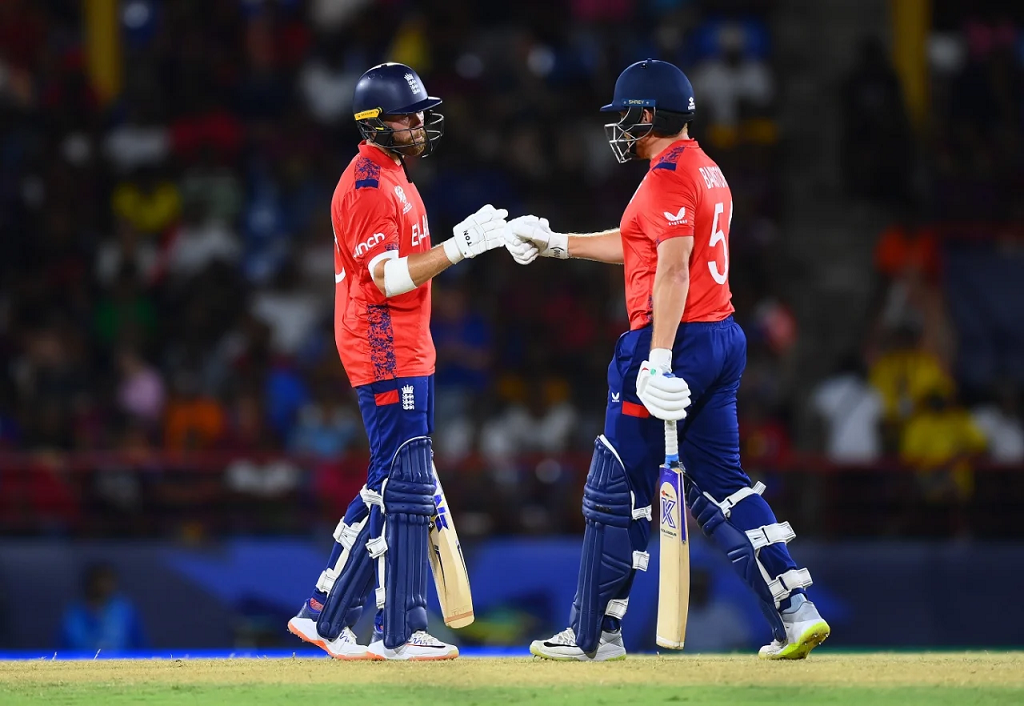
A devastating 87 not out from Phil Salt, supplemented by an unbeaten 48 from Jonny Bairstow saw England thrash West Indies by eight wickets in St Lucia. It was the kind of performance that set down a marker for the rest of the teams in the Super Eight of the T20 World Cup 2024.
The defending champions made light work of their target of 181, with a clinical 97-run stand between Salt and Bairstow earning victory with 15 deliveries to spare.
Played out on a fine batting deck at the Daren Sammy National Stadium, Jos Buttler opted to chase at the toss. Things looked precarious after eight overs, with West Indies getting 72 on the board for the loss of just Brandon King, who collapsed with a side strain early in the fifth over, having scored 23 off his previous 12 deliveries.
A diet of spin restricted West Indies’ batters thanks to Adil Rashid – the pick of the bowlers with 1 for 21 from his four overs – and Moeen Ali, who would go on to remove Johnson Charles.
Rovman Powell promoting himself to No. 4, took 20 from the 15th over, striking Liam Livingstone for three sixes down the ground in four deliveries. But an attempt at a fourth off Livingstone’s final ball brought his downfall, caught low at short third by Mark Wood, returning to the XI in place of Chris Jordan.
It was the first of three wickets to fall in the space of 12 deliveries for just six runs. Jofra Archer removed Nicholas Pooran caught behind in the next over, before Andre Russell nailed a Rashid googly straight to wide long on.
That West Indies were able to reach 180 without any further loss from a position of 143 for 4 with three overs to go owes as much to Sherfane Rutherford as it does to Wood. The former was able to find 28 from 15 deliveries, 13 of them off the latter as the 18th over was taken for 19.
England’s pursuit began steadily enough, reaching 58 for no loss after six overs. Roston Chase’s flat delivery eventually ended the opening stand on 67, trapping Buttler in front, before Moeen came and went, batting at No. 3 for the first time since March 2023.
Salt remained, and though he did end up slowing down, Bairstow was on hand to pick up the slack, striking 46 off 21 up to the 16th over. It was then that Salt tagged back in, and unfurled a brutal attack on Romario Shepherd, striking the seamer for 30 with three fours and three sixes – the joint-most expensive over by a West Indian in a T20 World Cup.
The first of those boundaries brought up Salt’s half-century from 38 deliveries, before he skewered any remaining jeopardy. It left West Indies to rue a half chance to remove Salt on seven in the third over, when he toed a hack across the line through to Pooran, who could not hold on.
Salt deserved the Player-of-the-Match award. But without Bairstow’s help, he – and maybe even England – might not have had something to celebrate.
Salt had emerged from the powerplay with a respectable 35 off 20. But with the field spread, twirlers working in tandem and less of the strike, he had stalled. Going into the 14th over, he had scored just 12 more from 15 deliveries.
That was when Bairstow set about a jump-start. For some reason, Powell returned to Alzarri Joseph instead of persisting with the frugal Chase. Bairstow used the pace on the ball to send the first delivery over the deep midwicket fence – the longer side, no less – before ramping the next delivery for four.
Powell attempted to correct his error by bringing Akeal Hosein back on for his final over. Bairstow, though, was in an unforgiving mood. An attempted reverse sweep brought a subdued lbw appeal before a conventional sweep, a 76-metre six heaved into the stands at midwicket, and a fortuitous inside edge brought 14 from three deliveries. The 16 from the over outright made it Hosein’s most expensive of this World Cup.
It was at that point, with 40 needed from 30, that Salt set about his assault on Shepherd. Bairstow watched on from the other end, settling into the role of cheerleader as his partner went ballistic. He eventually had the honour of striking the winning run, raising his personal best at T20 World Cups to 48 not out.
“Once Jos got out, I had to be the better to bat through,” explained Salt. “For Jonny to come out and take the pressure off me by taking calculated risks. I couldn’t be happier about that as a teammate.”
Intent comes in many different forms. England blitzed the six-count on the tournament’s truest batting pitch, but the difference between the running out in the middle told as true a story.
West Indies, for all their might, set a new unwanted record of 51 dot balls – the most any team has registered in a T20 World Cup when posting a score of at least 180. They were also responsible for the previous highest – 50 – in the 2016 edition, albeit when they chased down 193 to take down India in the semi-final on their way to their second title.
Moreover, they were second-best when making use of this ground’s lop-sided dimensions, failing to rotate the strike as much as they could, and running just nine twos across their 120 deliveries. Not only did England run three more in 15 fewer deliveries, but they even managed a three in the fourth over when Buttler could not quite time a cut to the cover point sponge. It brought Salt on strike for the final ball of the over, which he used to get going by charging at Russell and launching him back over his head and onto the roof for the first of five sixes.
At the time, the purchasing of Powell’s wicket for 20 runs from Livingstone’s only over did not seem a smart deal. Powell was only averaging 16.25 coming into this match. Having cooled a partisan St Lucian crowd, watching their captain hoist three quick sixes was a surefire way to get them warmed up for the arrival of Russell to assist Pooran, who was set on 32.
Both were back in the hut 11 deliveries later. And while Rashid’s snaring of Russell was the icing on the cake in this little stanza that shifted the match England’s way, it was Archer’s in the 17th over that vindicated Buttler’s investment.
Over the wicket to Pooran, Archer hammered a tight line across the left-hander. Ranging from full and yorker length, barring one misstep – a full toss third ball which Pooran guided through point for four – Archer had it all his own way.
He was too sharp – consistently around the 90mph mark – and too unwavering for a batter slowly falling into a funk, desperate for room to access his favoured hitting zones down the ground. The least full of all the deliveries was the one that took the edge through to Buttler, Pooran presenting the face of the bat in defeat rather than defiance.
With six wickets, Archer is now England’s joint top wicket-taker alongside Rashid, boasting an economy rate of 6.58, which is lower than any of his teammates barring Reece Topley (5.50), who has played two fewer games and is still yet to register a dismissal.
But the best stat of all is that Archer has now turned out five times for England in the last 15 days. The previous five caps came in the space of 448 days. After the nightmare run of elbow and back injuries over the last two years, the 29-year-old may finally be out the other end.
Brief scores:
England 181 for 2 in 17.3 overs (Phil Salt 87*, Jos Buttler 25, Jonny Bairstow 48*; Andre Rusell 1-21, Roston Chase 1-19) beat West Indies 180 for 4 in 20 overs (Brandon King 23, Johnson Charles 38, Nicholas Pooran 36, Rovman Powell 36, Sherfane Rutherford 28*; Jofra Archer 1-34, Adil Rashid 1-21, Moeen Ali 1-15, Liam Livingstone 1-20) by eight wickets
[Cricinfo]

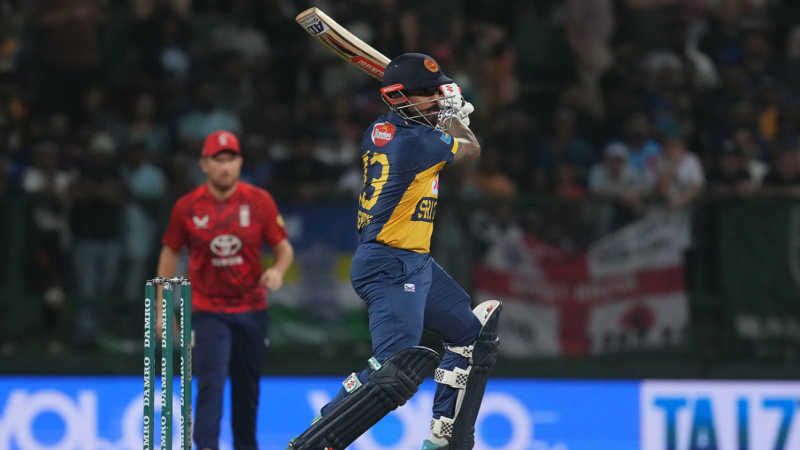
Englang to bowl first in 2nd T29I at Pallekelke.
Sri Lanka: Pathum Nissanka, Kamil Mishara, Kusal Mendis (wk), Pavan Rathnayake, Charith Asalanka, Janith Liyanage, Dasun Shanaka (capt), Dunith Wellalage, Wanindu Hasaranga, Eshan Malinga, Matheesha Pathirana
Latest News
In order to safeguard the future of the country, a quality human resource must be developed. – Prime Minister

Prime Minister Dr. Harini Amarasuriya stated that in order to ensure the economic, social, and cultural security of the country, it is essential to develop a quality human resource, and that education plays a vital role in achieving this goal.
The Prime Minister emphasized that the government is committed to bring about a transformation in the education sector, and that the government will continue to move forward by overcoming obstacles encountered along the way, guided by a clear vision and purpose.
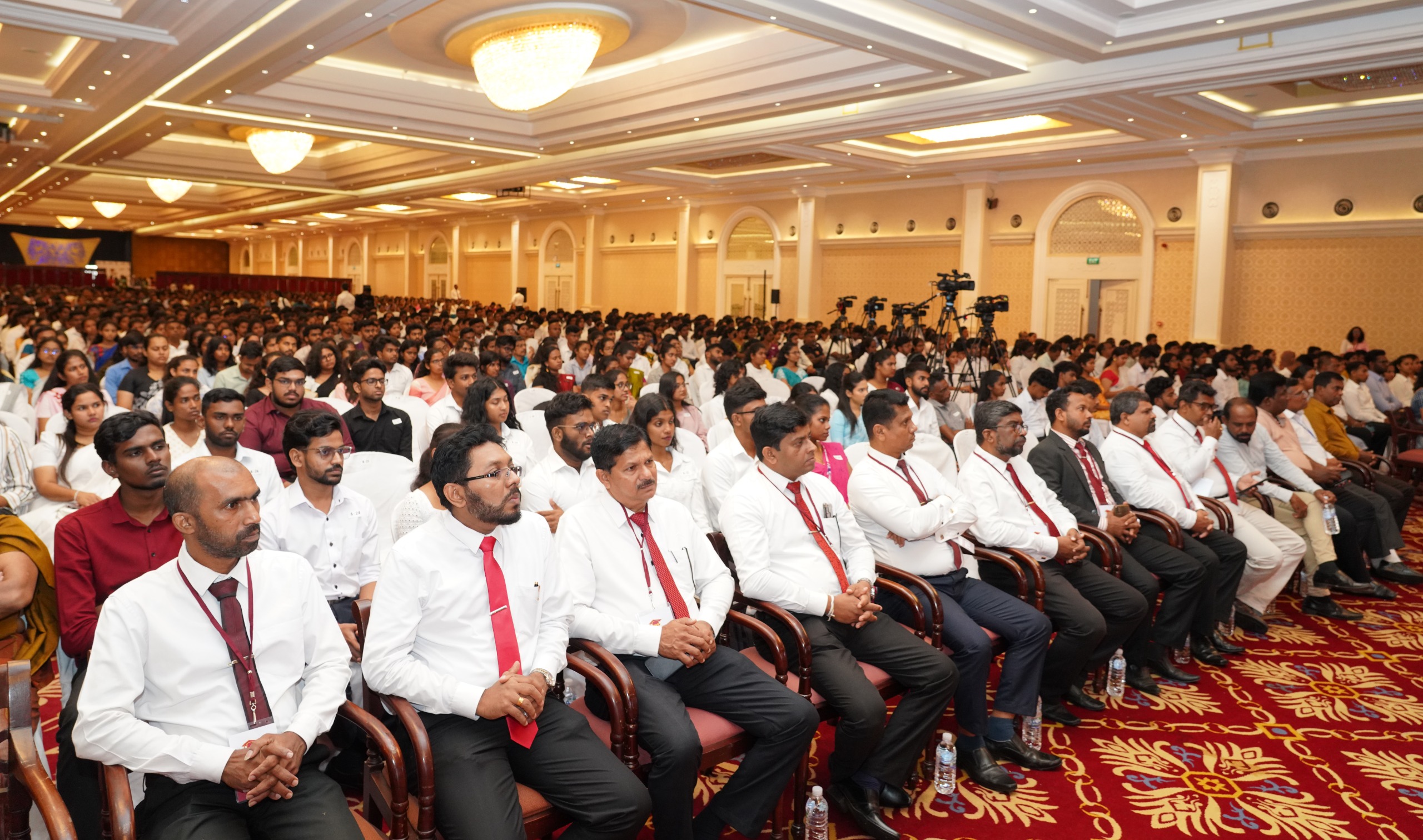
The Prime Minister made these remarks while addressing the EDCS Sisu Nena Pranama scholarship award ceremony held on Saturday (31) at Temple Trees, organized to recognize the children of the members of the Education Co-operative Society (EDCS) who have been selected to state universities for the academic year2023/2024.
Elaborating further, the Prime Minister noted that this program, organized by the Education Service Employees– Co-operative Thrift and Credit Society Ltd, is not merely about providing scholarships, but is an occasion that recognizes and appreciates the dedication of students and their parents who are preparing to shoulder the responsibility of the country’s future.
The Prime Minister also pointed out that it is a remarkable achievement that a society which began in 1930 with just 58 members and a membership fee of one rupee has today grown into the largest cooperative society in South Asia, with approximately 215,000 members.
The Prime Minister further highlighted how rapidly the world is changing, and the increasing necessity of developing human resources in the face of economic and environmental crises. She stressed that the education system must be transformed from the level of school education itself to align with the demands of the modern world, and that students entering universities should become leaders and active participants in this transformation.
Noting that out of nearly 300,000 students who enter primary education each year, only about 40,000 gain admission to universities, the Prime Minister urged students to make use of this opportunity for the development of the country.
Addressing the occasion, Deputy Minister of Labour and General Secretary of Ceylon Teachers Service Union, Mahinda Jayasinghe, stated that due to corruption-free management, it was possible to increase the financial stability of the society from Rs. 1,200 million to Rs. 1,700 million within a short period of approximately nine months.
Under this year’s program, scholarships amount to over Rs. 13.7 million were awarded to 2,292 students who have been selected to state universities.
This scholarship program, which initiated in 1984 with 15 students and an initial fund of Rs. 3,500, has been conducted continuously for 41 years. At present, scholarships of up to a maximum of Rs. 75,000 per student are awarded, demonstrating the collective strength and solidarity of the teaching community.
The event was attended by the Chairman of the Education Development Cooperative Society, Lal Kumara, the Western Province Director of Education, Darshani Iddamalgoda, along with other officials.
[Prime Minister’s Media Division]

If there was one positive from Sri Lanka’s defeat to England in the first T20I, it was how well their bowlers kept England’s batters in check on a batter-friendly surface. Particularly Matheesha Pathirana.
Pathirana, the 23-year-old slinger, returned figures of 1 for 18 across his four overs – and it might have been two had Pathum Nissanka not grassed a chance in the deep – but his impact was immense, as evident in ESPNcricinfo’s MVP index, where he was only behind Adil Rashid, whose 3 for 19 ripped through Sri Lanka’s batting.
The target of 134 off 17 overs (later revised to 115 in 15) proved too low to defend, but the margin of defeat – 11-runs via DLS – was not as wide as it might have been given the nature of the pitch.
On a good batting surface, seamers in particular suffered – Sam Curran and Eshan Malinga went at around 12 an over, while Jofra Archer and Jamie Overton both went at over seven. But Pathirana ticked along at an economy rate of 4.5.
He did so bowling his entire repertoire, from quick yorkers – he was hovering in the mid-140s, with his quickest delivery clocking 148kph – to pace-off length deliveries and spicy short ones. Even more impressive was the fact that he bowled two of his overs inside the powerplay. Pathirana is renowned for his death-overs exploits, but here, with a sub-par total to defend, Sri Lanka called on their strike bowler to take the new ball.
“Even though I’ve practiced to bowl in the powerplay, there was no plan as such for me to bowl there today,” Pathirana said after the game. “It just so happened that our score was lower than we wanted, so it was decided that I would bowl in the powerplay.”
Pathirana’s control was impressive. Wides have been an issue in the past – a common trade-off for a slingy action such as his – but on Friday night, there were just three across his spell.”Honestly I didn’t do anything major, just simple, basic things. The main thing was increasing the number of repetitions in practice. If there is any improvement, that’s the reason”
“Over the last year, year-and-a-half, along with my injuries, it was a challenging period,” he said. “I lost my rhythm. I’ve worked very hard to get back to this level. And then more recently Mali aiya [Lasith Malinga] was here in Sri Lanka helping out, as well all the coaches at SLC – not just one – all of them helped me get here.”
The impact of fellow slinger Malinga cannot be understated. Malinga has long been a proponent of target-based training drills, and hours of repetitive practice. And most recently he has been working as Sri Lanka’s fast-bowling coach in the lead-up to the T20 World Cup.
“Honestly I didn’t do anything major, just simple, basic things,” Pathirana said. “The main thing was increasing the number of repetitions in practice. If there is any improvement, that’s the reason. In terms of practice I increased it greatly.”
It’s a sharp turn in fortunes for Pathirana, who had only played two T20Is for Sri Lanka in 2025 – owing to a combination of poor form and injuries – and had been released by Chennai Super Kings [CSK] following IPl 2025. He had since been picked up by Kolkata Knight Riders (KKR), but that was more of an educated punt than anything based on tangible data.
Among the criticisms levied at Pathirana during this period was that his release point was not as low as it used to be. Stephen Fleming, the CSK coach, in fact pointed out this very fact when talking about the quick bowler’s decline in IPL 2025.
On Friday, Pathirana’s release point was lower than in recent times but still not as low as during his breakout season. He explained that his change in action had largely been involuntary, and down to a fairly serious shoulder injury he had been nursing.
“Yes,” he responded when asked if his release point had changed. “In the recent past, I was playing with a fairly major shoulder injury. So I think my body just automatically changed the release point. Even now I am doing rehab in between matches, and I think that’s why I’m seeing an improvement, and so you can see that the release point is getting to what it used to be.”
A fit and firing Pathirana is crucial for Sri Lanka, and with Dushmantha Chameera waiting in the wings, as well as Eshan Malinga ticking along well – he picked up two wickets on Friday with clever variations – Sri Lanka’s seam contingent at least looks in rude health heading into the World Cup.
[Cricinfo]

England to bowl first in Pallekelle

No child should be deprived of vocational or higher education due to poverty – PM

Ireland thump Thailand to qualify for 2026 women’s T20 World Cup

National Assessment and Policy Review: The impact of social media on children

Public officials must clearly understand public expectations against corruption and fraud – Secretary to the President

West Indies seal consolation win in ten-over shootout

‘Dates have the highest sugar content to fight Coronavirus’

Sunday Island 27 December – Headlines

#SundayIsland 17th December – Headlines

Sunday Island – 28th March

Sunday Island Headlines – 21 March

Sunday Island – 21st February – Headlines
-
 Business7 days ago
ComBank, UnionPay launch SplendorPlus Card for travelers to China
-
 Business4 days ago
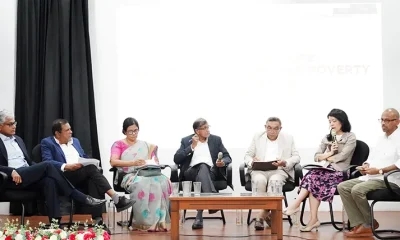
Climate risks, poverty, and recovery financing in focus at CEPA policy panel
-
 Opinion3 days ago
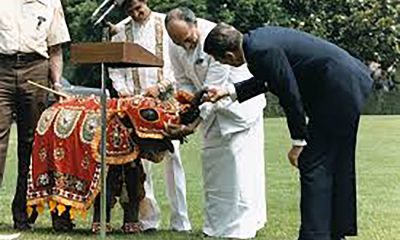
Sri Lanka, the Stars,and statesmen
-

 Business2 days ago
Hayleys Mobility ushering in a new era of premium sustainable mobility
-

 Opinion7 days ago
Luck knocks at your door every day
-

 Business2 days ago
Advice Lab unveils new 13,000+ sqft office, marking major expansion in financial services BPO to Australia
-

 Business2 days ago
Arpico NextGen Mattress gains recognition for innovation
-

 Editorial2 days ago
Govt. provoking TUs