
Sports
Mandhana and Harmanpreet top Wolvaardt and Kapp in landmark 646-run contest


Four centuries, a first in women’s ODI’s . A total of 646 runs. The spectators in Bengaluru were treated to as entertaining a game of 50-over cricket as they could have imagined, and the result went their way too: India clinched a last-ball win over South Africa to secure the series 2-0 with a match in hand.
It came down to Pooja Vastrakar’s final over where she had to defend 10 runs after India had posted 325 for 3. After conceding five off the first two balls, both full tosses, her next two deliveries fetched her two wickets with Laura Wolvaardt, one of four century-makers in the game, stranded at the non-striker’s end. The equation became five off the final delivery, and Wolvaardt, finally on strike, was beaten by Vastrakar’s back-of-the-hand slower delivery.
Earlier, after being asked to bat first, India scored their third highest ODI total with Smriti Mandhana and Harmanpreet Kaur smashing 136 and 103 not out respectively. While it looked out of reach after South Africa were reduced to 67 for 3 in the chase, Wolvaardt and Mariazanne Kapp’s 184-run partnership took the game deep.
Not long ago, South Africa were at the receiving end of the highest successful ODI run-chase of 302 by Sri Lanka. On Wednesday, they came close to breaking that record but fell just short of it.
The way South Africa started with the ball, one would have expected India to stop at around 230-240.
The second ODI was played on a different strip to the series opener, with a patch of grass and visible cracks on it. The new-ball pair of Ayabonga Khaka and Masabata Klaas extracted everything they could from it, exerting pressure on Shafali Verma and Mandhana with a lot of movement. A bit of variable bounce also meant runs were hard to get initially. Mandhana, in fact, got off the mark after 18 deliveries.
As for Shafali, she showed glimpses of patience in her 38-ball innings but it was short-lived. After smashing a four straight down the ground off left-arm spinner Nonkululeko Mlaba, she tried to go across the line next ball and holed out to Klaas at mid-on.
After 15 overs, India had huffed and puffed to 47 for 1, hitting just five fours. In this period, they had faced 72 dot balls.
Along with Dayalan Hemalatha, the No. 3, Mandhana stitched a steady 62 runs off 68 balls. Hemalatha fell for a 41-ball 24, and it was only after Harmanpreet walked out that runs started flowing.
The pitch had also eased out by then, and Harmanpreet and Mandhana put on a huge partnership – 171 runs off 136 balls. Their centuries not only helped India overcome their sedate start but also batted South Africa into a corner (though not out of the game, as it emerged).
Mandhana oozed class and Harmanpreet showed what power and deft touch can do.
Mandhana picked up pace, getting herself from 31 off the first 48 balls to her seventh ODI hundred in 103 balls, and went on to add 36 more. When the bowlers varied their lines, she moved around the crease and either slashed it to deep point or pulled to the square-leg area. Along the way, Mandhana also became the first Indian to score back-to-back centuries in women’s ODIs.
Harmanpreet didn’t have to start slow, unlike her deputy. After racing to a run-a-ball 24, she got quicker as her innings progressed. Unlike Mandhana, who scored on both sides of the wicket, Harmanpreet scored predominantly on the leg side. A total of 70 of her runs came on that side, with four of her nine fours and two out of three sixes hit in the midwicket region.
Meike de Ridder, who played in place of South Africa’s first-choice wicketkeeper Sinalo Jafta after she suffered a mild concussion on the eve of the match, missed a stumping chance when Harmanpreet was on 88, off the second delivery off the final over. It gave Harmanpreet a chance to complete her sixth ODI century, the first in almost two years, and she smoked 4, 6 and 4 to get to three figures.
South Africa ran out of steam, with Wolvaardt even bringing on legspinning-allrounder Sune Luus – who was bowling in ODIs after a gap of two years – into the attack. However, they couldn’t contain India, who scored 118 runs in the last ten overs.
At the other end, Richa Ghosh, batting at No. 5, plundered a 13-ball unbeaten 25, comprising three fours and a six, and was key in the unbroken 54-run stand with Harmanpreet.
Kapp and Wolvaardt, the senior pros, were resolute and unwavering in their focus.
This being South Africa’s second-last series in the 2022-25 Women’s Championship cycle, they need a couple of wins out of six to ensure automatic qualification for the World Cup next year in India. They had already lost the opening game, and needed points here. They play England next at home.
South Africa didn’t get off to an ideal start, losing three wickets for 67 inside 15 overs. However, unlike on Sunday, the pitch was helping the batters during the chase with the Indian spinners not getting enough grip and turn under lights. That helped Wolvaardt and Kapp settle in and then go big in the last 15 or so overs.
Initially, they kept the scoreboard ticking over, putting away the loose deliveries and taking singles off good ones. That clarity and patience saw both the set batters converting their starts and getting to half-centuries.
Kapp, playing as a pure batter with her workload being managed following a back injury, thrived under pressure and hit 11 fours and three sixes in her 94-ball 114. Wolvaardt, who became the first South Africa batter to score 4000 runs in women’s ODIs on the night, took calculated risks and paced her innings well to stay till the end. Her knock had 12 fours and three sixes.
With 148 runs needed from the last 15 overs, the pair accelerated. Even after Kapp was dismissed in the 43rd, courtesy a superb catch from Vastrakar at long-off, Wolvaardt kept going hard, striking the ball effortlessly.
Nadine de Klerk’s cameo of 28 also helped South Africa get closer. Till, in the end, they fell just short.
India Women 325 for 3 in 50 overs (Smirti Mandhana 136, Shafali Verma 20, Dayalan Hemalatha 24, Harmanpreet Kaur 103*, Richa Ghosh 25*; Nonkululeko Mlaba 2-51) beat South Africa Women 321 for 6 in 50 overs (Laura Wolvaardt 135*, Marizzane Kapp 114, Nadine de Klerk 28; Pooja Vastrakar 2-54, Deepti Sharma 2-56) by four runs

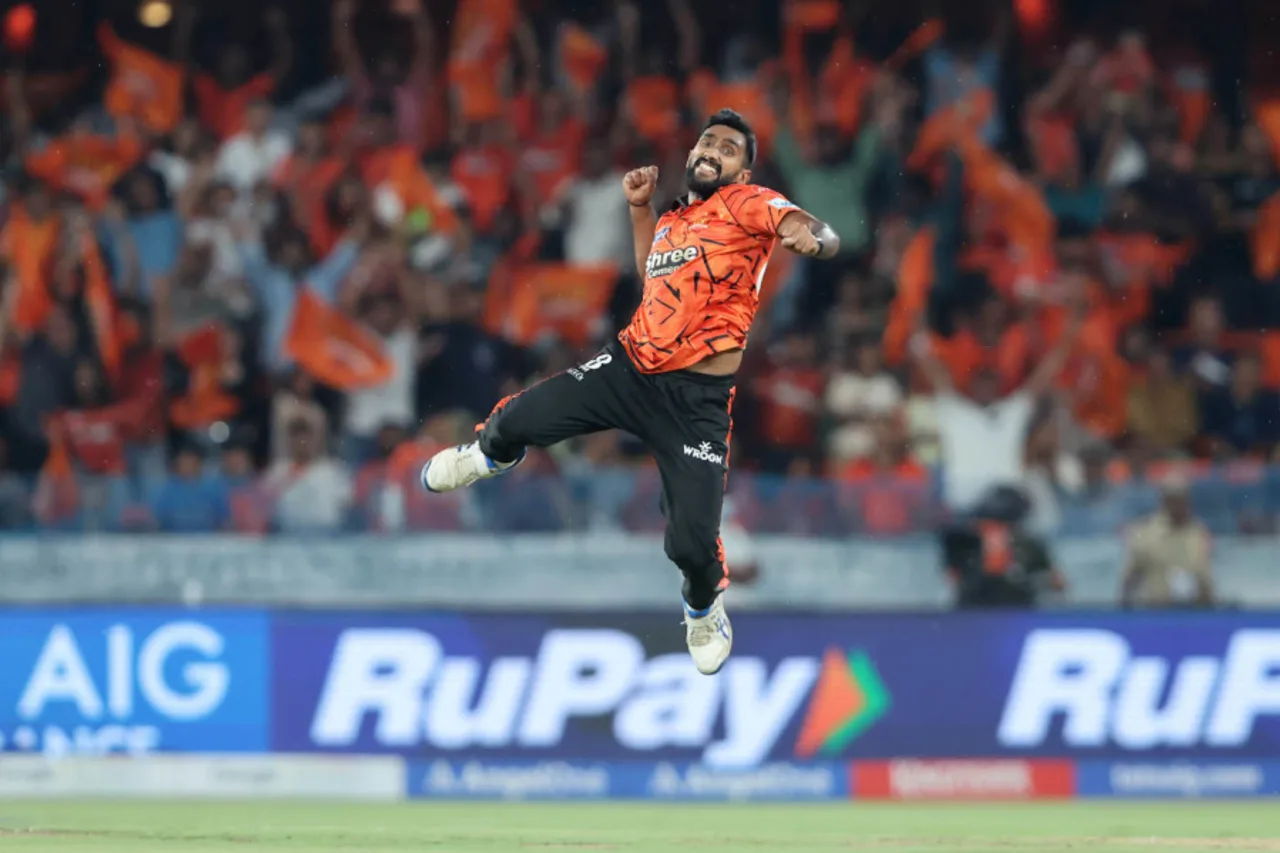
Life keeps throwing hurdles in his way, but Eshan Malinga keeps vaulting over them. Take his February from hell. For several months, Malinga had been building up to his first ever World Cup, a dream for pretty much anyone who ever picks up a cricket ball. But a week before that World Cup, Malinga dislocated his non bowling shoulder while bowling, which the team’s medical staff have since described as a freak injury they had never seen before.
“I was devastated,” Malinga says. “On top of it being my first World Cup, it was also at home and I didn’t know when I would get that chance again. There were a few days there where I did absolutely nothing.”
And yet in mid-May, here he is grinning from atop a pile of 16 IPL wickets, having developed a serious reputation as a reverse-swing operator. Sunrisers Hyderabad’s explosive batters may have seized the spotlight in this frenetic IPL, but on the bowling front, no SRH bowler has neared Malinga’s wicket haul, which is fifth best in the season overall. In a year in which they have not had Pat Cummins for seven of their 11 matches, it is Malinga who has held down the fort, particularly in the second half of the innings.
But trading difficulty for success is just what Malinga does. What he has long been doing. Go back eight years and Malinga had never played a hard-ball cricket match. On top of which his home district of Ratnapura – at the base of Sri Lanka’s central hills – was better known for its gems and waterfalls than cricket, never having produced a men’s international. Malinga, additionally, was not even actively trying to be a cricketer. He had moved from his first school in a village called Opanayake to Ratnapura’s Sivali Central College due to strong academic results, and found, almost by accident, that his new school had a hard-ball cricket team.
But what Malinga knew at that point was that he could bowl fast. That much had been obvious growing up in Opanayaka, where despite his mother’s occasional misgivings, Malinga was highly sought after by the organisers of the village softball team (Sri Lanka has a thriving village-level softball cricket ecosystem). And as had been the case with the better-known Malinga, this one was also aware he possessed a killer yorker – a prized asset in every form of cricket, with any kind of ball.
If he’d been on track to be a softball legend, Malinga found his horizons began to expand at a spectacular rate the moment he got a hard ball in his hands. First, his yorker and his pace began to reap big wickets in the Division Three schools competition for Sivali Central, whose coach had immediately hoisted him into the team upon seeing Malinga bowl at practice one day. Then in mid-2019, about a year into playing hard-ball cricket, came the day he still reflects on as the one that changed his cricketing life. Having missed a fast-bowling competition in Ratnapura because he had been playing for his school that day, Malinga travelled to the hill town of Badulla to bowl in the competition there, and clocked 127kph on the gun, which was enough to win him first place.
This was when he first became a blip, however faint and distant, on Sri Lanka Cricket’s radar. Visions of a cricketing life began to appear as wisps of opportunity began to materialise. The next few years, Covid-riddled though they were, became a crash course into the sport for Malinga. There were coaching camps in Colombo in which the best of the rural talent was trained up and funnelled into a programme at the next level up. There were trials for first-class teams, and eventually a fledgling domestic career.
“I don’t know how many times I came to Colombo from Ratnapura during those times,” he laughs now. “It was a lot! I would leave home at about 3am, and the bus journey to Colombo took about three-and-a-half hours. Then I’d train or play the match, and the bus back home always took longer because of traffic. So every day, I was on the road for more than seven hours.”
The Malinga who made these exhausting daily commutes was, as far as the Sri Lankan cricket system was concerned, a bowler of decent rather than blinding promise. His pace had propelled him to the top of the regional pool, but at the first-class level he was still adapting his yorker and slower ball (another weapon he had developed in his softball days). If he needed another gear, Malinga found it – again almost by accident – sometime in 2022.
“I was playing an Under-23 three-day tournament, and I remember that being the first time I really started reverse-swinging the ball,” he says. “Coaches had anyway told me that with my action and my pace, it should be possible. But it started almost automatically. It’s not something I had to learn.
“But it wasn’t that easy, because it was a long process to learn how to control it. To get reverse swing, you have to release the ball at a different point than a straight ball, because you want it to still hit the stumps when it is swinging. So I scuffed up a lot of balls and trained hard to get that line right.”
And so, the Malinga that emerged at the end of 2022 had sharp enough pace, an excellent yorker, a developing slower ball, mountains of homespun tenacity, and had also discovered that he can naturally reverse-swing the ball earlier in an innings than most. You could have seen where this is going, right? All the ingredients of an ace white-ball bowler were there. And Malinga was already a master of turning wisps of opportunities into tangible advances. Over the next three years, he’d land a spot in the national fast-bowling academy, use that as a trampoline to impress in an Emerging Teams three-dayer against Bangladesh, and from there bounce into a stint at the MRF Pace Academy in 2024, before on the franchise side of things parlaying a trial at Rajasthan Royals at Kumar Sangakkara’s invitation into a decent run at the SA20 for Paarl Royals.
Having leapt up to the fringes of the Sri Lanka team over the past 18 months, Malinga has at this IPL now seized another unusual chance. The square at SRH’s home stadium is among the barest and most abrasive in the league, and Malinga’s reverse swing has prospered upon it. Of his 16 wickets this season, 11 have come at home. In the second half of the innings, when the ball is most likely to reverse, Malinga’s economy rate is 8.37 at a venue where runs have been scored at 9.38 in that period this season.
Malinga had put in a robust 2025 season for SRH as well, so there is a body of work emerging there. Perhaps this is why this year, SRH’s bowling plans have tended to follow the contours of Malinga’s own game.
“After six overs the ball gets damaged here, so we needed to make use of that. When I bowled at practice, the ball reversed, so I think a plan emerged where we were going to use the scuffed up ball and take advantage of that.
“In the first powerplay the ball comes on to the bat nicely here. After that we try to get the advantage of having an older ball. We’ve got bowlers who bowl 140kph-plus, and we have Pat Cummins, who also reverses the ball. So we make sure to look after the ball in a way that will give us reverse.”
At 25, eight years into a serious cricket career, Malinga sees himself as a work in progress. He wants to work on his powerplay bowling. His variations, he thinks, still need some work. He’d like to play Tests, where his reverse swing could really stretch its legs. And, oh, he is still waiting to play that first World Cup.
Even here, his keen nose for opportunity leads him. He points out through the course of our conversation that where the three previous World Cups had been played with a new ball at either end being used right through the innings, the next World Cup, in 2027, will feature rules that seem at least partially designed to enhance reverse swing, an older ball more suited to the craft now available towards the end of the innings.
He isn’t even a sure-fire pick in Sri Lanka’s ODI XI just yet, so this is just a flicker of an opportunity for now. But having made the journey from the village of Opanayaka to the most raucous cricketing showpiece on the planet, Malinga knows just what to do with those.
[Cricinfo]
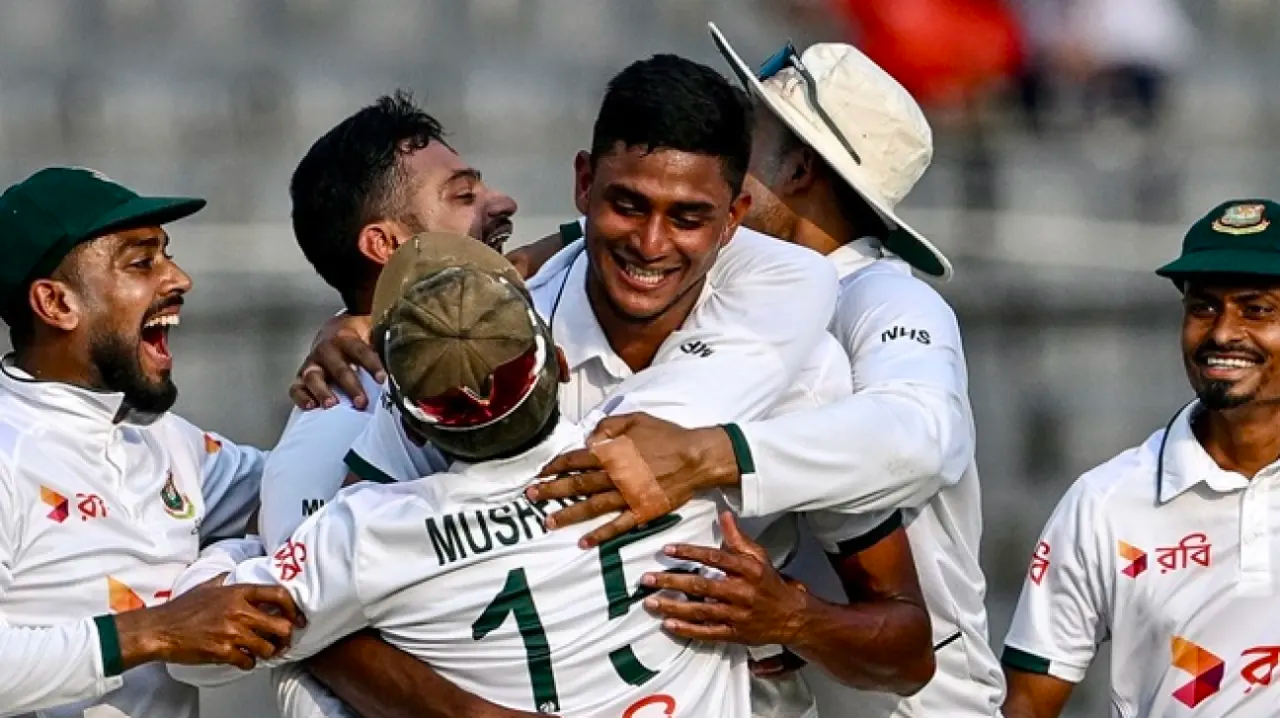
Bangladesh’s bowlers combined to trounce Pakistan by 104 runs in the first Test in Dhaka. Nahid Rana struck decisive blows while Taskin Ahmed, Mehidy Hasan Miraz and Taijul Islam were among the wickets as the home team put together a rare triumph on the fifth day. This is now Bangladesh’s third consecutive win against Pakistan, after they won the 2024 series by 2-0 margin.
Rana removed Shan Masood, Saud Shakeel and Mohammad Rizwan in a fiery spell, before he took down Noman Ali and Shaheen Shah Afridi to finish with figures of 5 for 40 from his 9.5 overs. Taskin and Taijul took two wickets each while Mehidy, who took a five-for in the first innings, took one wicket.
For most of their fourth innings, Pakistan were kept together by debutant Abdullah Fazal. He initially overcame Pakistan’s early loss of Imam-ul-Haq before lunch, when he struck Mehidy for consecutive fours just after lunch. Rana then went for three fours in a row; Fazal edged twice through the slips before driving hard down the ground.
Mehidy brought back Bangladesh immediately when he bowled Azan Awais next over. The opener was undone by a delivery that held its line before sliding into the stumps. Awais, who made a century in the first innings, fell for 15 this time.
When Rana removed Masood soon after, Pakistan were 68 for three staring at trouble. Fazal reached his half-century with an upper-cut off Ebadot Hossain. He is now the sixth Pakistan batter to get fifties in both innings of his debut Test.
Fazal however fell in the first over after tea when Taijul got the ball to spin sharply into the left-hander’s defensive prod, with the TV umpire confirming the dismissal through a review. Fazal made 66 off 113 balls, with eleven fours.
Soon after, Taskin had Salman Ali Agha caught at second slip. Shadman Islam however had to walk off after the catch hit his chest, although he held on to the chance.
Earlier in the day, the home side jumped into action in the fifth morning, adding 88 runs in 20 overs. They lost six wickets in the process, but Bangladesh made a laudable approach to keep the game alive. The morning however began with Hasan Ali removing Mushfiqur Rahim, caught at mid-off for 22.
Hasan then took an excellent catch at the fine-leg boundary after Litton Das top edged a hook off Shaheen Afridi after making eleven runs. Mehidy Hasan Miraz struck couple of fours and a six before Noman removed him for 24. It was his 100th wicket.
Shanto fell to Noman too, lbw for 87 while trying to play a reverse sweep. Shanto missed out on becoming only the fourth batter, after Sunil Gavaskar, Ricky Ponting and David Warner, to score twin hundreds in a Test on three occasions.
Brief scores:
Bangladesh 413 [Monimul Haque 91, Najmul Hossain Shanto 101, Mushfiqur Rahim 71; Shaheen Shah Afrid 3-113, Mohammad Abbas 5-92] and 240 for 9 dec [Mominul Haque 56, Najmul Hossain Shanto 87; Hasan Ali 3-52, Noman Ali 3-76] beatPakistan 386 [Azan Awais 103, Abdullah Fazal 60, Salman Agha 58, mohammad Rizwan 59; Mehidy Hasan Miraz 5-102] and 163 [Abdullah Fazal 66, Salman Agha 26; Nahid Rana 5-40] by 104 runs
[Cricinfo]
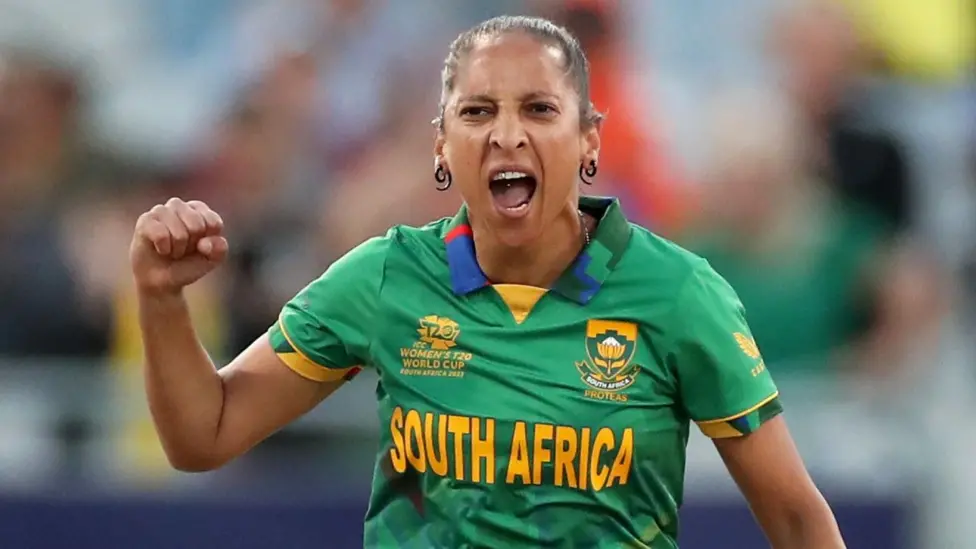
South Africa fast bowler Shabnim Ismail has reversed her international retirement and is included in the Proteas’ squad for this summer’s T20 World Cup in England.
Ismail, 37, is one of the fastest bowlers in women’s cricket and is her country’s all-time top wicket-taker in the format despite making her last appearance more than three years ago.
She is joined in the squad by fellow opening bowler Marizanne Kapp, who has recovered from illness, while Dane van Niekerk, who has also come out of retirement in the past year, is included following a calf injury.
South Africa, who were runners-up at the past two Women’s T20 World Cups, open their campaign against Australia on 13 June before facing Pakistan, India, the Netherlands and Bangladesh.
They recently enjoyed a 4-1 series win against ODI world champions India.
“Having someone like Shabnim back adds a lot of value to the group,” said head coach Mandla Mashimbyi.
“We had good conversations and you could see the hunger she still has to represent South Africa and help this team achieve something special.”
South Africa squad:
Laura Wolvaardt (c), Tazmin Brits, Nadine de Klerk, Annerie Dercksen, Shabnim Ismail, Sinalo Jafta, Marizanne Kapp, Ayabonga Khaka, Sune Luus, Karabo Meso, Nonkululeko Mlaba, Kayla Reyneke, Tumi Sekhukhune, Chloe Tryon, Dane van Niekerk.
[BBC Sports]

Eshan Malinga keeps getting them in the second half

State Mortgage and Investment Bank Law No. 13 of 1975 to be amended
Animals Act No. 29 of 1958 amended
Cabinet approves establishment of a ‘Trust’ to carry out the management of the Jaffna Thiruvalluvar Cultural Centre

Prime Minister Keir Starmer under pressure as ministers quit, 80 MPs urge him to resign

Nahid Rana rips through Pakistan to seal a final-session win for Bangladesh

‘Dates have the highest sugar content to fight Coronavirus’

Sunday Island 27 December – Headlines

#SundayIsland 17th December – Headlines

Sunday Island – 28th March

Sunday Island Headlines – 21 March

Sunday Island – 21st February – Headlines
-

 News6 days ago
MIT expert warns of catastrophic consequences of USD 2.5 mn Treasury heist
-

 News3 days ago
Lanka Port City officials to meet investors in Dubai
-

 Editorial6 days ago
Clean Sri Lanka and dirty politics
-

 Editorial5 days ago
The Vijay factor
-

 News4 days ago
SLPP expresses concern over death of former SriLankan CEO
-

 News7 days ago
Development Officer bids Rs. 48 mn for CPC’s V8 at auction
-
 Opinion7 days ago
Postmortem reports and the pursuit of justice
-
 News4 days ago
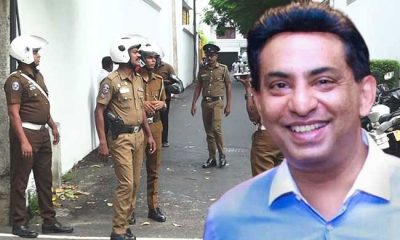
Police inform Fort Magistrate’s Court of finding ex-CEO of SriLankan dead under suspicious circumstances