
Business
A new institutional framework to enhance Sri Lanka’s industrial sector

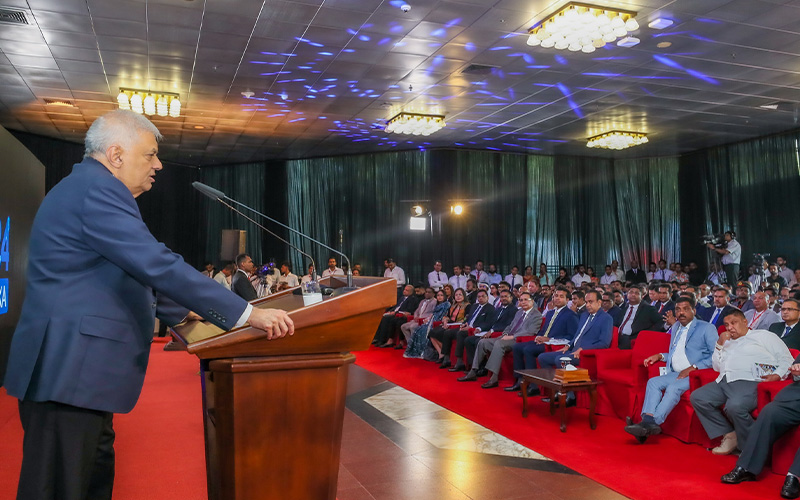
President Ranil Wickremesinghe announced the establishment of a new development bank aimed at providing financial support to industrialists in Sri Lanka. This initiative will offer industrialists the opportunity to obtain loans at low interest rates.
Additionally, the President revealed plans to set up an Economic Commission to oversee these activities. A new institution, “Enterprise Sri Lanka,” will also be created to empower small and medium-sized entrepreneurs.
President Ranil Wickremesinghe made this announcement during the inauguration of the International Industry Expo 2024, the first event of its kind in Sri Lanka.
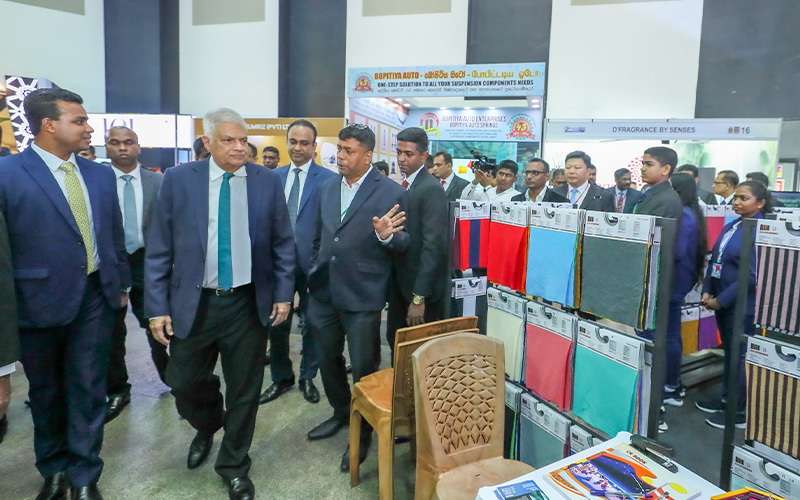
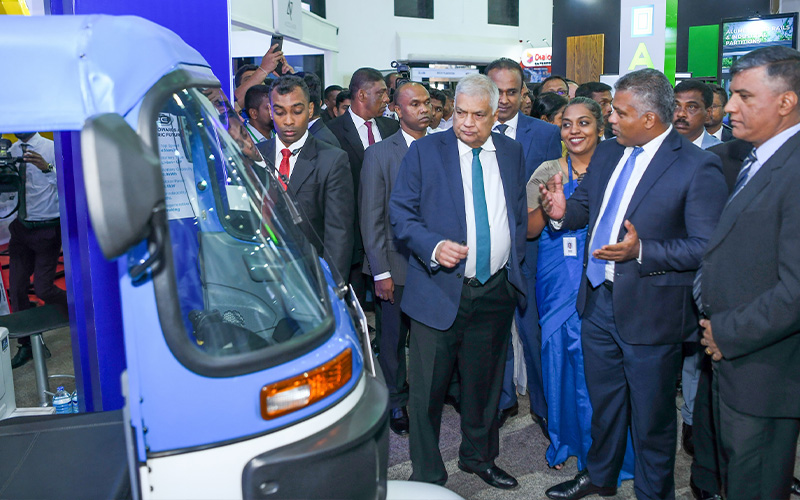
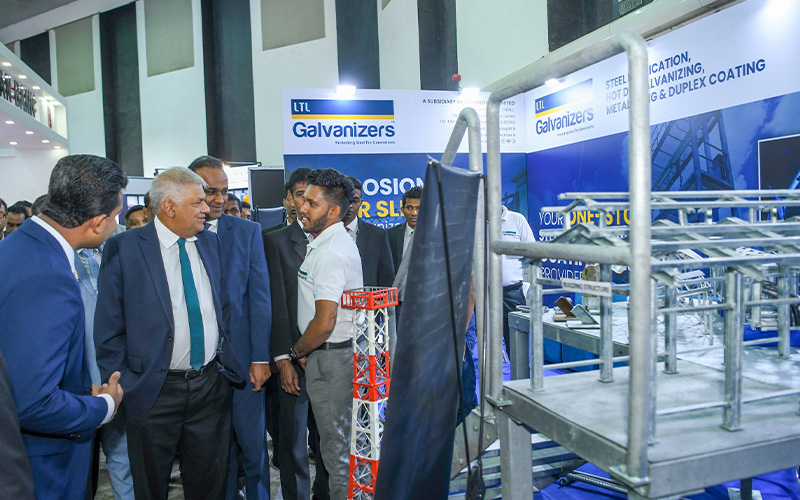
Organized by the Industrial Development Board under the guidance of the Ministry of Industry, and with the support of Industries and Health Minister Dr. Ramesh Pathirana, the exhibition will run from today until June 23 at the Sirimavo Bandaranaike International Conference Hall.
Over a thousand international industrial entrepreneurs from various countries, along with local large-scale and medium-scale industrialists, are participating in this event. The expo features 1,307 exhibition booths, with the special inclusion of a separate green industrial zone for the first time. Additionally, an experimental academic conference on green industrialization will be held during the exhibition.
In his address, the President remarked that some individuals have become accustomed to taking every development initiative to court. He emphasized that such actions hinder progress and stressed that the country can only be developed through a consistent national policy.
[PMD]


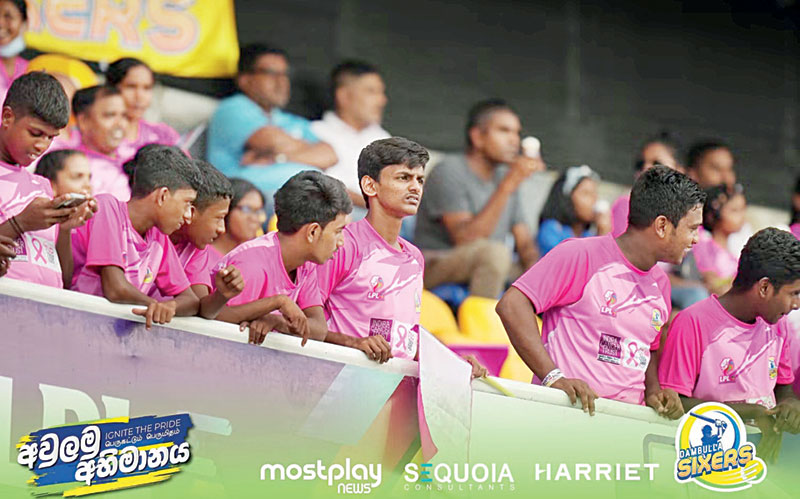
Pink match Dambulla Sixers vs. Jaffna Kings
Dambulla Sixers Pink Match calls Sri Lanka to wear pink, fill the SSC, and take the TLC (Touch, Look, Check) message home
There are days when cricket is about the result. There are days when it is about pride, rivalry, form and the final over. And then there are rare days when cricket is asked to carry something far greater than the game itself. Sunday, July 19, will be one of those days.
At 3.00 p.m. at the SSC Grounds, the Dambulla Sixers will meet the Jaffna Kings in the Lanka Premier League. But before the first ball is bowled, the country will be invited to stand together for a message that can save lives. This is the LPL Pink Match 2026.
It is not simply a match played in pink. It is a national reminder that breast cancer awareness matters, early detection saves lives, and every family has a role to play. The call to the public is direct:
Buy a ticket. Come to SSC. Wear pink. Bring your family and friends. Share the flyer. Post it on your WhatsApp Status and social media. Wear the official Pink Fan T-shirt. Most importantly, take home the message of TLC — Touch, Look, Check.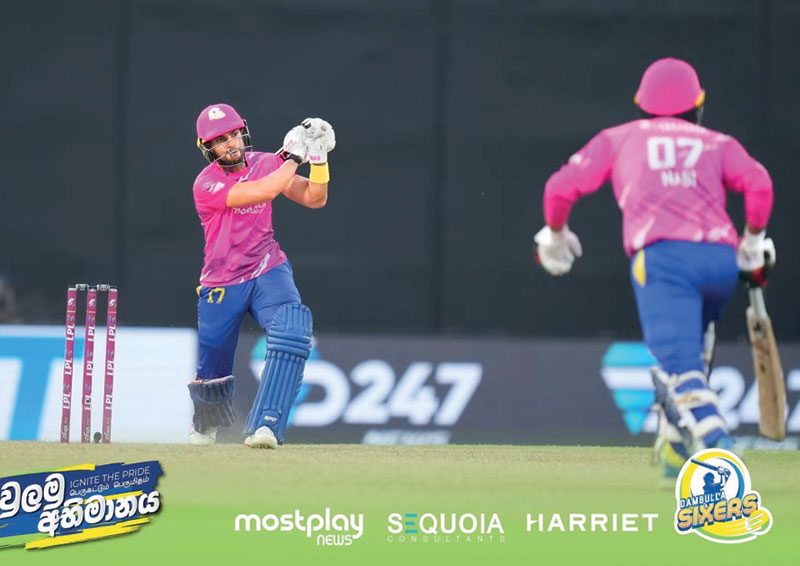
A match with a message
The Dambulla Sixers will take the field in specially designed pink playing apparel and pink helmets. The stadium will carry breast cancer awareness messages, the TLC logo will be displayed on giant screens, and the live broadcast will carry the message to homes across Sri Lanka. The Jaffna Kings will also take part in the Pink Match ceremony, reminding the country that while there may be opposing sides in cricket, there are no opposing sides in the fight against cancer.
Children from Suwa Arana – A Place for Healing, together with children from SOS Children’s Villages Sri Lanka, will join both teams on the field during the official ceremony. Their presence will give the day its deepest meaning. It will remind spectators that illness does not stop with the patient. It enters homes, affects siblings, changes routines, tests parents, and demands courage from entire families.
Three words that matter
The message of the Pink Match is simple enough for every home to remember.
Touch. Look. Check.
Touch — become familiar with your breasts and notice any lump, thickening or unusual change.
Look — check for changes in shape, size, skin or nipple.
Check — seek medical advice without delay if something feels or looks unusual.
In Sri Lanka, breast cancer remains the most common cancer affecting women. According to the campaign material, approximately 15 women are diagnosed every day, while three women lose their lives to the disease. Yet the central message is one of hope: when detected early, breast cancer is highly treatable.
That is why this match matters. Not because a cricket match can replace medical care. It cannot. But a cricket match can start a conversation. It can remind a daughter to speak to her mother. It can encourage a husband to support his wife. It can make a workplace talk about women’s health. It can help remove fear and delay.
Sometimes, the first step towards saving a life is not taken in a hospital. It is taken in a home, when someone says, “Please check.”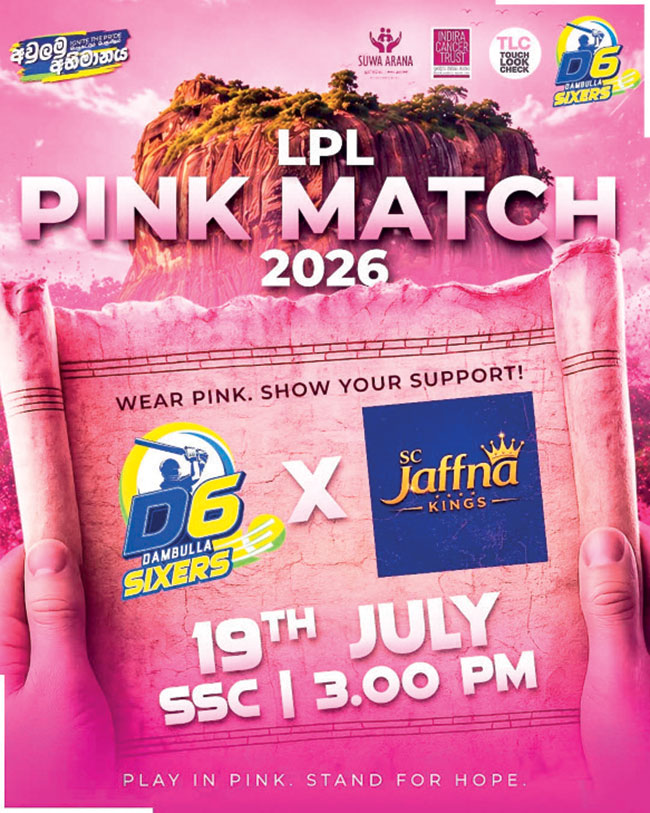
More than a one-day gesture
What gives this initiative particular strength is that it is not a cause attached to cricket for a day. It is rooted in a deeper relationship. Before the Pink Match, the Dambulla Sixers team will visit Suwa Arana – A Place for Healing, where children receiving cancer treatment and their families are supported with accommodation, meals, care and dignity while they travel for treatment at Apeksha Hospital. The team visit will include time with children and families, a guided experience through Suwa Arana, and the official launch of the LPL Pink Match 2026 and the TLC National Breast Cancer Awareness Campaign.
This matters because compassion cannot be staged only under stadium lights.
It must begin in quieter places — in patient rooms, dining areas, kitchens, play spaces, healing gardens and waiting moments. By beginning at Suwa Arana and continuing at SSC, the Dambulla Sixers are connecting the human reality of cancer care with the national reach of cricket.
That is the bridge this campaign is trying to build.
The Commercial Documents Registration Division (CDRD) of The Ceylon Chamber of Commerce has expanded its export support services with the introduction of the Free Sale Letter for Pharmaceuticals, providing Sri Lankan pharmaceutical manufacturers and exporters with an additional document certification service to support their export processes and compliance requirements in international markets.
The new service expands CDRD’s portfolio of trade documentation solutions, which includes Certificates of Origin and the certification of key commercial documents required by overseas buyers, customs authorities, and regulatory bodies. These services assist exporters across sectors by helping ensure their documentation meets applicable requirements for international trade.
Established in 1925 as one of the authorised institutions to issue Certificates of Origin in Sri Lanka, CDRD has supported the country’s international trade for nearly a century. Today, the Division provides certification and verification services to exporters, manufacturers, freight forwarders, logistics providers, and other trade stakeholders, supporting businesses in meeting documentation requirements for global markets.
In addition to pharmaceutical certification, CDRD facilitates the certification of Commercial Invoices, Packing Lists, Price Lists, Health Certificates, Phytosanitary Certificates, Certificates of Analysis, Bills of Lading, Survey Reports, Beneficiary Certificates, and other export-related documents. The Division also issues Free Sale Letters and Surveyor Appointment Letters, while supporting exporters through the Ministry of Foreign Affairs’ Electronic Document Attestation System (e-DAS), enabling secure and efficient document authentication.
Through established processes, digital solutions, and its e-service platform, CDRD continues to enhance the efficiency and accessibility of trade documentation services. Available 24/7 and 365 days of the year, the platform enables exporters to submit and manage documentation requirements conveniently while ensuring that certified documents meet internationally accepted requirements. By providing reliable documentation support and adapting its services to changing trade needs, the Division assists Sri Lankan businesses in managing export requirements and accessing international markets.
For more information on obtaining commercial document registration services, contact Achala via achala@chamber.lk / 0115588886
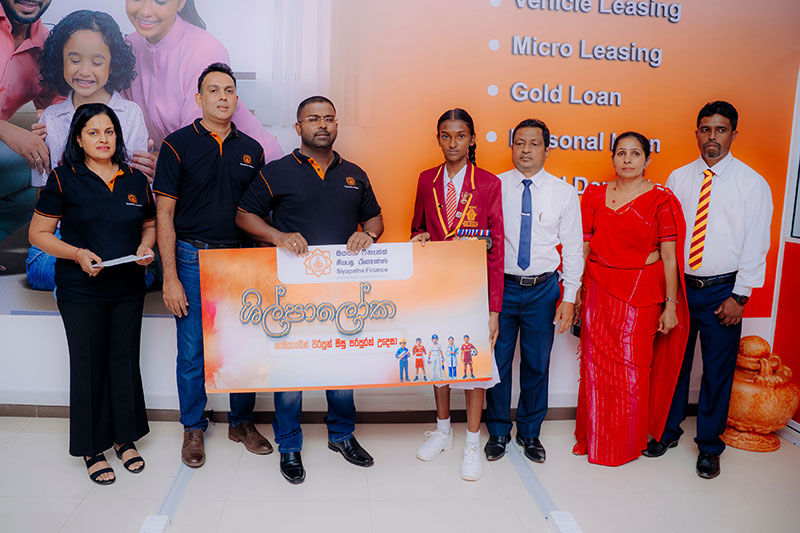
Siyapatha Finance PLC recently expanded its island-wide footprint with the successful inauguration of its 64th branch in Bandarawela. Strategically located in scenic hill town in the Badulla District, the latest branch offers convenient and wider access to tailored, customer-centric financial solutions.
The branch was ceremoniously declared open by Siyapatha Finance PLC Chief Executive Officer (CEO) Mathisha Hewavitharana, joined by Chief Operating Officer (COO)Rajeev De Silva, Ms.D.M. Dewmi Tharindi, a student of Bandarawela Dharmapala Vidyalaya who won the Under-18 Girls’ 3,000m event at the Junior National Athletics Championship, the Senior Management and staff members as well as Traffic OIC Kandasami, Trade Association Secretary Sunanda Rathnayaka, representatives of the government and private banks and insurance companies and well-wishers.
Sharing his thoughts, Siyapatha Finance PLC CEO Mathisha Hewavitharana remarked: “We are deeply honoured to be of service to the people of Bandarawela. Opening this branch is a pivotal step in our 2026 expansion strategy and a reflection of our commitment to strengthen our presence in Sri Lanka. It is a region that showcases potential for greater economic development primarily through the country’s traditional agricultural practices. We look forward to reaching as many different communities as possible in the coming years.”
The Bandarawela branch offers a comprehensive product portfolio including leasing, fixed deposits, gold financing, business loans, personal loans, fast draft, and factoring to Smart Pay, the Company’s bill payment facility. With a thorough understanding about the current socio-economic dynamics of the region, the well-trained team at the newest branch is dedicated to providing flexible financial solutions to aspiring individuals as well as small and medium-scale enterprises (SMEs).

Noskova defeats Muchova in Wimbledon final to record first Grand Slam title

Former Emir of Qatar Sheikh Hamad bin Khalifa Al Thani dies aged 74

Sourav Ganguly, Kevin Pietersen and Anjum Chopra inducted into ICC Hall of Fame

The President’s Fund has been transformed into a people-centred fund – PM

Wanyonyi breaks world 1000m record with 2:11.83 in Monaco

Gaud makes her Lord’s mark as India surge into dominant position

‘Dates have the highest sugar content to fight Coronavirus’

Sunday Island 27 December – Headlines

#SundayIsland 17th December – Headlines

Sunday Island – 28th March

Sunday Island Headlines – 21 March

Sunday Island – 21st February – Headlines
-
 News2 days ago
Herath warns prospective migrant workers not to get fleeced by racketeers
-

 News6 days ago
AI concerned over proposed SL military deployment in Haiti
-

 Midweek Review4 days ago
Unexpected focus on ‘pieces of tin’ worn by military men
-
 Latest News5 days ago
Nyamhuri and Ngarava stun Bangladesh by defending 141
-

 News3 days ago
Negombo Prison riot: Ensuring protection of prisoners fundamental responsibility of the state – UN
-

 Features2 days ago
Devanesan Annan – in Memoriam
-
 Foreign News2 days ago
Tensions erupt in Indian state after 11-year-old raped and murdered
-

 Editorial1 day ago
What’s the world coming to?