
Latest News
Rizwan takes Pakistan to their first win after Amir-led quicks put on a big show

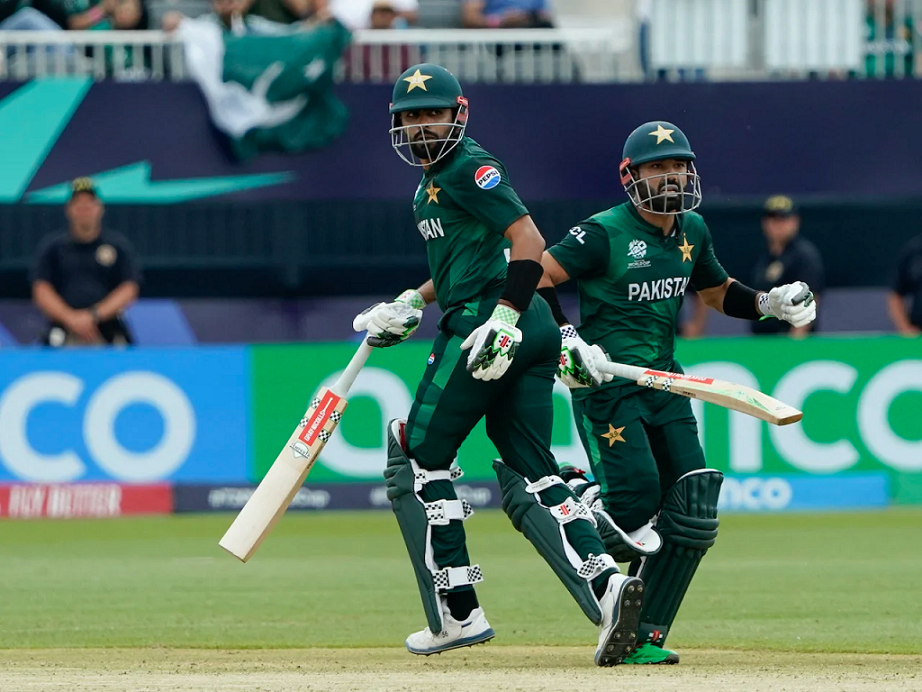
There was finally something at the T20 World Cup for Pakistan to be happy about as they produced a strong all-round show to record their first win of tournament, beating Canada by seven wickets in New York.
The win was set up by the fast bowlers, who combined to pick up six wickets to restrict Canada for 106 for 7 in their 20 overs despite an Aaron Johnson 44-ball 52 – that score was quick by the standards at the New York venue, and Canada’s total was not insignificant at all.
In reply, Pakistan stumbled in the powerplay.
They had brought in Saim Ayub in place of Iftikhar Ahmed, and Ayub walked out to open with Mohammad Rizwan, thus splitting the Rizwan – Babar Azam partnership up top. The decision did not pay dividends, though, as Ayub fell for 6 off 12 balls.
But Babar and Rizwan brought their experience into play, adding a 63-run stand off 62 balls for the second wicket. Babar fell with victory in sight, but Rizwan stayed put, crafting an unbeaten run-a-ball 53 to give Pakistan victory 15 balls to spare.
Babar won another crucial toss and had no hesitation in fielding first. He would have hoped for “first-over Shaheen Afridi” to do his magic. But instead, it was first-over Aaron Johnson setting the stage alight. He flicked the first ball of the innings, a shin-high full toss, through mid-on for four, before pumping Afridi straight down the ground for four more next ball.
This was the first time the first two balls in a men’s T20 World Cup match had been hit for boundaries. The third ball would also have gone for a straight four if not for the sluggish outfield.
Johnson then smashed Naseem Shah over backward point with Pakistan looking off the boil.
Mohammad Amir was the only one who got his length spot on from the get-go and he was duly rewarded. Navneet Dhaliwal picked him for a four through point first ball but Amir exacted revenge by sending a searing in-dipper that flattened Dhaliwal’s middle stump.
Afridi and Naseem, too found their lengths soon. And though Johnson continued to play his shots, there were plenty of plays and misses. And Afridi changed his bowling end and had Pargat Singh edging to first slip as Canada reached 30 for 2 after six overs.
The most crucial moment of the Canada innings came in the seventh over, when Nicholas Kirton, their best batter so far in this competition, was run out by a direct throw from Imad Wasim from the covers.
Johnson stayed put, but Canada kept losing wickets at the other end after that.
Haris Rauf struck twice in three balls when he removed Shreyas Movva to claim his 100th T20I wicket and then had Ravinderpal Singh caught at slip – Canada, after their bright start, had slipped to 55 for 5 after ten overs.
Johnson deposited Wasim twice over the ropes in two overs, the second hit fetching him his sixth T20I fifty off 39 balls. But he failed to carry on, falling for 52, his stumps rattled by Naseem.
Canada failed to inject any momentum into their innings after that, as Pakistan only conceded 29 runs in their last five overs, which included two fours and a six. In all, Canada faced 76 dot balls, the most in an innings at the men’s T20 World Cup.
ESPNcricinfo’s forecaster gave Pakistan a 93% of winning the game at the halfway stage. But the pitches in New York have often disrupted calculations.
Kaleem Sana gave away five wides in the first over, but apart from that, Canada were really tight with their lines. Ayub tried his shots before edging Dilon Heyliger behind. Babar, at No. 3, then had a tense moment when an appeal for a caught behind down leg was sent upstairs. But replays suggested the ball had gone off his pad.
The only four off the bat in the powerplay was struck by Rizwan in the sixth over. In comparison, Canada had hit five fours in their first six overs.
According to ESPNcricinfo’s logs, 31 of the 36 deliveries from Canada in the powerplay were on a length or short of a length. And the Pakistan batters struggled to deal with them.
Junaid Siddiqui and Saad Bin Zafar had the Ireland batters in a spin in Canada’s previous game, but Babar and Rizwan weren’t having any of it.
Rizwan first swept Saad’s full delivery through deep-backward square-leg, before Babar walloped Junaid for a six straight down the ground. The two added 31 runs between overs six and ten, and put the chase right back on track.
They kept the scoreboard ticking over before Babar fell edging Heyliger behind the stumps. Babar walked off in disgust. But Rizwan ensured he stayed till the end. He reached his 29th T20I fifty off 52 balls. It was the slowest by a Pakistan batter in the format but such were the conditions, and the win was more important.
Usman Khan hit the winning runs as Pakistan reached home in 17.3 overs. The win did not lift their NRR above that of USA, but it wasn’t a bad start in trying to turn the qualification race in their favour somewhat after back-to-back losses.
Brief scores:
Pakistan 107 for 3 in 17.3 overs (Mohammad Rizwan 53*, Babar Azam 33; Jeremy Gordon 1-17, Dilon Heyliger 2-18) beat Canada 106 for 7 in 20 overs (Aaron Johnson 52; Shaheen Shah Afridi 1-21, Naseem Shah 1-24, Mohammed Amir 2-13, Haris Rauf 2-26) by seven wickets
[Cricinfo]








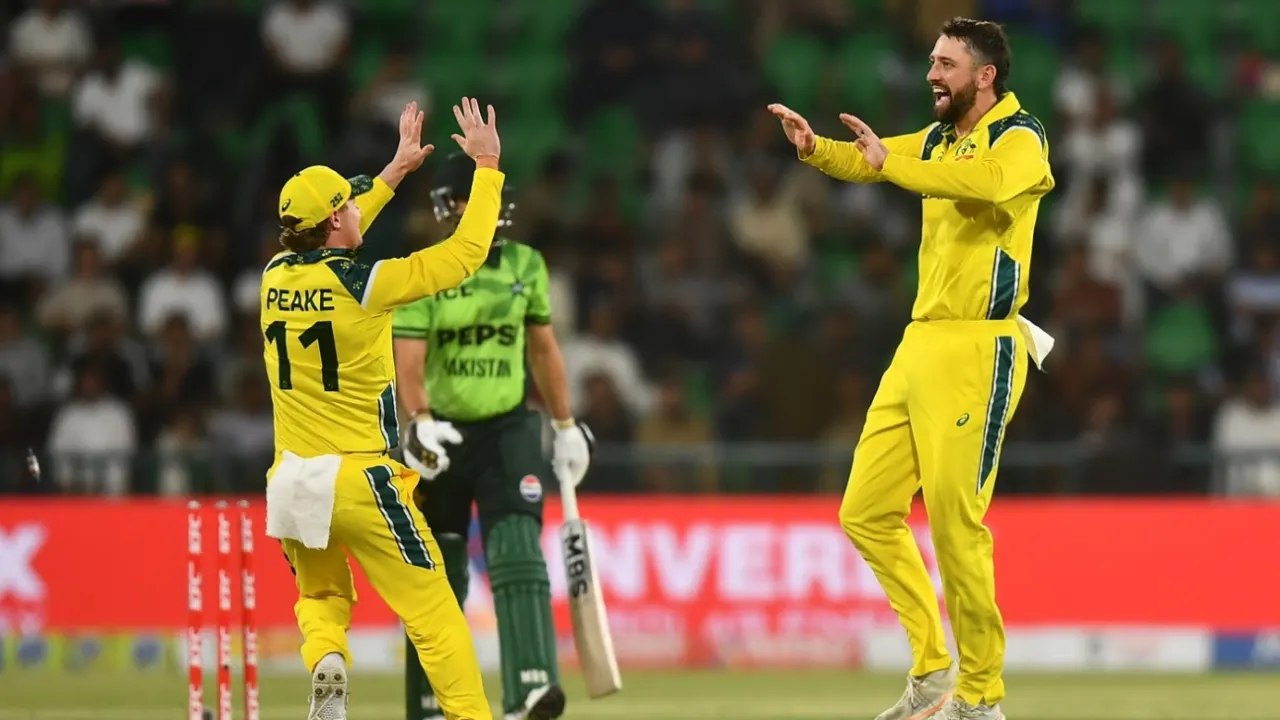
Quite what either side will ultimately take from this ODI series is debatable, but a patched-up Australia side can be proud of how they adapted to earn a decider against Pakistan in Lahore after being outplayed in the opening match. As a number of ESPNcricinfo feedbackers pointed out, it’s been something of a throwback with a 1990s vibe around the scoring rates. In the first match, 200 wasn’t enough for Australia, but in the second 231 certainly was.
Josh Inglis and Cameron Green put in the hard yards during the first half of the innings – it was especially hard work for Green, who battled for rhythm, but there was satisfaction in his gritty fifty which he acknowledged with a somewhat relieved punch of the air – and their innings allowed Matt Renshaw and latterly 19-year-old Oli Peake to play with a little more freedom.
Renshaw’s form has been especially eye-catching, extending a strong introduction to Australia’s white-ball set-up since late last year, while Peake’s maturity was on show when he did not panic at being 6 off 15 balls and managed to dispatch vital late sixes.
With the ball, Nathan Ellis was ideal for the slow, grippy surface and produced a career-best performance. The spinners all played their role, with Matt Short’s three wickets fitting into the bonus category; his delivery to slide past Salman Agha’s outside edge was an excellent piece of bowling.
Ahead of the match, Pakistan coach Mike Hesson defended the home surfaces the team is playing on before being hoisted by their own petard. Arafat Minhas looks a very exciting find – with bat and ball – while Ghazi Ghori has shown plenty of promise. But a lot of questions remain. Shadab Khan continued to labour with the ball, but his 71 kept Pakistan in the game although he may in the longer run have muddied the waters.
Pakistan have only lost one home bilateral ODI series since 2015nbut, after the recent loss in Bangladesh, a defeat in the decider on Thursday would add to the uncertainty around their game as a whole.
Sahibzada Farhan has forged his reputation in T20s – domestically and internationally – but he’s found life tougher in the early stages of his ODI career. He has made three starts in five innings but not been able to convert; in the first game of this series he gave it away when he picked out long-off. In the second match, he top-edged a sweep in the second over, having already lost his opening partner, and it left Pakistan on the back foot.
Matt Renshaw has been the most fluent batter on show in the first two matches in tough conditions. The left-hand batter has continued his impressive white-ball form with smart placement, good running and putting away the bad ball. His only blip has been falling on both occasions when Australia needed someone to close out the innings, although the two dismissals were against good deliveries. There is argument that he may be worth a go higher up the order.
Pakistan have been unchanged so far and Shadab’s runs will likely keep him in the XI given the balance he brings to the lower order. There is a clamour for Sufyan Moqim to play but it’s tricky to see how he fits in unless they drop a batter or only play one quick.
Pakistan (probable) Sahibzada Farhan, Maaz Sadaqat, Babar Azam, Ghazi Ghouri (wk), Arafat Minhas, Salman Agha, Abdul Samad, Shadab Khan, Shaheen Afridi (capt), Haris Rauf, Abrar Ahmed
Australia’s initial thoughts on this series may have been to give most players an outing, but their balance for the second match served them well so Liam Scott will likely have to wait for his debut. Labuschagne has missed out twice in the series – extending a lean time in ODIs – and is under increasing pressure but may cling onto his place for now. There could be consideration given to elevating Renshaw given his fine form.
Australia (probable) Alex Carey, Matt Short, Josh Inglis (capt & wk), Marnus Labuschagne, Cameron Green, Matt Renshaw, Oli Peake, Matt Kuhnemann, Nathan Ellis, Adam Zampa, Tanveer Sangha

West Indies won the toss and chose to bowl first in the first ODI of Sri Lanka’s tour of the Caribbean. This being a day game, West Indies believed their bowlers could extract some movement from the Sabina Park surface earlier in the day.
West Indies do not have Shimron Hetmyer in their XI, though he is named in the squad. Justin Greaves looks set to open alongside John Campbell. With captain Shai Hope, Sherfane Rutherford and Roston Chase make up the middle order. Jayden Seales, Shamar Joseph and Alzarri Joseph are the frontline seam options.
Sri Lanka, meanwhile, have also appeared to make a change at the top order, bringing Kamindu Mendis to the opening position. Their attack is made up of two frontline spinners, and two frontline quicks in Dushmantha Chameera and Asitha Fernando. Allrounder Milan Rathnayaka plays his second ODI.
This is the first ODI at Sabina Park since 2022.
Sri Lanka XI: Pathum Nissanka, Kamindu Mendis, Kusal Mendis (capt, wk), Pavan Rathnayake, Charith Asalanka, Janith Liyanage, Wanindu Hasaranga, Milan Rathnayake, Maheesh Theekshana, Dushmantha Chameera, Asitha Fernando
West Indies XI: John Campbell, Justin Greaves, Keacy Carty, Shai Hope (capt.)(wk), Sherfane Rutherford, Roston Chase, Matthew Forde, Gudakesh Motie, Alzarri Joseph, Shamar Joseph, Jayden Seales
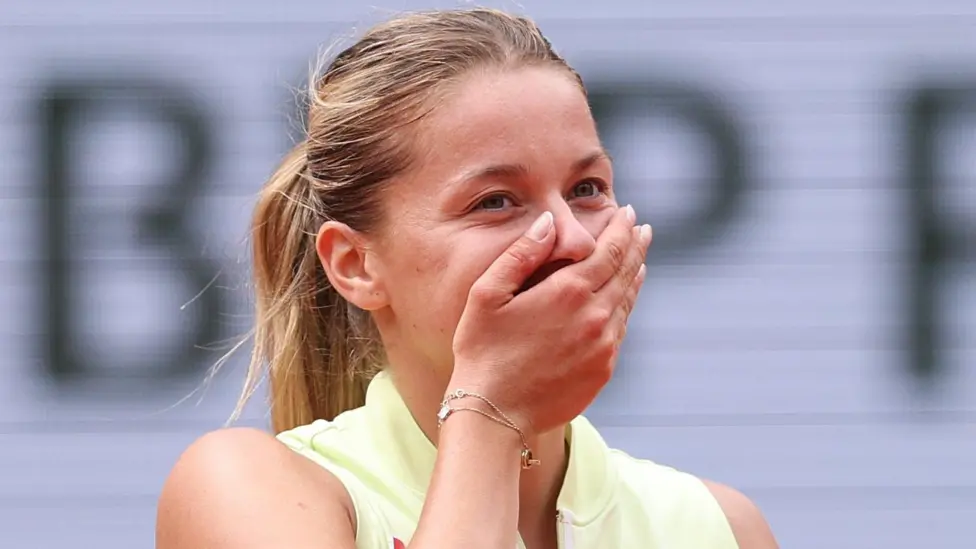
Qualifier Maja Chwalinska continued her dream French Open run as she beat Anna Kalinskaya to reach her first Grand Slam semi-final.
The world number 114 was left open-mouthed with shock after completing a superb 7-6 (7-3) 6-3 win over 22nd seed Kalinskaya on a blustery Paris day.
Poland’s Chwalinska is the second qualifier after Nadia Podoroska in 2020 to reach the singles semi-finals at Roland Garros.
She is only the sixth qualifier in the Open era to reach the women’s singles semi-finals at a Grand Slam.
Only one – Britain’s Emma Raducanu at the 2021 US Open – went on to win the title.
World number one Aryna Sabalenka could await Chwalinska the last four, with the Belarusian taking on Russian Diana Shnaider later on Wednesday.
“I honestly don’t know what is going on,” Chwalinska told the crowd.
“I know I repeat myself, but every match here is kind of crazy for me.”
It is a remarkable run for Chwalinska, who arrived at the tournament with just two victories in WTA Tour-level main-draw matches under her belt.
Her sole Grand Slam match win came at Wimbledon in 2022 – but Chwalinska now finds herself on an eight-match winning streak on the Parisian clay, having dropped just one set on the way.
Everything appears to have clicked in place for a player who once feared she might have left the sport for good.
Chwalinska struggled with depression for two years and took an indefinite break from tennis after losing in the first round of qualifying at Wimbledon in 2021.
She did not know whether she would return at that point, having lost her enjoyment of training and competing.
With the support of the people around her, the openness of fellow players such as Naomi Osaka in speaking about their mental health, and brief attempts to enjoy other sports, Chwalinska found herself gradually gravitating back to the tennis court.
It has all led her to this moment of a first major semi-final – and a potential David-versus-Goliath showdown with title favourite Sabalenka.

In Paris, Chwalinska has played with infectious freedom and joyful creativity, beating two seeded players and Olympic champion Zheng Qinwen along the way.
She kept her composure well against Kalinskaya, first having to reset after letting a 5-1 lead slip in the opener, before reeling off five straight points from 3-2 down in the resulting tie-break to take the lead.
She then held her nerve in the second, recovering from being broken as she tried to serve out victory before clinching her first match point on Kalinskaya’s serve.
“I was definitely nervous. I am stressed, of course, but I try to focus on my job and my games,” Chwalinska said.
“I am not focusing on confidence. I am playing against the best players in the world, so I will not compare myself to them.”
Whatever happens in the semi-finals, Chwalinska is now projected to leap up the rankings and into the world’s top 30.
By reaching the semi-finals, she has also secured prize money amounting to £647,700 – more than doubling her career total earnings of £642,400 in the space of 10 days.
[BBC Sport]

Battling Australia force series decider as questions grow for Pakistan

West Indies bowl vs Sri Lanka, Hetmyer not in the XI

Implementation of water supply projects in small town and rural areas.
Cabinet nod to submit Import and Export (Control) Regulations No. 04 of 2026 to Parliament for its concurrence
Declaration of Elephant Migratory Corridors to minimize HEC in Monaragala and Hambantota districts

Qualifier Maja Chwalinska extends dream French Open run

‘Dates have the highest sugar content to fight Coronavirus’

Sunday Island 27 December – Headlines

#SundayIsland 17th December – Headlines

Sunday Island – 28th March

Sunday Island Headlines – 21 March

Sunday Island – 21st February – Headlines
-
 News5 days ago
IMF urges Lanka not to meddle with exchange rate
-
 Business6 days ago
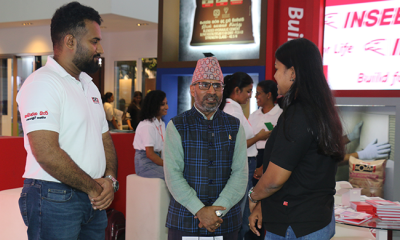
Sri Lanka’s construction industry losing ground while no one watches
-

 Business3 days ago
IMF’s unstated rate:Sri Lanka’s $695m loan costs about 5.33% per annum
-

 News2 days ago
Lankan duo emerge winners in Latin dance championship held in Blackpool, UK
-
 News5 days ago
State of emergency extended
-

 Features6 days ago
The Division Bell Mystery
-

 News3 days ago
UNP challenges NPP move to amend Vihara – Devalagam Act
-

 Features4 days ago
Are threats to Buddha Sasana external or from within?