
Foreign News
Europe’s night of election drama capped by Macron bombshell

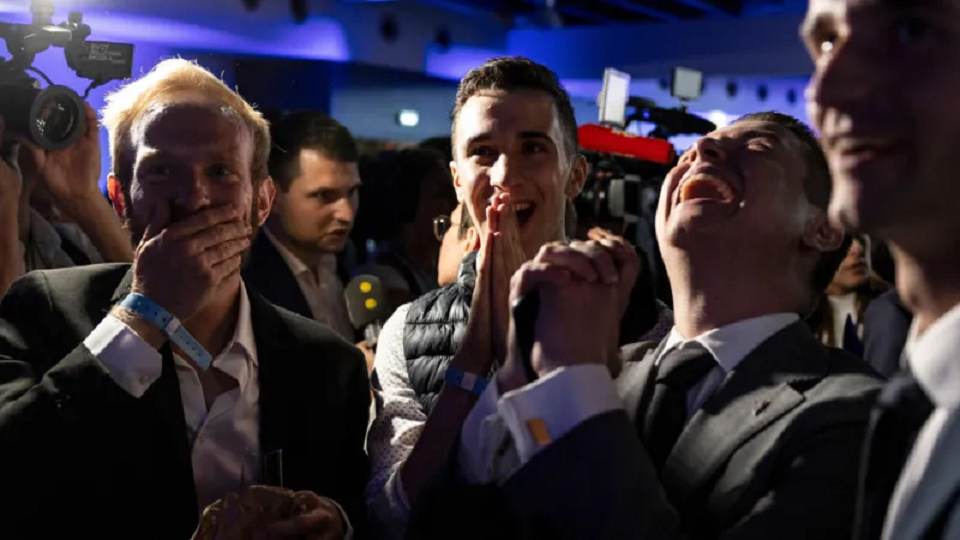
Exit polls had begun to roll in at the end of European elections across the EU’s 27 countries, when President Emmanuel Macron delivered his bombshell moment in a televised address to a stunned French population.
“I’ve decided to hand you back the choice of our parliamentary future with a vote. I am therefore dissolving the National Assembly,” he declared.
The National Rally party – led by Macron’s rivals Marine Le Pen and Jordan Bardella – was one of the big gains that Europe’s far-right parties had expected, and confirmation came with all the exit polls giving the party more than 30%, double that of Mr Macron’s centrist Renaissance.
But beyond France, the broader story of Europe’s four-day vote marathon really belonged to the parties of the centre right. They tightened their grip on the European Parliament, with victories in Germany and Spain, and significant advances in Hungary, against long-dominant Prime Minister Viktor Orban.
The far right did not enjoy as great a surge across Europe as many had predicted.
In the Netherlands, Geert Wilders’ Freedom Party came second, while Austria’s party of the same name came out as winners, but only narrowly.
“The centre is holding, but it is also true that the extremes on the left and on the right have gained support,” said Ursula von der Leyen, the centre-right head of the European Commission. “And this is why the result comes with great responsibility for the parties in the centre.”
There had been talk before the vote that her dominant European People’s Party might consider talking to the two right-wing groups that house the far right. But she made clear her only allies would be the Socialists & Democrats and the liberal Renew group that includes Mr Macron’s party.
Germany’s opposition conservatives were always going to come out on top, and they scored an impressive 30% of the vote. But for Chancellor Olaf Scholz’s SPD party this was the worst ever result in a European election, coming third behind the far-right Alternative for Germany (AfD).
The AfD has endured a slew of scandals involving espionage, foreign interference and allegations of Nazi sympathies, and yet its support still held up. “After all the prophecies of doom, after the barrage of the last few weeks, we are the second strongest force. And I’m telling you, the only way is up,” said co-leader Alice Weidel.

Meanwhile a new anti-migrant far-left party, BSW, led by charismatic left-wing firebrand Sahra Wagenknecht, also performed well – rounding off a good night for radical parties.
In Spain, the centre-right opposition Popular Party (PP) defeated Prime Minister Pedro Sánchez’s Socialists, but not by the big margin that PP leader Alberto Núñez Feijóo had been hoping for. Another far-right party, Vox, came a distant third.
Meanwhile, in Italy, Giorgia Meloni’s dominance of the country’s politics continues. Her far-right Brothers of Italy defeated the centre left Democratic Party of Elly Schlein by less than four points. “Thank you to the Italians who are continuing to choose us… I am proud of the result tonight,” she told her supporters.

In just five years, Ms Meloni has more than doubled her party’s seats in the European Parliament, while Ms Schlein’s performance pleasantly surprised even party activists.
There was no far-right success story in Belgium’s national elections, even though Flemish separatist party Vlaams Belang was widely expected to win. The Flemish National Alliance is now the dominant party there, bringing an end to the rule of liberal Prime Minister Alexander De Croo.
“The far right has under-performed in Belgium, the Czech Republic, Hungary, Finland and Poland. But it has over-performed in France,” said Prof Alberto Alemanno of HEC Paris, who was surprised that President Macron decided to dissolve parliament.
“It’s disproportionate that these election results might push a government out of a country,” he told the BBC.
[BBC]












About 550,000 accounts were blocked by Meta during the first days of Australia’s landmark social media ban for kids.
In December, a new law began requiring that the world’s most popular social media sites – including Instagram and Facebook – stop Australians aged under 16 from having accounts on their platforms.
The ban, which is being watched closely around the world, was justified by campaigners and the government as necessary to protect children from harmful content and algorithms.
Companies including Meta have said they agree more is needed to keep young people safe online. However they continue to argue for other measures, with some experts raising similar concerns.
“We call on the Australian government to engage with industry constructively to find a better way forward, such as incentivising all of industry to raise the standard in providing safe, privacy-preserving, age appropriate experiences online, instead of blanket bans,” Meta said in a blog update.
The company said it blocked 330,639 accounts on Instagram, 173,497 on Facebook, and 39,916 on Threads during it’s first week of compliance with the new law.
They again put the argument that age verification should happen at an app store level – something they suggested lowers the burden of compliance on both regulators and the apps themselves – and that exemptions for parental approval should be created.
“This is the only way to guarantee consistent, industry-wide protections for young people, no matter which apps they use, and to avoid the whack-a-mole effect of catching up with new apps that teens will migrate to in order to circumvent the social media ban law.”
Various governments, from the US state of Florida to the European Union, have been experimenting with limiting children’s use of social media. But, along with a higher age limit of 16, Australia is the first jurisdiction to deny an exemption for parental approval in a policy like this – making its laws the world’s strictest.
The policy is wildly popular with parents and envied by world leader, with the Tories this week pledging to follow suit if they win power at the next election, due before 2029.
However some experts have raised concerns that Australian kids can circumvent the ban with relative ease – either by tricking the technology that’s performing the age checks, or by finding other, potentially less safe, places on the net to gather.
And backed by some mental health advocates, many children have argued it robs young people of connection – particularly those from LGBTQ+, neurodivergent or rural communities – and will leave them less equipped to tackle the realities of life on the web.
(BBC)
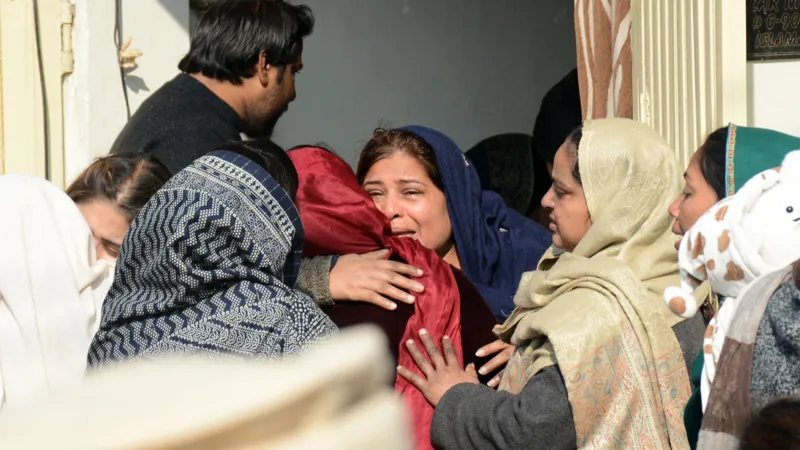
A newly married couple were killed when a gas cylinder exploded at a house in Islamabad where they were sleeping after their wedding party, police have said.
A further six people – including wedding guests and family members – who were staying there also died in the blast. More than a dozen people were injured.
The explosion took place at 07:00 local time (02:00 GMT) on Sunday, causing the roof to collapse.
Parts of the walls were blown away, leaving piles of bricks, large concrete slabs and furniture strewn across the floor. Injured people were trapped under the rubble and had to be carried out on stretchers by rescue workers.
(BBC)

Rescue workers are racing to find dozens of people still missing following a landslide at a landfill site in the central Philippines that occurred earlier this week, an official has said.
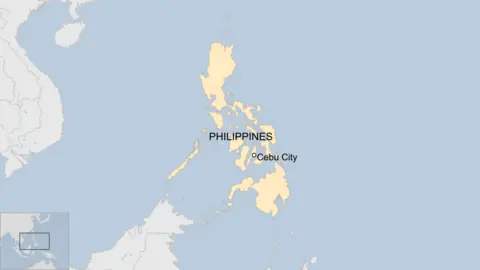
Mayor Nestor Archival said on Saturday that signs of life had been detected at the site in Cebu City, two days after the incident.
Four people have been confirmed dead so far, Archival said, while 12 others have been taken to hospital.
Conditions for emergency services working at the site were challenging, the mayor added, with unstable debris posing a hazard and crew waiting for better equipment to arrive.
The privately-owned Binaliw landfill collapsed on Thursday while 110 workers were on site, officials said.
Archival said in a Facebook post on Saturday morning: “Authorities confirmed the presence of detected signs of life in specific areas, requiring continued careful excavation and the deployment of a more advanced 50-ton crane.”
Relatives of those missing have been waiting anxiously for any news of their whereabouts. More than 30 people, all workers at the landfill, are thought to be missing.
“We are just hoping that we can get someone alive… We are racing against time, that’s why our deployment is 24/7,” Cebu City councillor Dave Tumulak, chairman of the city’s disaster council, told news agency AFP.
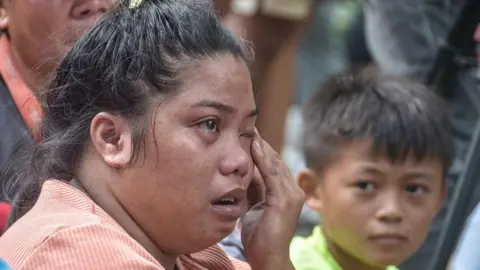
Jerahmey Espinoza, whose husband is missing, told news agency Reuters at the site on Saturday: “They haven’t seen him or located him ever since the disaster happened. We’re still hopeful that he’s alive.”
The cause of the collapse remains unclear, but Cebu City councillor Joel Garganera previously said it was likely the result of poor waste management practices.
Operators had been cutting into the mountain, digging the soil out and then piling garbage to form another mountain of waste, Garganera told local newspaper The Freeman on Friday.
The Binaliw landfill covers an area of about 15 hectares (37 acres).
Landfills are common in major Philippine cities like Cebu, which is the trading centre and transportation gateway of the Visayas, the archipelago nation’s central islands.
[BBC]

Showers in the Northern, North-central, Uva, Western, Eastern, Sabaragamuwa, North-western and Central provinces and Galle and Matara districts

Govt. extends ban on LTTE

Police obtain court order banning Wimal’s protest

Chinese Foreign Minister Wang Yi expresses optimism that Sri Lanka is on the right path to progres

India plans to restore northern regular train services to pre-Ditwah frequencies before traditional New Year 2026

Inauguration of first Bailey Bridge under Indian assistance package for post-Ditwah reconstruction

‘Dates have the highest sugar content to fight Coronavirus’

Sunday Island 27 December – Headlines

#SundayIsland 17th December – Headlines

Sunday Island – 28th March

Sunday Island Headlines – 21 March

Sunday Island – 21st February – Headlines
-
 News2 days ago
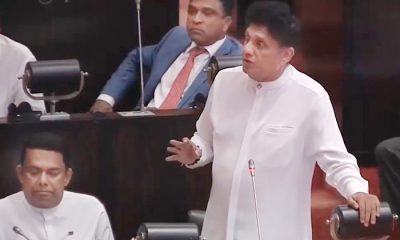
Sajith: Ashoka Chakra replaces Dharmachakra in Buddhism textbook
-

 Business2 days ago
Dialog and UnionPay International Join Forces to Elevate Sri Lanka’s Digital Payment Landscape
-

 Features2 days ago
The Paradox of Trump Power: Contested Authoritarian at Home, Uncontested Bully Abroad
-

 Features2 days ago
Subject:Whatever happened to (my) three million dollars?
-

 News2 days ago
Level I landslide early warnings issued to the Districts of Badulla, Kandy, Matale and Nuwara-Eliya extended
-

 News2 days ago
National Communication Programme for Child Health Promotion (SBCC) has been launched. – PM
-

 News2 days ago
65 withdrawn cases re-filed by Govt, PM tells Parliament
-

 Opinion4 days ago
The minstrel monk and Rafiki, the old mandrill in The Lion King – II