
News
SLPP’s opposition to privatisation and restructuring discarded: Mahinda, too, votes for Electricity (Amendment) Bill

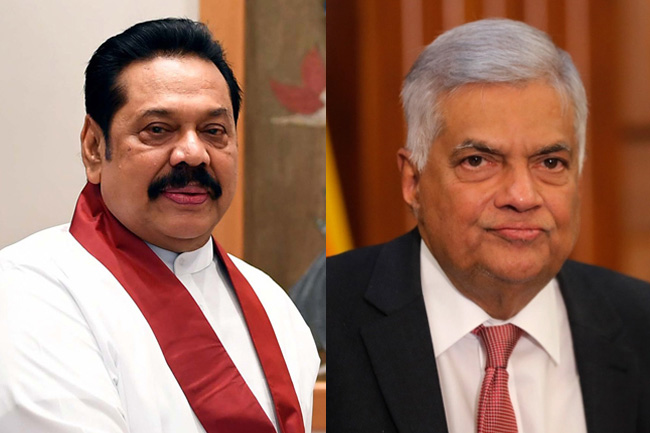
Over a dozen SJB MPs, Maithripala skip vote
By Shamindra Ferdinando
In spite of differences between President Ranil Wickremesinghe and the Sri Lanka Podujana Peramuna (SLPP) over the latter’s call for early General Election, a consensus seems to be emerging on the overall political strategy with the ruling party voting for the Sri Lanka Electricity Amendment Bill, political sources say.
The SLPP has so far declined to officially endorse Ranil Wickremesinghe candidature at the forthcoming Presidential Election though several members publicly supported the UNP leader.
SLPP leader Mahinda Rajapaksa, in spite of publicly declaring his opposition to the government privatization and restructuring plan, voted for the Bill along with his elder brother Chamal Rajapaksa, MP, his son, Shashendra Rajapaksa and General Secretary Sagara Kariyawasam, who recently warned of the SLPP withdrawing support to the government.
However, SLPP National List MP Namal Rajapaksa skipped the vote. Namal Rajapaksa was among about 10 SLPPers absent at the time of the voting.
During the debate JJB MP Vijitha Herath declared that the Bill was enacted to pave the way for the Adanis.
The Supreme Court determined the Bill as a whole is inconsistent with Article 12(1) of the Constitution and shall only be passed by the special majority of Parliament required under Article 84 (2). This inconsistency shall however cease if Clause 1(2) and Clause 1(3) were amended, the SC declared.
Political sources said that the SLPP’s stand was surprising against the backdrop of former President Mahinda Rajapaksa’s declaration on May 12 that the privatization and restructuring programme of the government should he stopped, pending the conclusion of the Presidential Poll later this year.
The following MPs voted for the Bill: Prime Minister Dinesh Gunawardena, Leader of the House Susil Premjayantha, Bandula Gunawardena, Wijeyadasa Rajapakse, Gamini Lokuge, Rear Admiral (retd.) Sarath Weerasekera, Major (retd.) Pradeep Undugoda, Premanath C. Dolawatte, Madura Withanage, Nalin Fernando, Lasantha Alagiyawanna, A.H.M. Fowzie (SJB), Indika Anuruddha, Sisira Jayakody, Prasanna Ranaweera, Nimal Lanza, Kokila Harshani Gunawardena, Milan Jayatilleke, Upul Mahendra Rajapaksa, Sahan Pradeep Vithana, Vudura Wickremanayake, Piyal Nishantha de Silva, Anupa Pasqual, Rohitha Abeygunawardena, Sanjeewa Edirimanne, Lalith Warnakumara Manju, Dilum Amunugama, Lohan Ratwatte, Anuradha Jayarathna, Mahindananda Aluthgamage, Pramitha Bandara Tennakoon, Rohana Dissanayake, Janaka Bandara Tennakoon, Nalaka Bandara Kottegoda, Jeevan Thondaman, S.B. Dissanayake, C. B. Ratnayake, M. Rameshwaram, Ramesh Pathirana, Manusha Nanayakkara, Mohan de Silva, Geetha Kumarasinghe, Sampath Atukorale, Isuru Dodangoda, Kanchana Wijesekera, D.V. Chanaka, Ajith Rajapaksha, Chamal Rajapaksha, Douglas Devananda, Carder Masthan, Seevanesathurai Chandrakanthan, Wimalaweera Dissanayake, S.M.M. Musharaff, D. Weerasinghe, Kapila Nuwan Atukorale, Mahinda Rajapaksa, D. B. Herath, Shantha Bandara, Johnston Fernando, U.K. Sumith Udukumbura, Samanpriya Herath, Anura Priyadarshana Yapa, Ashoka Priyantha, Priyankara Jayaratne, Ali Sabri Raheem, Shehan Semasinghe, S.M. Chandrasena, S. C. Muthukumarana, M. G. Weerasena, Siripala Gamlath, Jagath Samarawickrema, Nimal Siripala de Silva, Thenuka Vidanagamage, A Aravinda Kumar, Janaka Tissakuttiarachchi, Major (retd) Sudarshana Denipitiya, Vijitha Berugoda, Shashendra Rajapaksha, Dr. Gayashan Nawanandana, Kumarasiri Ratnayake, Pavitradevi Wanniarachchi, Janaka Wakkumbura, Premalal Jayasekera, John Seneviratne, Akila Saliya Ellawela, Muditha Prishanthi, Ranjith Siyambalapitiya, Kanaka Herath, Tharaka Balasuriya, Sudath Manjula, Rajika Wickremesinghe, Ali Sabry, Tiran Alles, Dr. Seetha Armbepola, Suren Raghavan, Wajira Abeywardena, Jayantha Ketagoda, Sagara Kariyawasam, Yadamini Gunawardena, Manjula Disanayake, Ranjith Bandara, Jayantha Weerasinghe and Mohamed Faleel Marjan.
Of the 103 MPs who voted for the Bill, two represented the SJB (Manusha Nanayakkara and A.H.M. Fowzie).
Sources said that Udayakantha Gunatilleke, though being present in Parliament at the time of the voting, hadn’t voted. The JJB’s three MPs -Anurta Kuamar Dissanayake, Vijitha Herath and Dr. Harini Amarasuriya – voted against the Bill, whereas the 10-member Tamil National Alliance (TNA) abstained.
Twenty MPs who had been elected on the SLPP ticket at the last General Election voted against the Bill, along with 36 SJB MPs. The SJB won 54 seats at the last General Election.
Former President Maithripala Sirisena (SLPP/Polonnaruwa) skipped the vote, whereas other SLFP MPs voted for the Bill. They included Wijeyadasa Rajapakse and Nimal Siripala de Silva, leading two factions in the SLFP.
Sources said that the SLPP’s backing for the Bill meant that the May 12 statement regarding their opposition to privatization and restructuring was not relevant.
They said that the SLPP was most likely to support the Economic Transformation Bill (ETB) that had been challenged by the SJB in the Supreme Court.
The Supreme Court summarized the Constitutionality of Sri Lanka Electricity Bill as follows:
The Bill as a whole is inconsistent with Article 12(1) of the Constitution and shall only be passed by a special majority of Parliament required under Article 84 (2). This inconsistency shall however cease if Clause 1(2) and Clause 1(3) are amended as set out in the summary of the Determination of the Supreme Court.
Clauses 3(6) (a) and 10(1) (c) are inconsistent with Article 12(1) of the Constitution and shall only be passed by the special majority required under Article 84(2). However, the inconsistency shall cease if those Clauses are amended as set out in the summary of the Determination of the Supreme Court.
The first proviso to Clause 11(1) of the Bill is inconsistent with Article 12(1) of the Constitution and shall only be passed by the special majority of Parliament required under Article 84 (2). However, the said inconsistency shall cease if the Clause is amended as set out in the summary of the Determination of the Supreme Court.
Clause 17 is inconsistent with Article 12(1) of the Constitution and shall only be passed by the special majority of Parliament required under Article 84(2). The said inconsistency shall however cease and Clause 17 may be passed by a simple majority if the Clause is amended as set out in the summary of the Determination of the Supreme Court.
Clause 18(3) (e) (ii) of the Bill is inconsistent with the provisions of Article 12(1) and shall only be passed by the special majority of Parliament required under Article 84(2). The said inconsistency shall however cease if Clause 18(3) is amended as set out in the Summary of the Determination of the Supreme Court.
Clause 18(3) (f) of the Bill is inconsistent with Article 12(1) and Article 14(1) (g) of the Constitution and shall only be passed by the special majority of Parliament required under Article 84(2). However, the said inconsistency shall cease if the Clause 18(3) (f) is amended as set out in the summary of the Determination of the Supreme Court.
Clause 18(5) (b) (ii) is inconsistent with Article 12(1) of the Constitution and shall only be passed by the special majority of Parliament required under Article 84(2). The said inconsistency shall however cease if Clause 18(5) (b) (ii) is amended as set out in the summary of the Determination of the Supreme Court.
Clause 21 and Clause 23 are inconsistent with Article 12(1) of the Constitution and shall only be passed by the special majority of Parliament required under Article 84(2). The said inconsistency shall however cease if those Clauses are amended as set out in the summary of the Determination of the Supreme Court.
Clause 38 (2) of the Bill is inconsistent with Article 12(1) of the Constitution and shall only be passed by the special majority required under Article 84(2). The said inconsistency shall cease if Clause 38(2) is amended as per the summary of the Determination of the Supreme Court.
Clause 48 is violative of Article 4(a) read together with Article 3 and 76 and hence needs to be passed by the special majority of Parliament and approved by the People at a Referendum.
The definition of ‘national grid’ in Clause 53 of the Bill is inconsistent with Article 12(1) of the Constitution and shall be passed by the special majority of Parliament required under Article 84(2). However, the said inconsistency shall cease if the said definition is amended as set out in the summary of the Determination of the Supreme Court.







‘Companies may face US sanctions’: Lanka to put ‘national interest’ first as 19 Iranian vessels seek help
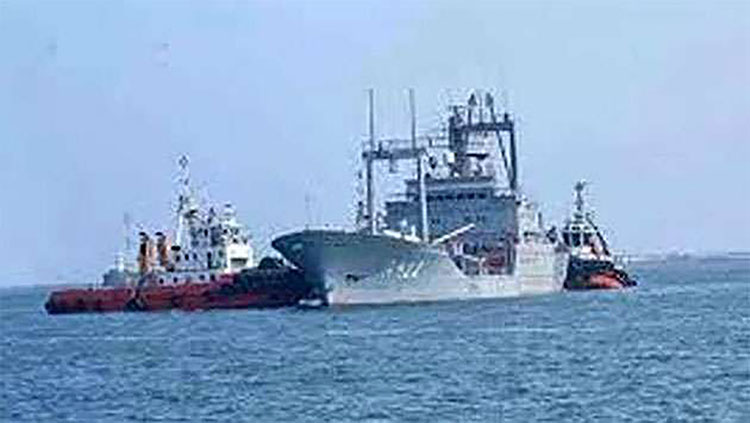
(ToI) Sri Lanka said on Friday it would “prioritise our national interests” before providing assistance to the crews of 19 Iranian ships anchored in international waters near the island nation.The crews are facing shortages of food, water and fuel. A foreign ministry spokesperson cited the risk of US sanctions against Sri Lankan companies supplying the vessels as a key concern.
The United States and Iran have been at war since February 28, when the US and Israel launched joint strikes against the Islamic Republic.
“Sri Lanka will put its national interest first before considering any help, and the companies that supply ships are aware of possible secondary sanctions from the United States,” spokesperson Thushara Rodrigo told reporters, ruling out any immediate assistance to the vessels.
Rodrigo clarified, however, that Sri Lanka had received no communication from the United States warning of repercussions if it decided to assist the vessels.According to Rodrigo, the ships are stationed 24 nautical miles off Sri Lanka’s coast.The Iranian Embassy said it had no information on the matter.
In March, a US torpedo attack sank the Iranian naval vessel IRIS Dena in Sri Lankan waters, killing 87 sailors.
The ship was returning to Iran after participating in a naval exercise at India’s invitation. A second Iranian vessel was brought to a Sri Lankan port after its crew reported technical problems.
Wounded sailors were treated at Sri Lankan hospitals, while those rescued from the second vessel were safely repatriated to Iran.
Sri Lanka is still recovering from an economic crisis, with both the United States and Iran serving as important trading partners. Washington played a key role in securing an International Monetary Fund bailout and supporting Sri Lanka’s agricultural sector to help avert a food crisis.
Sri Lanka CERT has warned the public of fraudulent social media advertisements offering admission to foreign universities after receiving complaints from parents and students who have lost hundreds of thousands of rupees to scammers.
The fraudsters reportedly pose as representatives of reputed foreign universities, promising admission, student visas, work permits and even eventual citizenship in return for registration fees and initial tuition payments.
They use convincing videos, photographs and documents circulated via email and WhatsApp to gain the confidence of unsuspecting victims before asking them to transfer money to foreign bank accounts. The scammers then disappear after receiving the payments, Sri Lanka CERT said.
The agency has urged prospective students and their parents to verify the authenticity of university representatives, documents and bank account details before making payments, and to seek overseas education opportunities only through legitimate and recognised channels.
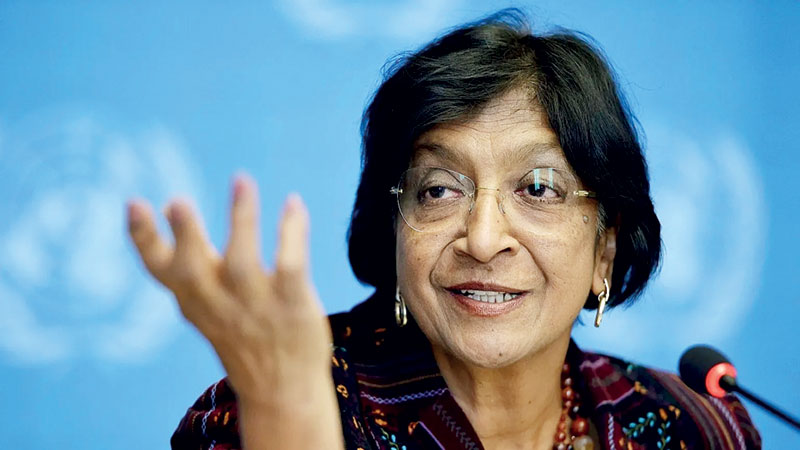
Former UN High Commissioner for Human Rights and International Court of Justice judge Navanethem “Navi” Pillay has won the 2026 Nobel Peace Prize for her contribution to international law and efforts to promote peace, the Norwegian Nobel Committee announced in Oslo on Friday.
Announcing the award, committee chairman Jørgen Watne Frydnes said Pillay had “significantly enlarged the scope and impact of international law” and helped advance “a more comprehensive global legal order” with exceptional courage. He also praised her long career, which began as a lawyer confronting deep-rooted discrimination in South Africa, and described her as a person with a “firm moral compass”.
Pillay, 85, served as the UN High Commissioner for Human Rights from 2008 to 2014. Her tenure brought her into sharp focus in Sri Lanka, particularly over her assessment of the country’s human rights situation in the aftermath of the decades-long civil war.
During an official fact-finding visit to Sri Lanka from August 25 to 31, 2013, Pillay travelled to areas including Jaffna, Kilinochchi and Trincomalee, where she met civil war survivors, families of the disappeared and local communities.
Following the visit, she warned that Sri Lanka was moving towards authoritarianism and highlighted what she described as a persistent climate of fear.
She also reported intimidation and harassment of people who had sought to meet her during the mission.
Pillay urged the UN Human Rights Council to establish an international inquiry mechanism to investigate alleged war crimes and crimes against humanity committed by both government forces and the LTTE during the final stages of the 26-year civil war.
Her observations and recommendations became a significant part of international scrutiny of Sri Lanka’s post-war human rights record.
The Norwegian Nobel Committee received 287 nominations for this year’s Peace Prize, slightly more than a quarter of them being organisations. The committee traditionally considers efforts to promote peace, international fraternity and institutions that contribute to lasting stability.
Last year, Venezuelan opposition leader Maria Corina Machado won the prize for her campaign for a democratic transition in Venezuela. She was praised as a woman who kept the flame of democracy burning amid growing darkness.
The 2026 award marks the 125th anniversary of the Nobel Peace Prize, first presented in 1901. Over its history, the prize has recognised prominent figures and organisations involved in advancing peace, human rights and international cooperation.

Rahmat, Malik fifties lead Afghanistan’s strong reply

Showers above 75 mm are likely at some places in the Western, Sabaragamuwa, Central, Uva and North-Western provinces and in Galle, Matara, Anuradhapura and Mannar districts.

Iranian ships stranded, Lanka fears US sanctions

Sri Lanka CERT warns of overseas university admission scams

Navi Pillay’s Lankan affairs in focus as she wins 2026 Nobel Peace Prize

Lanka welcomes Indian SC remarks on Katchatheevu dispute

‘Dates have the highest sugar content to fight Coronavirus’

Sunday Island 27 December – Headlines

#SundayIsland 17th December – Headlines

Sunday Island – 28th March

Sunday Island Headlines – 21 March

Sunday Island – 21st February – Headlines
-

 News6 days ago
Geneva takes up Sallay’s case and govt. ignores opportunity to answer accusations
-

 Features5 days ago
Preventing grievances from becoming communal
-

 Features3 days ago
The Sri Lankan who made Scottish history
-

 Sports3 days ago
Nissanka absence opens door for Sri Lanka’s young guns
-

 News4 days ago
Gnansara Thera to be assigned to prison printing section: Officials
-

 Features6 days ago
Sri Lanka Cricket Bill: Governance reform is not yet a cricket strategy
-

 News2 days ago
NDB fraud Rs 60mn more than reported
-

 Features3 days ago
Future of Sri Lanka’s state university system: Should it be shut down and reopened?