
Latest News
Scotland openers make the running before rain frustrates in Barbados

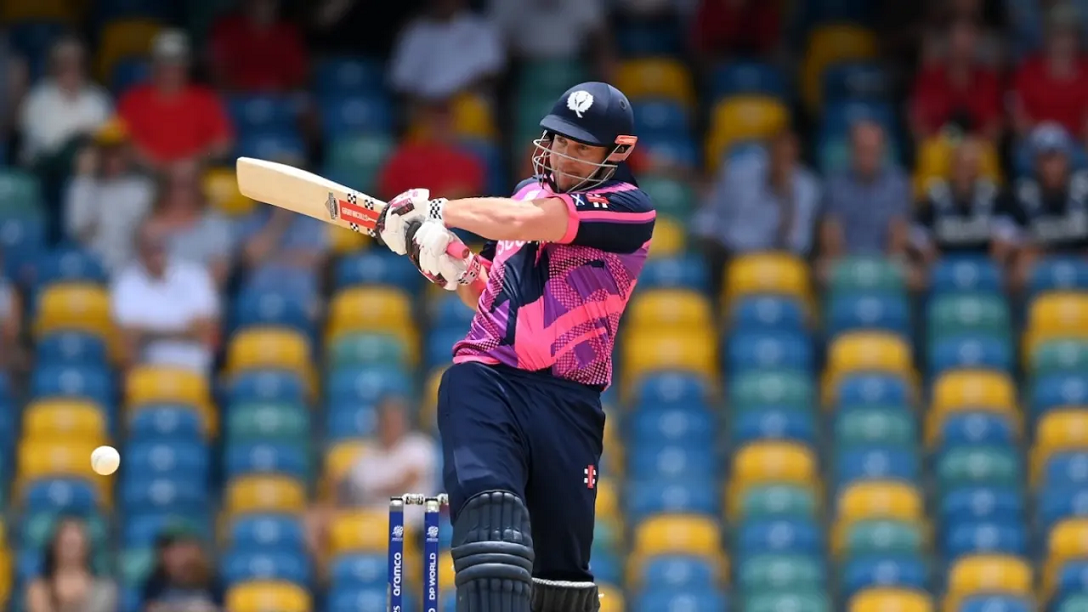
Scotland showed that they mean business at this T20 World Cup with Michael Jones and George Munsey forging ahead to 90 without loss in an innings cut in half by heavy rain. But the weather eventually ruined their opening match against defending champions England.
An untimely rain squall, followed by a damp spot on the pitch, delayed the start by 55 minutes after Scotland had won the toss and opted to bat. A much heavier storm arrived to halt proceedings again just two balls after the powerplay with Scotland reaching 51 for nought off the back of some assured hitting from Jones, who was unbeaten on 30 from 20 balls at the time, and Munsey, who had earlier been let off by a Mark Wood no-ball.
By the time the skies cleared and the ground was mopped up sufficiently, the match had been reduced to 10 overs per side. Jones and Munsey added 39 runs in the remaining 3.4 overs after the restart to push their score to 90 without loss and England were set an adjusted target of 109 to win. But as soon as they finished, the rain returned for good and condemned the contest to a wash-out.
Wood found some late inswing with the first ball of the match, which had Munsey on the hop immediately. But Munsey settled to pick up Wood’s fourth ball from outside off stump and power it over mid-on for four. Munsey had reached 16 when he skied a Wood delivery towards deep third with Jos Buttler running back from behind the stumps to take the catch. However, the sound of the no-ball siren dampened England’s celebrations as replays showed Wood had over-stepped by a considerable margin.
Scotland were 34 without loss after that fifth over, then Jones swung Chris Jordan for an 87-metre six which smashed a solar panel on the roof of the stand beyond deep midwicket. It was the first of three consecutive boundaries, the next a four punched through the covers and another scything through midwicket, as Jones took 15 runs off the over to power his side to the end of the powerplay on 49 for nought. He and Munsey added just two more runs, however, before more rain arrived and halted play for the best part of two hours.
Play resumed with 3.4 overs remaining in Scotland’s innings. With Jofra Archer and Wood unavailable with a new maximum of two overs per bowler, Adil Rashid was introduced to bowl the eighth over. Jones clubbed Rashid’s first ball over long-on for six and Munsey chimed in with a four and a six to push the scoring along.
England kept the faith in Jordan’s renowned death bowling despite his expensive first over and Munsey thrashed the second ball of his next over the fence at backward square for six. Rashid was more miserly in the final over, conceding just four runs off the first five balls before Jones pulled the last ball through midwicket for four to take his side to 90 without loss.
It wasn’t a chanceless innings after the restart with Munsey surviving an England review for caught behind off a googly in Rashid’s first over and Jones making his ground despite his bat sticking in the pitch as he ran over the crease to beat a direct hit when the Scotland duo took a second run off Jordan’s last ball. At that moment, the rain returned, but the 10 overs were completed, all to no avail as the showers set in.
Having waited so long to play international cricket in his birthplace of Bridgetown, Archer’s comeback continued with a two-over spell, the first going for 10 runs, all to Jones who pounced on some extra width to dispatch his third ball through the covers for four. Archer’s second over was much tighter as he deployed his leg-cutter and only conceded two singles, closing with a short, fast delivery which brushed Jones’ glove as he attempted to pull and, fortunately for the batter, didn’t reach Buttler behind the stumps.
Archer’s appearance in the second T20I at home against Pakistan late last month was his first professional match in more than a year following a lengthy battle with injuries. There, he took 2 for 28 and hit speeds of 92mph/148kph which further soured this rain-affected match. Amid the rain restrictions, England could only wonder what more he might have done.
Brief scores:
Scotland 90 for 0 in 10 overs (Michael Jones 45*, George Munsey 41*) vs England (match abandoned)
[Cricinfo]







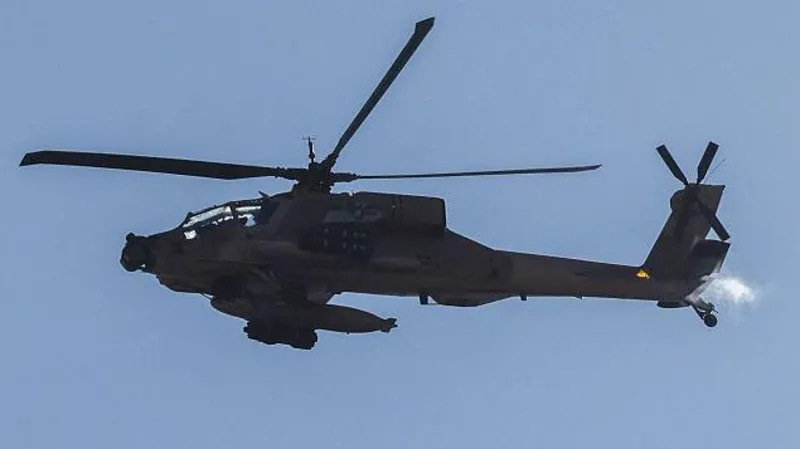
The US says it has carried out a series of strikes on Iranian military and surveillance sites in response to the downing of an American helicopter in the Gulf.
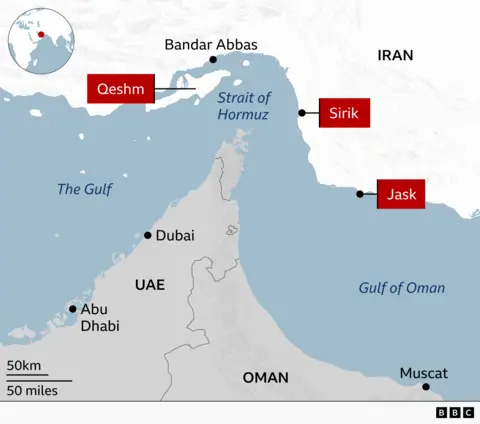
Air defence systems, ground control stations and radar sites were targeted near the Strait of Hormuz, the US military Central Command (Centcom) said.
In response, Iran’s Islamic Revolutionary Guard Corps (IRGC) said it launched strikes on 21 targets at US bases in the region, one in Bahrain and the other in Jordan, while Kuwait’s army said it was also intercepting an attack.
The US has described its strikes as “a proportional response” for the Apache helicopter downing on Monday, while the IRGC described the attacks as “vicious”.
US President Donald Trump had earlier accused Iran of shooting down the helicopter and said the US “must, of necessity” respond. The two crew members survived and were rescued by an American sea drone.
According to US officials, Iran used a drone to launch the attack on the helicopter. But it is not clear whether the Iranian drone had deliberately attacked, an unnamed US official told CBS News, the BBC’s US partner. The semi-official Mehr News Agency reported that Iran had not claimed responsibility for the downed aircraft.
Trump said the helicopter had been patrolling the Strait of Hormuz, a critical shipping channel that was effectively closed days after the US and Israel launched its first strikes on Iran in late February.
On Wednesday, the IRGC said US strikes had damaged a telecommunications tower and two water tanks, and added the US had targeted the cities of Jask and Sirik, and Qeshm – an island in the Gulf.
US officials are yet to comment on reports of attacks on its bases and it is unclear if there has been any damage. Jordan’s military said it had shot down five missiles fired from Iran.
Earlier, an air raid alert was issued in Bahrain, according to local authorities who said Iranian attacks had been repelled.
Iran’s foreign minister issued a threat to the US in the aftermath of the renewed US attacks, saying the country “will leave no attack or threat unanswered”.
“Despite its defeats on the battlefield, the US opted to test our determination,” Iran’s Foreign Minister Abbas Araghchi wrote on X.
He added: “Leave our region if you want to be safe.”
In Washington, US House Speaker Mike Johnson said he was in the room with Trump when he decided that US attacks on Iran should resume.
“We lament that it became necessary,” said the top Republican in Congress, adding that “we’re going to have to take care of this business”.
Araghchi said on Tuesday that foreign forces near Iran’s territory were at “constant risk on account of their own human errors, plain accidents or potentially being caught in crossfire”.
“To reduce risk, best solution is for them [foreign forces] to leave,” the Iranian leader said in a post on X.
Minutes before Trump’s comments on the downed American Apache helicopter on Tuesday, Iran’s top negotiator in peace talks with Washington, Mohammad Baqer Qalibaf, took to social media to signal retaliation.
“We prefer the language of diplomacy, but we speak other languages far more fluently. Break your commitments, and we’ll switch to what we speak best.”
“You ride the horse you saddled!,” he wrote.
It remains to be seen what impact the exchange of fire will have on the negotiations between the US and Iran.
But Iranian foreign ministry spokesman Esmaeil Baqai told reporters on Wednesday that the US was “damaging this diplomatic process through the contradictory messages it sends, its repeated shifts in positions and demands, and, worst of all, through repeated violations of the ceasefire”.
He said Iran needed to re-assess the situation, adding that any diplomatic process required a minimum of stability.
The flare-up between the US and Iran comes after Israeli forces carried out strikes across southern Lebanon on Tuesday.
Tehran had warned that Israeli attacks on southern Lebanon would trigger another wave of retaliatory strikes.
Israel and Iran halted attacks on each other after exchanging fire over the weekend for the first time since April’s truce.
Trump publicly told both countries to “immediately stop ‘shooting'” because they were jeopardising negotiations between Washington and Tehran on a deal to end the regional war.
He said on social media platform Truth Social that Israel and Iran are looking to do “an immediate ceasefire” but peace is “subject to ignorance or stupidity getting in its way”.
On Tuesday he also told journalists: “We’re in the final throes of what will be a very, very good deal,” adding that it could take “two or three days” and the Strait of Hormuz would open immediately after.
[Aljazeera]

Nahid Rana and Mosaddek Hossain combined brilliantly to secure Bangladesh a huge win against Australia in the first ODI in Dhaka. The 86-run victory, which eventually came via DLS due to a thunderstorm, was only the second time that Bangladesh have defeated Australia in this format; their previous win was in June 2005, known as the Cardiff Miracle. However, this win 21 years later was far from an upset as Bangladesh continued their impressive home form by completely dominating proceedings.
Mosaddek celebrated his return to the team after four years with an all-round showing that included an unbeaten career-best 86 and two wickets. Rana, who had taken three five-wicket hauls in the last three months, claimed 4 for 41 in a fiery performance where he was clocked at over 150kph.
Australia had a forgettable day at the Shere Bangla National Stadium. They dropped four catches and looked unlike themselves in the field. Then they couldn’t withstand Rana’s speed on a pitch that produced mostly even bounce and a bit of pace. Cameron Green ended unbeaten with 52 but the game had long since gone.
Taskin Ahmed’s peach of a delivery that moved slightly off the wicket castled Matt Short off the first ball of the Australia chase. Short became only the fifth opener to get out first ball in an ODI innings against Bangladesh, and the first in 17 years. It meant Australia had registered three consecutive scoreless opening stands.
Mustafizur Rahman trapped the struggling Marnus Labuschagne lbw with the second ball of the next over. Left-armer Mustafizur pitched it up to Labuschagne who played around the delivery. There was initial doubt about the review before captain Mehidy Hasan Miraz gave the signal and it was the right call.
Rana then bowled a perfect length to Australia captain Josh Inglis who edged to wicketkeeper Litton Das. Rana, who usually doesn’t react to his wickets too loudly, really went into a celebratory run, appearing to say something Inglis. He reacted to Rana’s outburst, before Mehidy escorted away his Australian counterpart. In the rest of the over, Rana bowled deliveries in excess of 146kph.
Mosaddek’s fine day continued when he removed Cooper Connolly in the 20th over with a delivery from around the wicket which slid into leg stump. Connolly, opening for just the second time in his ODI career, made 35 off 50 balls. Alex Carey was the next to go, nicking Rana to the keeper for 47 when he looked beaten for pace. In the 29th over, Rana bowled one delivery that reached 150kph.
Rana also removed debutant Liam Scott and Xavier Bartlett in the space of two overs. Scott fended a rising delivery to Tawhid Hridoy, who took a diving catch in front of him at gully, and Bartlett avoided getting hit when he gave a simple catch to Tanzid at square-leg off a 148kph delivery.
Meanwhile, Mosaddek had added his second when he trapped Matt Renshaw lbw for 2 with one which turned sharply to hit the back leg. Mosaddek capped off his brilliant day with a terrific catch running back from mid-off when Nathan Ellis top-edged Mustafizur.
After Bangladesh were sent in to bat, Mosaddek led the way in the latter part of the innings as he struck seven fours and three sixes in his unbeaten 86 off 70 balls. Mosaddek added 75 for the fifth wicket with Hridoy who contributed a sedate 31. The partnership revived the Bangladesh innings after they had slipped to 140 for 4.
Tanzid Hasan and Najmul Hossain Shanto had laid the platform with a 96-run stand for the second wicket after Bangladesh lost Saif Hassan in the second over. The left-handed duo kept the home side in the driver’s seat with regular boundaries throughout their stay. Shanto was initially the more aggressive of the pair, regularly coming down the track against the Australia seamers.
Tanzid played mostly from his crease, as he crashed the ball down the ground whenever it was pitched up. However, they were unable to push on, falling shortly after reaching their first milestones. Tanzid holed out to Bartlett at mid-on followed by Shanto chipping to long-off nine overs later. In between, Renshaw had taken a superb caught-and-bowled to remove Litton for 7.
Mosaddek and Hridoy batted positively while rotating the strike during their fifth-wicket stand, continuing their impressive form from the DPL. Mosaddek’s first boundary was a straight six off Adam Zampa although he was lucky, too, surviving dropped catches on 21, 38 and 73.
In between, he struck the ball hard down the ground. When he lost Hridoy and Mehidy in quick succession, Mosaddek didn’t panic, adding 65 with the lower order. Taskin supported him with a six and two fours while Mosaddek raced between the wickets whenever there was an opportunity to take a second run.
Brief scores:
Bangladesh 284 for 8 in 50 overs (Tanzid Hasan 54, Najmul Hosain Shanto 67, Mosaddek Hossain 86*; Nathan Ellis 3-38, Liam Scott 2-57, Matt Renshaw 2-35) beat Australia 191 for 9 in 42.2 overs (Alex Carey 47, Cameron Green 52*; Mustafizur Rahman 2-24, Nahid Rana 4-41, Mosaddek Hossain 2-37) by 86 runs (DLS method)
[Cricinfo]

Showers will occur at times in the Western, Sabaragamuwa and North-western provinces and in Galle, Matara, Kandy and Nuwara-Eliya districts

‘Investigations won’t be stopped due to protests’

267,138 Lankan children dropped out of school system between 2018 and 2024

PM declares PC polls only under new electoral system

No decision on extending retirement age of judiciary – govt.

From UAE heartbreak to fresh hope in England

‘Dates have the highest sugar content to fight Coronavirus’

Sunday Island 27 December – Headlines

#SundayIsland 17th December – Headlines

Sunday Island – 28th March

Sunday Island Headlines – 21 March

Sunday Island – 21st February – Headlines
-
 Latest News7 days ago
Kusal Mendis, Pathum Nissanka, bowlers put Sri Lanka 1-0 up
-

 Features6 days ago
Power crept into the Sangha and is now tearing it apart
-

 Features6 days ago
Kondachchi wind farm and battery storage project to boost energy security, says Power Ministry Secretary
-
 News4 days ago
Women’s T20 World Cup 2026 warm-up: Chamari Athapaththu’s 94 helps Sri Lanka beat Pakistan
-

 Features6 days ago
Saudi Arabia sets new benchmark in Hajj management as 1.7 million pilgrims complete sacred journey
-

 News5 days ago
Asst. Manager, security officer arrested over Rs 30 mn snatch at Horana PB branch
-

 Editorial3 days ago
Probe Sallay’s complaint
-

 News4 days ago
Lankan-Canadian inducted to Toronto Sports Hall of Fame