
Foreign News
South Africa leader under pressure after election blow


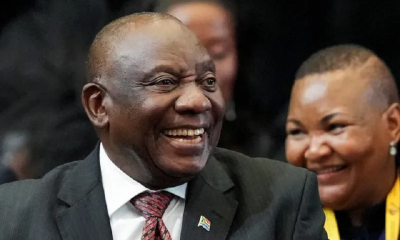
South Africa’s President Cyril Ramaphosa is under growing pressure after leading the ruling African National Congress (ANC) to its worst election result in 30 years, forcing it to share power.
With votes in from most districts, the ANC is on 40% – down from 58% at the previous election. This is lower than the party’s feared worse-case scenario of 45%, analysts say, The ANC has always polled above 50% since the country’s first democratic elections in 1994, which saw Nelson Mandela become president.
But support for the party has been dropping significantly due to anger over high levels of corruption, unemployment and crime.
Citing the cost-of-living crisis and frequent power-cuts, a woman told the BBC she ended a 30 year voting streak for the ANC in favour of the centre-right Democratic Alliance (DA) this time.
“This result is not good. I wanted it out of government. We need to give someone else a chance,” she said
The final results will be announced at 18:00 local time (17:00 BST) on Sunday, the BBC understands.
The ANC leadership has begun to consult internally to prepare for complex coalition talks.
Its options are the DA, which is in second place on 22%, the uMkhonto we Sizwe (MK) party led by former President Jacob Zuma, on 15%, or the radical Economic Freedom Fighters (EFF) with 9%.
Both the EFF and MK advocate seizing white-owned land and nationalising the country’s mines.
The MK has said it would be prepared to work with the ANC, but not while it was led by Mr Ramaphosa.
He replaced Mr Zuma as both president and ANC leader following a bitter power struggle in 2018.
MK supporters have been celebrating overnight in Durban, the biggest city in the party’s heartland of KwaZulu-Natal province. The party was only formed in December.
ANC chairperson Gwede Mantashe said his party was unlikely to form an alliance with the DA. He said there would have to be “policy alignment” between parties to form a coalition agreement.
For the ANC, its black empowerment policies – aimed at giving black people a stake in the economy following their exclusion during the racist apartheid era – were “non-negotiable”.
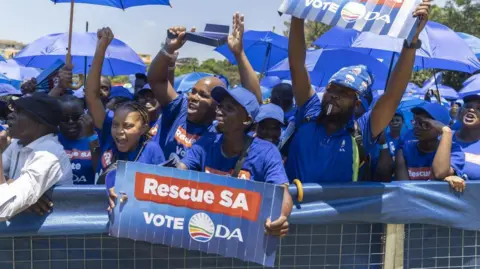
He added that any coalition partner would have to agree to the National Health Insurance (NHI) Bill, which promises universal health care for all, signed into law earlier this month.
The DA opposes both the NHI and the ANC’s black empowerment policies.
Despite the ANC’s reluctance to align with the DA, its leader John Steenhuisen hasn’t ruled out the idea.
Bit if an alliance with the ANC was reached there would be a few non-negotiables, he said. “Respect for the rule of law and the constitution, a social market economy that treats the private sector as partners in the growth agenda.”Zero tolerance for corruption and cadre deployment, and an absolute laser-like focus on economic policies that grow jobs.”
Mr Steenhuisen also told the BBC he would have to consult pre-election coalition partners before considering any negotiations. But he ruled out the EFF and the MK party as potential coalition partners. “I think instability is not in the best interest of the country. A coalition with the radical left in South Africa of the MK party and the EFF will produce the same policies that destroyed Zimbabwe, destroyed Venezuela,” he said.
Another option would be to work with the EFF, led by Julius Malema, a former ANC youth leader. The two parties currently form the coalition that runs the country’s biggest city, Johannesburg.
A record 70 parties and 11 independents were running, with South Africans voting for a new parliament and nine provincial legislatures.
The DA has signed a pact with 10 of them, agreeing to form a coalition government if they get enough votes to dislodge the ANC from power. But this does not include the EFF or MK, who would be needed to form a majority.
As the parties scramble to form alliances, Kenya’s former President Uhuru Kenyatta, who is leading the African Union election observer mission in South Africa, offered some advice for forming coalitions.
He said coalition governments need to focus on areas of agreement instead of differences.
“I can only wish them well and hope that the leadership will take this decision by the people in a positive frame,” he said.
(BBC)










Almost 5,000 people are known to have died in two earthquakes that devastated Venezuela in June, but the United Nations estimates that as many as 50,000 people may still be missing – with many feared buried under rubble.
The number of confirmed deaths is now higher at 4,930, lawmaker Jorge Rodriguez announced on Thursday
The disaster almost a month ago impacted tens of thousands of others. Nearly 17,000 people are wounded, and 21,120 are living in shelters.
Venezuelan teams have been operating since the earthquake struck, but locals say their response has been slow.
“From the very first moment, from when the earthquake happened, there was an immediate response, but from civilians. Civilians and independent people. The state’s response is only being seen now,” Cinthia Pulido, a Venezuelan displaced by the earthquakes, told Al Jazeera. “We’re watching and waiting for some kind of answer.”
International rescue teams sent in the immediate aftermath of the disaster have left as the focus moves to providing humanitarian relief.
“The little I can get is just for me to survive, support my children, and help my mum,” Louismarez Paez, who has also been displaced, told Al Jazeera.
Her mother, she said, does not receive any assistance other than that which she herself provides.
Venezuela has ‘crucial resources’ it cannot access
Venezuela has faced tight US sanctions since 2015, which experts say is making the government’s job even harder.
“Venezuela has crucial resources that it is not being allowed to access,” Mark Weisbrot, senior economist and co-director at the Center for Economic and Policy Research, said.
That includes $11bn blocked by the US and European countries that Venezuela “should legally have”, Weisbrot said.
Earlier this week, a group of 14 Democratic lawmakers in the US sent a letter urging the White House to ease economic sanctions on Venezuela to aid recovery efforts, according to a report from Spanish newspaper El Pais.
The sanctions, they wrote, are “severely hampering urgent relief efforts” and have “severely undermined the country’s response and reconstruction efforts”.
The UN estimates that the recovery efforts in Venezuela could cost the country $37bn.
[Aljazeera]
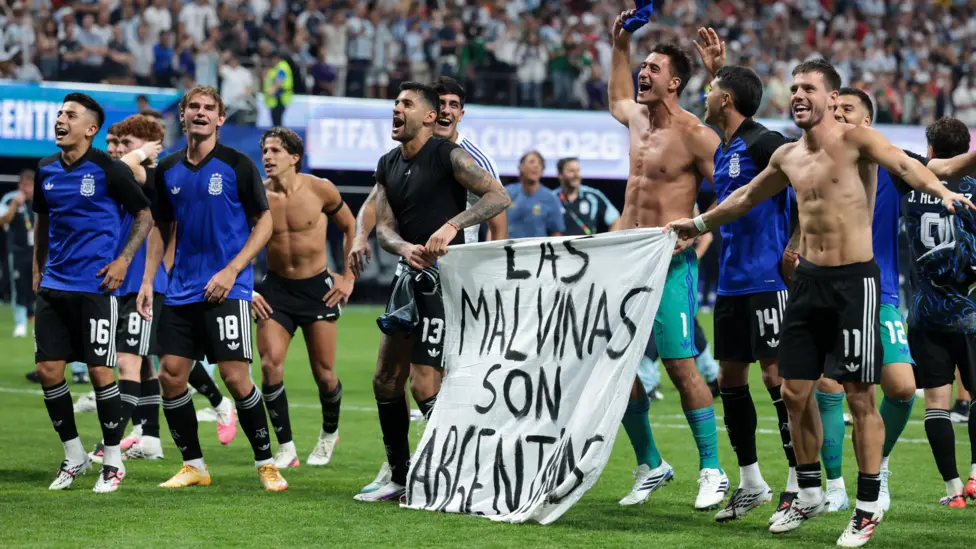
Argentina face the prospect of a Fifa fine after their players celebrated the World Cup semi-final win against England with a banner in support of their country’s claims to the Falkland Islands.
The defending world champions produced a dramatic late comeback in Atlanta, scoring twice to defeat Thomas Tuchel’s side 2-1 and book a showdown with Spain in Sunday’s final.
After the final whistle, Argentina players celebrated while holding a banner reading “Las Malvinas son Argentinas”, which translates as “The Falklands are Argentine”.
The Falkland Islands, a British overseas territory in the south-west Atlantic Ocean, remain the subject of a sovereignty dispute between Britain and Argentina.
The two nations went to war over the group of islands, situated 300 miles off Argentina’s east coast, from April to June 1982.
The 74-day conflict led to the deaths of 655 Argentine and 255 British servicemen. Three people from the islands also died.
In 2014, Fifa fined the Argentine Football Association 20,000 pounds after its players held up a banner with the same message before a friendly against Slovenia.
World football’s governing body said the gesture had breached rules on political action and team misconduct.
[BBC]
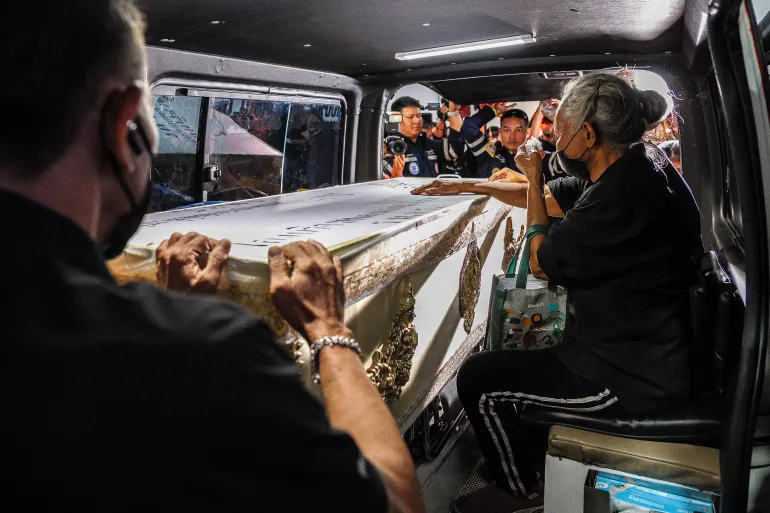
The death toll in a fire at a popular live music pub in Bangkok has risen to 32 after two more people died from their injuries, as Thai police continue to investigate possible negligence as a factor in the blaze.
The Erawan Emergency Medical Centre said on Wednesday that 30 people remained in hospitals in the city, with 15 of those being treated in intensive care units. It said 44 people had been discharged.
The fire, Thailand’s deadliest in 17 years, broke out at the Rong Beer Na Ladprao late on Sunday night. It took firefighters 30 minutes to put out the blaze.
Most of the victims died from smoke inhalation, while a few died from burn injuries, Wiroon Supasingsiripreecha, chief of the Institute of Forensic Medicine, told journalists on Wednesday.
Local police said that most of the people who were found dead were trapped in windowless bathrooms, where they may have tried to escape the blaze.
The cause of the fire has not been determined, and police are investigating the possibility of negligence at the venue, including whether emergency exits were obstructed.
Authorities say an electrical short circuit in a ceiling-mounted air conditioner may have sparked the fire. Some experts say that combustible acoustic materials around the stage may have ignited, producing extreme heat and smoke.
Some survivors and family members of victims arrived at the Phahonyothin Police Station on Wednesday to give statements, gather belongings and seek compensation.
Natthaphong Lakhorn, 26, told the Associated Press news agency that he was close to the stage when the fire started.
[Aljazeera]

Garry Sobers dies, aged 89

Magnitude 7.3 earthquake quake strikes off Mexico coast

Can Argentina and Messi beat Spain and Yamal to defend World Cup?

Anushka Sanjeewani, Vishmi Gunaratne return for Pakistan ODIs

Lennox stars again as New Zealand take series lead after West Indies collapse

Former IGP C.D. Wickramaratne found dead at his residence

‘Dates have the highest sugar content to fight Coronavirus’

Sunday Island 27 December – Headlines

#SundayIsland 17th December – Headlines

Sunday Island – 28th March

Sunday Island Headlines – 21 March

Sunday Island – 21st February – Headlines
-
 Features6 days ago
Prison riots and politics: NPP’s biggest challenge and Sri Lanka’s biggest opportunity
-

 Editorial7 days ago
What’s the world coming to?
-
 Features3 days ago
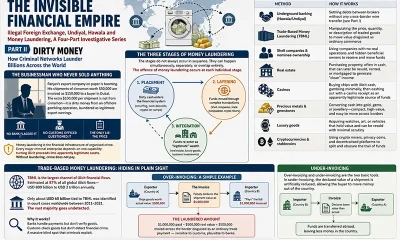
Dirty Money
-

 Editorial6 days ago
Much ado about crime: Fish or cut bait
-
 Features6 days ago
More on Saudi Arabia: ARAMCO and beyond
-
 Midweek Review3 days ago
The sordid tale of theft and tragedy at Finance Ministry
-
 Latest News3 days ago
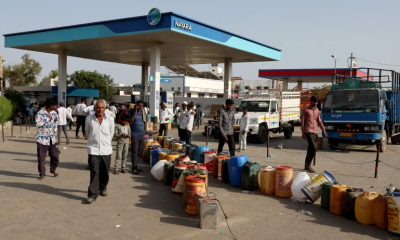
Oil prices hit 1-month high as US-Iran attacks dim Strait of Hormuz outlook
-

 News18 hours ago
Money laundering case against Yoshitha, fixed for pre-trial conference