
News
BASL asks its members to return Japanese funds


Rs. 21 mn JICA payment controversy:
by Shamindra Ferdinando
Reeling from a revelation that the Bar Association of Sri Lanka (BASL) received Rs 21 million as payment for an anti-corruption study undertaken in terms of an agreement with Japan International Cooperation Agency (JICA), without following proper procedures, the Bar Council has appointed a five-member committee consisting of five President’s Counsel to conduct an investigation.
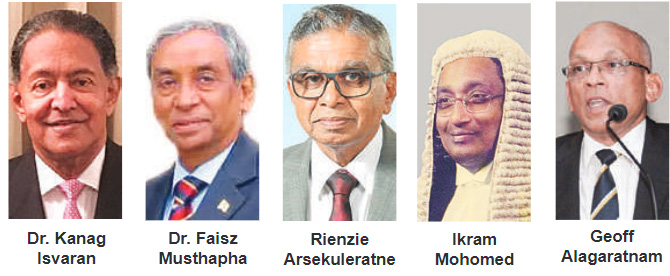
The committee comprising Dr. Kanag Isvaran, Dr. Faisz Musthapha, Rienzie Arsekuleratne, Ikram Mohomed and Geoff Alagaratnam has been asked to submit its report to the Bar Council within two months.
Rs. Rs 19 mn out of Rs 21 mn received by the BASL was shared by five members who undertook the study.The Bar Council has directed all of them to return the money to the BASL. Two of them had returned their share before the Bar Council took up the matter.
The Bar Council intervened after several senior members of the Executive Committee of BASL demanded an explanation as regards the JICA project.JICA engaged the team comprising members of the BASL late last year to conduct a study on bribery and corruption.
The BASL members have asked why the five members had not obtained approval from the Bar Council and its Executive Committee before undertaking the study. The team facing the current probe includes two President’s Counsel.
Several years ago, The Island revealed how the BASL had secured a sponsorship for the Law Asia Conference from Perpetual Treasuries Limited (PTL), which was under investigation for Treasury bond scams. Those who had shared Rs 19 mn had been asked not to seek media interventions until the completion of the inquiry.
PC Upali Gooneratne, in his capacity as pro tem Chairman chaired Saturday’s Bar Council meeting in view of the current BASL President Kaushalya Nawaratne, PC, too, being subjected to the ongoing unprecedented investigation focused on the overall process, absence of required approvals, etc. The other members of the five–member team are Nalinda Indatissa, PC, Shavindra Fernando, PC, Nuwan de Alwis and Rashmi Indatissa.
The funding of the Bar Association study coincided with the Japanese funding for the UNDP anti-corruption project launched in February this year. When The Island sought a clarification regarding the latest anti- corruption initiative from the UNDP Office in Colombo, a spokesperson said that the ministries of justice and finance were involved in the project.
Japanese Ambassador in Colombo Mizukoshi Hideaki and UNDP Resident Representative in Colombo Azusa Kubota launched ‘The Project for Promoting Economic Governance through Anti-Corruption Policy Support’ on February 13, 2024. The UNDP spokesperson said that the project worth 137 million JPY (approximately USD 931,000) would be implemented from March this year to March next year.
Soon after the finalization of the agreement between Japan and the UNDP in February 2024, JICA in collaboration with BASL conducted a series of introductory workshops between 19 and 28 February for the officers of the Commission to Investigate Allegations of Bribery or Corruption (CIABOC) as well as key actors of the justice system.
These workshops dealt with whistleblower protection, deferred prosecution agreements and anti -money laundering measures. In terms of the new Anti-Corruption Act No 9 of 2023 that came into operation in September last year, CIABOC spearheaded the operations. JICA brought in experts from Japan, US (Department of Justice and US Federal Bureau of Investigation), National Crime Agency of the United Kingdom and the Asia Pacific Group for Anti-Money Laundering.











News
Public officials must clearly understand public expectations against corruption and fraud – Secretary to the President


In line with the Government’s programme to build a clean, transparent and corruption-free public service, a workshop to brief heads of 250 state institutions that have been instructed to establish Internal Affairs Units was held on Thursday (29) at the auditorium of the Sri Lanka Foundation Institute, under the patronage of Secretary to the President, Dr. Nandika Sanath Kumanayake.
As the first phase of this programme, Internal Affairs Units were previously established in 106 state institutions and the relevant officers were trained accordingly. As part of the second phase, instructions have been issued to establish Internal Affairs Units in an additional 250 state institutions. Accordingly, this workshop was organised by Presidential Secretariat, with the assistance of the Clean Sri Lanka Programme.
Although Sri Lanka continues to maintain relatively high rankings in sectors such as education and healthcare, Secretary to the President, Dr. Nandika Sanath Kumanayake noted that the country is ranked 121st in the 2024 Corruption Perceptions Index, a position that could adversely affect its overall standing in other key sectors.
Addressing the gathering, the Secretary to the President stated that while the primary slogan of the recent public uprising was against the corrupt politics, the allegations were directed not only at corrupt politicians but also at corrupt public officials. He emphasised that the public uprising occurred at a time when the country had become economically bankrupt and its adverse consequences were being directly felt by the people.
He further observed that such public uprisings are not sudden events, but rather the culmination of a prolonged and systematic process, driven by public frustration and the erosion of trust in governance.
Further addressing the workshop, Secretary to the President emphasised that public uprisings should not be underestimated, noting that they represent a powerful expression of public will.
He stated that it is essential for public officials, as well as politicians, to have a clear understanding of public aspirations and public sentiment. As public servants, he stressed, there is an obligation to deliver a clean, transparent and accountable public service to the people.
Accordingly, he explained that a structured programme has been initiated to strengthen the integrity of public service delivery. The establishment of Internal Affairs Units forms a key component of this initiative, aimed at ensuring greater transparency and accountability within state institutions.
Dr. Kumanayake further noted that public officials must remain mindful of upholding ethical standards while performing their duties, as strengthening individual integrity can contribute to transforming the broader culture of corruption within the public sector.
He highlighted that Internal Affairs Units can be viewed both as a mechanism for fostering a culture of integrity within the public service and as a platform that enables the public to raise concerns regarding the conduct of public officials, thereby strengthening accountability and public trust.
At the event, Additional Secretary to the President, Ms. Chandima Wickramasinghe and Senior Lecturer at the University of Kelaniya, Tharindu Dhananjaya Weerasinghe delivered keynote presentations.
Latest News
In order to safeguard the future of the country, a quality human resource must be developed. – Prime Minister

Prime Minister Dr. Harini Amarasuriya stated that in order to ensure the economic, social, and cultural security of the country, it is essential to develop a quality human resource, and that education plays a vital role in achieving this goal.
The Prime Minister emphasized that the government is committed to bring about a transformation in the education sector, and that the government will continue to move forward by overcoming obstacles encountered along the way, guided by a clear vision and purpose.
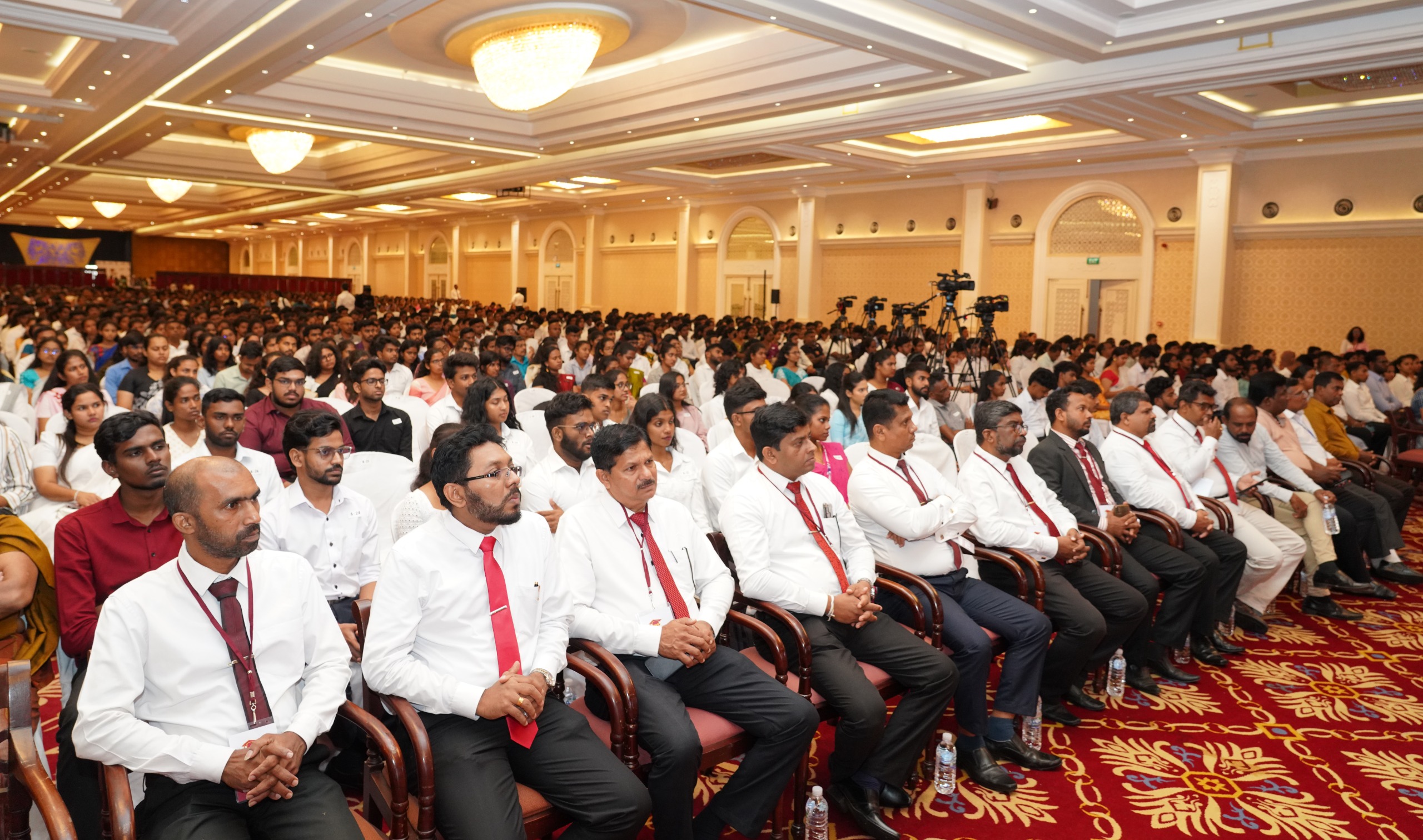
The Prime Minister made these remarks while addressing the EDCS Sisu Nena Pranama scholarship award ceremony held on Saturday (31) at Temple Trees, organized to recognize the children of the members of the Education Co-operative Society (EDCS) who have been selected to state universities for the academic year2023/2024.
Elaborating further, the Prime Minister noted that this program, organized by the Education Service Employees– Co-operative Thrift and Credit Society Ltd, is not merely about providing scholarships, but is an occasion that recognizes and appreciates the dedication of students and their parents who are preparing to shoulder the responsibility of the country’s future.
The Prime Minister also pointed out that it is a remarkable achievement that a society which began in 1930 with just 58 members and a membership fee of one rupee has today grown into the largest cooperative society in South Asia, with approximately 215,000 members.
The Prime Minister further highlighted how rapidly the world is changing, and the increasing necessity of developing human resources in the face of economic and environmental crises. She stressed that the education system must be transformed from the level of school education itself to align with the demands of the modern world, and that students entering universities should become leaders and active participants in this transformation.
Noting that out of nearly 300,000 students who enter primary education each year, only about 40,000 gain admission to universities, the Prime Minister urged students to make use of this opportunity for the development of the country.
Addressing the occasion, Deputy Minister of Labour and General Secretary of Ceylon Teachers Service Union, Mahinda Jayasinghe, stated that due to corruption-free management, it was possible to increase the financial stability of the society from Rs. 1,200 million to Rs. 1,700 million within a short period of approximately nine months.
Under this year’s program, scholarships amount to over Rs. 13.7 million were awarded to 2,292 students who have been selected to state universities.
This scholarship program, which initiated in 1984 with 15 students and an initial fund of Rs. 3,500, has been conducted continuously for 41 years. At present, scholarships of up to a maximum of Rs. 75,000 per student are awarded, demonstrating the collective strength and solidarity of the teaching community.
The event was attended by the Chairman of the Education Development Cooperative Society, Lal Kumara, the Western Province Director of Education, Darshani Iddamalgoda, along with other officials.
[Prime Minister’s Media Division]
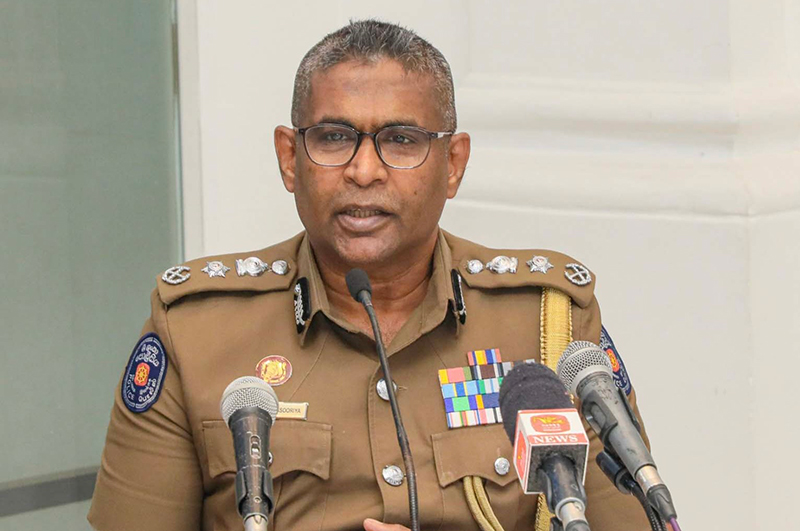
IGP Priyantha Weerasooriya says that the Police is facing a shortage of nearly 32,000 personnel and is currently operating well below its required strength.
He made these remarks while attending a ceremony held on Friday morning (30) to recognise the contribution of fingerprint officers, crime analysis officers and forensic photographers attached to the Criminal Investigation Department for their role in solving crimes.
Addressing the gathering, the IGP said that around 2,500 police officers are due to retire this year, with a further 2,700 officers expected to retire next year.
In view of the growing cadre shortfall, he said plans are underway to recruit 10,000 new officers to the Sri Lanka Police in the future.

Public officials must clearly understand public expectations against corruption and fraud – Secretary to the President

West Indies seal consolation win in ten-over shootout

In order to safeguard the future of the country, a quality human resource must be developed. – Prime Minister

Pathirana: ‘My body just automatically changed the release point’ after injury

U 19 World Cup: Emon five-for gives Bangladesh consolation win against Zimbabwe

Showers will occur at times in the Northern, North-Central, North-western, Eastern and Uva provinces and in Matale and Nuwara Eliya districts

‘Dates have the highest sugar content to fight Coronavirus’

Sunday Island 27 December – Headlines

#SundayIsland 17th December – Headlines

Sunday Island – 28th March

Sunday Island Headlines – 21 March

Sunday Island – 21st February – Headlines
-
 Business6 days ago
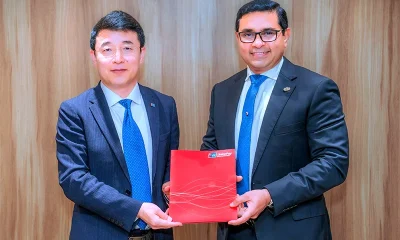
ComBank, UnionPay launch SplendorPlus Card for travelers to China
-
 Business3 days ago
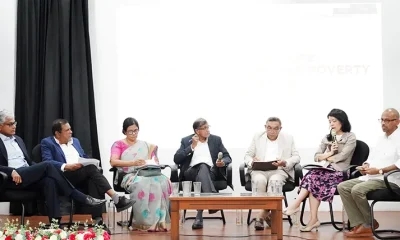
Climate risks, poverty, and recovery financing in focus at CEPA policy panel
-
 Opinion2 days ago
Sri Lanka, the Stars,and statesmen
-

 Business1 day ago
Hayleys Mobility ushering in a new era of premium sustainable mobility
-

 Opinion6 days ago
Luck knocks at your door every day
-

 Business1 day ago
Advice Lab unveils new 13,000+ sqft office, marking major expansion in financial services BPO to Australia
-
 Business1 day ago
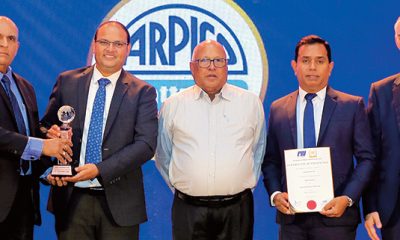
Arpico NextGen Mattress gains recognition for innovation
-

 Editorial1 day ago
Govt. provoking TUs